

By Prof. Giorgi Pkhakadze, MD, MPH, PhD · 15/09/2026
Every visitor to Kazbegi drives it, and almost nobody knows what they are driving. The Georgian Military Highway — 212 kilometres from Tbilisi to Vladikavkaz — is one of the great roads of the world, and its summit, the Jvari pass, is the reason it exists.
The only door
The Great Caucasus runs unbroken for 1,200 kilometres between the Black Sea and the Caspian. In all that length there are two ways through by road: a coastal strip in Dagestan, far to the east, and the Darial gorge, where the river Terek has cut a slot through the mountains just north of Stepantsminda. Whoever controlled the Darial controlled the traffic between the steppe and the Middle East. Strabo mentioned it. The Persians walled it. The Georgian kings held it, lost it and held it again.
But the Darial is the exit. To reach it from the south you must first climb out of the Aragvi valley and over the watershed — the Jvari pass, named for a cross set up, tradition says, by King David the Builder in the 12th century to mark the top.
Three builders
The Georgians made it a track. The Russians, arriving in 1801, made it a road: the Military Highway was cut in the 1810s and 1860s to move armies south, with switchbacks, retaining walls and a chain of forts and post-houses — Pushkin, Lermontov and Tolstoy all travelled it and all wrote about it. The Soviets widened, paved and tunnelled it, and built the ski resort of Gudauri just below the summit. Today’s road is the third edition, and still follows the first.
What you see on the way up
From Tbilisi the road runs past Mtskheta and along the Aragvi to Ananuri, then climbs beside the Zhinvali reservoir. Pasanauri, where the black and white Aragvi rivers meet — you can see the two colours side by side — is the last real village. Then the valley narrows, the trees stop, and the road folds back on itself up an open mountainside to Gudauri at 2,200 metres.
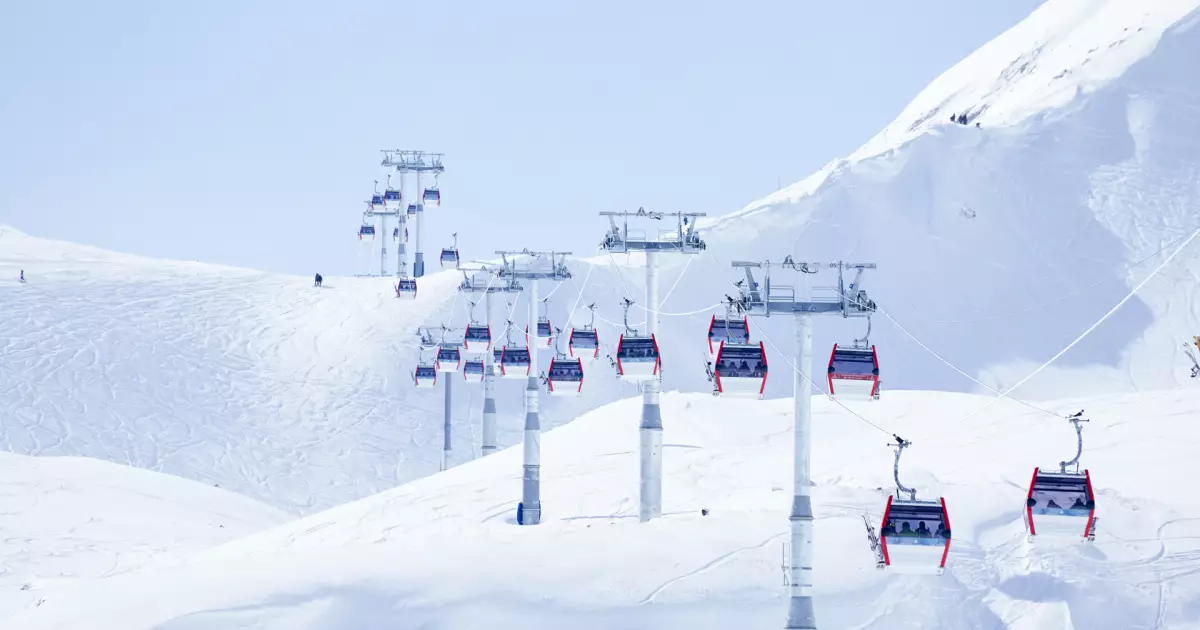
Just above the resort is the Friendship Monument, a curved concrete viewing platform from 1983 painted inside with a Soviet-Georgian mural. Ignore the mural, walk to the rail: the view down the Devil’s Valley is the best on the road. A few kilometres on is the summit, marked by the cross, and then the long descent to Stepantsminda with Kazbek ahead.
Seasons
The pass is open all year and cleared daily, but heavy snow closes it for hours at a time between December and March — a reason to leave Tbilisi early in winter, and to accept that the mountains keep their own timetable. In May the roadside is covered in wild flowers; in October the birch woods below Gudauri turn gold.
See it with GTour
The pass is the spine of the Kazbegi day trip and the two-day mountain journey; in winter it is the way up to the slopes on the Gudauri mountain escape.
ქართულად: ჯვრის უღელტეხილი — გზა, რომელიც სამმა იმპერიამ ააშენა
