

By Prof. Giorgi Pkhakadze, MD, MPH, PhD · 15/09/2026
Kutaisi is one of the oldest continuously inhabited cities in the world — it was the capital of Colchis when Jason sailed for the Golden Fleece — but its two great churches belong to a single century, the eleventh, and to two kings.
Bagrati: the king who united Georgia
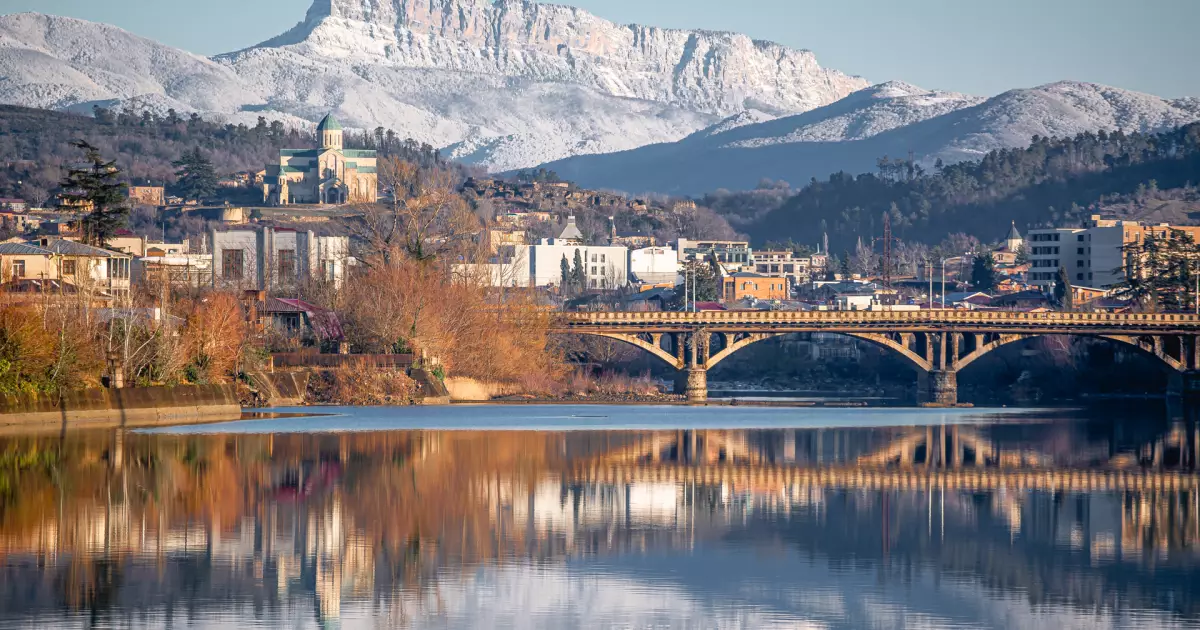
Bagrat III was the first ruler to bring the Georgian principalities under one crown, in 1008. His cathedral on Ukimerioni hill above the Rioni was finished in 1003, before the job was done, as a declaration of what was coming: a church on a scale no Georgian had attempted, with a dome higher than Svetitskhoveli’s and carved stone that still surprises. For six centuries it was the coronation church of the western kings.
In 1692 Ottoman troops blew it up. For three hundred years it stood as a roofless ruin — one of the most beautiful ruins in the Caucasus, its arches open to the sky, and a UNESCO site on those terms. Then, between 2009 and 2012, the Georgian government rebuilt it: a new dome, new roof, a glass-and-steel lift on one side. Architects argued; UNESCO removed it from the list. Georgians, for the most part, were glad to have their cathedral back. Go with an open mind: the interior is vast and pale, the hilltop position is superb, and the argument about authenticity is itself a very Georgian conversation to have on the terrace afterwards.
Gelati: the king who made it great
David IV — David the Builder, Aghmashenebeli — took the throne in 1089 at sixteen, drove out the Seljuks, won the battle of Didgori against odds that still sound invented, and left Georgia at the height of its power. In 1106 he founded Gelati, in the hills east of the city, as a monastery and an academy — a Georgian answer to the schools of Constantinople, where philosophy, theology and translation were taught for the next four centuries.
The main church is the reason to come. Its apse holds a mosaic of the Virgin and Child from the 1120s, gold and blue, the finest medieval mosaic in Georgia. The walls are frescoed from floor to dome with saints, kings and the Council of Nicaea, painted between the 12th and 17th centuries; you can read the whole history of Georgian painting on one building. David himself is buried under the south gate, by his own instruction, so that everyone who entered would step on his grave. The inscription reads, in effect: this is my resting place, and it is enough.
Gelati remains on the UNESCO list on its own; the academy building, the smaller churches and the gate with David’s tomb are all original.
The two together
Bagrati is drama — the hill, the scale, the story of ruin and return. Gelati is depth — the mosaic, the frescoes, the silence of a working monastery. See Bagrati first, from the town, and Gelati in the afternoon light, when the gold in the apse catches. Between them lies Motsameta, a tiny monastery on a cliff above a river bend, with a tunnel under the altar that, tradition says, grants a wish to anyone who crawls through it three times.
See it with GTour
Both cathedrals, Motsameta, the Prometheus cave and the canyons are in our Kutaisi & Western Georgia three-day tour; Gelati is also the sixth day of Georgia in 7 days. Kutaisi’s airport makes this an easy first or last chapter of any trip.
ქართულად: ბაგრატი და გელათი — ოქროს ხანის ორი ტაძარი
