

By Mariam Lomidze, Culture & Events Reporter · 27/10/2026
Luxembourgish citizens travelling to Georgia in 2026 do not need a visa for short tourist stays, flights always involve at least one connection, the currency is the Georgian lari (GEL), and English is reliably understood in Tbilisi, Batumi and Kutaisi but far less so outside the main tourist routes. Georgian is the only compulsory subject on this trip: neither French nor German, Luxembourg’s two other official languages, will get you far beyond a handful of hotels and specialist guides, though Russian remains widely spoken by the older generation.
This guide sets out the practicalities a Luxembourg passport holder actually needs: entry rules, how to fly here, driving, money, connectivity, language, the (thin) historical link between the two countries, food, insurance and a few etiquette points. Entry conditions, insurance requirements and exchange rates change without much notice, so every rule below includes where to check it yourself before you fly.
Visa and entry rules for Luxembourg citizens
As an EU member state, Luxembourg is covered by Georgia’s unilateral visa-free regime, which currently allows citizens of EU countries to enter and stay for up to one year without a visa for tourism, business or family visits. This is a generous rule by regional standards, but Georgia has adjusted visa-free periods and conditions before, so confirm the current duration and any recent change directly on the Ministry of Foreign Affairs of Georgia’s consular information, officially published as the geoconsul.gov.ge portal, before booking non-refundable flights.
If your purpose of travel falls outside the visa-free categories, or you plan a longer stay, study or work, Georgia runs an e-visa system through evisa.gov.ge. Applications are submitted online with a passport scan, a passport photo and proof of accommodation and funds; processing is usually quoted at a few working days, though the portal itself states the exact timeframe and fee for your specific visa category, and these are the figures to trust over any third-party estimate. Keep a digital and printed copy of your e-visa approval, and carry it alongside your passport at the border even when travelling visa-free, since officers may still ask about your onward travel and accommodation.
Getting to Georgia from Luxembourg
There is no direct flight between Luxembourg Findel and any Georgian airport, and none is likely to appear given the route’s size, so plan for one connection. The practical routings are:
- Via Istanbul with Turkish Airlines, generally the shortest and most frequent one-stop option to Tbilisi, with onward links also serving Kutaisi and Batumi.
- Via Munich or another German hub with Lufthansa or a partner carrier, convenient given Luxembourg’s rail and road links to southern Germany.
- Via Warsaw with LOT, a reasonable option for travellers connecting from Benelux via Brussels first.
- Via Doha or Dubai with Qatar Airways or Emirates, a longer but comfortable option if you are already routing through the Gulf, with good onward frequency into Tbilisi.
Check live schedules, terminals and any seasonal route changes on tbilisiairport.com for the capital, and on kutaisiairport.com and batumiairport.com if a Kutaisi or Batumi arrival suits your itinerary better, since low-cost carriers into Kutaisi sometimes undercut Tbilisi fares substantially. Arrange your onward transfer in advance: a private sedan from Tbilisi airport to any address in the city is a fixed €25, a minivan €35, and we track your flight so a delay costs you nothing extra, see GTour’s service prices.
Driving in Georgia on a Luxembourg licence
A standard Luxembourg driving licence, issued under EU/EEA rules, is generally accepted for short-term driving in Georgia without needing an International Driving Permit, since Georgia recognises EU-format licences for visitors. Confirm this before renting a car, because recognition rules for specific document formats can change, and the authoritative source is Georgia’s road and traffic legislation published via matsne.gov.ge; your rental company will also tell you if they require an IDP as a matter of their own policy, which is common even where the law does not insist on it. Mountain roads to Kazbegi, Svaneti and Tusheti are demanding, and winter driving over the Gudauri pass requires caution and often snow chains; check conditions on GTour’s road status page before setting out independently, or book a car with an experienced local driver instead, from €90 a day around Tbilisi.
Money, cards and cash
Georgia’s currency is the lari (GEL). As of 26 October 2026 the National Bank of Georgia quoted roughly 2.91 GEL to the euro, a rate that moves daily, so check the current figure on the day you exchange money rather than relying on any printed guide. Card payments, including contactless, are standard in Tbilisi, Batumi and Kutaisi hotels, restaurants and supermarkets; carry cash in smaller towns, mountain guesthouses, local markets and for marshrutka minibus fares, where card terminals are still the exception rather than the rule. ATMs are widespread in cities and tourist towns and generally dispense lari; withdrawing in local currency rather than accepting a “convert to euro” prompt usually gives a better rate.
SIM, eSIM and staying connected
Georgia has three main mobile operators, Magti, Geocell and Beeline, all offering inexpensive prepaid tourist SIM packages with data, available at the airport on arrival with just your passport. eSIM options from international providers also work in Georgia and are a sensible choice if your phone supports them, since they avoid queueing for a physical SIM. Wi-Fi is reliable in hotels and cafés in the main cities; coverage in remote mountain regions such as Tusheti and parts of Svaneti is patchy, so download offline maps before heading into the high mountains.
Language: Georgian, Russian, English and the limits of French or German
Georgian, written in its own unique script, is the state language and the one you will see on road signs, menus and official documents outside the main tourist zones. English is widely understood by younger staff in hotels, restaurants and tour operations in Tbilisi, Batumi, Kutaisi and the main wine and mountain towns, but thins out quickly in villages. Russian remains a practical second language for the older generation and in rural areas. French and German, Luxembourg’s other two official languages, are not generally spoken beyond a small number of hotels, restaurants with European-trained staff, and specialist guides; GTour can arrange a German- or French-speaking licensed guide for a surcharge of €25 a day on top of standard guiding rates, which is worth booking in advance if you prefer not to rely on English, see guide pricing.
Luxembourg and Georgia: diplomatic, trade and diaspora ties
The relationship between Luxembourg and Georgia is honestly thin and largely conducted through European institutions rather than bilateral channels. Luxembourg does not maintain its own embassy in Tbilisi, and Georgia has no resident mission in Luxembourg; both countries engage mainly through the European Union’s framework with Georgia, including the EU’s support for Georgia’s reform path and candidate status, documented on europa.eu. For consular emergencies, Luxembourg nationals should check which embassy currently provides assistance in Tbilisi, since Benelux and other EU partners sometimes cover each other’s nationals under EU consular protection arrangements; the current list of foreign missions accredited to Georgia is published by Georgia’s Ministry of Foreign Affairs, and Luxembourg’s own foreign ministry publishes equivalent travel advice that should be treated as the final word on who to call. There is no significant historical trade route or large diaspora community linking the two countries; most Luxembourgish visitors come as independent leisure travellers rather than through family or business ties, and that is a fair and unremarkable reason to visit.
Food, health insurance and safety
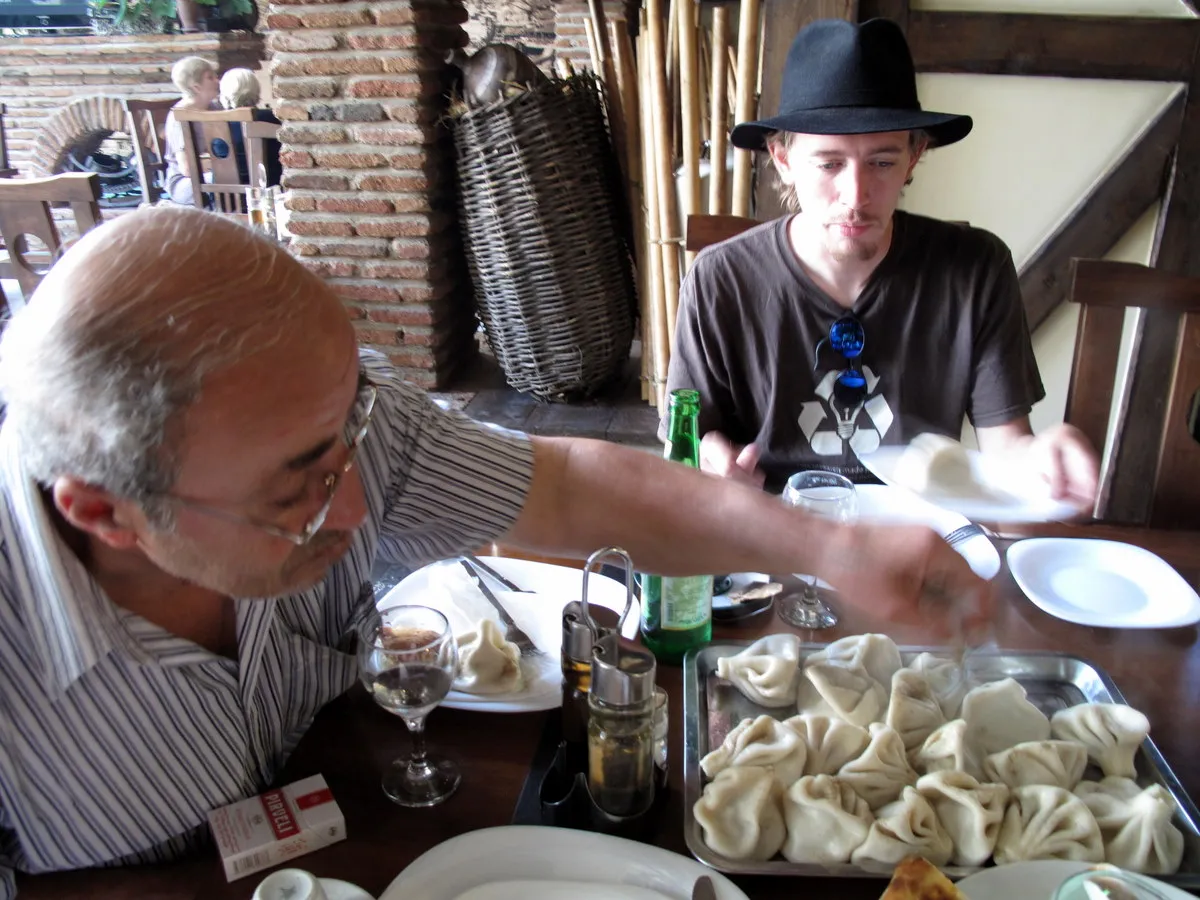
Georgian cuisine is meat-, bread- and wine-heavy, which will feel familiar to visitors used to Luxembourgish cooking, with dishes such as khinkali dumplings, mtsvadi grilled meat and khachapuri cheese bread as reliable starting points. Vegetarian travellers are well served, since Georgia’s monastic food tradition produced an extensive menu of bean, walnut and aubergine dishes such as lobio and pkhali that contain no meat. Halal food is available, particularly in Tbilisi and Batumi, where establishments serving the Muslim community and Gulf tourists are established, though it is worth asking directly or researching in advance rather than assuming, since it is not universal.
Georgia has, at various points, required visitors to hold valid travel medical insurance as a condition of entry or as a practical necessity given limited reciprocal healthcare arrangements with non-EU Georgia; confirm the current requirement and any proof needed at the border via evisa.gov.ge and Georgia’s public health authority, the National Center for Disease Control and Public Health, and buy a policy that covers mountain activities if you plan to hike or ski, since standard travel policies sometimes exclude altitude or off-piste incidents. Georgia is a safe destination for independent travel with normal city-level caution; the main practical risks are road conditions in the mountains and altitude on high treks, not crime.
What a G Tour private guide adds
For a Luxembourg-based traveller juggling a trilingual home environment but facing a fourth, unfamiliar language and script in Georgia, a private guide removes the single biggest source of friction: communication with drivers, border posts, mountain villages and small family wineries. A licensed guide costs from €70 for a half-day city walk in Old Tbilisi up to €120 a day on a multi-day route, with German or French available for a modest surcharge; pairing a guide with a car and driver turns a logistically tricky trip, such as a self-drive attempt at the Gudauri pass in winter, into a relaxed one. Ready-made itineraries built for first-time visitors include Tbilisi & Mtskheta — The Essential First Day, Kazbegi — 2-Day Mountain Journey and Kakheti Wine Country — Day Trip, all bookable with transparent per-person pricing at gtour.ge/tours.
If this guide is part of a trip you are planning, our Georgia in 10 Days — Tbilisi to Svaneti to the Sea and Monasteries of Georgia — Mtskheta, the Thirteen Fathers and Kakheti in 3 Days cover the places it describes with a private guide and driver; a GTour travel expert adapts the route to your dates.
Practical summary
- Visa: Luxembourg citizens travel visa-free for short stays under Georgia’s current EU visa-free regime; verify the exact duration on geoconsul.gov.ge before booking.
- Other purposes or longer stays: apply through evisa.gov.ge, processing times and fees are stated on the portal itself.
- Flights: no direct route; connect via Istanbul, Munich, Warsaw, Doha or Dubai; check tbilisiairport.com, kutaisiairport.com or batumiairport.com for live schedules.
- Driving: EU-format Luxembourg licence generally accepted short-term; confirm with your rental company and matsne.gov.ge.
- Money: lari (GEL), rate roughly 2.91 to the euro on 26 October 2026, confirm the day-of rate; cards work in cities, carry cash for rural areas.
- Connectivity: prepaid SIM or eSIM on arrival, offline maps for mountain regions.
- Language: English in tourist areas, Georgian and Russian elsewhere; French and German are not widely understood, book a specialist guide if needed.
- Embassy: no Luxembourg mission in Tbilisi; check mfa.gov.ge’s accredited mission list and Luxembourg’s own travel advice for current consular coverage.
- Insurance: confirm current mandatory travel medical insurance rules via evisa.gov.ge and ncgh.ge before departure.
Sources
- Georgia e-Visa portal
- Georgia Ministry of Foreign Affairs
- Road legislation, Legislative Herald of Georgia
- European Union and Georgia relations
- National Statistics Office of Georgia (Geostat) – International Visitor Statistics
- Legislative Herald of Georgia (Matsne) – Law of Georgia on Tourism and Resorts
Questions this guide does not answer? Write to info@castle.ge or WhatsApp +995 577 41 63 14 — a person in Tbilisi replies. See also our travel services and all guides.
Khinkali, Georgia's iconic dumplings, a dish Luxembourgish visitors will encounter everywhere. · Photo: Peretz Partensky from San Francisco, USA / Wikimedia Commons, CC BY-SA 2.0
Been to Georgia? Tell us how it went — the best stories are published here.
Share your tripOne email a week: what changed for travellers in Georgia — rules, roads, flights, seasons — plus one place worth the trip. Written by the GTour desk, no advertising, unsubscribe in one click.
This story across our partner network — ქართულად: შენი დასვენება