

By Nino Gelashvili, Travel News Editor · 30/10/2026
Service charge in Georgian restaurants typically runs 10 to 15 percent and is usually added to the bill automatically, especially in Tbilisi, Batumi and other tourist-facing venues, so check the printed total before leaving extra cash. Tipping drivers and guides is customary but not obligatory, taxi fares are cheap by European standards if booked through an app or a licensed transfer, and bargaining is normal only in bazaars and flea markets, not in shops, restaurants or on fixed-price tours and transfers.
Prices in this guide are shown in euros and Georgian lari (GEL). As a benchmark, the National Bank of Georgia’s reference rate on 29 October 2026 was about 2.89 GEL to 1 EUR, so figures below convert roughly at that rate; always check the current rate before changing money, since it moves daily. This is an evergreen guide and we update it when rules or typical prices shift noticeably, with a note on where to verify each figure yourself.
Service charge and restaurant tipping
Most mid-range and upscale restaurants in Tbilisi, Batumi, Kutaisi and the main wine-country towns add a service charge of 10 to 15 percent to the bill, often printed as “servisi” or “service” on the receipt. This is not the same as a tip pooled for the waiting staff everywhere, and policies vary by restaurant, so it is worth glancing at the bill rather than assuming. Where a service charge is already included, an additional cash tip is appreciated but not expected; rounding up 5 to 10 percent for excellent service is normal practice among both locals and visitors. In small khinkali houses, bakeries and street-food stalls, there is usually no service charge at all, and rounding the bill up to the next 5 or 10 GEL is a polite minimum tip. Georgia does not have a legal minimum-tip requirement; if you want to confirm current consumer rules, Georgia’s statistics agency publishes retail and hospitality price indices that show how restaurant prices are tracked over time at Geostat.
Tipping drivers and guides
Private drivers and licensed guides in Georgia work on day rates that already include fuel, tolls, parking and, on multi-day trips, the driver or guide’s own meals and accommodation. A tip on top is a personal gesture of thanks rather than a wage top-up. A reasonable guideline for a full day is 10 to 20 GEL per traveller for a driver, and a similar amount for a guide, more for a multi-day trek or a particularly knowledgeable specialist guide (wine, mountains, architecture). For group tours, pooling a note per person at the end of the trip is standard. Our Car with Driver by the Day and Licensed Private Guide by the Day services are priced per group with everything above included, so any tip is entirely optional.
| Service | Typical rate |
|---|---|
| Licensed guide, city walk (up to 4 hours) | from €110 per group |
| Licensed guide, full day with your transport | from €140 per group |
| Specialist guide, full day (wine, hiking, history) | from €180 per group |
| Car with driver, sedan, day in and around Tbilisi | from €150 per car |
| Car with driver, 4×4, day in and around Tbilisi | from €220 per car |
| Certified mountain guide (glaciers, high routes) | from €220 per day |
Taxi prices in Tbilisi, Batumi and Kutaisi
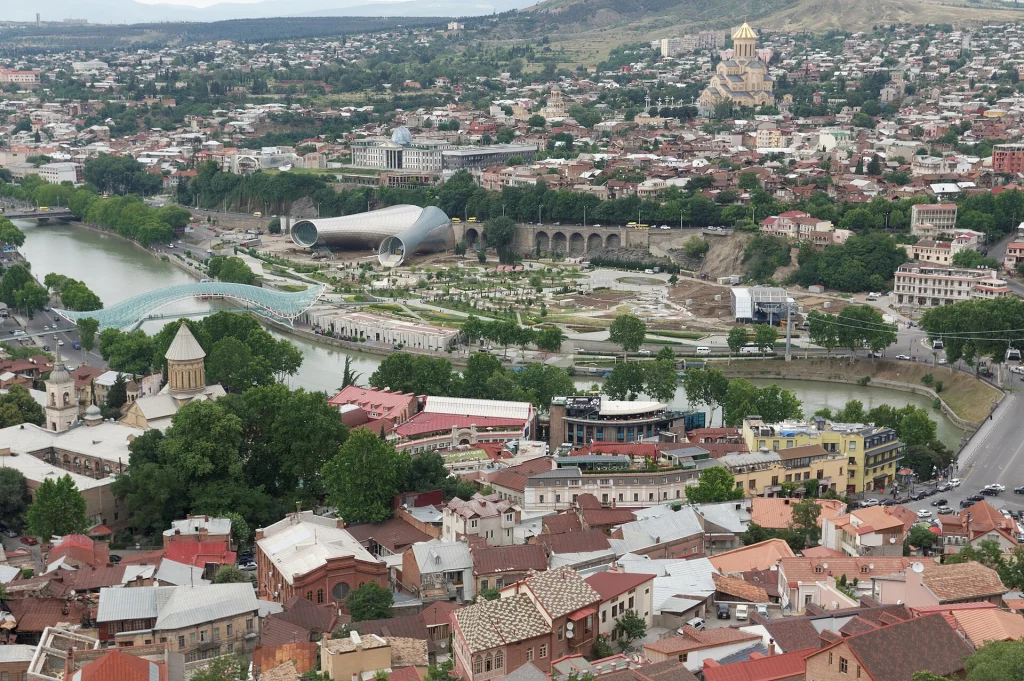
Ride-hailing apps are the standard way to take a taxi in Georgian cities; fares are shown in the app before you confirm, which removes the need to negotiate. A short ride across central Tbilisi typically costs a handful of lari, rising for longer cross-town trips or late-night surge pricing. Hailing a taxi on the street without an app is best avoided, since prices are not fixed and bargaining with a driver at the curb is not a reliable way to get a fair fare. For airport transfers, pre-booked private transfers give a fixed price agreed in writing before you fly, which is useful for budgeting and for groups with luggage. Our own fixed transfer prices, confirmed before departure, include meeting at arrivals, flight tracking, 60 minutes of free waiting and child seats.
| Route | Vehicle | Price |
|---|---|---|
| Tbilisi airport ↔ Tbilisi (any address) | Sedan, 1–3 travellers | €45 |
| Tbilisi airport ↔ Tbilisi (any address) | Minivan, 4–7 travellers | €58 |
| Kutaisi airport ↔ Kutaisi | Sedan or minivan | €35 |
| Kutaisi airport ↔ Tbilisi | Sedan | €190 |
| Kutaisi airport ↔ Batumi | Sedan | €150 |
| Batumi airport ↔ Batumi, Kobuleti | Sedan or minivan | €40 |
Ground transport information for the three international airports, including public bus connections, is published by the airports themselves at Tbilisi International Airport, Kutaisi International Airport and Batumi International Airport.
Meal costs, from street food to a wine dinner
Georgia remains inexpensive for food by Western European standards, though prices in Tbilisi’s Old Town and in Batumi’s seafront restaurants run noticeably higher than in neighbourhood places or regional towns.
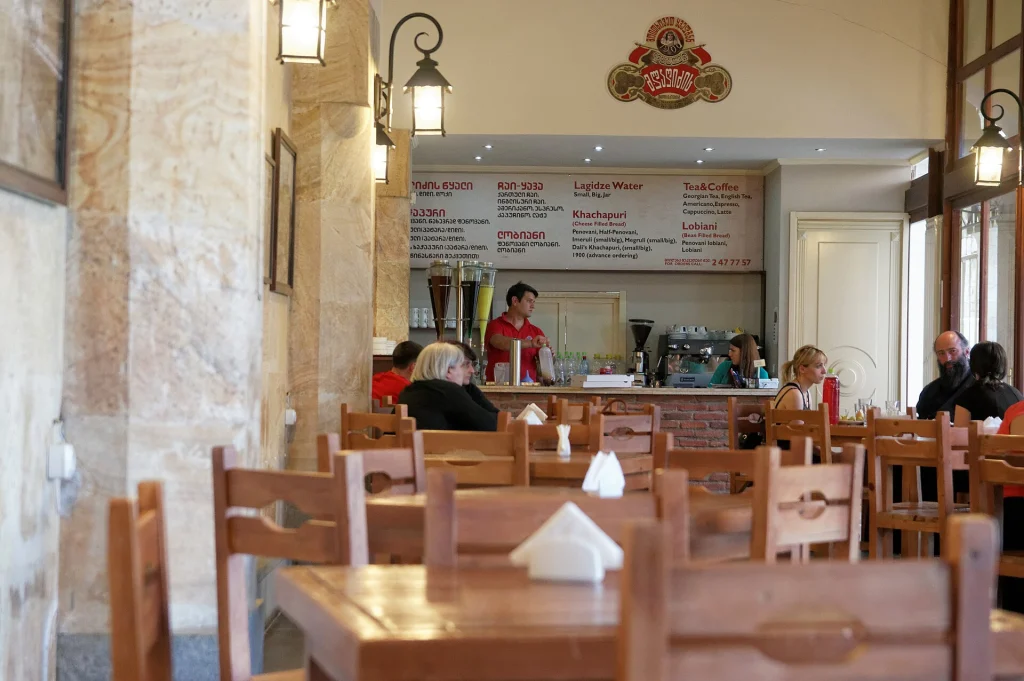
- Khachapuri or a portion of khinkali at a local bakery or khinkali house: roughly 3 to 15 GEL (about €1 to €5)
- Coffee or a local draft beer: roughly 5 to 10 GEL (about €2 to €3.5)
- A casual sit-down lunch for one with a soft drink: roughly 20 to 35 GEL (about €7 to €12)
- A mid-range dinner for one with a glass of Georgian wine: roughly 40 to 70 GEL (about €14 to €24)
- A multi-course supra feast with a tamada and live polyphonic song, as on our Supra Evening with a Tamada, runs higher per person but includes the full evening, food, wine and performers
- Fine dining or a tasting menu with paired wines in Tbilisi or Batumi: 100 GEL and upward per person (about €35+)
These are approximate ranges rather than fixed prices, since individual restaurants set their own menus; always check the printed menu and the service-charge line on the bill.
Hotel price brackets
Accommodation prices vary sharply by season, city and star rating. July to September, the New Year period and the Rtveli wine-harvest weeks in Kakheti see the highest demand and prices; shoulder months such as April, May and late October are generally better value.
| Bracket | Typical nightly price, double room |
|---|---|
| Hostel dorm bed | €8 to €18 |
| Budget guesthouse or 2-star hotel | €25 to €55 |
| Mid-range 3 to 4-star hotel | €60 to €130 |
| Boutique or 5-star hotel | €150 and upward |
| Mountain guesthouses (Svaneti, Tusheti, Khevsureti) | €30 to €70, often including meals |
Georgia’s official hotel classification and accommodation standards are overseen by the national tourism administration; see the Georgian National Tourism Administration at gnta.ge for the current star-rating framework. We offer free hotel recommendations for your dates and budget, with a small fixed service fee only if you ask us to make the booking for you.
Museum tickets and cable cars
Entrance fees to state museums and heritage sites are modest but change periodically, and several sites run a dual pricing structure with a lower rate for Georgian citizens and residents and a separate rate for foreign visitors. Typical adult entrance fees at major sites and museum branches sit in the range of 7 to 20 GEL (roughly €2.5 to €7), with some flagship sites, guided tower visits in Svaneti, or combined tickets costing more. The Georgian National Museum network publishes current ticket information at museum.ge, and state-protected monuments such as Vardzia, Uplistsikhe and the churches of Mtskheta are managed by the National Agency for Cultural Heritage Preservation, whose site lists opening hours and fees at heritagesites.ge. Georgia’s UNESCO World Heritage properties, including Mtskheta’s historical monuments, Bagrati Cathedral and Gelati Monastery, and the upper Svaneti towers, are described at UNESCO’s World Heritage Centre, though UNESCO listing pages do not quote ticket prices. For cable cars, Tbilisi’s funicular and the Narikala ropeway are inexpensive, short rides best checked on the day; Batumi’s Argo cable car above the Botanical Garden area typically costs in the range of 15 to 25 GEL return; and Gudauri‘s ski lifts and gondolas are priced as day or multi-day passes, published each winter season at gudauri.travel. Because these fees are reviewed from time to time, confirm the exact current price on the relevant official page before you travel, particularly if visiting with a group.
Where bargaining is normal, and where it is not
Bargaining is accepted and even expected at open-air bazaars and flea markets, particularly for souvenirs, antiques, carpets and handicrafts at Tbilisi’s Dry Bridge market, and to a lesser extent for non-food goods at Dezerter Bazaar. A polite opening offer of 20 to 30 percent below the asking price is common, with the final price settled somewhere in between; fresh produce stalls at Dezerter Bazaar generally post fair prices and bargaining there is less customary, though asking the price before buying is always sensible. Outside markets, bargaining is not normal practice and can come across as awkward: supermarkets, pharmacies, shops with price tags, restaurants, museum ticket counters, licensed taxis using an app, and any of our quoted tours, transfers or guide days are all fixed prices agreed in advance. If you enjoy market browsing, our Dry Bridge and Dezerter Bazaar — the Markets Walk is built around exactly this kind of shopping with a guide who can help with the back-and-forth.
If this guide is part of a trip you are planning, our Tbilisi to Borjomi or Bakuriani Transfer and Mtskheta on Foot — the Ancient Capital in 2 Hours cover the places it describes with a private guide and driver; a GTour travel expert adapts the route to your dates.
Practical summary
- Check the bill for a 10 to 15 percent service charge before adding an extra tip at restaurants
- Tip drivers and guides 10 to 20 GEL per traveller per day as a voluntary thank-you, more for multi-day treks
- Use a ride-hailing app for city taxis rather than bargaining with a street driver; pre-book airport transfers for a fixed written price
- Budget roughly €1 to €5 for street food, €14 to €24 for a mid-range dinner with wine, more for fine dining
- Hotel prices range from €8 hostel beds to €150-plus for 5-star stays, with July to September and New Year the most expensive periods
- Confirm museum and cable-car ticket prices on the official site before visiting, since fees change periodically and some sites charge foreign visitors a different rate
- Bargain at bazaars and flea markets, not in shops, restaurants, museums or on fixed-price transport and tours
- Convert prices using the National Bank of Georgia’s daily reference rate, roughly 2.89 GEL to 1 EUR in late October 2026
Sources
- National statistics and price indices
- Georgian National Tourism Administration
- National Agency for Cultural Heritage Preservation sites
- UNESCO World Heritage properties in Georgia
- Gudauri mountain resort information
Questions this guide does not answer? Write to info@castle.ge or WhatsApp +995 577 41 63 14 — a person in Tbilisi replies. See also our travel services and all guides.
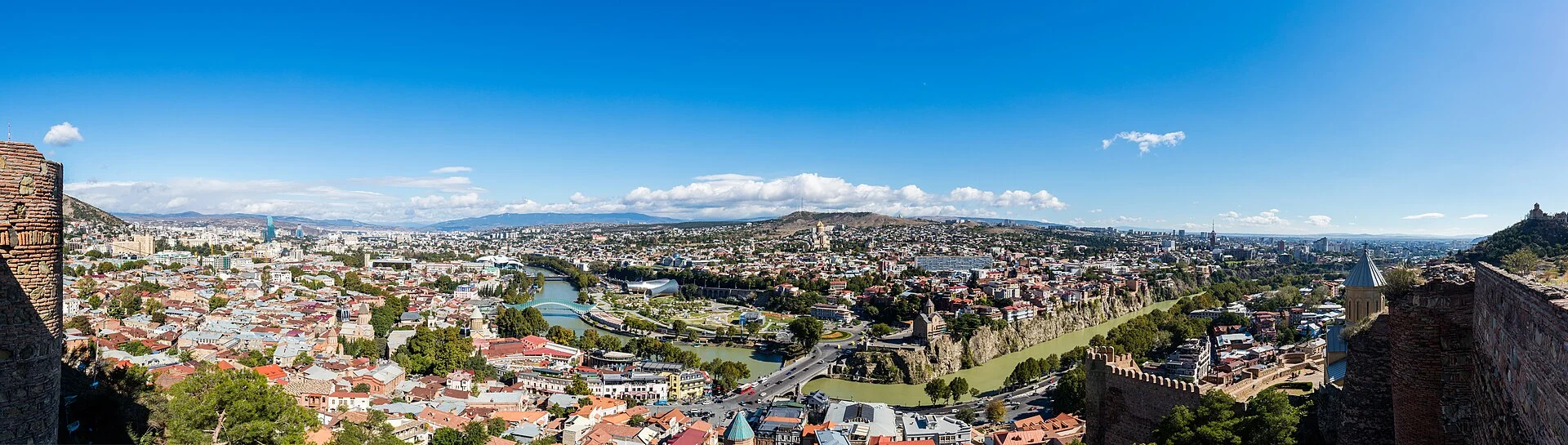
Panoramic view of Tbilisi, Georgia's capital, where meal and service costs discussed apply. · Photo: Diego Delso / Wikimedia Commons, CC BY-SA 4.0
Been to Georgia? Tell us how it went — the best stories are published here.
Share your tripOne email a week: what changed for travellers in Georgia — rules, roads, flights, seasons — plus one place worth the trip. Written by the GTour desk, no advertising, unsubscribe in one click.
This story across our partner network — ქართულად: შენი დასვენება
