

By Nino Gelashvili, Travel News Editor · 30/10/2026
Georgia’s sockets take European-style Type C and Type F plugs at 220 volts, 50 Hz, the same standard used across most of continental Europe, so travellers from the UK, Ireland, Malta, North America, and most of Asia and the Gulf need a simple round-pin adapter, not a voltage converter. Tap water is safe to drink in Tbilisi, Batumi, Kutaisi and most towns on the municipal network, Wi-Fi is free and fast in nearly every café, hotel and even some public squares, laundries exist but self-service is rare, pharmacies are plentiful and open long hours daily, and most shops trade seven days a week with only a handful of exceptions. Smoking indoors in restaurants, bars and workplaces has been banned since 2018.
This guide sets out what to expect in late 2026, written and checked by our editorial team with input from our founder, a public-health professor, so the health-related sections lean on official caution rather than guesswork. Rules, prices and opening hours can shift, so each section tells you exactly where to confirm the current position before you travel or if something looks out of date.
Electricity: plugs and voltage
Georgia runs on 220 V at 50 Hz, like the European Union, and uses the two round-pin plug types C and F, the same as Germany, France, Spain, Italy and most of the former Soviet Union. If your devices and chargers already handle 100 to 240 V, which is true of almost all modern phone, laptop and camera chargers, you only need a plug adapter, not a voltage converter. Travellers from the United Kingdom, Ireland, Malta, Cyprus, North America, Japan and most of Asia should pack one; travellers from most of continental Europe will not need anything. Hairdryers, straighteners, kettles and other high-wattage appliances built for 110 to 120 V markets, chiefly North America, do need a proper step-up converter, not just a shape adapter, or they can overheat.
| Item | Georgia standard | Notes |
|---|---|---|
| Voltage | 220 V, 50 Hz | Same as EU |
| Plug type | Type C and Type F | Two round pins, F has side clips |
| UK/Ireland travellers | Need adapter | Type G plug is incompatible |
| US/Canada travellers | Need adapter, check device voltage | High-wattage appliances need a converter |
Hotel rooms, guesthouses and mountain lodges across the country, including along routes we run such as Tusheti Expedition and Mestia & Ushguli, use the same sockets, so one adapter covers the whole trip. Pack a spare if you are travelling with a group, as reception desks do not always have one to lend.
Tap water: quality by city and bottled alternatives
Tap water from the municipal supply in Tbilisi is drawn largely from mountain sources and is treated and monitored; most residents and long-term visitors drink it without treatment. Batumi and Kutaisi’s municipal water is also generally considered safe to drink, though the taste can be mineral or slightly chlorinated depending on the season and the pipe network in older buildings. In smaller towns, mountain villages, and especially in high-altitude regions such as Svaneti, Tusheti and Khevsureti, water supply is often untreated spring water piped directly from the hillside; it is usually clean at source but is not centrally monitored in the way city supplies are, so travellers with sensitive stomachs, young children, or anyone unsure of a specific village’s source should default to bottled or boiled water. If you have a compromised immune system, are pregnant, or have specific medical concerns, ask your doctor before you travel rather than relying on local reassurance, and see Georgia’s national public health guidance for travellers.
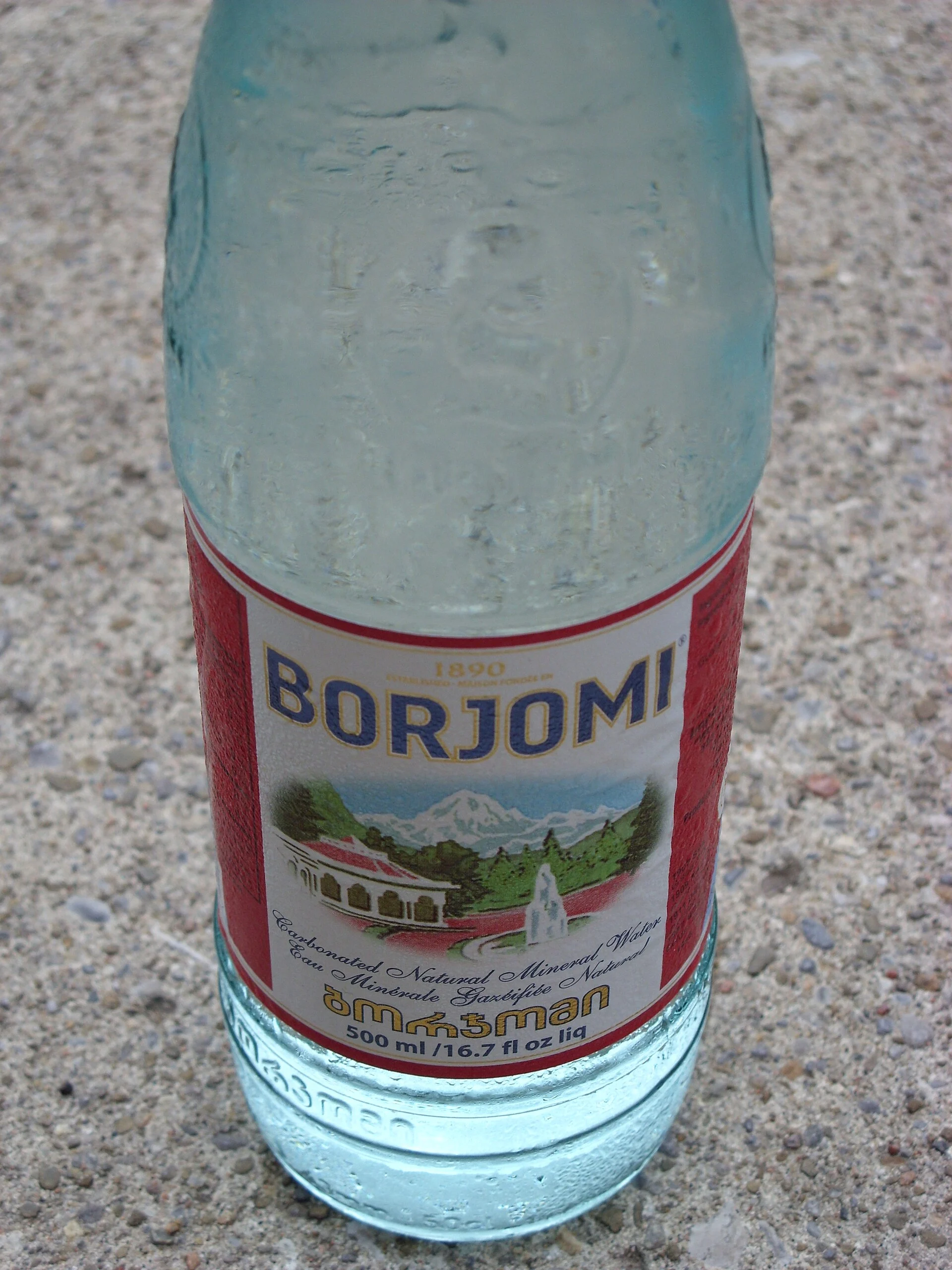
- Common bottled still and sparkling brands sold everywhere: Borjomi (naturally carbonated mineral water), Nabeghlavi, Bakuriani, and various supermarket own-brand stills.
- A 0.5 litre bottle typically costs 0.50 to 1 GEL in a shop, more in tourist-area cafés and at airports.
- Reusable bottles are fine to refill from the tap in Tbilisi, Batumi and Kutaisi city centres; in rural guesthouses, ask your host directly whether the water is from a treated or untreated source.
Our mountain itineraries such as Khevsureti and Tusheti by 4×4 and Mestia to Ushguli Trek carry drinking water as standard, but it is worth packing a personal filter bottle or purification tablets for multi-day treks away from towns.
Wi-Fi and mobile data
Free Wi-Fi is close to universal in Georgian cities: nearly every café, restaurant, hotel and guesthouse offers it, often without asking for a password beyond a simple request to staff. Tbilisi City Hall runs a free public Wi-Fi network across many central squares, parks and metro stations, branded for visitors and residents alike. Coverage and speed are reliable in Tbilisi, Batumi and Kutaisi; in mountain regions such as Svaneti, Tusheti and Khevsureti, Wi-Fi exists in most guesthouses but can be slow or intermittent, and mobile signal drops out entirely in some high passes and remote valleys. A local SIM card from Magti, Geocell or Beeline, available at both main airports and in city-centre shops with a passport, is inexpensive and gives much more reliable mobile data coverage for driving tours than relying on Wi-Fi alone.
Laundry
Self-service coin laundrettes are rare outside a few spots in central Tbilisi. The standard option is a full-service laundry (often called a “khimchistkha” for dry cleaning, or simply a laundry service), where you drop off a bag in the morning and collect it washed, dried and folded the same evening or the next day, typically priced per kilogram. Most mid-range and upscale hotels offer laundry service directly, usually at a premium versus a street-corner laundry, and some guesthouses will wash a small bag for a flat fee as a favour. On multi-day touring routes through the mountains, including our Georgia Self-Drive and 4×4 expedition itineraries, laundry options thin out considerably once you leave Tbilisi, Kutaisi or Batumi, so pack accordingly for stretches of four or more days in Svaneti, Tusheti or Khevsureti.
Pharmacies: chains and hours
Pharmacies are abundant in every Georgian town and are usually well stocked, with pharmacists who often speak some English, especially in Tbilisi and Batumi. The three nationwide chains you will see most often are PSP, Aversi and GPC (Pharmadepot), recognisable by their branded green, red or blue signage on almost every main street and near every hospital. Many branches in city centres operate on extended hours, commonly from around 9:00 to 21:00 or 22:00, and larger cities have a rotating or fixed set of 24-hour branches, usually near hospitals, main squares or airports; look for a sign reading “24 საათი” (24 hours) or ask your hotel to point you to the nearest overnight branch. Common over-the-counter medicines, including painkillers, antihistamines and rehydration salts, are easy to find without a prescription, but antibiotics and some other medicines that would require a prescription elsewhere may be sold more freely in Georgia; this does not mean self-medicating is advisable, and anyone with a specific condition, chronic prescription, or uncertainty about dosage should consult a doctor rather than a pharmacist alone. If you need ongoing medical care while travelling, our Medical Travel to Tbilisi and Dental Travel to Tbilisi services arrange interpreters and clinic appointments.
| Chain | Typical hours | Notes |
|---|---|---|
| PSP | 9:00–21:00/22:00, some 24h | Widest network nationally |
| Aversi | 9:00–21:00/22:00, some 24h | Common near hospitals |
| GPC (Pharmadepot) | 9:00–21:00/22:00, some 24h | Strong presence in Tbilisi and Batumi |
Shop hours and Sunday closures
Most supermarkets, convenience stores and corner shops in Georgia trade seven days a week, commonly from around 9:00 or 10:00 until 21:00 or later, and many small neighbourhood shops and kiosks stay open well into the night or around the clock, particularly in central Tbilisi and Batumi. Large supermarket chains typically keep the same hours on Sundays as on weekdays. Where closures do happen on Sundays, they tend to be smaller, independent businesses, some government offices and banks, and certain markets that trade on a reduced schedule; a few traditional bakeries and family-run shops in smaller towns may close for the day or for a half day. Museums and churches often have adjusted Sunday hours too, with some closing earlier or, in the case of working churches, restricting sightseeing during services. If you are planning a day around a specific shop, bank branch, or regional market, it is worth checking locally the day before, since practice varies more by town and by business than by any single national rule.
Smoking law
Georgia introduced a national indoor smoking ban in restaurants, bars, cafés, workplaces and most other enclosed public spaces in 2018, extending protections that previously applied only to limited categories of venue. In practice, this means you cannot smoke inside a restaurant or bar, including in Tbilisi’s most atmospheric old-town wine bars, though many venues offer outdoor terraces, courtyards or designated smoking balconies where smoking is permitted. Smoking is also prohibited in most other enclosed public spaces, including public transport, shopping centres and government buildings. Enforcement is generally consistent in Tbilisi and Batumi’s established hospitality venues; rules can be applied more loosely in some smaller, family-run guesthouses, so it is reasonable to ask before assuming either way. E-cigarettes and vaping fall under related tobacco-control rules and are best treated the same as smoking when in doubt.
If this guide is part of a trip you are planning, our Tbilisi to Borjomi or Bakuriani Transfer and Mtskheta on Foot — the Ancient Capital in 2 Hours cover the places it describes with a private guide and driver; a GTour travel expert adapts the route to your dates.
Practical summary
- Electricity: 220 V, 50 Hz, Type C/F round-pin plugs; UK/US/Canada travellers need an adapter, high-wattage appliances need a voltage converter.
- Tap water: generally safe in Tbilisi, Batumi and Kutaisi; be more cautious in rural and mountain villages, and ask locally or stick to bottled water if unsure.
- Wi-Fi: free and widely available in cities; patchy in remote mountain areas, so a local SIM helps for driving routes.
- Laundry: full-service drop-off laundries are standard; self-service launderettes are rare; pack for gaps on multi-day mountain trips.
- Pharmacies: PSP, Aversi and GPC are the main chains, generally open 9:00 to 21:00/22:00 with some 24-hour branches; see a doctor for anything beyond basic over-the-counter needs.
- Shops: most trade seven days a week, including Sunday; smaller independents and some offices may close or shorten hours on Sunday.
- Smoking: banned indoors in restaurants, bars and workplaces since 2018; outdoor terraces are usually fine.
- Always verify current rules and prices on the official pages linked above before you travel.
Sources
- Georgia travel practical information
- Georgian National Tourism Administration
- Ministry of Foreign Affairs consular information
- Legislative Herald of Georgia
- Law of Georgia on Tobacco Control (Matsne)
- Civil.ge – Georgia Enacts Full Smoking Ban in Public Places
- Agenda.ge – Smoking Banned in Enclosed Public Spaces in Georgia
Questions this guide does not answer? Write to info@castle.ge or WhatsApp +995 577 41 63 14 — a person in Tbilisi replies. See also our travel services and all guides.
Borjomi, Georgia's famous mineral water, widely sold in shops as a popular bottled-water brand. · Photo: Johnny Action / Wikimedia Commons, CC BY-SA 2.0
Been to Georgia? Tell us how it went — the best stories are published here.
Share your tripOne email a week: what changed for travellers in Georgia — rules, roads, flights, seasons — plus one place worth the trip. Written by the GTour desk, no advertising, unsubscribe in one click.
This story across our partner network — ქართულად: შენი დასვენება
