

By Prof. Giorgi Pkhakadze, MD, MPH, PhD · 15/09/2026
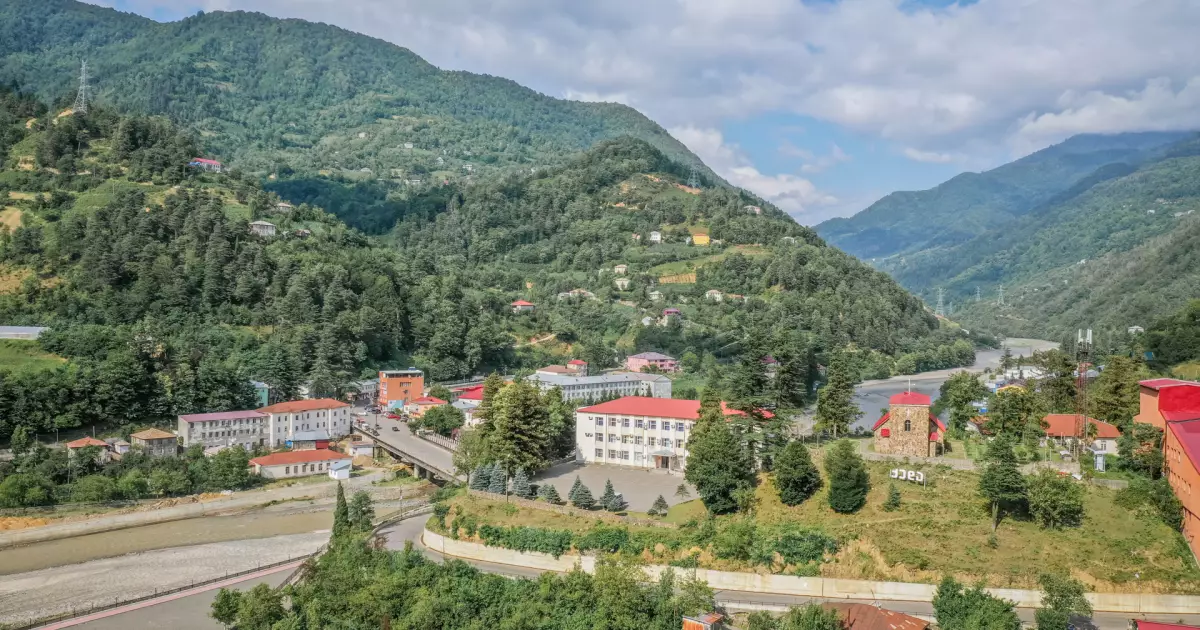
Turn inland from Batumi up the Acharistskali river and the coast disappears in ten minutes. The road climbs through a gorge of chestnut and beech, past tea terraces and villages of wooden houses with wide balconies, and every few kilometres a bridge appears: a single high arch of grey stone, humpbacked, narrow, spanning the river or a side stream with the assurance of something that has stood a very long time. Most of them have. The bridges of mountain Ajara are among the oldest working structures in Georgia, and the best of them are 11th and 12th century.
How they were built
No mortar. The masons cut local stone into blocks and laid them dry over a timber frame, or centring, in a single arch — sometimes twenty metres across and ten high — with the blocks tapered so that each one locks its neighbours in place; when the frame was removed the arch held itself up by its own weight, pressing outward into abutments cut into the rock of the gorge. The deck is a metre or two wide, paved with flat stones, with no parapet worth mentioning. A bridge built this way has no part that can rot, rust or loosen. It either stands or it falls, and these have stood through nine centuries of floods and earthquakes.
Who built them is not recorded. The bridges belong to the Georgian Golden Age, when Ajara was part of the united kingdom and this valley was a trade route from the coast over the Goderdzi pass to the interior; the masons were probably the same guilds that built the churches. The Ottomans, who ruled Ajara for three hundred years, kept them in use, and the villagers still cross them with donkeys, motorbikes and school bags.
Which to see
The Makhuntseti bridge, thirty kilometres from Batumi in Keda district, is the most visited: a 20-metre arch beside a road and a waterfall, with a café, in the village of the same name — the easy one, and lovely. Dandalo, further up in the same district, is longer and higher and stands in a quieter setting. Tskhemlara and Purtio are smaller and off the road. In Shuakhevi district, the bridges at Chirukhi and Kokoleti reward the detour. Twenty-two are listed; some are still being found in side valleys.
The valley around them
Mountain Ajara is a world of its own — Muslim villages with wooden mosques, tea and hazelnut on the terraces, honey and cheese for sale at the roadside, and a highland kitchen of corn bread, sinori and borano that has nothing to do with Batumi’s seafood. Keda has a small family winery reviving the Ajaran grape Chkhaveri; Khulo, at the top of the valley, has a cable car across the gorge and the road on to the Goderdzi pass and the ski resort. A day up the valley and back is the counterweight to a day on the beach.
See it with GTour
The bridges, the waterfall, the Keda winery and Khulo are the second day of the Batumi & the Ajara mountains tour.
ქართულად: აჭარის ქვის ხიდები — 900 წელი, დუღაბის გარეშე
