

By Prof. Giorgi Pkhakadze, MD, MPH, PhD · 15/09/2026
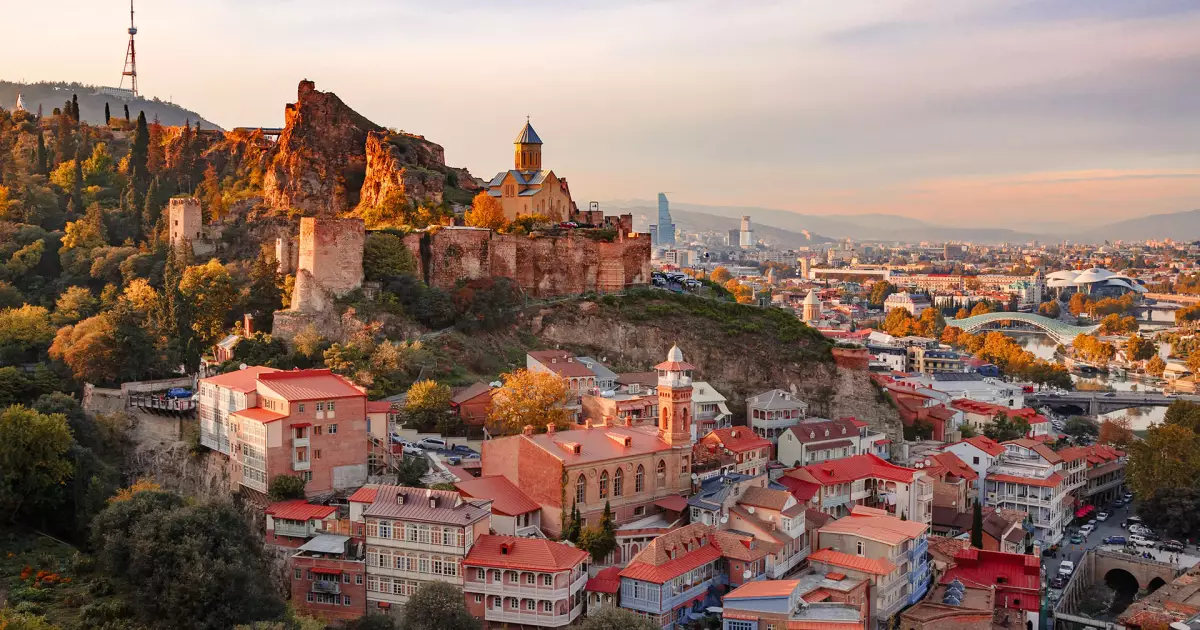
Every visitor to Tbilisi ends up on Narikala, because every visitor takes the cable car from Rike park across the river and up the cliff, and the cable car stops there. The view is the reward — the whole city in its gorge, the river, the domes of the baths, the new bridge and the old balconies — and most people take it and go. The walls they are standing on are worth a minute.
Fifteen centuries of owners
The first fortress here was Persian, built in the 4th century when Tbilisi was a Sasanian outpost and before it was Georgia’s capital; the name may come from a Persian word for citadel. King Vakhtang, who founded the city, took it. The Arabs took it in the 7th century and held Tbilisi for four hundred years as an emirate — a Muslim city with a Georgian hinterland — and expanded the fortress; the name Narikala is usually traced to the Mongols, who called it “little fortress” in the 13th century after they had made it larger. David the Builder retook Tbilisi in 1122 and made it his capital. The Persians came back, and the Turks, and the Persians again: in 1795 Agha Mohammad Khan burned the city and the fortress with it. The Russians, arriving six years later, used it as a magazine, and in 1827 the gunpowder exploded and took most of what was left.
So the walls you climb are a patchwork — 4th-century foundations, Arab and Georgian masonry, Persian brick, 19th-century collapse — and nobody has seriously rebuilt them since. That is their charm. Tbilisi’s history is one of being taken and taken back, and Narikala is that history with a handrail.
What is there
Two lines of wall along the ridge, a keep at the top with a view down the Kura gorge, and inside the lower enclosure the church of Saint Nicholas, rebuilt in the 1990s on the plan of a 12th-century original, with bright frescoes of Georgian history inside. West along the ridge stands Kartlis Deda, the Mother of Georgia — a twenty-metre aluminium woman from 1958 holding a cup of wine for friends and a sword for enemies — and beyond her the path down into the botanical garden, which was the fortress’s kitchen garden and is now the most peaceful place in the city.
How to do it
Cable car up from Rike park (two minutes, a few lari), walk the walls, then walk down through the lanes of the old town — the descent past the mosque and into Abanotubani is the best fifteen-minute walk in Tbilisi. Sunset from the keep is the hour, when the city lights come on below you. The walls have no rails in places and the stone is worn; good shoes, and hold on to children.
See it with GTour
Narikala, the cable car and the walk down are the first morning of the Tbilisi & Mtskheta first day, and the opening of Georgia in 7 days.
ქართულად: ნარიყალა — ციხე, რომელიც სპარსული, არაბული, მონღოლური და ქართული იყო
