

By Mariam Lomidze, Culture & Events Reporter · 27/10/2026
Yes, in almost all cases Djiboutian passport holders need a visa to enter Georgia, and the practical route for most travellers is Georgia’s e-visa system rather than a sticker visa applied for in person, because Djibouti has no Georgian embassy and Georgia has no diplomatic representation in Djibouti. Processing is normally measured in days rather than weeks, but rules on nationality lists change without much notice, so the first and most important step for anyone reading this guide is to check the current requirement for Djibouti on the official portals before booking flights, not to rely on what a blog (including this one) said last year.
Beyond the visa question, this is an honest guide: cultural and historical ties between Georgia and Djibouti are genuinely thin, there is no significant diaspora in either direction, and trade between the two countries is negligible. What makes Georgia worth the long journey from the Horn of Africa is practical and experiential — mountains, snow, wine country, and a cuisine built around vegetables, bread and grilled meat that a Djiboutian traveller will find easy to navigate with a little guidance. Because there is no direct flight, no large expatriate community to lean on, and limited French or Arabic spoken outside Tbilisi‘s main hotels, a private guide who can handle logistics, translation and halal-aware restaurant choices earns its cost quickly for this nationality in particular.
Visa and entry rules for Djiboutian citizens
Djibouti does not appear on Georgia’s short list of nationalities granted visa-free entry, so Djiboutian citizens should plan to apply for an electronic visa through the official portal, evisa.gov.ge, before travel. The online application typically asks for a passport scan, a passport photo, proof of accommodation, return flight details and evidence of travel or medical insurance covering the stay; processing is usually quoted in a small number of working days once the application is complete, though peak periods can take longer. Because visa categories, fees and processing times are revised periodically, confirm the current rule for Djibouti specifically on the evisa portal and on the Ministry of Foreign Affairs’ consular page, geoconsul.gov.ge, rather than assuming last year’s terms still apply. If the e-visa system shows Djibouti as ineligible for online application at the time you check, the consular page will list which Georgian embassy currently accepts paper applications from Djiboutian residents.
Getting to Georgia: flights and connecting hubs
There is no direct flight between Djibouti-Ambouli International Airport and any Georgian airport, so every Djiboutian traveller connects through a third hub. The most realistic routings use the Gulf and Istanbul networks that already serve Djibouti, given existing regional air links from East Africa into those hubs.
| Likely hub | Why it works | Arrival airport in Georgia |
|---|---|---|
| Istanbul | Turkey’s main carrier serves both East Africa and the Caucasus with frequent onward connections | Tbilisi or Kutaisi |
| Dubai | Gulf hub with strong East Africa links and daily onward flights to Tbilisi | Tbilisi |
| Doha | Alternative Gulf hub with onward Caucasus connections | Tbilisi |
Expect at least one stop and realistically a journey of 10 to 16 hours in the air depending on layover length. Always verify current routes, schedules and any seasonal changes directly with the airline and with the arrivals information on tbilisiairport.com, kutaisiairport.com or batumiairport.com before finalising dates, since low-cost carriers in particular adjust Caucasus routes between seasons. Once you land, a pre-booked airport transfer removes the stress of arriving after a long multi-leg flight; GTour’s fixed-price transfers start at €25 for a sedan between Tbilisi airport and any address in the city, with details on the services page.

Driving, money, cards and cash
Georgia drives on the right. Visitors may drive on a valid national licence for a limited period, but because Djibouti’s licence format is less commonly recognised by car rental firms and traffic police than European or Gulf-issued documents, carrying an International Driving Permit alongside your Djiboutian licence is strongly advised. Confirm the current recognition rule before you travel via the consular page at geoconsul.gov.ge, since it can change. Most visitors, including first-time travellers from the Horn of Africa, find it simpler to book a car with an English-speaking driver rather than self-drive on unfamiliar mountain roads; GTour’s day rates start at €90 for a sedan around Tbilisi and rise to €165 a day for a 4×4 on multi-day routes, which is required for Tusheti, Ushguli and winter mountain passes.
Georgia’s currency is the lari (GEL). At the National Bank of Georgia’s reference rate for 27 October 2026, one euro buys roughly 2.91 lari and one US dollar roughly 2.60 lari; rates move daily, so check the current figure before changing money. Djibouti’s franc is pegged to the US dollar, so travellers will find it easiest to carry US dollars or euros in cash as a backup and to exchange small amounts on arrival, rather than hunting for Djiboutian franc exchange, which is essentially unavailable in Georgia. Visa and Mastercard are accepted in city hotels, restaurants and larger shops; carry some cash for rural guesthouses, market stalls and small family-run restaurants in Svaneti, Tusheti and Racha, where card machines are unreliable or absent.
Staying connected: SIM and eSIM
Georgia has three main mobile operators, Magti, Geocell and Beeline, all with counters at Tbilisi, Kutaisi and Batumi airports selling tourist SIM cards with data bundles, usually activated within minutes on presentation of a passport. eSIM options from international providers also work well if your phone supports them and you want connectivity the moment you land, avoiding the airport queue after a long multi-stop flight. Coverage is reliable in cities and along main roads; it thins out in remote valleys such as upper Tusheti, which is worth knowing if you plan a multi-day trip there.
Language, food and dietary notes
Georgian is the official language and the Georgian script is unrelated to Arabic, French or Somali, so street signs will look unfamiliar at first. Russian is still understood by much of the older generation, and English is spoken in Tbilisi’s hotels, restaurants and by licensed tour guides, though less so in villages. Djiboutian travellers who speak French may find it occasionally useful with older guides or at some European-run hotels, but it is not a reliable fallback; a guide who speaks both English and your preferred language removes most friction.
Georgian cuisine is built on bread, cheese, vegetables, walnuts and grilled meat, with pork appearing regularly in dishes such as some khinkali fillings, so travellers keeping halal should ask specifically for beef, lamb or chicken versions, which are widely available, and should say “halal” clearly when ordering meat dishes in Tbilisi, where a visible Muslim community (concentrated historically around the Jumah Mosque area) and Adjara‘s larger Muslim population mean staff are generally used to the request. Vegetarian and naturally halal-friendly dishes are abundant and easy to default to:
- Lobio — bean stew, usually meat-free
- Pkhali — walnut and vegetable pâté, vegetarian
- Badrijani nigvzit — eggplant rolls with walnut paste, vegetarian
- Khachapuri — cheese-filled bread, vegetarian
- Mtsvadi — grilled beef, pork or lamb skewers, ask for beef or lamb
- Churchkhela — walnut and grape-juice sweet, vegetarian and portable
Wine is central to Georgian hospitality and the ritual of toasting is taken seriously at a traditional supra feast; declining alcohol for religious reasons is entirely normal and respected, and hosts will substitute grape juice or water without comment if you simply say so in advance.
Ties between Georgia and Djibouti, and the embassy question
There is little documented history connecting Georgia and Djibouti: no shared colonial past, no significant trade volume, and no established diaspora community in either country. Readers interested in official trade figures can check Georgia’s external trade statistics directly on geostat.ge, though Djibouti is unlikely to feature as a notable partner. This guide does not pretend otherwise; the honest pitch for visiting is Georgia’s landscapes, wine regions and mountain culture on their own terms, not a historical connection.
Georgia does not maintain an embassy in Djibouti, and Djibouti does not maintain one in Georgia. Consular and visa matters for Djiboutian citizens are handled through the nearest accredited Georgian diplomatic mission in the region; which specific embassy currently covers Djibouti can change, so confirm this directly on the Ministry of Foreign Affairs’ list of missions at mfa.gov.ge before assuming where to apply in person, if the e-visa route is not available to you.
When to come: seasons, holidays, health and insurance
Djibouti’s hottest months, roughly June to September, coincide with Georgia’s warm but far more temperate summer, making it a natural season for travellers seeking relief from extreme heat, with Svaneti, Kazbegi and Tusheti offering genuinely cool mountain air. Many first-time visitors from hot climates are drawn to Georgia’s winter precisely because snow is a novelty; Gudauri‘s ski season runs roughly December to March, and GTour’s Georgia in Winter — Gudauri Skiing, Tbilisi & Kakheti (6 Days) package is built around exactly that experience.
Travel and medical insurance covering the full length of stay is generally required as part of the e-visa application and is sound practice regardless of visa category; Georgia’s public healthcare system is not typically free for foreign visitors, and private clinics in Tbilisi expect payment or insurance documentation upfront. For general public health guidance before travel, Djiboutian visitors can check Georgia’s national health authority resources via ncgh.ge, and should otherwise consult their own doctor about routine travel vaccinations and any personal health considerations before departure, since this guide cannot substitute for medical advice.
Safety and etiquette notes
Georgia is a low-crime destination for tourists and petty theft is uncommon, but normal precautions around bags and valuables in crowded markets still apply. Dress modestly when entering Orthodox churches and monasteries — shoulders and knees covered, headscarves available at the door for women — regardless of your own faith, as this is standard practice for all visitors. Photographing people, particularly in rural villages, should be done with permission first, a courtesy that applies everywhere but is especially appreciated in small Svan and Tush communities unused to visitors from the Horn of Africa.
What a G Tour private guide adds
Given the absence of a direct flight, limited French or Arabic on the ground, and the need to be specific about halal meat when ordering, a private guide removes the guesswork that otherwise falls on a first-time visitor managing a long multi-stop journey. GTour’s licensed guides run from €70 for a half-day Old Tbilisi walk to €120 a day on multi-day touring, and can be paired with a car and driver for a fully private itinerary from day one at the airport through to departure. For travellers wanting the mountains and snow that make the detour worthwhile, the Kazbegi — 2-Day Mountain Journey and Mestia & Ushguli — 3 Days in Svaneti tours are natural starting points; for a gentler first day after a long flight, Tbilisi & Mtskheta — The Essential First Day eases travellers in before anything more demanding.
If this guide is part of a trip you are planning, our Georgia in 10 Days — Tbilisi to Svaneti to the Sea and Monasteries of Georgia — Mtskheta, the Thirteen Fathers and Kakheti in 3 Days cover the places it describes with a private guide and driver; a GTour travel expert adapts the route to your dates.
Practical summary
- Check visa status for Djibouti on evisa.gov.ge and geoconsul.gov.ge before booking flights; most Djiboutian travellers will need an e-visa or embassy-issued visa
- Expect one stop via Istanbul, Dubai or Doha; no direct flights exist to Tbilisi, Kutaisi or Batumi
- Carry an International Driving Permit alongside your national licence if planning to drive; otherwise book a car with driver
- Bring US dollars or euros in cash as backup; cards work in cities, cash is needed in rural guesthouses
- Buy a tourist SIM or activate an eSIM at the airport for immediate connectivity
- Ask explicitly for halal or beef/lamb versions of meat dishes; vegetarian Georgian food is abundant and simple to default to
- Confirm which Georgian embassy currently handles consular matters for Djibouti via mfa.gov.ge
- Arrange travel and medical insurance for the full stay before applying for your visa
- Consider a private guide and driver from arrival, given the long journey and limited French or Arabic spoken outside Tbilisi
Sources
- Georgia e-Visa portal
- Ministry of Foreign Affairs consular services
- Ministry of Foreign Affairs missions abroad
- Georgia external trade statistics
- Georgia e-Visa Portal
- Geostat – International Visitor Arrivals Statistics
Questions this guide does not answer? Write to info@castle.ge or WhatsApp +995 577 41 63 14 — a person in Tbilisi replies. See also our travel services and all guides.
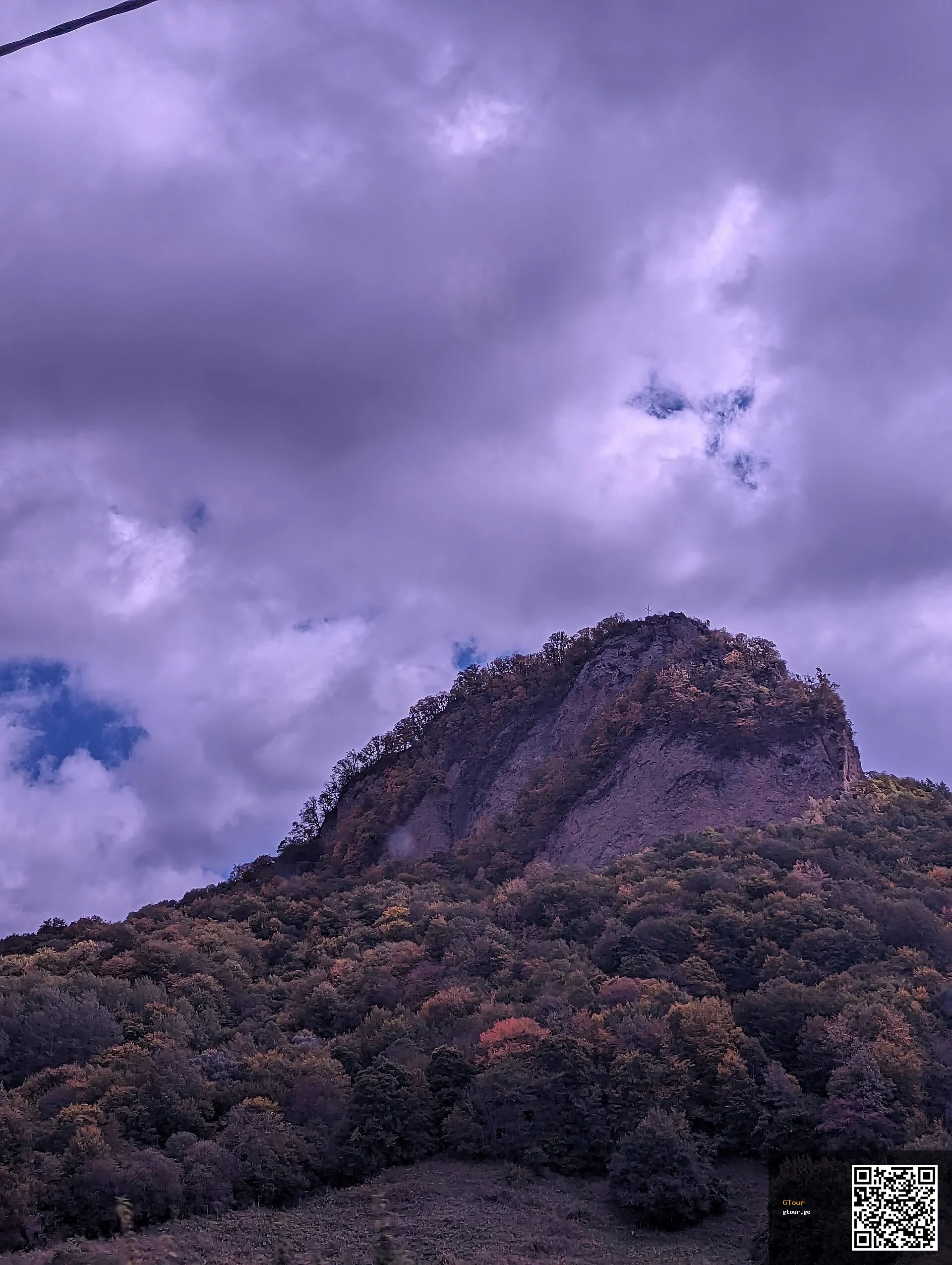
Mountain landscape along the Gombori Pass road in Kakheti, eastern Georgia. · Photo: FingerWiki / Wikimedia Commons, CC BY-SA 4.0
Been to Georgia? Tell us how it went — the best stories are published here.
Share your tripOne email a week: what changed for travellers in Georgia — rules, roads, flights, seasons — plus one place worth the trip. Written by the GTour desk, no advertising, unsubscribe in one click.
This story across our partner network — ქართულად: შენი დასვენება