

By Mariam Lomidze, Culture & Events Reporter · 27/10/2026
Georgia runs on a single time zone, Georgia Standard Time, which is UTC+4 all year. The country stopped observing daylight saving time in 2017, so clocks do not move in spring or autumn, and travellers from the UK, continental Europe, the US and Australia all need to recalculate the gap manually each season rather than assume a fixed difference.
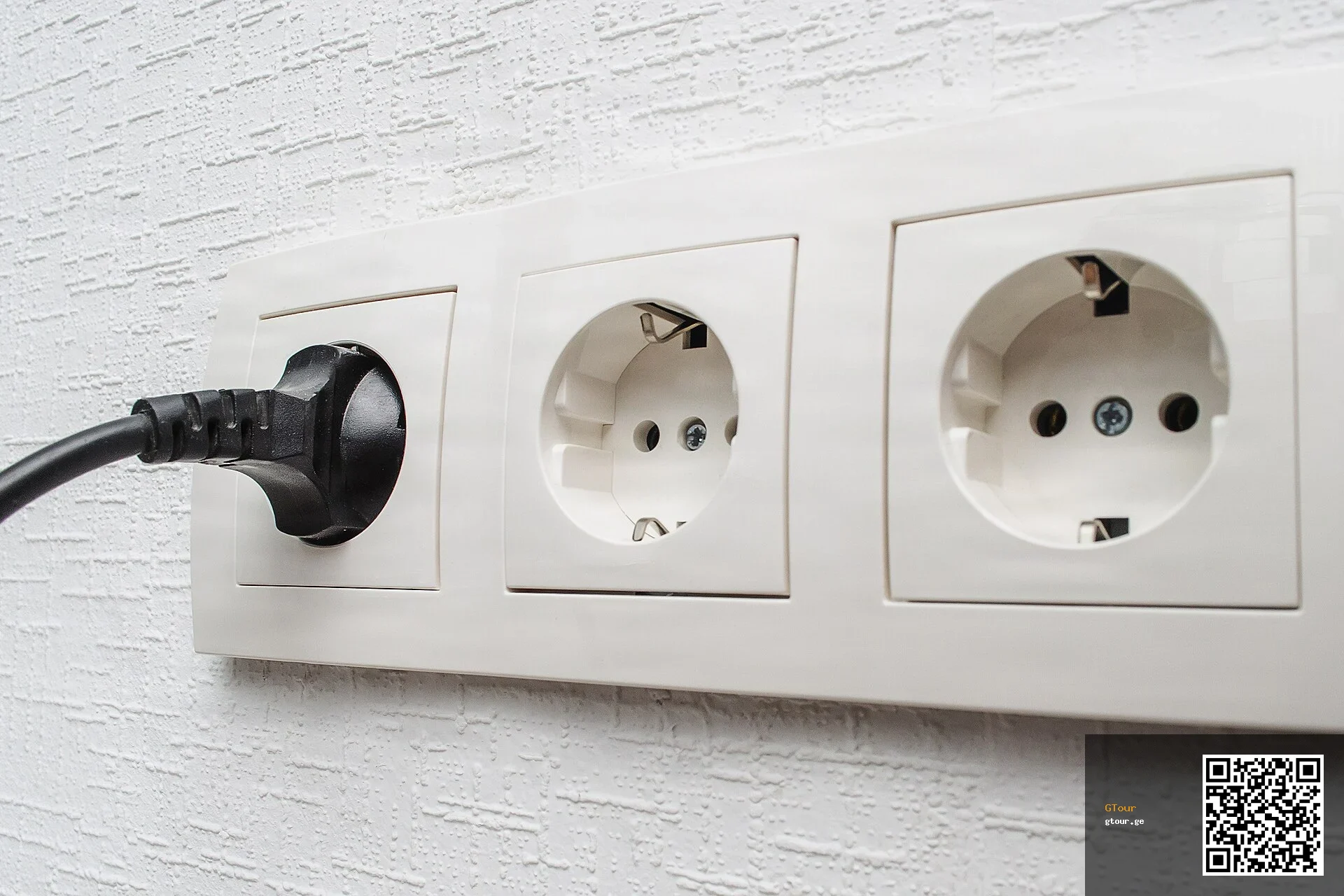
For power, Georgia uses the European-style round-pin sockets, types C and F, at 220 volts and 50 Hz. This matches most of continental Europe but not the UK (type G), North America (types A/B, 120 V) or Australia (type I, 230 V but different pins), so nearly every visitor from those countries needs a simple plug adapter, and those from the US or Canada should also check their device’s voltage rating before plugging in.
Time zone: UTC+4 with no seasonal change
Georgia Standard Time is fixed at UTC+4. Parliament abolished the twice-yearly clock change in 2017, so unlike the UK, the EU or the US, Georgia does not “spring forward” or “fall back.” In practice this means the time difference with London, New York or Sydney shifts by an hour whenever those places change their own clocks, even though Tbilisi stays put. Travellers booking flights or calling home should check the current difference close to their travel dates rather than relying on a number they used last year.
Plug types C and F
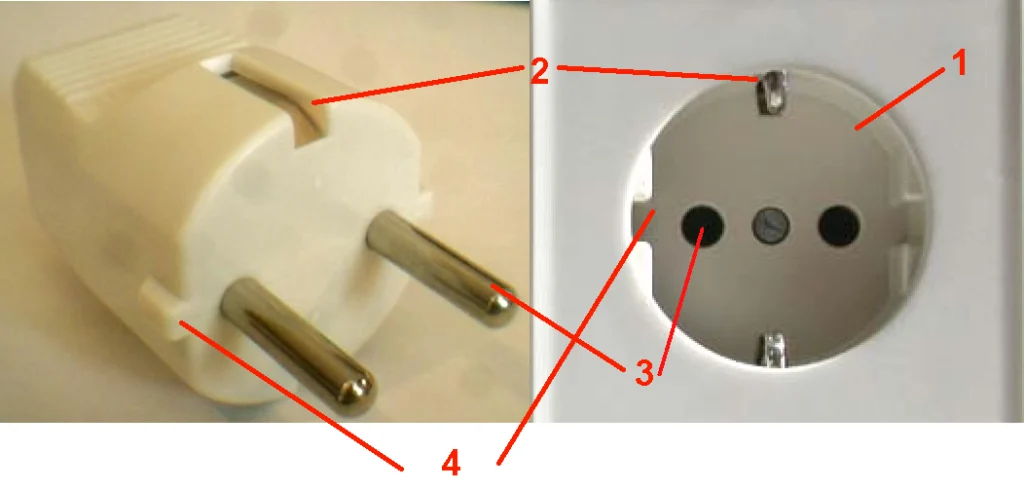
Sockets across Georgia, in hotels, guesthouses, cafés and rental cars, take the two-round-pin Europlug (type C) and the slightly larger Schuko-style plug (type F). Both are common in hotels built or renovated in the last decade, and most modern electronics with a two-pin European plug will fit directly without an adapter.
- Type C — two thin round pins, no earth, fits most phone and laptop chargers
- Type F — two round pins with side earth clips, used for kettles, hairdryers and some wall sockets
- Older guesthouses in rural regions, including Svaneti, Tusheti and Racha, may still have a mix of socket depths, so a compact universal adapter is the safer choice outside Tbilisi and Batumi
Voltage: 220 V, 50 Hz
Mains supply is 220 volts at 50 Hz nationwide. This is standard for UK (230 V), EU (230 V) and Australian (230 V) appliances, which are built to a 220–240 V range and will run safely on a plug adapter alone. US and Canadian appliances rated for 120 V are the exception: a plug adapter changes the pin shape but not the voltage, so a 120 V-only hairdryer, kettle or straightener can be damaged or become a fire risk if plugged in directly. Dual-voltage devices (most laptop, phone and camera chargers, usually marked “100–240V” on the block) are unaffected and only need the pin adapter.
What travellers from the UK, US and Australia actually need
| From | Home plug | Home voltage | Needs in Georgia |
|---|---|---|---|
| United Kingdom | Type G | 230 V | Plug adapter only (G to C/F) |
| United States / Canada | Type A/B | 120 V | Plug adapter (A/B to C/F); voltage converter for non-dual-voltage appliances |
| Australia / New Zealand | Type I | 230 V | Plug adapter only (I to C/F) |
| European Union | Type C/F (most countries) | 230 V | Usually no adapter needed |
A single universal travel adapter with a USB port covers most itineraries, including the day trips and multi-day routes on our tours and the hotel stays we help arrange through our hotel booking service. See our nationality guides for travellers from for country-specific packing notes.

Practical notes for your trip
- Carry one adapter per person if you are travelling as a group, since hotel rooms rarely have more than two or three sockets
- Pack a short surge-protected power strip if you are travelling with several devices and staying in older guesthouses
- Rental cars and private transfers, including the airport transfers we run, do not reliably have USB or 12V sockets in older vehicles, so keep devices charged before a long drive
- Mobile plans and roaming are a separate matter from power and time zone; check with your home carrier before arrival
Where this comes from
The time zone and the end of daylight saving in Georgia are matters of public record confirmed by the country’s government notices and reported at the time by international broadcasters; plug type and voltage are physical standards that do not change year to year and are consistent with the European C/F, 220 V, 50 Hz system used across the wider region. Rules and government guidance can be updated, so check the current position on Georgia’s foreign ministry travel pages and the national tourism administration before you fly. Figures and page checked 27 October 2026; see our data page for current service prices if you are booking transfers or a car with driver.
If this guide is part of a trip you are planning, our Georgia Classic in 7 Days — Tbilisi, Kazbegi, Kakheti and Mtskheta and Georgia in 10 Days — Tbilisi to Svaneti to the Sea cover the places it describes with a private guide and driver; a GTour travel expert adapts the route to your dates.
Sources
- BBC country profile, Georgia
- Lonely Planet, Georgia travel guide
- Georgian National Tourism Administration
- Georgia.travel, plan your trip
- Ministry of Foreign Affairs of Georgia, travel information
- National Statistics Office of Georgia
- Agenda.ge, Georgia news in English
Questions this guide does not answer? Write to info@castle.ge or WhatsApp +995 577 41 63 14 — a person in Tbilisi replies. See also our travel services and all guides.
A European Type F/Schuko-style socket with a plug inserted, similar to Georgia's Type C/F outlets. · Photo: U.S. Army USAGA by [null Courtesy] / Wikimedia Commons, Public domain
Been to Georgia? Tell us how it went — the best stories are published here.
Share your tripOne email a week: what changed for travellers in Georgia — rules, roads, flights, seasons — plus one place worth the trip. Written by the GTour desk, no advertising, unsubscribe in one click.
This story across our partner network — ქართულად: შენი დასვენება