

By Prof. Giorgi Pkhakadze, MD, MPH, PhD · 15/09/2026
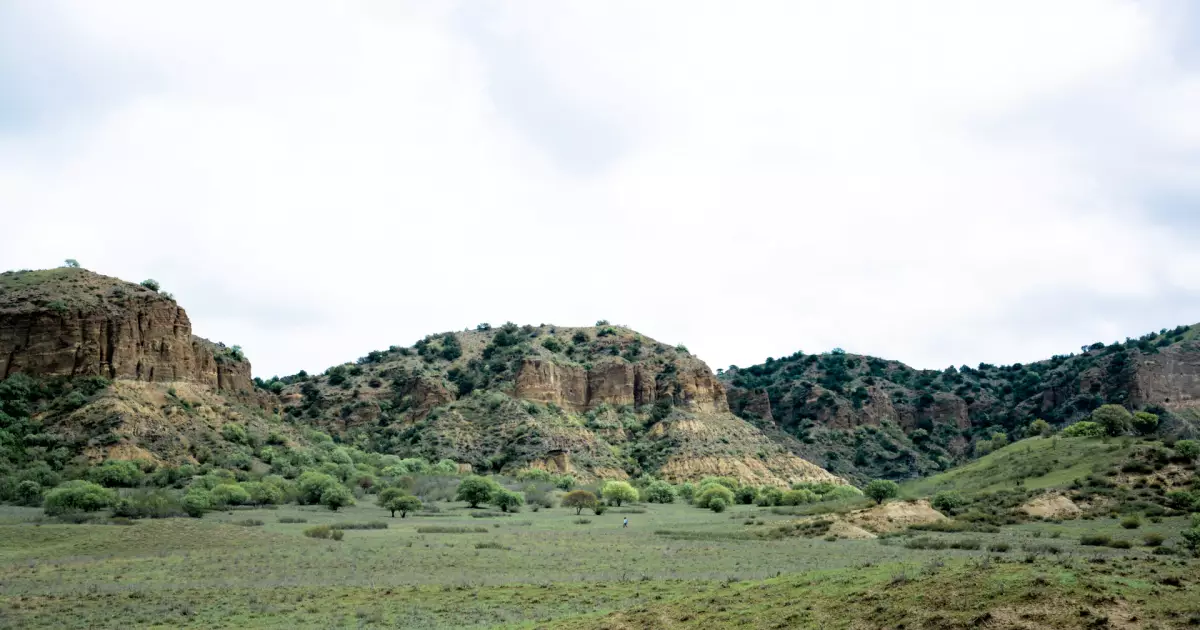
The road south-east from Tbilisi runs out of trees within an hour. By the time it reaches the Gareji ridge the land is semi-desert — grass gone gold by May, red and ochre hills folded like cloth, eagles, tortoises, the occasional shepherd — and it is hard to believe this is the same country as Svaneti. It is the setting for the most unexpected monastery in Georgia.
The founder
David of Gareji was one of the thirteen Syrian fathers, monks who arrived from the Middle East in the 6th century and established monasticism in Georgia. He had first settled on a hill above Tbilisi — Mtatsminda, the “holy mountain”, still named for him — and then withdrew with a disciple to this wilderness, living in a cave and drinking, the legend says, rain collected in a hollow of the rock. Others followed. Over the next thousand years the ridge was honeycombed with cells, chapels and refectories, and Gareji became the spiritual and artistic heart of eastern Georgia, with a school of fresco painting whose work is among the finest in the Caucasus.
Lavra
The main monastery, Lavra, is built into the south face of the ridge in tiers: a courtyard, a church cut into the rock with David’s tomb inside, cells stacked up the cliff, terraces with the desert stretching away below. Half a dozen monks live here, and it is a working monastery — quiet is asked for, and given. The rock around the tomb is worn smooth by pilgrims’ hands. The church is small and dark and the tomb is a slab under a low arch; the power of the place is in its improbability.
The ridge and Udabno
A path climbs from Lavra to the crest of the ridge — twenty minutes, steep, with the wind — and on the far side, cut into the north face, are the caves of Udabno, the “desert” monastery, with frescoes from the 10th to 13th centuries: a Last Supper, Saint David with the deer that the legend says fed him, a procession of Georgian kings. From the crest you look south into Azerbaijan, whose border runs along the ridge itself. Access to the Udabno caves depends on the border guards on the day; when it is open, it is the best walk in eastern Georgia, and when it is not, the crest alone is worth the climb.
Practical
Spring, from April to early June, is the season: green hills, flowers, cool air, and the rainbow-striped clay at its most vivid. Autumn is good; July and August are brutal, and winter is windy and grand. Water, hat, proper shoes. Modest dress at Lavra. The nearest village is far; bring lunch or eat at a winery on the way back — Sagarejo, on the road, has several.
See it with GTour
Gareji is a day of its own — the David Gareji day trip, with a winery lunch at Sagarejo on the return — and can be added to the Grand Wine & Heritage tour as a fourth day.
ქართულად: დავითგარეჯა — ბერები, ფრესკები და საზღვარი უდაბნოში
