

By Mariam Lomidze, Culture & Events Reporter · 30/10/2026
A Georgian supra is a structured feast in which food, wine and speech move together under the direction of a toastmaster, the tamada. It is not a meal you eat at your own pace: it is a sequence of toasts, often a dozen or more, each one proposed, elaborated, and drunk together, usually standing for the most serious ones. Expect several hours at the table, polyphonic singing between courses, and a clear if unwritten order to who speaks when.
For a visitor, the short answer is this: follow the tamada, drink only when a toast is made, never toast with beer, and it is entirely acceptable to drink less or substitute juice or water as long as you still raise your glass and show respect for the words being said. The rest of this guide sets out how the evening actually unfolds, the usual order of toasts, the horn, the singing, and how to decline without causing offence.
What a supra is, and when Georgians hold one
Supra simply means tablecloth, and by extension, the feast laid on it. There are two broad kinds. A keipi is a joyful, often spontaneous gathering among friends. A formal supra marks a specific event: a birthday, a wedding, a baptism, a university graduation, the grape harvest (rtveli) in autumn, or a memorial. A funeral or memorial supra follows its own, more solemn rules, with different toasts and without the same cheerfulness, so this guide describes the celebratory version, which is what most visitors will see.
The table itself is packed before anyone sits: khachapuri, khinkali, cold vegetable dishes, cheeses, pkhali, cured meats and bread arrive together, with hot dishes added through the evening. Wine, usually from qvevri, Georgia’s ancient clay-vessel method recognised by UNESCO as an element of intangible cultural heritage, is poured early and often, but nobody drinks until the first toast is made.
The tamada: who leads, and why it matters
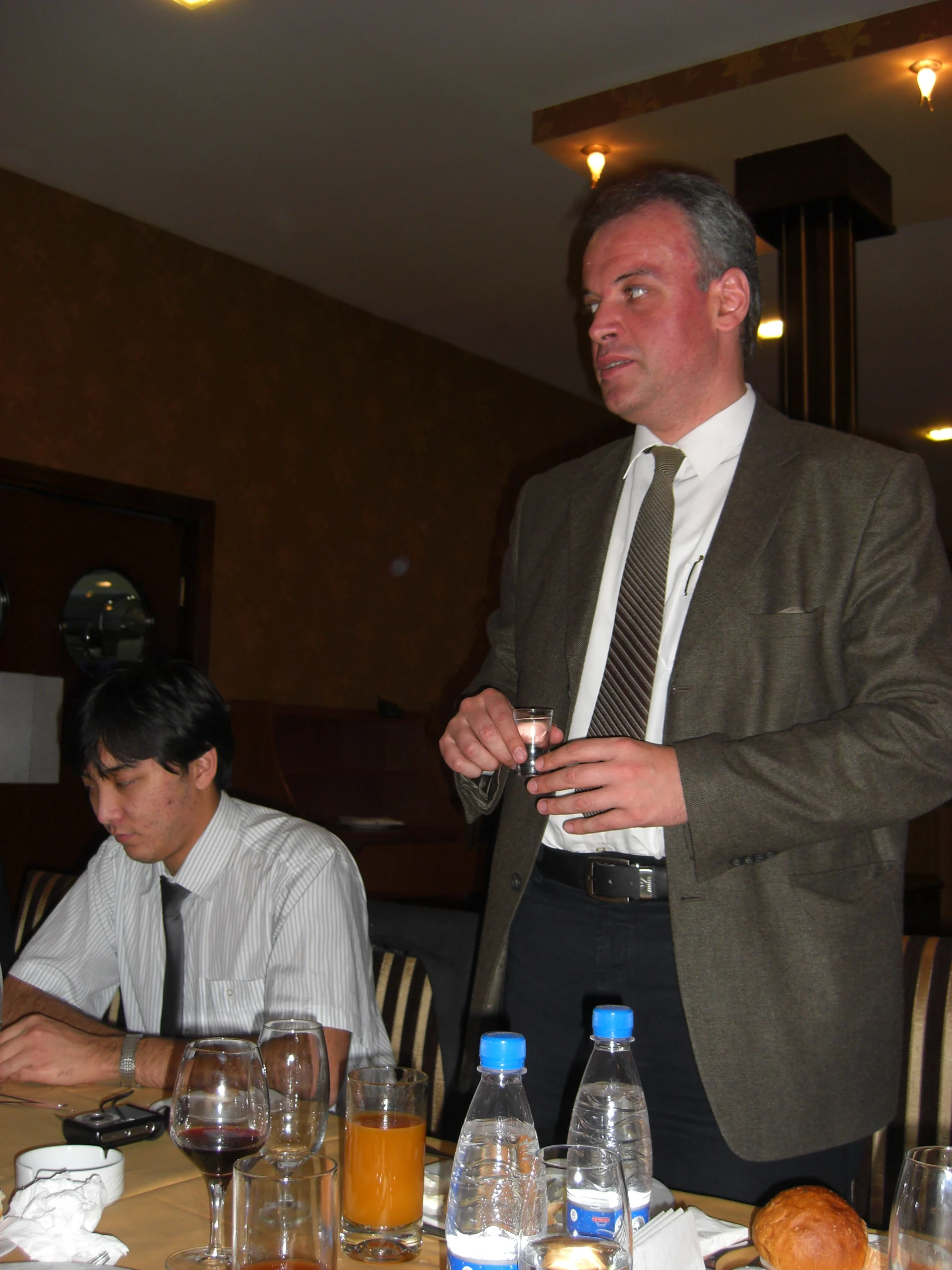
The tamada is chosen by the host, usually a respected man or woman known for eloquence, wit and the ability to drink steadily without losing control of the table. The tamada’s job is to propose each toast, decide its order, invite guests to speak after him (a practice called alaverdi, passing the toast on), and keep the evening moving so that eating, drinking and conversation stay in balance. A good tamada reads the room: toasts to grieving guests are handled gently, toasts among old friends run longer and looser.
Guests do not propose their own toasts out of turn. If you are asked to speak, even briefly, it is a mark of respect, and a short, sincere sentence is better than a long one you are unsure of in English or Georgian.
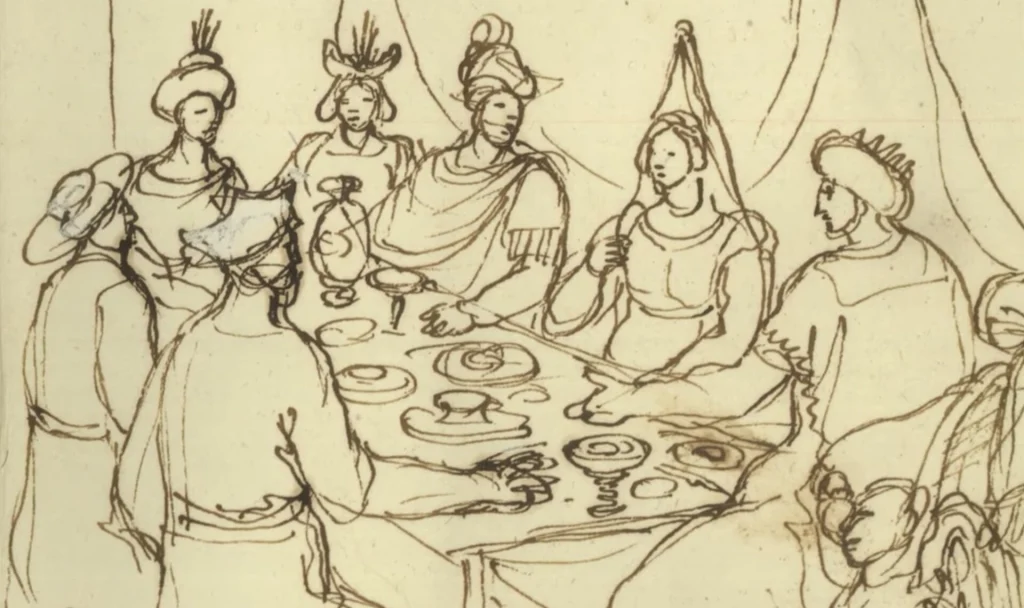
This work is in t / Wikimedia Commons, Public domain
The order of toasts
The exact sequence varies by region, family and occasion, and no law fixes it, but most supras in eastern Georgia follow a recognisable pattern close to this:
| Order | Toast | Notes |
|---|---|---|
| 1 | God and peace | Opens the evening, often mentions peace for Georgia and the world |
| 2 | The occasion and the guests | Welcomes visitors and states why everyone has gathered |
| 3 | The dead | Drunk in memory of relatives and friends who have died, usually in a quieter tone |
| 4 | Parents | Living and departed, thanking them for life and upbringing |
| 5 | Georgia and the homeland | Common at any gathering with foreign guests present |
| 6 | Children and the future | Often followed by toasts to specific children present |
| 7 | Women | A toast of praise, usually drunk standing; men traditionally rise for it |
| 8 | Friendship and love | Personal, often the longest and most varied toast of the night |
| 9 | The tamada’s own choice | Travel, work, health, reunion, whatever fits the company |
| 10 | Closing toasts | Safe roads, good health, until we meet again |
Between formal toasts, the tamada may invite guests to speak through alaverdi, and conversation, food and song continue freely. Do not treat the list above as a script to memorise; treat it as a shape to recognise.
The horn, the kantsi, and how it is used
At some tables, usually for a toast of particular weight, such as to the host, to Georgia, or to an honoured guest, the tamada or a chosen guest drinks from a kantsi, a drinking horn traditionally made from buffalo, ram or ox horn. Because a horn cannot stand upright on a table, it must be filled and emptied in one go, which is why it is reserved for serious, often larger toasts rather than used casually through the evening. If you are handed one, it is a gesture of trust and welcome; you may ask for it to be filled less full, which hosts generally accept without comment.
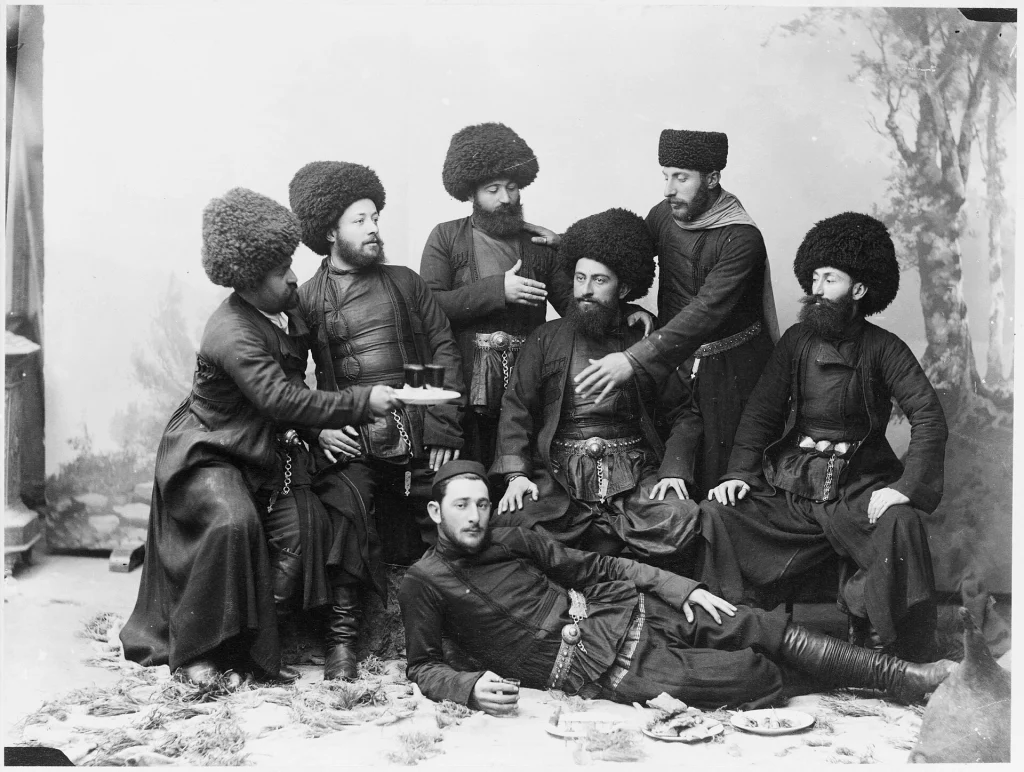
Polyphonic song at the table
Many supras include a cappella singing in three-part harmony, a tradition UNESCO has inscribed on its Representative List of the Intangible Cultural Heritage of Humanity as Georgian polyphonic singing. Songs tend to follow particular toasts, especially to the dead, to friendship, or at the close of the evening, and guests who know the songs are expected to join rather than perform. If you do not know the words, listening attentively is the correct response; clapping along is usually fine, but check the room, as some polyphonic pieces are sung without interruption until they finish.
On beer and what you should never toast with
Wine is the traditional drink of the supra, with chacha, Georgian grape brandy, sometimes used for shorter, stronger toasts. Beer is considered inappropriate for toasting: it has no place in the ritual, and clinking beer glasses during a formal toast is seen as a mistake at best and a minor insult at worst. If wine is not to your taste or you are avoiding alcohol, ask quietly for juice, lemonade or water to be poured into your glass; you still raise it with everyone else, which is what matters, rather than what is in it.
One further point of etiquette: glasses are not usually clinked for the toast to the dead, which is drunk standing and in silence or near-silence before the room returns to its earlier mood.
How to decline gracefully
Declining alcohol entirely is accepted, provided you do it with warmth rather than refusal. Useful approaches:
- Say plainly that you do not drink, for health, religious, pregnancy or personal reasons, early in the evening rather than after several toasts have passed.
- Ask for your glass to be filled with water, juice or non-alcoholic wine so you can still participate in raising it.
- If you are driving afterwards, say so clearly. Hosts in Georgia generally respect a driver’s decision not to drink, and you should check current drink-driving rules before you get behind the wheel rather than guess.
- If you take medication that interacts with alcohol, have a medical condition, or are unsure whether drinking is safe for you, decline and, if in doubt about any interaction, ask your own doctor rather than rely on advice at the table.
- Touching the glass to your lips without finishing it is a soft middle option many foreign guests use and is rarely challenged.
What does not work well is leaving the table mid-toast or arguing with the tamada about the order of events; a quiet word to your host beforehand solves most situations.
How to be invited, and what to bring
Visitors are usually invited to a supra through a personal connection, a village homestay, a wine-cellar visit that turns into a meal, or a booked cultural evening. If you want a reliable, well-run introduction without needing a personal invitation, GTOUR runs a dedicated Supra Evening with a tamada and live polyphonic song, and longer programmes such as Kakheti Table build several days of village meals, cellars and feasts into one trip; Culinary Georgia in 6 Days and the Rtveli harvest tours also centre on supras during the autumn grape harvest.
If you are invited into a private home, small gifts are appreciated, though never expected as payment for hospitality:
- A bottle of good wine or chacha, or local sweets such as churchkhela.
- Flowers, if you bring them, in an odd number of stems; an even number is reserved for funerals and mourning in Georgian custom.
- A small gift for children in the household if you know there are any.
- Effort to try the local dishes and to stay through at least the main toasts before leaving, which matters more to a host than the gift itself.
If this guide is part of a trip you are planning, our Georgian Wine Grand Tour — 8 Days, Five Regions and Georgia Off the Beaten Track — 9 Days in Racha, Samegrelo and Guria cover the places it describes with a private guide and driver; a GTour travel expert adapts the route to your dates.
Practical summary
- Do not drink until a toast is made; follow the tamada’s lead throughout the evening.
- Expect toasts roughly in this order: God and peace, the occasion, the dead, parents, homeland, children, women, friendship, then free toasts.
- A drinking horn (kantsi) is for serious toasts only and must be emptied once raised; you can ask for it half-filled.
- Never toast with beer; ask for water or juice if you are avoiding wine.
- Polyphonic songs often follow key toasts; join if you know them, otherwise listen rather than talk over them.
- Decline alcohol early, clearly and politely, especially if you are driving; verify current drink-driving rules through official sources before you drive.
- Bring wine, sweets or an odd number of flowers if invited to a home; even numbers of flowers are for funerals only.
- To experience a supra without a personal invitation, book a guided evening such as GTOUR’s Supra Evening with a Tamada and Polyphonic Song, or a multi-day trip like Kakheti Table.
Sources
- Georgian polyphonic singing, Intangible Cultural Heritage
- Ancient Georgian traditional Qvevri wine-making method
- Tamada, a Form of Expression of Care and Respect for Guests in Georgia (UNESCO ICH)
- Why Georgians Toast Like No One Else
- Georgia: The Country Where Wine Was Born
Questions this guide does not answer? Write to info@castle.ge or WhatsApp +995 577 41 63 14 — a person in Tbilisi replies. See also our travel services and all guides.
A modern-day tamada stands to deliver a toast, horn-glass in hand, at a Georgian supra. · Photo: Vaso51 / Wikimedia Commons, CC BY-SA 4.0
Been to Georgia? Tell us how it went — the best stories are published here.
Share your tripOne email a week: what changed for travellers in Georgia — rules, roads, flights, seasons — plus one place worth the trip. Written by the GTour desk, no advertising, unsubscribe in one click.
This story across our partner network — ქართულად: შენი დასვენება
