

By Mariam Lomidze, Culture & Events Reporter · 27/10/2026
In Georgia, the fastest and most predictable way to get a taxi is Bolt or Yandex Go, both of which work in Tbilisi, Batumi, Kutaisi and several other cities, accept cash or card, and show the fare before you confirm the ride. Street taxis still circulate everywhere and are fine for short hops if you agree the price first, but they have no meter, no fixed fare, and wide variation in what a driver will ask a tourist versus a local.
For airports, late-night arrivals, or trips with children, a pre-booked fixed-price transfer removes the guesswork entirely: you know the fare before you fly, the driver meets you with a name board, and a child seat is already in the car. The sections below cover how each option actually works, what a fair fare looks like in 2026, and the handful of things worth avoiding.
How Bolt and Yandex Go work
Both apps function much as they do across Europe: open the app, set pickup and destination, see the estimated fare, and track the driver’s arrival. Card payment is built into both apps (Visa, Mastercard, and most virtual cards), and both also allow a cash option at the point of booking, which is useful if your foreign card is occasionally declined by a Georgian merchant terminal. Fares are dynamic, meaning price rises with demand, rain, late hours, or airport pickup zones, so the quote you see five minutes before a ride may differ from the quote you see now.
- Bolt has wider coverage in Tbilisi, Batumi and Kutaisi, and is generally the easier app for first-time visitors since the interface defaults to English.
- Yandex Go often has more cars circulating at any given moment in Tbilisi and can be cheaper at quiet hours, but some menus still default to Russian or Georgian depending on your phone region.
- Both apps let you add a destination note, request an estimated fare, and rate the driver afterward, which matters if a driver later tries to charge more than the app quote.
Whichever app you use, always let the trip start from inside the app rather than negotiating directly with the driver once you are both standing at the pickup point. The in-app fare is the one you are entitled to pay.
Typical fares in Tbilisi and Batumi
App fares move constantly, so treat the figures below as indicative only and check your own route and time of day in the app before booking. The National Bank of Georgia’s reference rate on 27 October 2026 was €1 = GEL 2.9082, which is the rate used for the euro conversions here.
| Trip type | Typical Bolt/Yandex fare (GEL) | Approx. EUR |
|---|---|---|
| Short city hop, under 3 km, off-peak | 6–10 GEL | €2–3.4 |
| Cross-town, Tbilisi Old Town to Vake or Saburtalo | 12–20 GEL | €4–7 |
| Tbilisi city centre to airport | 25–40 GEL | €8.6–13.8 |
| Batumi seafront to Batumi airport | 15–25 GEL | €5.2–8.6 |
| Surge pricing, rain or late night | can be 1.5–3x the above | varies |
Prices are consistently lower in Batumi and Kutaisi than in Tbilisi for the same distance, and both apps apply a minimum fare that rises slightly each year with inflation, so always check the live quote rather than relying on numbers printed anywhere, including this guide.
Airport rides: app, street taxi, or fixed-price transfer
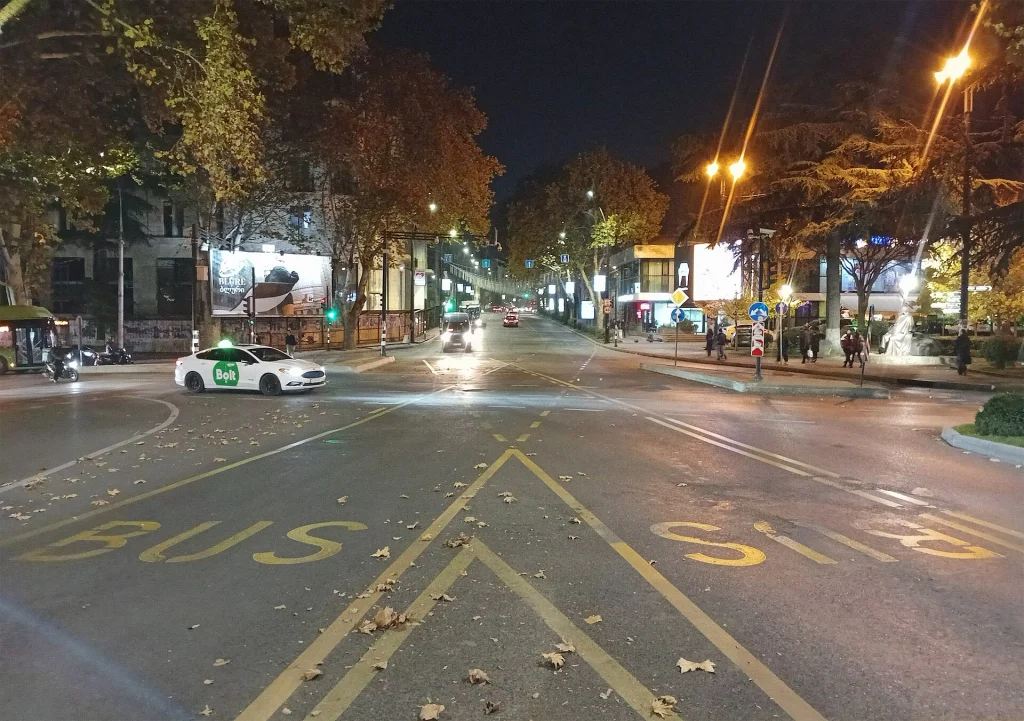
At Tbilisi, Kutaisi and Batumi airports, app cars generally wait in a designated pickup zone a short walk from arrivals rather than directly outside the doors, and both Bolt and Yandex Go operate at all three. Each airport also publishes its own transport guidance, which is worth checking before you fly in case pickup zones move; see the official pages for Tbilisi International Airport, Kutaisi International Airport and Batumi International Airport.
Street taxi drivers inside the arrivals hall almost always quote well above the app fare, since they know arriving passengers are tired, carrying luggage, and unfamiliar with local prices. If you do use one, agree the full fare in GEL before getting in, not “about 20 lari,” and confirm whether that price covers the whole car or is per person.
For a fixed, written price agreed before you fly, GTOUR runs private airport transfers with a driver meeting you at arrivals with a name board, flight tracking, 60 minutes of free waiting, a child seat if needed, and all tolls included: Tbilisi airport to anywhere in Tbilisi is €45 for a sedan (1–3 people) or €58 for a minivan (4–7 people); Kutaisi airport to Kutaisi city is €35; Kutaisi airport to Tbilisi is €190 by sedan; Kutaisi airport to Batumi is €150; and Batumi airport to Batumi or Kobuleti is €40. Full details are on gtour.ge/services.
Street taxis: negotiating, and what to avoid
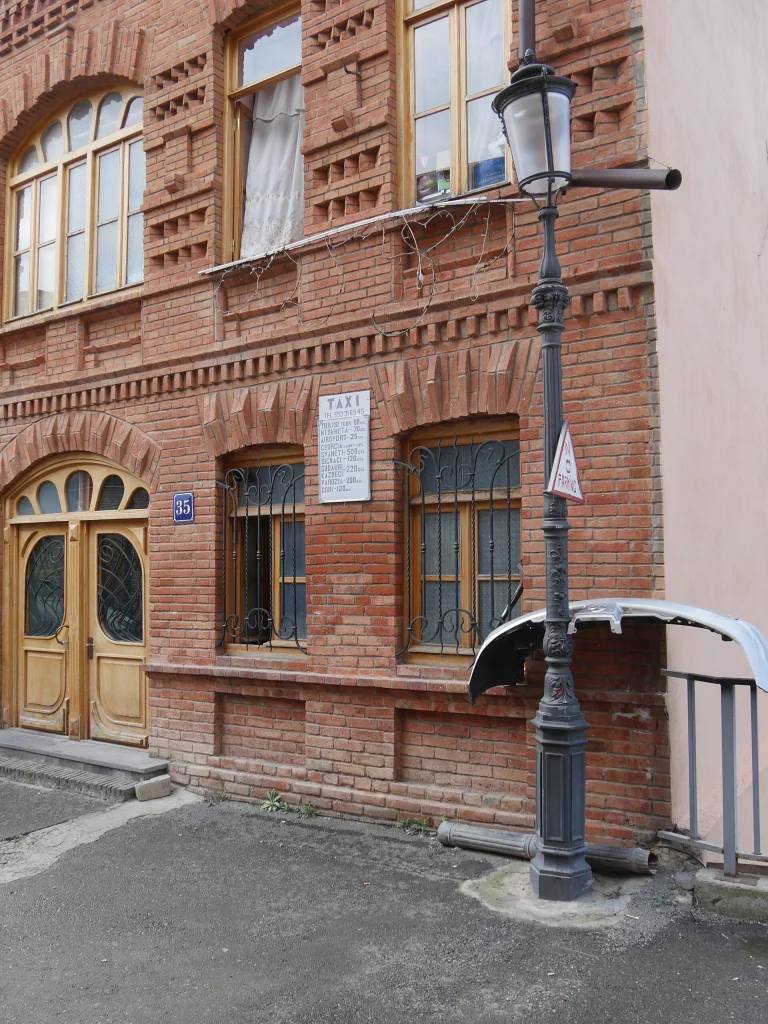
Unmarked and marked street taxis still operate in every Georgian city, hailed by hand or found waiting at a rank near markets, stations and hotels. They have no meter and no fixed tariff, so the fare is whatever you and the driver agree before the car moves. A few practical rules keep this straightforward:
- Agree the total fare in GEL before getting in, and repeat it back to the driver, since misunderstandings over numbers are the most common source of disputes.
- Have roughly the right notes ready; drivers who claim they have “no change” for a large note are a known minor nuisance, particularly with first-time visitors.
- Avoid drivers who approach you aggressively at stations or who insist on carrying your bag before a price is set; a driver confident in a fair fare will simply quote it.
- If the number seems high compared with what Bolt or Yandex Go quotes for the same route on your phone, it probably is, and you can simply thank the driver and open the app instead.
- At night, street taxis are less reliable for women and solo travellers than an app ride, since there is no trip record, no driver rating, and no automatic emergency sharing of your location.
Intercity travel: taxi, shared van, train or private car
Bolt and Yandex Go are built for in-city trips and do not reliably cover long intercity runs such as Tbilisi to Batumi, Kazbegi or Kakheti; drivers can decline long-distance requests or the app may simply not offer the route. For intercity travel, Georgians typically use shared marshrutka minivans from the relevant bus station, the national railway, or a private car.
The train is a comfortable, fixed-price option between major cities, including Tbilisi–Batumi and Tbilisi–Kutaisi; check current timetables and fares on Georgian Railway’s official site before travelling, since schedules change seasonally. For door-to-door comfort with no transfers, GTOUR’s private car with English-speaking driver is priced per car, not per person, from €150 a day for a sedan around Tbilisi, Mtskheta, Kakheti, Gori or Kazbegi, with fixed one-way fares also available, such as Tbilisi to Batumi at €220 by sedan or €270 by minivan, and Tbilisi to Kazbegi at €150 by sedan. Current road conditions for mountain routes are worth checking on gtour.ge/road-status before setting off in winter.
Child seats
Neither Bolt nor Yandex Go guarantees a child seat will be available for a given ride in Georgia; some drivers carry one, most do not, and you cannot reliably filter for it in every city. Families travelling with young children should either bring a portable, lightweight car seat for use in any taxi, or book a transfer that includes one as standard. GTOUR’s airport transfers and car-with-driver bookings include child seats at no extra charge when requested in advance, which is generally the simplest solution for anyone travelling with a child under the recommended seat age.
Safety at night
Tbilisi, Batumi and Kutaisi are generally calm cities by regional standards, and app-based taxis add a layer of accountability that street taxis lack: the trip is logged, the driver is rated, and the route can be shared live with a friend or family member from within the app. For late-night arrivals, solo travellers, or anyone unfamiliar with a neighbourhood, an app ride or a pre-booked transfer is the more cautious choice over hailing a car from the street. If you have any doubt about a driver’s route, intentions, or behaviour, end the trip through the app rather than mid-journey, and keep the trip record as evidence if a dispute follows. For current general travel advisories, see Georgia’s Ministry of Foreign Affairs guidance at mfa.gov.ge.
If this guide is part of a trip you are planning, our Western Georgia in 5 Days — Kutaisi, Canyons, Svaneti and Batumi and North of Batumi — Petra Fortress, Kobuleti and the Shekvetili Pines cover the places it describes with a private guide and driver; a GTour travel expert adapts the route to your dates.
Practical summary
- Use Bolt or Yandex Go for city trips; both accept cash and card and show the fare before you confirm.
- Typical Tbilisi fares run roughly 6–40 GEL depending on distance; Batumi and Kutaisi are usually cheaper for the same distance, but always check the live in-app quote.
- Agree a street taxi fare in GEL before getting in; if it is higher than the app quote for the same route, use the app instead.
- For airports, book a fixed-price transfer in writing in advance, such as GTOUR’s €45 Tbilisi airport sedan transfer, rather than negotiating with drivers in the arrivals hall.
- Apps are unreliable for long intercity routes; use the train, a shared marshrutka, or a private car with driver instead.
- Bring your own child seat or book a transfer that includes one, since neither app guarantees availability.
- At night or when travelling alone, prefer an app ride or pre-booked transfer over an unmarked street taxi.
Sources
- Georgian Railway, official schedules and booking
- Georgia's Ministry of Foreign Affairs, travel guidance
- National Bank of Georgia, official exchange rates
- Georgian Railway – Passenger Timetable (Intercity Trains)
- Tbilisi City Hall – Public Transport Information
Questions this guide does not answer? Write to info@castle.ge or WhatsApp +995 577 41 63 14 — a person in Tbilisi replies. See also our travel services and all guides.
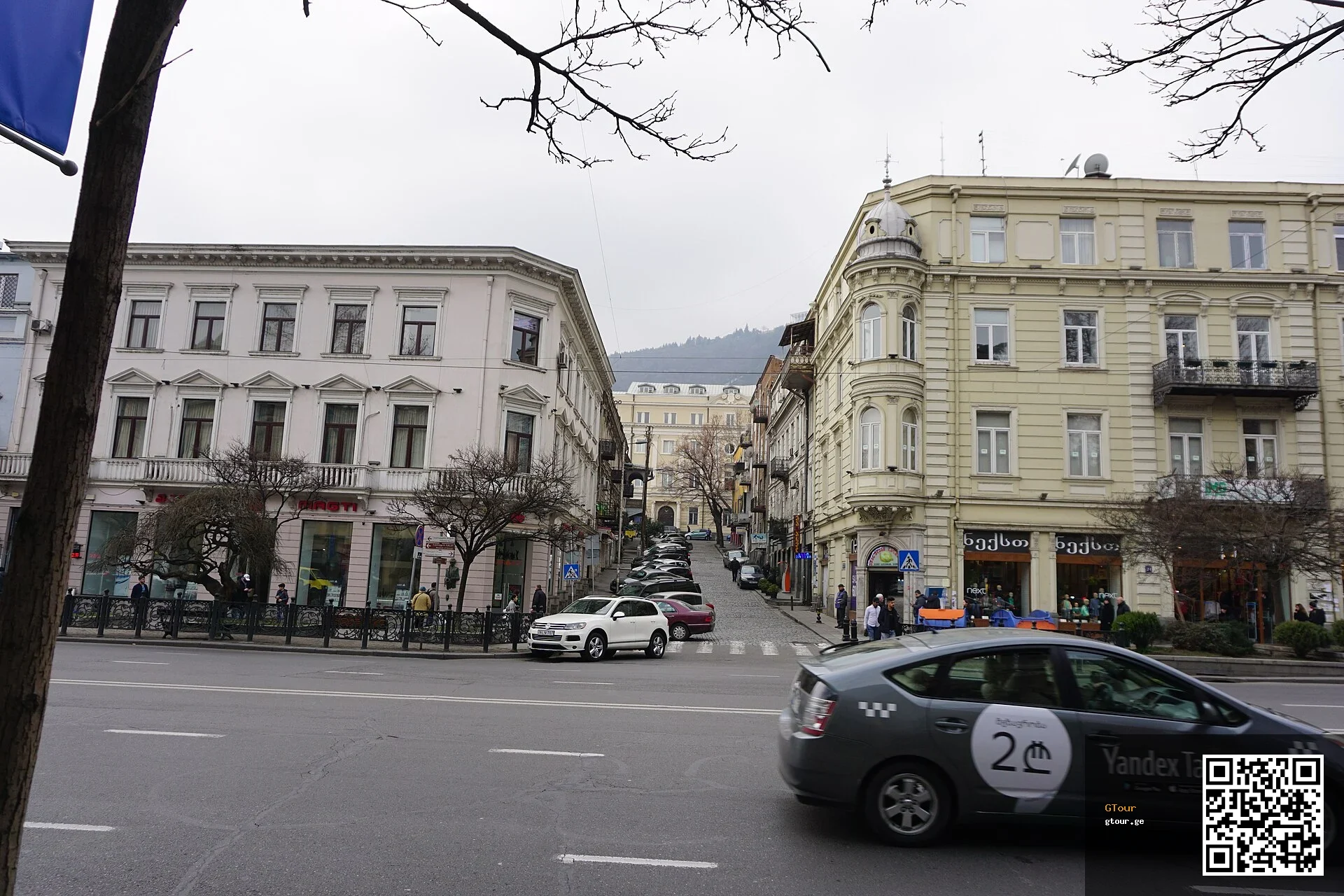
A green Yandex Taxi car drives through central Tbilisi near Laghidze Street. · Photo: Andrew Milligan sumo / Wikimedia Commons, CC BY 2.0
Been to Georgia? Tell us how it went — the best stories are published here.
Share your tripOne email a week: what changed for travellers in Georgia — rules, roads, flights, seasons — plus one place worth the trip. Written by the GTour desk, no advertising, unsubscribe in one click.
This story across our partner network — ქართულად: შენი დასვენება