

Lagodekhi Protected Areas — opening hours, tickets, how to get there and what to see
Lagodekhi Protected Areas is a strict nature reserve and national park on the southern slopes of the Greater Caucasus in eastern Kakheti, bordering Dagestan and Azerbaijan. Established in 1912 as a nature reserve, it is one of the oldest formally protected areas in the Caucasus, now combined with a national park zone created in 2003 to allow regulated hiking and camping. Its main draw is a multi-day trail network running from oak and beech forest up to subalpine meadows and the glacial Black Rock Lake at around 2,700 metres.
What you see
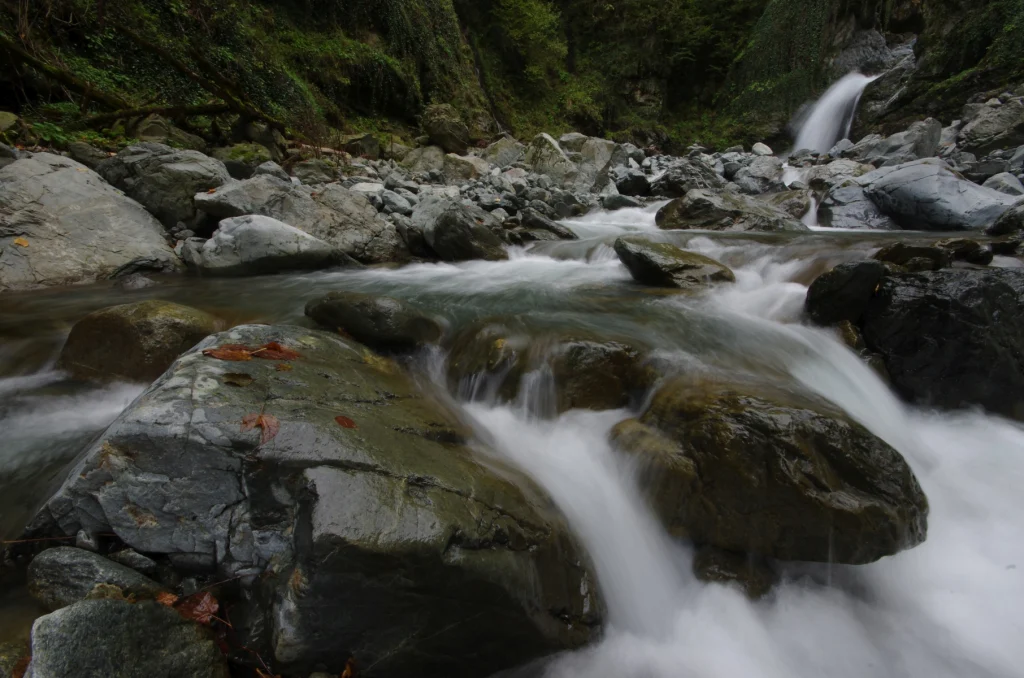
Lagodekhi Protected Areas covers roughly 24,000 hectares of unbroken forest and high mountain terrain, rising from about 400 metres near Lagodekhi town to over 3,500 metres along the watershed with Dagestan. The lower trails pass through oak-hornbeam and beech forest, with the Ninoskhevi and Matsimi waterfalls reachable on half-day walks from the visitor centre. Longer routes climb through mixed and coniferous forest into subalpine birch stands and open meadows, ending at Black Rock Lake (Lagodekhis Tba), a small glacial lake held in a rocky cirque close to the Russian border. The reserve is known for brown bear, East Caucasian tur, chamois and a large bird list, though sightings of large mammals are infrequent given the forest cover.
History
The reserve was founded in 1912 at the initiative of naturalist Ludwig Mlokosiewicz, who had studied the area’s flora and fauna for decades; it is counted among the oldest protected areas in the Caucasus region. It functioned as a strict scientific reserve through the Soviet period, with public access largely limited to rangers and researchers. After Georgian independence, the protected area was reorganised and in 2003 a national park zone was added around the historic strict reserve, opening marked trails and camping sites to visitors under the state Agency of Protected Areas, part of the Ministry of Environmental Protection and Agriculture (apa.gov.ge, mepa.gov.ge). The visitor centre and current trail infrastructure in Lagodekhi town were built out over the following decade as part of wider investment in Georgia’s protected area network.
Opening hours and tickets
| Item | Usual pattern |
|---|---|
| Visitor centre, Lagodekhi town | Daily, roughly 09:00–18:00, shorter in winter (checked at booking) |
| Park entry fee | A modest per-person fee is charged at registration, with an additional fee for overnight camping or hut use (checked at booking) |
| Permits | Required for all overnight treks, including Black Rock Lake; register and pay at the visitor centre before setting out |
| Season for high trails | Late May to October; the Black Rock Lake route can hold snow into June and close early after autumn snowfall |
Current fees and the exact registration procedure are confirmed at the visitor centre or through the Agency of Protected Areas website (apa.gov.ge); figures change from year to year.
How to get there
Lagodekhi town is about 150 km east of Tbilisi, roughly 2.5 to 3 hours by car on the main Telavi–Lagodekhi road through Kakheti. Marshrutkas run from Tbilisi’s Samgori station to Lagodekhi, taking about 3 to 3.5 hours with a change in some cases at Telavi; there is no rail link to the town. From Kutaisi or Batumi the park is a long day’s drive, generally paired with an overnight stay in Kakheti rather than attempted as a single trip. We run eastern Kakheti itineraries that include the Lagodekhi forest alongside Nekresi and Gremi (Eastern Kakheti — Nekresi, Gremi, Kvareli and the Lagodekhi Forest, 12 hours), and a dedicated multi-day trek to the lake itself (Lagodekhi — Black Rock Lake Trek, 3 Days on the Dagestan Border). A car with driver by the day is a practical way to reach the trailhead and visitor centre on your own schedule.
How long and the best time
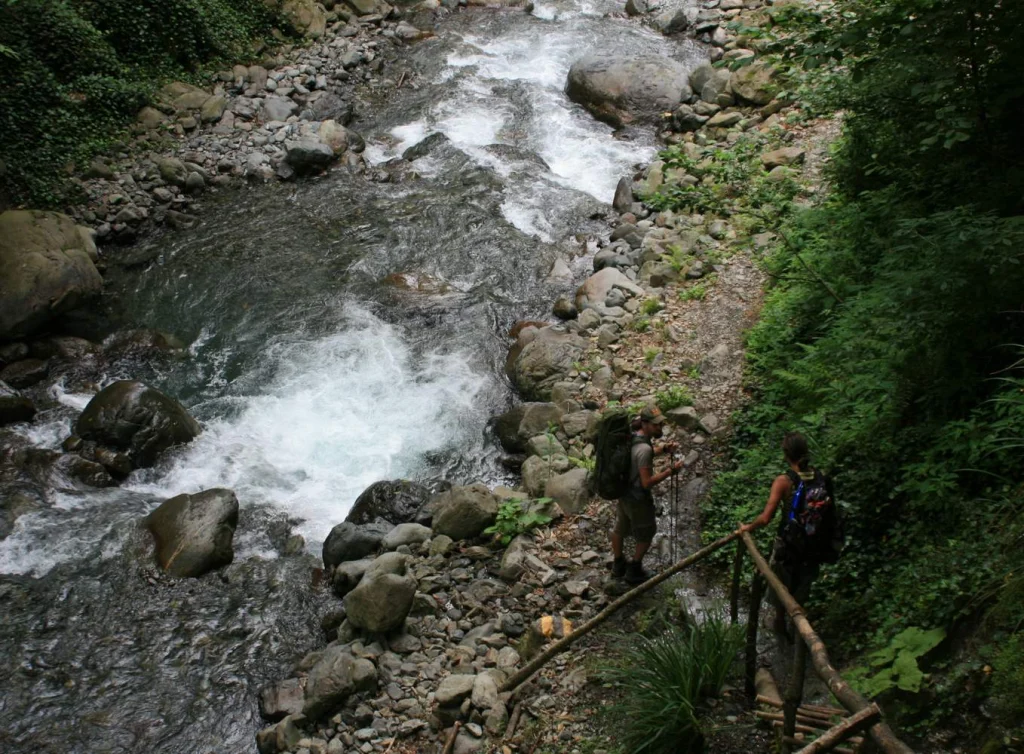
A half-day waterfall walk from the visitor centre takes 3 to 4 hours round trip. The Black Rock Lake trail is a serious undertaking, usually done as a two- to three-day return hike with a night at a mountain shelter or campsite, covering roughly 40 km round trip with substantial elevation gain. Late June through September is the most reliable window for the high route, with July and August giving the longest daylight and driest trail conditions; spring and autumn suit the lower forest walks well and bring fewer visitors.
Tips
- Wear proper hiking boots and layered clothing; weather on the high trail changes quickly and can turn cold even in summer.
- Register at the visitor centre before any overnight route and carry your permit; rangers check documents at points along the trail.
- The lower waterfall trails are busiest at midday in July and August; an early start avoids both heat and crowds.
- Camera gear benefits from a rain cover, since the forest sections can be humid and showers are common in the warmer months.
- Mobile signal is unreliable above the lower forest zone, so download maps and tell someone your planned return time.
- Combine a visit with the wine villages of eastern Kakheti or a stop in Lagodekhi town itself for a full day out from Telavi or Tbilisi.
Nearby
- Lagodekhi town and its small museum
- Kvareli and Kindzmarauli wine cellars
- Nekresi Monastery
- Gremi fortress and church
- Alazani Valley wine villages
Lagodekhi Protected Areas is on these private tours: Georgia in 4 Days — Tbilisi, Kazbegi and Kakheti · Sighnaghi at Sunset — Afternoon Wine Trip from Tbilisi · Mtskheta Half-Day — Jvari and Svetitskhoveli from Tbilisi. A travel expert adapts any of them to your dates.
Questions
Do I need a permit to hike in Lagodekhi Protected Areas?
Yes, overnight routes such as Black Rock Lake require registration and a permit from the visitor centre in Lagodekhi town before you start.
Can I visit Lagodekhi as a day trip from Tbilisi?
The lower waterfall trails are feasible as a long day trip, but the Black Rock Lake route needs at least two days with an overnight on the mountain.
What is the best time of year to hike the high trails?
Late June through September, when snow has cleared from the higher sections and mountain shelters are in use.
Is wildlife easy to see in the reserve?
Brown bear, tur and chamois live in the park but the dense forest cover makes sightings uncommon; birdwatching is more consistently rewarding.
Sources
Black Cliffs' Lake sits at 3,000 meters amid the alpine meadows of Lagodekhi Protected Areas. · Photo: Giorgi Balakhadze / Wikimedia Commons, CC BY-SA 4.0