

Gori Fortress (Goris Tsikhe) — opening hours, tickets, how to get there and what to see
Gori Fortress (Goris Tsikhe) is a hilltop citadel in the center of Gori, the Shida Kartli regional capital about 76 km west of Tbilisi. Rebuilt in its current form in the 17th century over much older fortifications, it marks one of the historic strongholds guarding the Mtkvari river crossing and the road into western Georgia. The walls were badly shaken by the 1920 earthquake and the site was struck again during the August 2008 war, when shelling near the fortress killed a foreign journalist covering the conflict.
What you see
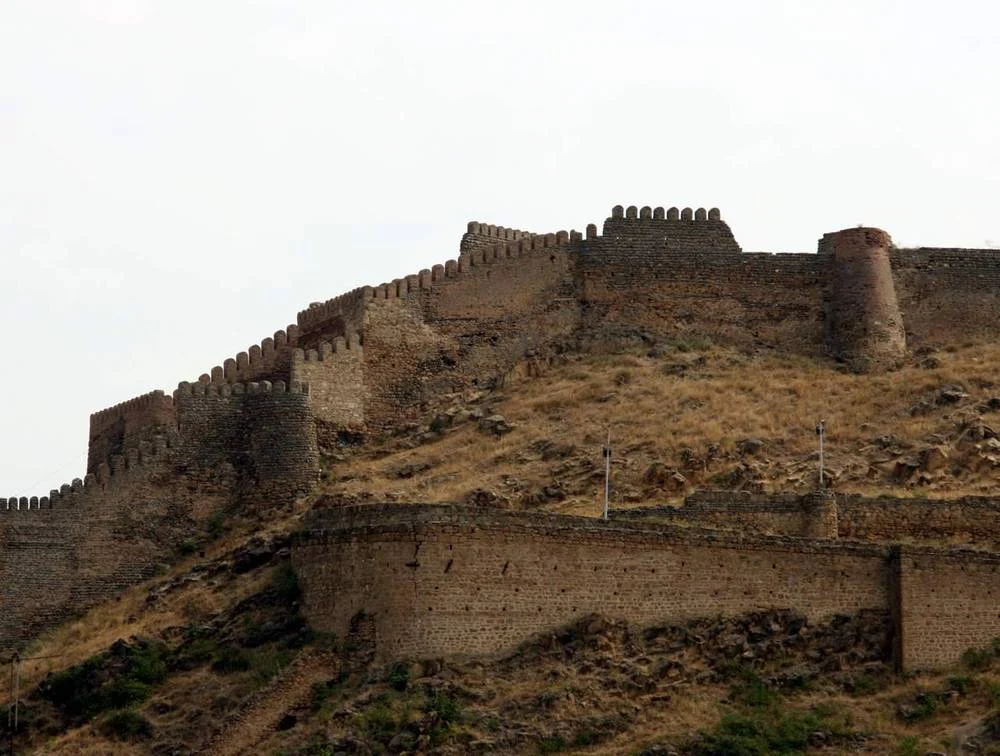
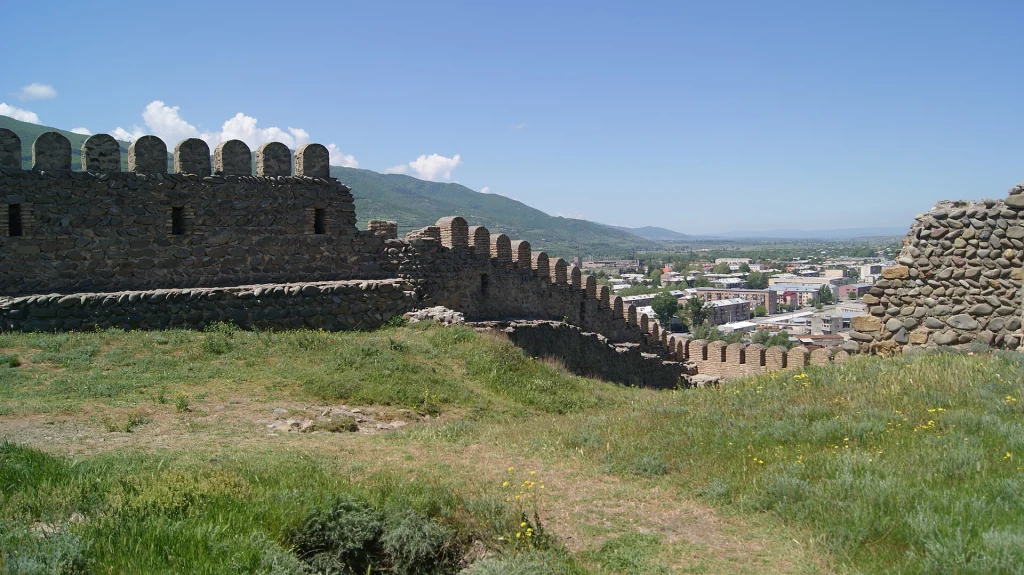
Gori Fortress stands on an isolated volcanic-looking hill that rises abruptly from the flat town center, visible from almost every street in Gori. A path and a set of stairs climb through a public park to reach the walls, which enclose an irregular oval roughly 200 meters long. Inside the perimeter are the remains of two concentric rings of defensive walls, round and square towers of rubble stone, and the footprint of what was once a keep and cisterns, though no roofed interior buildings survive. The site is unfenced and open-air, with no reconstructed rooms or museum displays inside the walls themselves; the appeal is the structure, the hill, and the view. From the upper platform the panorama takes in the Mtkvari and Liakhvi river valleys, the Gori Stalin Museum and the grid of the old town below, and on clear days the foothills toward the South Ossetian administrative boundary line to the north.
History
A fortified point on this hill is attested from the early medieval period, when Gori guarded a key river crossing on the route between eastern and western Georgia. The fortress was rebuilt and strengthened repeatedly as it changed hands between Georgian kings and Persian and Ottoman forces through the Middle Ages and the early modern period; the walls visible today largely date from a 17th-century reconstruction under King Rostom of Kartli. The structure suffered heavy damage in the earthquake of 1920, after which parts of the upper fortifications were left as ruins rather than fully restored. It was damaged again in August 2008, when Gori came under aerial and artillery attack during the Russia–Georgia war; a strike near the fortress killed Dutch cameraman Stan Storimans, one of the conflict’s documented civilian casualties (The Guardian, 9 August 2008). The town’s position close to the administrative boundary with South Ossetia continues to shape how the site and the wider region are presented to visitors (BBC, Georgia country profile).
Opening hours and tickets
| Season | Typical access | Entry fee |
|---|---|---|
| Spring to autumn | Roughly 09:00–19:00, daily, unstaffed | Free |
| Winter | Roughly 09:00–17:00, daily, unstaffed | Free |
The fortress is an open public monument with no ticket booth and no fixed gate hours; access depends on daylight and the park’s informal opening pattern, so treat the hours above as a general guide, checked at booking. There is no indoor section to time a visit around.
How to get there
From Tbilisi, Gori is about 76 km and roughly 1 hour 10 minutes by car on the main highway west, with the fortress hill visible as you enter town. Marshrutka minibuses to Gori run through the day from Tbilisi’s Didube station, taking about 1.5 to 2 hours depending on stops, and the walk from the Gori bus station to the fortress hill is about 15 minutes. A slower train option also connects Tbilisi and Gori. From Kutaisi the drive is about 2 hours 15 minutes; from Batumi, around 4 hours. With us, Gori and the nearby cave city of Uplistsikhe are covered on the Gori & Uplistsikhe day trip, or the fortress can be added to a private car-with-driver day in and around Tbilisi (sedan, up to 10 hours and 250 km, €150 per car), with a licensed guide available separately if you want the history explained on site.
How long and the best time
Thirty to forty-five minutes is enough to walk the walls and take in the view; most visitors combine it with an hour or two at the Stalin Museum nearby and a half-day or full-day trip that continues to Uplistsikhe. Spring and autumn mornings give the clearest light for the valley views and avoid the strongest summer heat on the exposed, largely shadeless hill. Winter visits are quieter but can be windy and occasionally icy on the stone steps.
Tips
- Wear flat, grippy shoes: the path and the stone surfaces inside the walls are uneven and can be slippery after rain.
- There is little shade on the hill, so carry water and sun protection in summer.
- The upper platform and valley views are best photographed in morning or late afternoon light, when the haze over the valley is lower.
- The site rarely sees crowds outside peak summer weekends, so queues are not an issue.
- Combine the visit with the Gori Stalin Museum at the foot of the hill and, time permitting, the cave city of Uplistsikhe about 30 minutes away.
Nearby
- Gori Stalin Museum
- Uplistsikhe cave city
- Gori History and Ethnography Museum
- Mtkvari and Liakhvi river confluence
- Ateni Sioni church, Ateni valley
Gori Fortress (Goris Tsikhe) is on these private tours: Mtskheta, Gori and Uplistsikhe — Kartli in a Day · Gori & Uplistsikhe — Cave City Day Trip · The Grand Tour of Georgia in 14 Days — Every Region, Mountains to Sea. A travel expert adapts any of them to your dates.
Questions
Is there an entrance fee for Gori Fortress?
No, the fortress grounds are a free, unstaffed public site with no ticket booth, checked at booking.
How long does it take to see Gori Fortress?
Thirty to forty-five minutes is enough for the walls and the view; most visitors pair it with the Stalin Museum below the hill.
Can I visit Gori Fortress and Uplistsikhe in one day from Tbilisi?
Yes, both are commonly combined on a single day trip from Tbilisi, roughly 8 to 9 hours including driving and stops.
Is Gori safe to visit given its proximity to South Ossetia?
Gori town and its sights are regularly visited and generally calm, but travellers should check current advisories before heading further north toward the administrative boundary line.
Sources
The hilltop stone walls of Gori Fortress rise above the dry grassy slope. · Photo: Andrzej Wójtowicz from Poznań, Poland / Wikimedia Commons, CC BY-SA 2.0