By David Kiknadze, Transport & Openings Reporter · 11/11/2026
- Plan on roughly one to three and a half hours' drive depending on your starting city, and expect to arrive via Kutaisi or Zestafoni rather than by direct public transport.
- Treat Sachkhere as a waypoint, not a base: pair it with the Katskhi pillar, Mgvimevi monastery and onward routes into Racha-Lechkhumi for an overnight stay.
- Mobile coverage and road conditions can weaken on the hill routes toward Katskhi and Chiatura, so check conditions in November before continuing into the mountains.
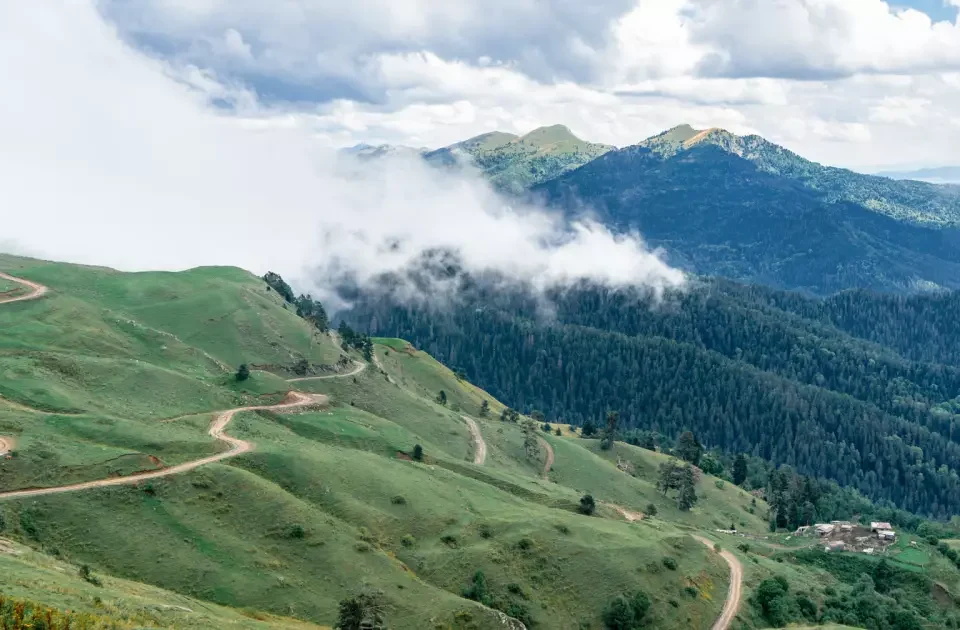
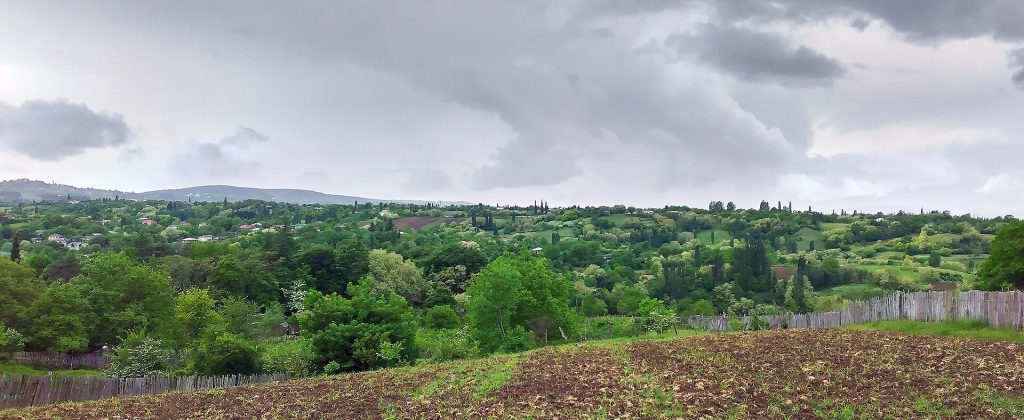
Sachkhere sits in a shallow valley on the Kvirila River, the administrative centre of its own municipality in Imereti and a natural stopping point for anyone moving between the lowlands around Kutaisi and the mountain roads into Racha-Lechkhumi and Kvemo Svaneti. It is not a destination that demands days of exploration on its own, but as a waypoint it earns its place on an itinerary, particularly in November when the valley’s wooded hills carry autumn colour and the roads are quieter than in high summer.
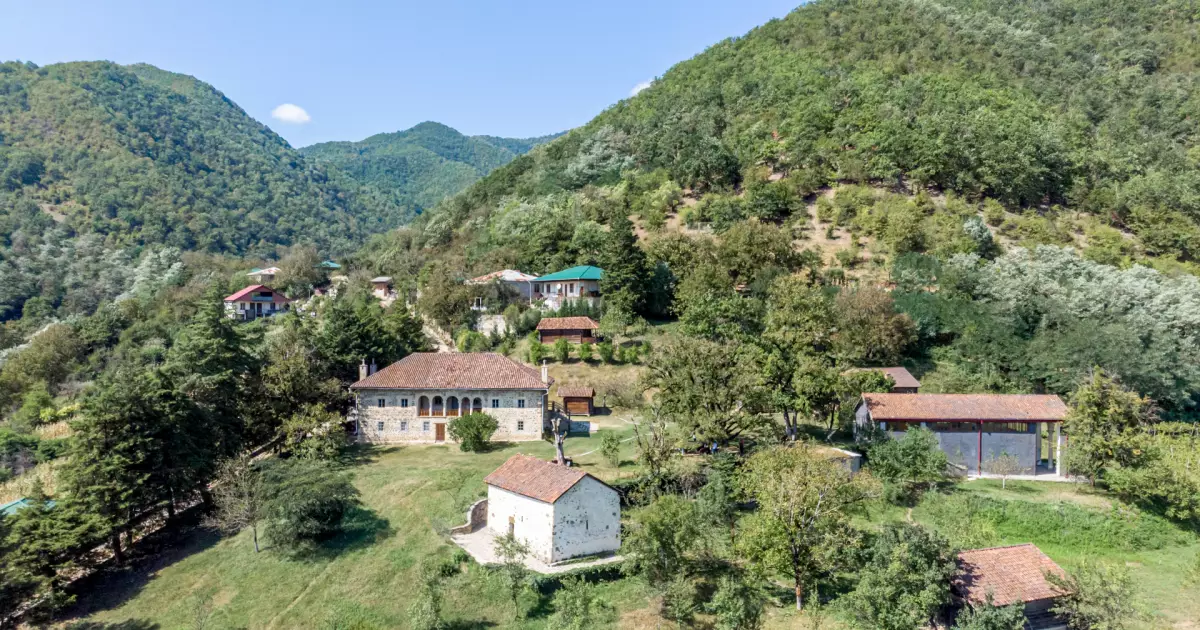
The town’s deepest claim on travellers is literary: Akaki Tsereteli, one of the central figures of nineteenth-century Georgian poetry and national revival, was born in 1840 in nearby Skhvitori, and the family house there now operates as a memorial museum with manuscripts, personal effects and period rooms. In the twentieth century Sachkhere’s growth was tied to the manganese mines of neighbouring Chiatura, and the town still functions as a service centre for that industrial hinterland, giving its streets a working, unpolished character rather than a curated one.
What to see
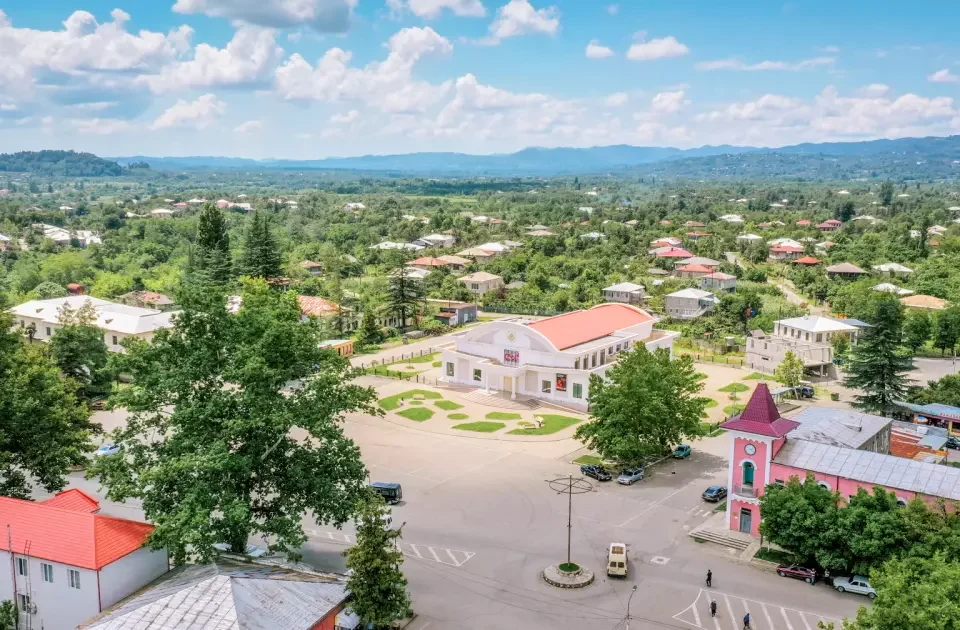
Beyond the Tsereteli museum, the main reason to detour here is the Katskhi pillar, a limestone monolith crowned by a small medieval church and the cell of a resident monk, restored in the twentieth century and among the most photographed sights in western Georgia. A short distance away near Chiatura, the Mgvimevi monastery is built directly into a cliff face above the Kvirila gorge, combining a cave church with later masonry; the approach is steep, so sturdy footwear matters. Back in town, the modest centre around the river crossing, with its Soviet-era civic buildings and small churches, gives a candid look at ordinary provincial Imereti.
Sachkhere suits independent drivers and travellers with a guide more than those relying on public transport, since direct marshrutka links are infrequent and most visitors connect through Kutaisi or Zestafoni. From Tbilisi, allow roughly three to three and a half hours by car; from Kutaisi it is about an hour to ninety minutes; from Batumi, around four hours. GTour arranges private transfers and guided day tours from all three cities.
With limited formal lodging in Sachkhere itself, most visitors treat it as a stop on a wider circuit rather than an overnight base, combining it with wine villages and river valleys in Racha-Lechkhumi or with Kutaisi’s own sights. In November, check road conditions before pushing further into the mountains, since early snow can affect the higher approaches.
Read more on gtour.ge: Sachkhere
What to see — a daily GTour desk feature drawn from the verified-place register and our destination guides. Not sponsored.
Been to Georgia? Tell us how it went — the best stories are published here.
Share your tripOne email a week: what changed for travellers in Georgia — rules, roads, flights, seasons — plus one place worth the trip. Written by the GTour desk, no advertising, unsubscribe in one click.
One email a week: what changed for travellers in Georgia — rules, roads, flights, seasons — plus one place worth the trip. Written by the GTour desk, no advertising, unsubscribe in one click.
Planning a trip to Georgia?
GTour runs private tours with English-speaking guides from Old Tbilisi. See all tours or ask the desk on WhatsApp +995 577 416 314.
Source: Georgian National Tourism Administration — Sachkhere (georgia.travel). Reported by the GTour desk; updated 22 October 2026, 13:07 (Tbilisi).