

By David Kiknadze, Transport & Openings Reporter · 27/10/2026
Short answer: most Taiwanese passport holders can currently enter Georgia without a visa for short tourist stays, flights always route through at least one hub (commonly Istanbul or Doha, since there is no direct service from Taiwan), the Lari is the only currency that matters on the ground, and very little Mandarin or Taiwanese Hokkien is spoken outside a handful of Tbilisi hotels — so expect English in cities, Georgian and Russian elsewhere, and plan for a guide or driver if you want more than the capital.
Georgia and Taiwan have no diplomatic relations and the people-to-people history is thin, so this guide does not try to manufacture ties that are not there. What it does is lay out, plainly and with official sources to check before you fly, the visa position, the realistic flight routings, money and connectivity, food, and the health and safety points that matter specifically for a Taiwanese traveller. Rules on visas and insurance can change with little notice, so every section below tells you exactly which official page to check in the weeks before departure.
Visa and entry rules for Taiwanese citizens
Georgia runs one of the more open visa regimes in the region, and Taiwan has for some years been included among the passports that can enter visa-free for short tourist stays. Because this is set by government decree and can be amended, do not rely on this article alone: confirm your own situation on Georgia’s official visa pages before booking non-refundable flights. The Ministry of Foreign Affairs publishes the current visa list and conditions, and the government’s e-Visa portal is the place to apply if your nationality or purpose of travel requires it (for example, longer stays, work, or study). Check evisa.gov.ge directly to see whether an e-visa applies to you, and the Ministry’s own consular guidance at mfa.gov.ge for the authoritative, up-to-date list. If an e-visa is needed, processing is typically quoted in a few working days, but apply earlier if you can, since the portal itself states that approval is not guaranteed and delays happen.
Because Georgia maintains the “one China” position, it has no embassy in Taipei and Taiwan has no representative office in Tbilisi. In practice this means ordinary consular matters — document authentication, emergency travel documents — are usually handled by Taiwan’s regional representative offices covering Europe or Turkey rather than one dedicated to Georgia; check with Taiwan’s own foreign affairs authorities which office currently covers Georgia before you travel, since this assignment is administrative and can shift. For Georgian-side consular contacts and the current embassy network, see mfa.gov.ge.
Flights from Taiwan: realistic routings
There is no direct flight between Taiwan and Georgia, and none is likely soon given the thinness of direct demand. Every itinerary from Taipei to Tbilisi, Kutaisi or Batumi involves at least one connection. The two most practical one-stop options use airlines that fly Taipei directly to their own hub and then on to Georgia:
| Hub | Taiwan leg | Onward to Georgia |
|---|---|---|
| Istanbul | Turkish Airlines, direct from Taipei | Multiple daily Turkish Airlines flights to Tbilisi, plus seasonal service to Batumi and Kutaisi |
| Doha | Qatar Airways, direct from Taipei | Daily Qatar Airways service to Tbilisi |
| Dubai | Emirates, direct from Taipei | Emirates and flydubai both serve Tbilisi from Dubai |
Routings via Warsaw or Munich exist for travellers already connecting through continental Europe, but they are rarely the shortest option starting from Taiwan and usually add a second long-haul sector; worth checking only if your onward business or family travel already puts you in Europe. Always check live routes and seasonal changes on the airport sites directly: tbilisiairport.com, kutaisiairport.com and batumiairport.com list current airlines and destinations. Total journey time from Taipei to Tbilisi, including a reasonable connection, usually runs 15 to 20 hours depending on the hub and layover. If you land tired after a long two-sector flight, a pre-booked private pickup removes one variable: our fixed airport transfers start at a flat rate per car with flight tracking and free waiting, so a delayed connection does not cost you extra.
Driving in Georgia with a Taiwanese licence
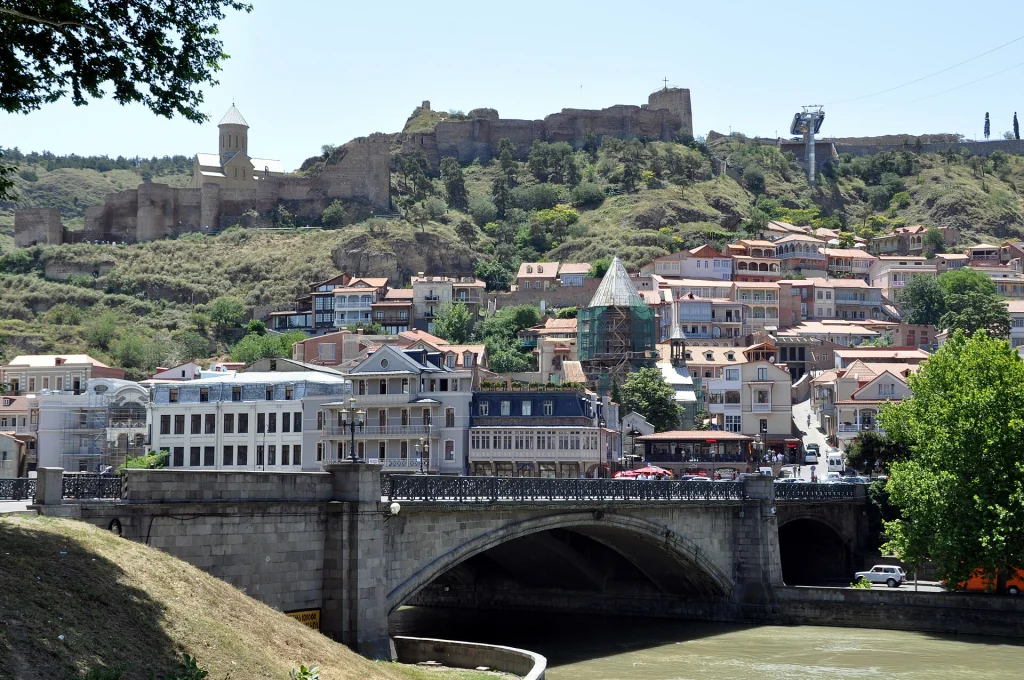
Georgian traffic law generally allows a foreign national driving licence to be used for a limited period after entry, and recommends — for licences not issued in Latin script or without a Latin-alphabet counterpart — either an International Driving Permit or a certified translation. Since Taiwan is not party to the 1949 or 1968 Vienna conventions that most IDPs reference, the safest approach is to bring both your Taiwanese licence and, if you plan to self-drive, an internationally recognised translation or permit accepted by local rental agencies, and to confirm current wording of the rule with the rental company and, if in doubt, the text of the law itself at matsne.gov.ge. Given mountain roads, unmarked livestock, and winter ice on passes like the Jvari Pass toward Kazbegi, many Taiwanese visitors find it simpler to hire a car with driver rather than self-drive, particularly for Svaneti, Tusheti or winter routes to Gudauri.
Money, cards and cash
The Georgian Lari (GEL) is the only legal tender and the only currency you should budget in. There is no direct market exchanging New Taiwan Dollars for Lari, so bring US dollars or euros in cash as a backup, or rely on an international debit or credit card and ATMs, which are plentiful in Tbilisi, Batumi, Kutaisi and larger towns. Cards are widely accepted in city restaurants, hotels and shops; smaller guesthouses, rural markets, marshrutka minibuses and mountain villages often expect cash. As a reference point, the National Bank of Georgia’s rate on 26 October 2026 was roughly 2.60 GEL per US dollar and 2.91 GEL per euro — rates move daily, so check the bank’s own page before converting a large sum.
SIM, eSIM and staying connected
Georgia’s three main mobile operators (Magti, Silknet and Geocell) sell prepaid SIM cards at the airport and in city shops with straightforward tourist data packages, and eSIM options from international providers can be activated before you land if your phone supports them, which is worth doing if your connection involves an overnight layover and you want data on arrival. Coverage is good in cities and along main roads; expect gaps in remote parts of Svaneti, Tusheti and some mountain passes.
Language: what to expect
Georgian, written in its own script, is the state language, and Russian remains widely understood among older generations as a second language from the Soviet period. English is increasingly common among younger Georgians, hotel staff, and anyone working in tourism in Tbilisi, Batumi, Kutaisi and the main wine and mountain towns, but it thins out quickly in villages and among older drivers and shopkeepers. Mandarin or Taiwanese Hokkien are essentially not spoken outside a very small number of Tbilisi hotels or restaurants with Chinese-speaking staff. For anything beyond the main tourist circuit, a licensed English-speaking guide closes the gap quickly and reliably.
Food and dietary notes
Georgian cuisine centres on bread, cheese, walnuts, fresh herbs and grilled or stewed meat, with khachapuri (cheese-filled bread) and khinkali (dumplings) as the two dishes every visitor tries. Taiwanese travellers used to rice and noodle-based meals will find Georgian food heavier and more bread- and dairy-centred, though portion-sharing at a traditional supra feast will feel familiar in spirit if not in content. Vegetarians are well served: Orthodox Christian fasting traditions have produced a large repertoire of meat-free dishes — lobio (bean stew), pkhali (vegetable and walnut pâtés), mushroom and bean dishes — available even outside dedicated vegetarian restaurants. Halal food is limited outside Adjara, where Batumi’s historic Muslim community supports halal butchers and some restaurants; our Batumi & the Ajara Mountains — 2 Days tour passes through this area if halal options matter to your itinerary. Asian restaurants exist in central Tbilisi but are not common elsewhere, so travellers who want a taste of home should plan around the capital.
Ties, trade, diaspora and when Taiwanese travellers come
It is honest to say that historical, cultural and trade links between Georgia and Taiwan are thin. Georgia observes the “one China” policy and has no formal diplomatic relationship with Taiwan, bilateral trade volumes are small, and there is no established Taiwanese diaspora community in Georgia comparable to those from, say, Russia, Iran or Israel. What has grown is tourism interest and word-of-mouth travel coverage, plus a small but real number of Taiwanese visitors drawn by Georgia’s wine culture, Caucasus mountain scenery and relative distance from more heavily touristed parts of Europe and Asia. Taiwanese travellers tend to visit around Lunar New Year (when a winter trip combining Tbilisi with skiing in Gudauri is popular, see Georgia in Winter — Gudauri Skiing, Tbilisi & Kakheti), during the northern summer holiday window, and around Taiwan’s National Day period in October, which coincides with Georgia’s grape harvest season — a good time for a wine-focused route such as Rtveli — Wine Harvest in Kakheti.
Health, insurance, safety and etiquette
Georgia has no reciprocal healthcare agreement with Taiwan, so private travel medical insurance with evacuation cover is strongly advisable regardless of whether it is formally mandated for your visa category at the time you travel; insurance requirements for specific visa types do change, so check current wording on evisa.gov.ge and mfa.gov.ge before departure, and in any case see a doctor before travel if you have an existing condition or plan high-altitude hiking in Svaneti or Tusheti. Georgia is generally a safe destination with low rates of violent crime against tourists; usual precautions around valuables in crowded markets and late-night areas apply as anywhere. Etiquette notes specific to a Taiwanese visitor: dress modestly when entering Orthodox churches and monasteries (shoulders and knees covered, headscarves for women are often provided at the door); toasting customs at a supra can involve substantial wine consumption, and it is entirely acceptable to sip rather than drain each glass; and given Georgia’s own sensitivities around sovereignty and neighbouring Russia, it is wise to keep discussion of cross-strait politics low-key, as locals are usually unfamiliar with the nuances and the subject can read as political even when meant lightly.
What a G Tour private guide adds
Given the language gap, the lack of direct flights, and the thinness of ready-made English or Mandarin signage outside major hotels, a private guide and driver remove most of the friction a first-time Taiwanese visitor faces. A licensed English-speaking guide handles church etiquette, menu translation, and the practicalities of toasting culture; a car with driver makes mountain routes to Kazbegi, Svaneti or Tusheti straightforward without renting a vehicle on an unfamiliar licence; and a single pre-arranged invoice for transport, guiding and hotel booking avoids the currency-conversion guesswork of paying cash in Lari at every stop. Ready-made options such as Georgia in 7 Days — The Classic Grand Tour or a focused first day with Tbilisi & Mtskheta — The Essential First Day are built around exactly this kind of door-to-door clarity.
If this guide is part of a trip you are planning, our Georgia in 10 Days — Tbilisi to Svaneti to the Sea and Monasteries of Georgia — Mtskheta, the Thirteen Fathers and Kakheti in 3 Days cover the places it describes with a private guide and driver; a GTour travel expert adapts the route to your dates.
Practical summary
- Visa: check current rules for Taiwan passport holders on mfa.gov.ge and evisa.gov.ge before booking; do not assume last year’s rule still applies.
- Flights: no direct service; one-stop via Istanbul (Turkish Airlines), Doha (Qatar Airways) or Dubai (Emirates/flydubai) are the practical options.
- Driving: bring your Taiwanese licence plus a certified translation or recognised international permit; confirm the current rule on matsne.gov.ge.
- Money: Lari only; bring USD or EUR cash as backup, use cards and ATMs in cities, carry cash in villages.
- Connectivity: local SIM or eSIM on arrival; good city coverage, gaps in remote mountains.
- Language: English in cities and tourism, Georgian and Russian elsewhere; book a guide for rural areas.
- Food: easy for vegetarians, halal mainly in Batumi/Adjara, limited Asian food outside Tbilisi.
- Health: no reciprocal healthcare; buy travel medical insurance with evacuation cover and see a doctor before high-altitude hikes.
Sources
- e-Visa portal for Georgia
- Ministry of Foreign Affairs of Georgia, consular information
- Legislative Herald of Georgia (traffic and licensing law)
- Georgian National Tourism Administration
- Georgia Travel, official tourism portal
Questions this guide does not answer? Write to info@castle.ge or WhatsApp +995 577 41 63 14 — a person in Tbilisi replies. See also our travel services and all guides.
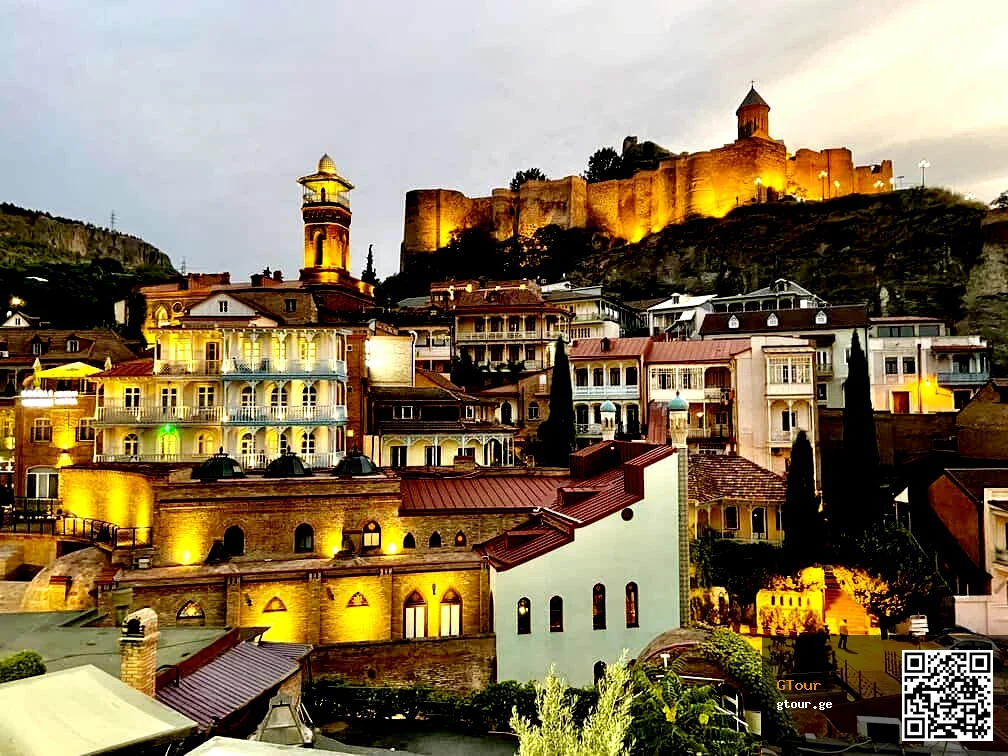
Narikala Fortress and the historic Abanotubani district in Tbilisi, Georgia, lit at dusk. · Photo: beka vanadze / Wikimedia Commons, CC BY-SA 4.0
Been to Georgia? Tell us how it went — the best stories are published here.
Share your tripOne email a week: what changed for travellers in Georgia — rules, roads, flights, seasons — plus one place worth the trip. Written by the GTour desk, no advertising, unsubscribe in one click.
This story across our partner network — ქართულად: შენი დასვენება