

By David Kiknadze, Transport & Openings Reporter · 29/10/2026
Yes, in almost all cases Guyanese citizens need a visa to enter Georgia, and the practical route is Georgia’s e-visa system rather than a visa stamped in a passport at a consulate. Georgia’s visa-free list is short and weighted toward the EU, EEA, North America, the Gulf states and a handful of others; Guyana is not on it as far as current published lists show, and this can change without much notice, so confirm your own case on the Ministry of Foreign Affairs consular pages before booking flights.
Beyond the visa, a trip from Guyana to Georgia is mostly a question of routing through a major hub, carrying enough euros or a card that works, and setting reasonable expectations on language outside Tbilisi and Batumi. Food is easy for most Guyanese travellers, the lari is the only currency that matters on the ground, and the thinnest part of the story is the bilateral relationship itself: ties between Georgia and Guyana are minimal, so this guide stays close to logistics rather than inventing connections that are not there.
Visa and entry rules for Guyanese citizens
Check your visa requirement on the Ministry of Foreign Affairs visa information page before you do anything else, because Georgia periodically revises its visa-free list by government decree and a guide like this one cannot guarantee it stays accurate past publication. As of October 2026, Guyana is not listed among the countries whose citizens may enter Georgia without a visa, which means the practical path for most Guyanese travellers is the e-Visa portal at evisa.gov.ge. The online application asks for a passport scan, a passport-style photo, travel dates and an address in Georgia, and processing is typically quoted at a few working days, though it can run longer; apply at least two to three weeks ahead of travel to leave room for requests for extra documents. There is no visa-on-arrival for Guyanese passport holders, so arriving without an approved e-visa risks denied boarding at your departure airport, not just problems on arrival in Georgia.
Flights from Guyana: routes and connecting hubs
There are no direct flights between Guyana and Georgia, and realistically there will not be for the foreseeable future given the distance and the size of both markets. Travellers from Georgetown typically fly first to a major transatlantic or Gulf hub and then connect onward. The two routings that work best are via Istanbul, which has strong Turkish Airlines connections from the Caribbean and the Americas and a short onward hop to Tbilisi or Kutaisi, and via Doha or Dubai, which suit Guyanese travellers already connecting through the Gulf for other legs of a trip. European hubs such as Warsaw or Munich can also work if your itinerary already routes through Europe, with onward connections to Tbilisi. Expect a total journey of 20 to 30 hours depending on layovers. Check live routes and terminals on Tbilisi International Airport’s site, and compare Kutaisi as a low-cost alternative on Kutaisi Airport’s site, since some budget carriers from Gulf and European points serve Kutaisi more cheaply than Tbilisi. If your final leg lands at Kutaisi, our Kutaisi Airport to Tbilisi — Private Transfer, 3.5 Hours or Kutaisi Airport to Batumi — Private Transfer saves a complicated bus-and-taxi change after a long flight.
Driving licence, money, cards and SIM cards
A valid Guyanese driving licence printed in Latin script is generally accepted for short-term driving in Georgia, but carrying an International Driving Permit alongside it removes any doubt at a police checkpoint or a car rental counter; confirm the current rule on Georgia’s Road Department site before you drive. The currency is the Georgian lari (GEL), and the Guyanese dollar cannot be exchanged directly anywhere in Georgia, so bring euros or US dollars in cash and convert on arrival, or use a card that does not charge foreign transaction fees. Card payments are standard in Tbilisi, Batumi and Kutaisi hotels, restaurants and supermarkets; carry cash for mountain guesthouses, small village shops and market stalls. As a rough guide using the National Bank of Georgia’s rate published on 28 October 2026, one euro was worth about 2.89 GEL and one US dollar about 2.60 GEL, but rates move daily, so check before you travel rather than relying on these figures for budgeting. For connectivity, Magti, Geocell and Silknet all sell prepaid tourist SIM cards at the airport and in city shops, typically with generous data allowances, and eSIM options are increasingly available if your phone supports them; buy on arrival rather than pre-ordering from Guyana.
Language: where you will and will not be understood
Georgian is the state language and uses its own alphabet, which is not phonetically guessable the way Latin-script languages often are, so street signs and menus can be opaque at first. English is spoken reasonably well in Tbilisi and Batumi hotels, major restaurants and by younger staff generally, and tourist offices under the Georgian National Tourism Administration can usually help in English. Outside the two main cities, in mountain villages in Svaneti, Tusheti or Racha, English drops off quickly and Georgian or Russian are the working languages; a phrasebook, a translation app with an offline Georgian pack, or a guide solves most of this. Guyanese English speakers should not expect Georgia to function in English the way some Caribbean or Commonwealth destinations do, and a licensed guide earns its cost fastest in exactly these rural stretches.
Embassy and consular coverage for Guyanese travellers
Guyana has no embassy, high commission or consulate in Georgia, and Georgia does not appear to have reciprocal representation in Georgetown either. Before you fly, ask Guyana’s Ministry of Foreign Affairs which overseas mission is formally responsible for consular matters in Georgia, since this kind of coverage is often assigned to a mission in a third country (historically a European capital) and the assignment can change. For the Georgian side, the general contact details and list of accredited foreign missions are maintained by Georgia’s Ministry of Foreign Affairs. Register your trip with whichever authority Guyana designates, and keep both that contact and Georgia’s own MFA emergency line saved before departure, since an honest answer here is that Guyanese travellers are not well covered by resident diplomatic staff inside the country.
Food and dietary notes
Georgian food gives Guyanese travellers more familiar ground than the language does. Lobio, a stewed and spiced kidney-bean dish served with cornbread, will feel closer to home than most European food Guyanese travellers encounter elsewhere, and grilled meat skewers (mtsvadi) sit comfortably alongside any barbecue tradition. Khachapuri, the cheese-filled bread, and khinkali, the soup dumplings, are the two dishes worth trying specifically; our Cooking Class in Tbilisi — Khinkali, Khachapuri and a Family Lunch or the shorter Adjarian Khachapuri Class in Batumi are easy ways to learn them properly rather than guessing at a menu. Vegetarians are well served: pkhali (vegetable pâtés), badrijani (eggplant rolls) and lobio are vegetarian by default in most kitchens, though confirm with staff since stock bases sometimes contain meat. Halal certification is not common in Georgia, which is a historically Orthodox Christian country with widespread pork on menus, but Adjara and Batumi have a resident Muslim population and functioning mosques, and halal-friendly restaurants exist there and in Tbilisi; ask directly rather than assuming. A Supra Evening — a Georgian Feast with a Tamada and Polyphonic Song is the fullest introduction to how Georgians eat and toast together, and it is worth doing once even for travellers who do not drink, since non-alcoholic toasting is normal and expected to be respected either way.
Ties between Georgia and Guyana, and when Guyanese travellers tend to come
It would be dishonest to overstate this: historical, trade and diaspora ties between Georgia and Guyana are thin to the point of being essentially absent. Both countries are UN member states and occasionally cross paths in multilateral settings, but there is no meaningful trade relationship, no resident Guyanese community in Georgia, and no documented historical connection worth building a narrative around. Guyanese interest in Georgia tends to come from the same forces that drive most long-haul travel here: wine, mountains, affordability relative to Western Europe, and word of mouth from travel media rather than any inherited tie. Most Guyanese travellers who do come arrive in the warmer shoulder seasons, May to June and September to October, when Tbilisi and Kakheti are comfortable and the Black Sea coast around Batumi is still swimmable without the peak-July crowds; Georgian winters are genuinely cold by Guyanese standards, particularly in the mountains, so pack accordingly if travelling December to February.
Health, insurance and safety for this trip
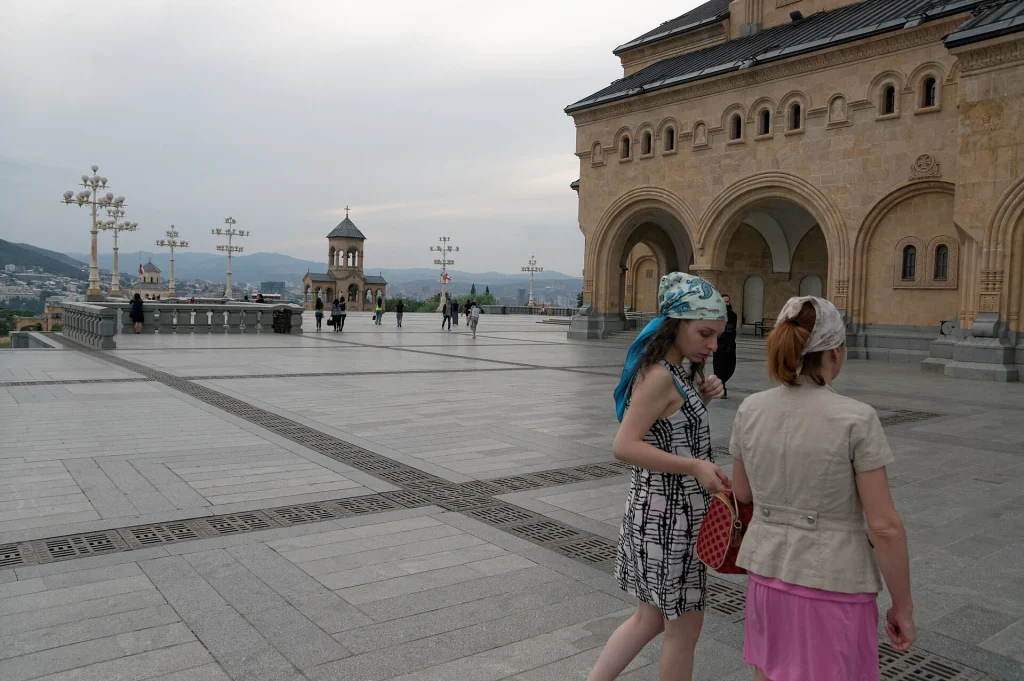
Guyana is classified by the World Health Organization as a country with risk of yellow fever transmission, and some countries require proof of yellow fever vaccination from travellers arriving from Guyana even when not travelling directly; check this specific requirement with a travel health clinic and with Georgia’s consular staff on the MFA visa page well before departure, since it affects what you need to carry at the border. As of October 2026, Georgia does not generally require proof of travel medical insurance for ordinary tourist entry, but this kind of rule has shifted before and can shift again, so verify current status on evisa.gov.ge at the time you apply, and buy comprehensive travel medical insurance regardless of whether it is mandatory, since it is simply sound practice for mountain driving, hiking and any clinic visit. On safety and etiquette, Georgia is a low-crime destination by most measures, but mountain roads, unmarked trail junctions and sudden weather in places like Svaneti and Tusheti are the real risks, not street crime; dress modestly when visiting working Orthodox churches and monasteries (headscarves for women, covered shoulders for everyone), and expect the tamada, or toastmaster, tradition at any shared meal to be treated seriously rather than as a joke. For any personal medical question before or during travel, see a doctor or a registered travel clinic rather than relying on a general guide like this one.
What a G Tour private guide adds
Given the language gap outside the two main cities and the complete absence of Guyanese diplomatic or community support inside Georgia, a private guide closes more practical gaps here than it might for a traveller from a country with deeper ties to the region. Our Licensed Private Guide by the Day works in English and handles everything from reading Georgian-only menus and signage to negotiating village homestays where no one speaks English. Pairing a guide with Car with Driver by the Day removes the driving-licence and mountain-road questions entirely, and for a first arrival, a pre-booked Tbilisi Airport Transfer or Batumi Airport Transfer avoids the single most common stress point for any long-haul traveller landing at 2am after 24 hours in transit.
If this guide is part of a trip you are planning, our Tbilisi to Borjomi or Bakuriani Transfer and Mtskheta on Foot — the Ancient Capital in 2 Hours cover the places it describes with a private guide and driver; a GTour travel expert adapts the route to your dates.
Practical summary
- Visa: assume you need one; apply through evisa.gov.ge at least two to three weeks ahead, and confirm current rules on mfa.gov.ge.
- Flights: no direct route; connect via Istanbul, Doha or Dubai, occasionally via Warsaw or Munich, to Tbilisi or Kutaisi.
- Driving: carry your Guyanese licence plus an International Driving Permit; confirm on georoad.gov.ge.
- Money: Georgian lari only; bring euros or dollars, use cards in cities, carry cash in villages.
- SIM: buy a Magti, Geocell or Silknet SIM or an eSIM on arrival rather than ordering ahead.
- Language: English works in Tbilisi and Batumi; expect Georgian or Russian elsewhere.
- Embassy: none in Georgia for Guyana; confirm the responsible mission with Guyana’s own foreign ministry before you fly.
- Health: check yellow fever documentation requirements and buy travel insurance regardless of whether it is currently mandatory.
- Best season: May to June or September to October for comfortable weather in both the mountains and on the coast.
Sources
- Georgia e-Visa portal
- Georgian Road Department
- Georgian National Tourism Administration
- 7. National Statistics Office of Georgia – International Visitor Arrivals
- 8. Matsne Legislative Herald – Law of Georgia on Foreigners and Stateless Persons
Questions this guide does not answer? Write to info@castle.ge or WhatsApp +995 577 41 63 14 — a person in Tbilisi replies. See also our travel services and all guides.
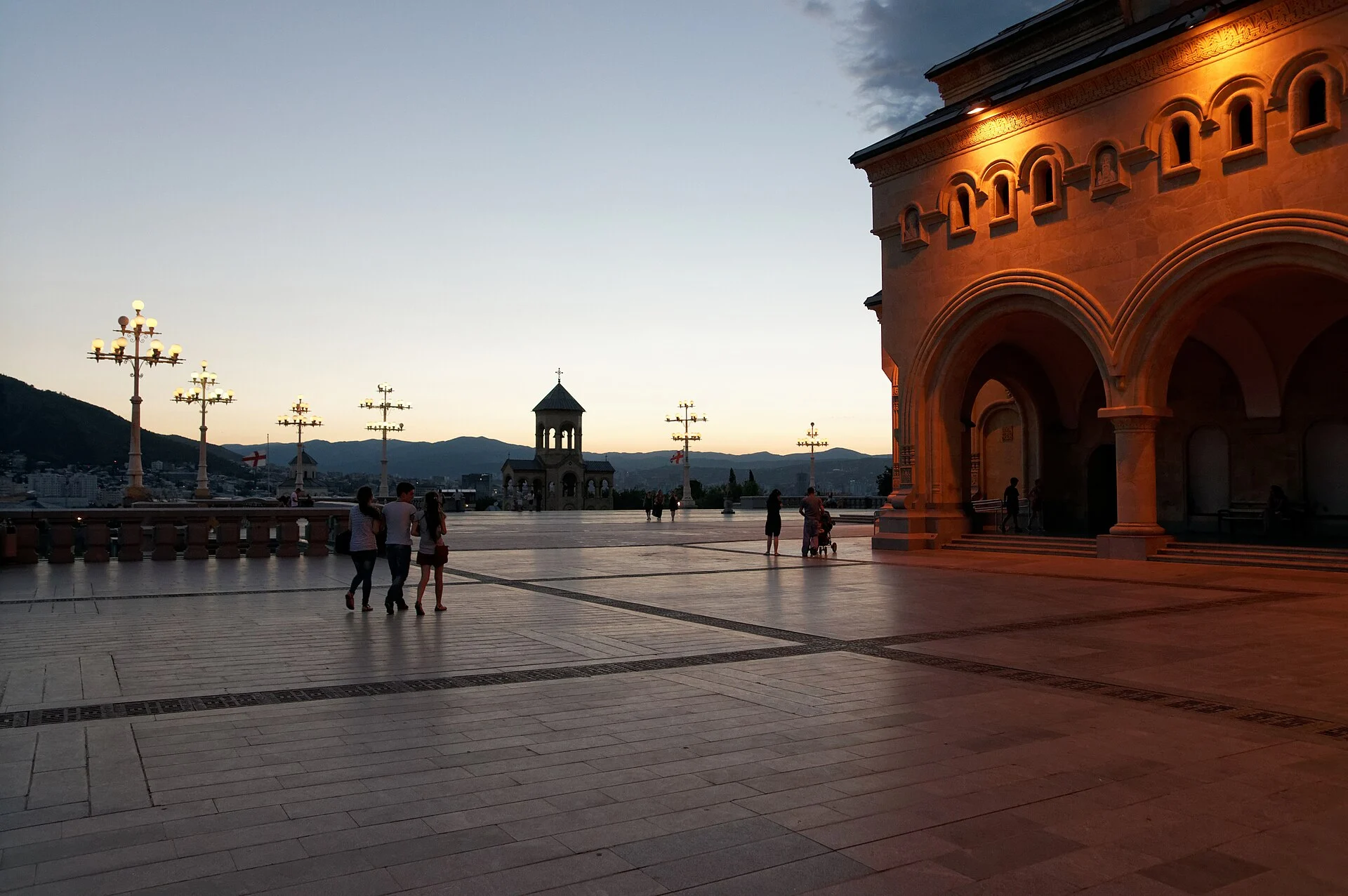
Sameba Cathedral courtyard at dusk, Tbilisi's most recognisable landmark for visitors. · Photo: Vyacheslav Argenberg / Wikimedia Commons, CC BY 4.0
Been to Georgia? Tell us how it went — the best stories are published here.
Share your tripOne email a week: what changed for travellers in Georgia — rules, roads, flights, seasons — plus one place worth the trip. Written by the GTour desk, no advertising, unsubscribe in one click.
This story across our partner network — ქართულად: შენი დასვენება
