

By Mariam Lomidze, Culture & Events Reporter · 28/10/2026
Travellers from Equatorial Guinea almost certainly need a visa to enter Georgia, since Equatoguinean passport holders are not on Georgia’s short unilateral visa-free list, and the practical route for most visitors is the e-visa, applied for online before departure. There are no direct flights between Equatorial Guinea and Georgia, so every itinerary involves at least one, usually two, stops, commonly through a European hub such as Madrid or Paris (where Equatorial Guinea has direct links) and then onward via Istanbul to Tbilisi.
Beyond entry formalities, Georgia works much like it does for any visitor flying in from outside the region: the lari is the only currency that matters day to day, cards are accepted in most towns, Georgian and Russian are the working languages with English concentrated in tourism, and the food leans heavily on bread, cheese, walnuts and grilled or stewed meat rather than anything specifically halal or Central African. Diplomatic and trade ties between Georgia and Equatorial Guinea are thin, so this guide focuses on what actually matters for a trip: paperwork, routing, money, communication and the practical help a private guide or driver adds when no embassy, familiar language or direct flight is standing by to smooth things over.
Visa and entry rules for Equatoguinean citizens
Georgia’s unilateral visa-free regime covers a defined list of nationalities, largely European, North American and a number of Asian states, and Equatorial Guinea is not currently on it. In practice this means Equatoguinean citizens should expect to apply for an e-visa through the official portal, evisa.gov.ge, before travelling, selecting the category that matches the purpose of the trip (tourism, business or transit). Processing is usually completed within a few business days, though the portal itself states the current official timeframe and fee, and both can change, so check the live requirements and documents list there rather than relying on this or any other secondary source.
The Ministry of Foreign Affairs’ consular page is the other place to confirm rules before booking flights, since visa policy is reviewed periodically: geoconsul.gov.ge. If a question cannot be resolved online, the ministry’s list of Georgian diplomatic and consular missions is at mfa.gov.ge; Georgia does not maintain a resident embassy in Equatorial Guinea, so the nearest accredited mission (if any) will depend on current arrangements, and this should be verified directly rather than assumed.
| Item | What to expect |
|---|---|
| Visa-free entry | Not currently available for Equatoguinean passports; verify at geoconsul.gov.ge |
| Practical route | Apply for an e-visa at evisa.gov.ge before flying |
| Processing | Typically a few business days; confirm current timing on the portal |
| Insurance | Travel medical insurance is generally required to support the application; check the minimum cover on evisa.gov.ge |
| Georgian mission locally | No resident embassy in Equatorial Guinea; check mfa.gov.ge for the current accredited mission |
Getting to Georgia: flights and connections
There is no direct flight between any Equatoguinean airport (Malabo or Bata) and Georgia, and none is likely to open in the near term given the thin traffic between the two countries. Most travellers will fly first to a European or Gulf hub on whichever carrier already serves Equatorial Guinea, then pick up a connection into Tbilisi, Batumi or Kutaisi. The one-stop option that most reliably applies is via Istanbul, since Turkish Airlines’ network reaches both Central Africa and Tbilisi, making a single change of plane realistic for travellers already routed through Istanbul. Depending on the outbound carrier used from Malabo or Bata, a second connection through a European gateway before reaching Istanbul or Tbilisi is common, which in practice makes most itineraries two-stop rather than one-stop. Current schedules, seasonal routes and any new direct or one-stop services should always be checked directly with the airline or at tbilisiairport.com, which lists the carriers currently flying into Tbilisi.
Georgia has three international airports: Tbilisi, Batumi on the Black Sea, and Kutaisi, which handles a growing number of low-cost European routes. None of these receives traffic from Equatorial Guinea directly, so the choice of arrival airport should be based on the connection available on the day, not on the final destination in Georgia. For the Georgian leg, GTour’s Tbilisi Airport Transfer and Kutaisi Airport to Tbilisi private transfer cover the first and last mile with a driver waiting at arrivals, which removes one more unfamiliar step after a long multi-stop journey.
Driving licence, money, SIM cards and connectivity
An Equatoguinean national driving licence is not printed in Georgian or English, and Georgia generally expects a foreign licence to be either accompanied by a certified translation or, more simply, supported by an International Driving Permit (IDP) issued before departure. Rules on recognised foreign licences and the length of time they remain valid for driving in Georgia can change, so confirm the current position before renting a car at georoad.gov.ge. Most visitors find it simpler to hire a car with a driver instead; GTour’s Car with Driver by the Day and licensed guide services cover this without the paperwork question at all.
The lari (GEL) is Georgia’s only legal tender, and the reference rate from the National Bank of Georgia on 27 October 2026 was €1 ≈ GEL 2.9082. Cards are widely accepted in Tbilisi, Batumi and Kutaisi hotels, restaurants and larger shops, but smaller guesthouses, mountain villages and market stalls still prefer cash, so carrying some lari is sensible outside the main cities. ATMs are common in towns; withdrawing lari locally generally gives a better rate than exchanging CFA francs or euros in advance. A local prepaid SIM or an eSIM from Magti, Geocell or Beeline is inexpensive and can usually be arranged at the airport or in town on arrival, and all three networks offer reasonable 4G coverage along the main tourist routes, though coverage thins out in remote mountain areas such as Tusheti or upper Svaneti.
Language: what to expect and where English helps
Georgian is the state language and the one used on road signs, menus and official documents, with Russian still widely understood among older Georgians, particularly outside Tbilisi. Spanish, French or Fang, the languages most Equatoguinean travellers will default to, are not commonly spoken in Georgia, so English becomes the practical bridge language. It is reliably understood in Tbilisi’s hotels, main restaurants, licensed guides and most tour operators, less so in rural guesthouses, local markets and smaller towns, where a translation app or a guide who speaks both English and Georgian is genuinely useful. A private guide booked through GTour’s Licensed Private Guide by the Day service, available in English among other languages, removes this gap entirely for the length of a tour.
This work is in t / Wikimedia Commons, Public domain
Food and dietary notes
Georgian cuisine centres on bread (puri), fresh and aged cheese, walnuts, fresh herbs, grilled meat (mtsvadi) and bean or vegetable stews, several of which will feel familiar in texture and spice level to a Central African palate even if the specific dishes are new. Pork appears regularly in Georgian cooking and at the traditional feast known as the supra, so travellers who avoid it for religious reasons should say so clearly when ordering, as menus do not always flag it. Dedicated halal restaurants exist in Tbilisi but are not widespread outside it, and should be sought out in advance rather than assumed; vegetarian eating is, by contrast, very easy, since lenten dishes without meat or dairy are a long-standing part of Georgian Orthodox cooking and appear on most menus. GTour’s Cooking Class in Tbilisi and Supra Evening with a Tamada are both useful low-risk introductions to the cuisine with dietary preferences flagged in advance.
Ties between Georgia and Equatorial Guinea, holidays and embassies
Direct ties between Georgia and Equatorial Guinea are limited. There is no significant Equatoguinean diaspora in Georgia, no direct trade corridor of note, and no shared colonial, linguistic or migration history to draw on, so this is a trip best approached as two countries with little existing connection rather than one with hidden depth to uncover. Diplomatic relations and the current status of any accredited missions should be checked on mfa.gov.ge rather than assumed, and the same applies in reverse for Equatoguinean representation, since Equatorial Guinea does not maintain an embassy in Tbilisi; travellers should confirm with their own foreign ministry which mission currently covers consular matters for Georgia before departure.
Most Equatoguinean visitors who do come are travelling for business, diplomatic work, study or occasional medical treatment rather than leisure, and the best travel windows follow Georgia’s own calendar rather than any shared holiday pattern: warm, dry weather from May to September for wine country, hiking and the Black Sea coast, and snow from December to March in Gudauri and Bakuriani for skiing. Equatorial Guinea’s own national holidays do not affect scheduling in Georgia, but Georgian Orthodox Christmas (7 January) and Easter close many businesses and are worth checking against travel dates at gov.ge or georgia.travel.
Health, insurance and safety
Georgia generally requires visa applicants to hold travel medical insurance valid for the stay, and this is checked as part of the e-visa process at evisa.gov.ge; confirm the current minimum coverage there before applying, since figures are reviewed from time to time. Public healthcare in Tbilisi and the larger cities is reasonable, and private clinics used to treating foreign visitors are available; anyone with an existing condition, planning a mountain trek, or considering treatment in Georgia should speak to a doctor before travelling and should not rely on this guide for medical decisions. GTour’s Medical Travel to Tbilisi service, with an interpreter and accompanied clinic visits, exists specifically for visitors who come for treatment rather than leisure.
Georgia has a low rate of violent crime against tourists, and the ordinary precautions that apply anywhere (watching belongings in crowded markets, agreeing taxi fares or using a booked transfer, and keeping to marked trails in the mountains) are sufficient for most visits. At a Georgian supra, expect numerous toasts led by a tamada (toastmaster); declining alcohol is accepted if explained politely, and modest dress is expected when visiting working churches and monasteries, which make up a large share of the country’s sights.
What a G Tour private guide adds
For a nationality with no established travel pattern to Georgia, no shared language beyond English, and no diaspora network to call on for advice, the value of a private guide is less about insider knowledge and more about removing friction at every step: meeting at arrivals after a long multi-stop flight, handling a driving licence question before it becomes a rental dispute, flagging halal or pork-free dishes before they appear on the table, and explaining supra etiquette in real time rather than after the fact. GTour’s Georgia Classic in 7 Days or a tailored itinerary built around Car with Driver by the Day and a Licensed Private Guide by the Day both work well as a first trip, with every price agreed in writing before departure.
If this guide is part of a trip you are planning, our Tbilisi to Borjomi or Bakuriani Transfer and Mtskheta on Foot — the Ancient Capital in 2 Hours cover the places it describes with a private guide and driver; a GTour travel expert adapts the route to your dates.
Practical summary
- Check visa status at geoconsul.gov.ge and apply for an e-visa at evisa.gov.ge well before booking flights; Equatoguinean passports are not on Georgia’s visa-free list as of October 2026.
- Expect at least one, more often two, connections, typically via a European hub used by Equatorial Guinea’s carriers and then Istanbul into Tbilisi; confirm current routes at tbilisiairport.com.
- Carry an International Driving Permit if self-driving, or book a car with driver instead.
- Use lari (GEL) for cash needs; cards work in cities, less reliably in villages. €1 ≈ GEL 2.91 on 27 October 2026.
- Get a local SIM or eSIM on arrival; Georgian and Russian dominate outside Tbilisi, so lean on English-speaking guides where needed.
- Seek out halal options specifically in Tbilisi; vegetarian eating is easy everywhere via Orthodox lenten dishes.
- Confirm travel medical insurance cover for the e-visa and see a doctor before travel for any personal health question.
- Diplomatic ties are thin; verify the responsible embassy or mission with mfa.gov.ge rather than assuming one exists locally.
Sources
- Georgia e-visa portal
- MFA consular information
- Georgian diplomatic missions list
- Road and driving information
- National tourism information
- Government of Georgia portal
Questions this guide does not answer? Write to info@castle.ge or WhatsApp +995 577 41 63 14 — a person in Tbilisi replies. See also our travel services and all guides.
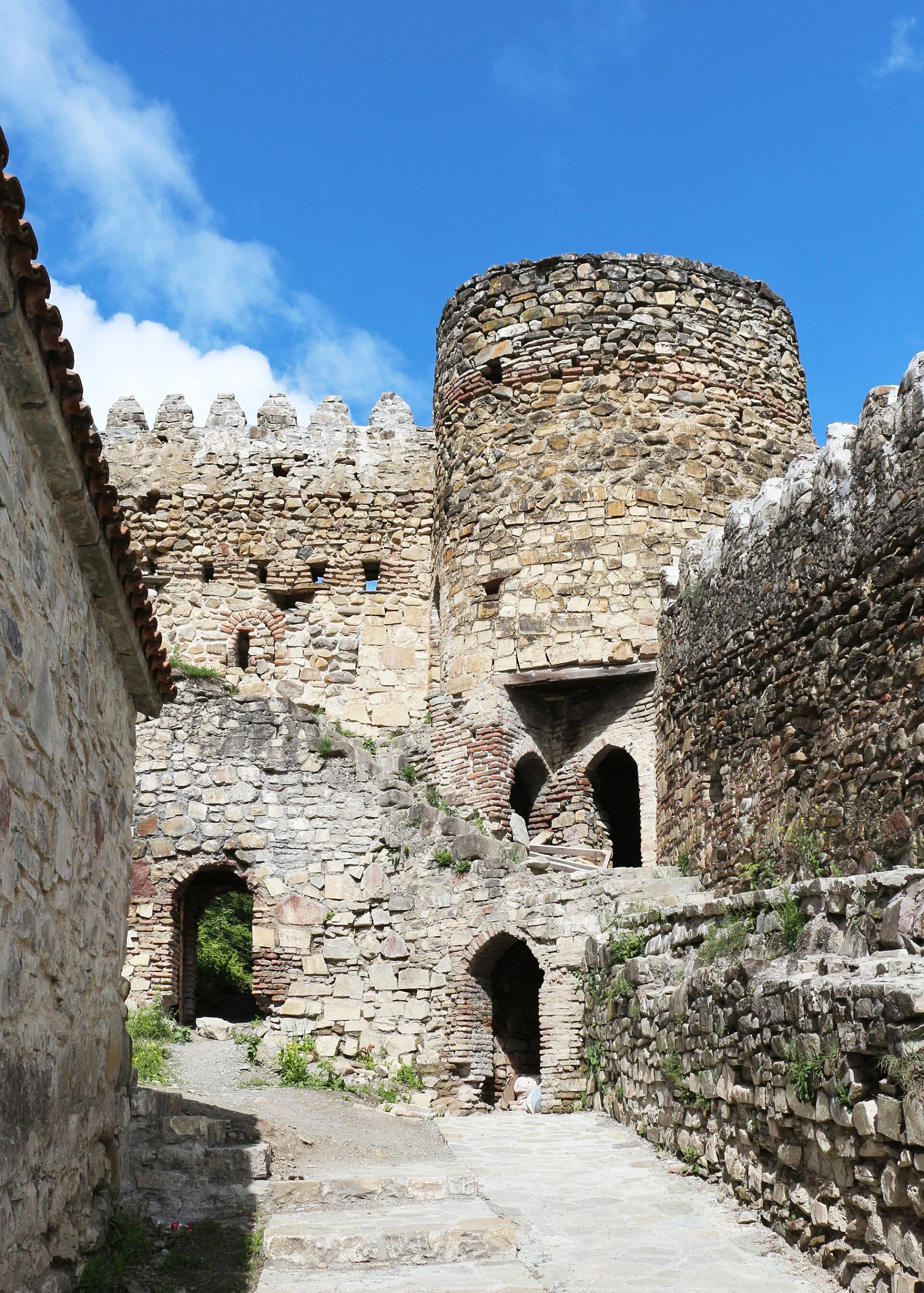
Ananuri fortress on the Aragvi River, a classic day-trip landmark near Tbilisi. · Photo: Bernard Gagnon / Wikimedia Commons, CC BY 4.0
Been to Georgia? Tell us how it went — the best stories are published here.
Share your tripOne email a week: what changed for travellers in Georgia — rules, roads, flights, seasons — plus one place worth the trip. Written by the GTour desk, no advertising, unsubscribe in one click.
This story across our partner network — ქართულად: შენი დასვენება