

By Mariam Lomidze, Culture & Events Reporter · 28/10/2026
Yes, travellers from the Central African Republic need a visa to enter Georgia, and in 2026 there is no direct flight between Bangui and Tbilisi, so every journey involves at least one, usually two, connections. The practical route for most Central African travellers runs through a major hub such as Istanbul, Doha or Dubai, where onward connections to Tbilisi, Batumi or Kutaisi are frequent. Money works differently too: Georgia uses the lari, CFA francs cannot be exchanged locally, and cards are accepted in cities but not reliably in villages.
This guide sets out what actually changes for a Central African passport holder, as opposed to the general advice given to European or North American visitors. Historical and trade ties between the two countries are genuinely thin, so rather than invent a connection that does not exist, we focus on what you need to verify before you fly, what to carry in cash, and where a licensed guide saves you time at the border, in the markets and at the table.
Visa and entry rules
Georgia operates a tiered entry system: citizens of around 90 countries, mostly in Europe, the Americas and parts of Asia, can enter visa-free for short stays, a further group can use the e-visa system, and the rest apply for a visa in the standard way. The Central African Republic is not on the visa-free list, so in practice Central African citizens should expect to apply for an e-visa or a visa in advance of travel. Processing through the e-visa portal is typically completed within a few working days once the application and supporting documents (passport scan, photo, proof of funds, accommodation booking, and often travel insurance) are submitted, but processing times are not guaranteed and can be longer. Because the visa-exempt and e-visa lists are reviewed periodically, the only reliable approach is to check your specific case on the official Consular Services Department page and the evisa.gov.ge portal before booking flights, since rules can and do change without wide notice. The underlying legal framework sits in Georgia’s law on the legal status of foreigners and stateless persons, published on Matsne, the legislative herald, for those who want the primary text rather than a summary.
- Apply through evisa.gov.ge before travel; do not assume a visa on arrival is available.
- Keep digital and printed copies of your e-visa approval, return ticket and hotel booking for airline check-in and border control.
- Re-check the rule close to your travel date, since the visa-exempt list changes periodically.
Getting there: flights and routings
There is no direct air link between the Central African Republic and Georgia, and none is likely to appear soon given the thin demand between the two countries. The realistic routings in 2026 go through one of the major connecting hubs that serve both Bangui and the Georgian airports: Istanbul is generally the most useful, since Turkish carriers connect to a wide spread of African cities and to Tbilisi, Batumi and Kutaisi several times daily; Doha and Dubai are the other common options for travellers connecting from Central Africa through the Gulf. Warsaw and Munich mainly suit travellers already routing through Europe rather than those flying directly out of Bangui. In practice, most Central African travellers will fly from Bangui to a regional or European hub first, then pick up a second connection to Istanbul, Doha or Dubai, and a third flight into Georgia, so total journey times of 15 to 24 hours including layovers are normal. Always check arrivals information and current routes directly on the destination airport sites, Tbilisi International Airport, Kutaisi International Airport, or Batumi International Airport, since schedules change seasonally.
| Connecting hub | Typical use for this route | Notes |
|---|---|---|
| Istanbul | Most common, widest choice of onward times to all three Georgian airports | Useful single-stop option from several African gateway cities |
| Doha | Alternative Gulf routing, strong network across Africa | Usually one change, connects mainly to Tbilisi |
| Dubai | Similar role to Doha, slightly longer layovers on some days | Check whether your flight lands at Tbilisi or requires a further change |
| Warsaw / Munich | Relevant mainly if you are already routing via Europe | Not a direct path from Bangui, included for completeness |
For the final leg, our Tbilisi Airport Transfer and Batumi Airport Transfer services meet arriving passengers at the gate with a name board and track your inbound flight, which is useful after a long multi-stop journey when you do not want to negotiate a taxi in an unfamiliar language.
Money, cards and cash
Georgia’s currency is the lari (GEL). The CFA franc used in the Central African Republic is not exchanged in Georgian banks or exchange bureaus, so bring euros or US dollars in cash, which exchange easily in Tbilisi, Batumi and Kutaisi, and use a card for the rest. Contactless and chip cards are widely accepted in hotels, supermarkets and restaurants in the main cities, but smaller guesthouses, mountain villages and market stalls in Tusheti, Khevsureti or rural Kakheti often take cash only. Carry some lari in small notes for markets, taxis outside the capital and rural lunches. Current exchange rates are published daily by the National Bank of Georgia; at the time of writing one euro buys roughly 2.89 lari and one US dollar roughly 2.60 lari, but check the day’s rate before large exchanges.
SIM cards, eSIM and staying connected
Georgia has three main mobile operators, Magticom, Geocell and Beeline, all offering tourist SIM packages with data at the arrivals halls of Tbilisi, Batumi and Kutaisi airports and in city centre shops. A passport is required for registration, which Central African travellers should have no difficulty with. eSIM options from international providers also work in Georgia and can be activated before you leave Bangui if your onward layovers have wifi, which avoids queueing on arrival. Coverage is reliable in cities and along main roads; expect weaker signal in remote mountain valleys such as Tusheti or upper Svaneti.
Language: what to expect
Georgian is the official language and uses its own script, unrelated to Latin or Arabic alphabets, so street signs and menus are not always intuitive even to well-travelled visitors. Russian is widely understood by an older generation and in the tourism and hospitality sector, and English is increasingly common among younger Georgians, guides, hotel staff and in Tbilisi’s and Batumi’s restaurants and shops. French, the official language of the Central African Republic, is not widely spoken in Georgia outside university staff and a small number of guides, so Central African travellers who are more comfortable in French than English should expect to rely on a guide or translation app for anything beyond basic transactions. This is one area where booking a Licensed Private Guide by the Day genuinely changes the experience, since our guides work in English, Russian, German, French, Italian and Hebrew and can bridge the gap in markets, clinics or government offices.
Embassy and consular coverage
Neither country maintains a resident embassy in the other: Georgia has no embassy in Bangui, and the Central African Republic has no embassy in Tbilisi. Consular coverage for each side is handled through accredited missions in third countries, and which embassy is currently accredited can change, so Central African travellers should check directly with Georgia’s Ministry of Foreign Affairs for the mission responsible for consular matters involving the Central African Republic, and with their own foreign ministry for the Georgian mission that covers their consular needs, before relying on any specific address. The Ministry of Foreign Affairs of Georgia publishes its current list of diplomatic missions and contact details, which is the authoritative source rather than any address found elsewhere.
Food, health insurance and safety
Georgian food centres on bread, cheese, walnuts, fresh herbs and grilled or stewed meat, with khachapuri, khinkali and a wide range of bean, vegetable and nut-based dishes (lobio, pkhali, badrijani) that suit vegetarian travellers well. Central African cuisine shares a love of stews and sauces, though built around cassava, plantain and different spicing, so the texture of Georgian food, rich with walnut and pomegranate, will likely feel new rather than familiar. Pork and wine feature heavily in traditional meals and at the supra feast, so travellers who avoid pork or alcohol for religious reasons should say so clearly when booking; halal-certified restaurants are limited outside Tbilisi, but most kitchens can prepare a meat-free or chicken-based version on request, and our Supra Evening and Cooking Class in Tbilisi can be adapted in advance.
Insurance requirements are tied to the visa process: applicants for an e-visa or standard visa are generally asked to show proof of travel medical insurance covering the stay, and this is checked as part of the application on evisa.gov.ge rather than at the border, so arrange a policy before you apply rather than after. Beyond the visa paperwork, we recommend comprehensive travel insurance covering medical evacuation for any mountain or trekking itinerary, since rural clinics are basic and serious cases are transferred to Tbilisi. For any personal medical question, consult a doctor or a travel clinic before departure rather than relying on general guidance.
Georgia is, by regional standards, a safe destination with low rates of violent crime against tourists; ordinary precautions around belongings in markets and transport hubs apply as anywhere. Dress modestly when visiting working churches and monasteries, expect to remove hats and cover shoulders, and know that photographing military or border installations, common in the mountain regions, is restricted.
Cultural and historical ties, honestly assessed
There is no meaningful historical, trade or diaspora relationship between Georgia and the Central African Republic to report, and readers should treat any claim of a long-standing connection with scepticism. Both countries are landlocked or partly landlocked states shaped by larger regional powers, both have significant mountain and forest geographies, and both have small populations relative to their land area, but these are coincidences of geography rather than ties. Trade volumes between the two countries are negligible and not separately tracked in a way useful to a traveller; Georgia’s own statistics office, Geostat, publishes country-level trade data for those who want to verify this directly. For a first-time Central African visitor, Georgia is best approached simply as an unfamiliar, welcoming country rather than one with a shared past.
What a G Tour private guide adds
Given the language gap, the lack of a resident embassy, and the complexity of a multi-stop flight arriving tired, a private guide and driver reduce the friction points that matter most on a first visit. A licensed guide who speaks French or works comfortably through English and translation apps can handle hotel check-in, market bargaining, church etiquette and menu navigation, while a Car with Driver by the Day avoids the need to read Georgian road signs or negotiate an unmetered taxi after a long flight. For a first three or four days we generally recommend starting with Tbilisi in a Day or the Old Tbilisi Walking Tour to adjust before heading into Kakheti or Kazbegi, where English and French both thin out.
If this guide is part of a trip you are planning, our Tbilisi to Borjomi or Bakuriani Transfer and Mtskheta on Foot — the Ancient Capital in 2 Hours cover the places it describes with a private guide and driver; a GTour travel expert adapts the route to your dates.
Practical summary
- Visa: apply through evisa.gov.ge in advance; confirm current rules on geoconsul.gov.ge, since the visa-exempt list changes.
- Flights: no direct route from Bangui; connect via Istanbul, Doha or Dubai into Tbilisi, Batumi or Kutaisi.
- Money: bring euros or US dollars cash to exchange for lari; cards work in cities, cash needed in villages.
- SIM: buy a tourist SIM (Magticom, Geocell, Beeline) on arrival or activate an eSIM before you fly.
- Language: English and Russian are more useful than French outside a small circle of guides and academics.
- Embassy: neither country has a resident mission in the other; confirm the covering mission with mfa.gov.ge before travel.
- Insurance: travel medical insurance is generally required for the visa application and strongly advised for mountain travel.
- Guide: a licensed private guide smooths the language gap and the first unfamiliar days considerably.
Sources
- Consular Services Department, visa information
- Ministry of Foreign Affairs of Georgia, diplomatic missions
- Law on the legal status of foreigners (Matsne)
- National Bank of Georgia, exchange rates
- National Statistics Office of Georgia, trade data
Questions this guide does not answer? Write to info@castle.ge or WhatsApp +995 577 41 63 14 — a person in Tbilisi replies. See also our travel services and all guides.
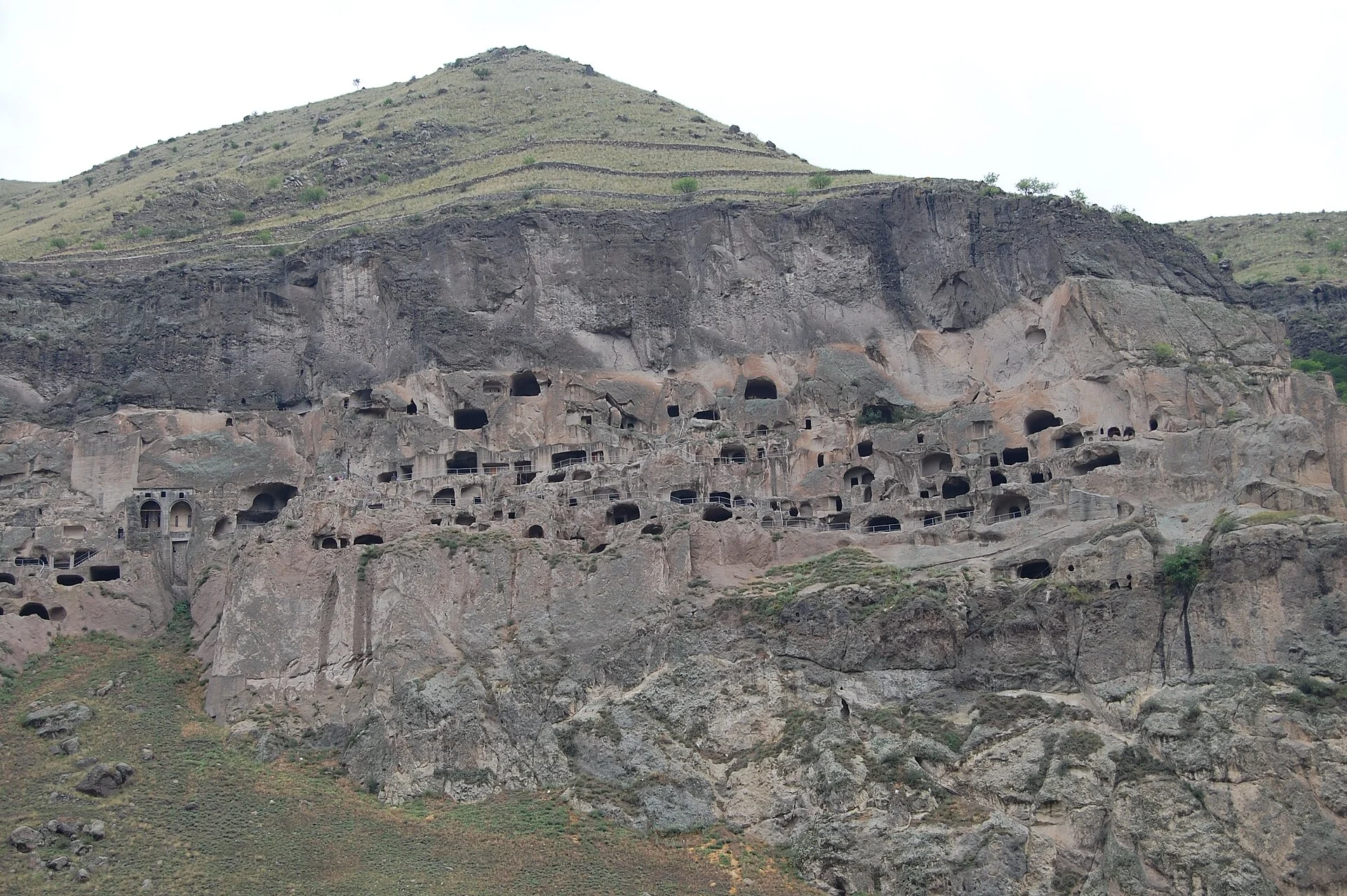
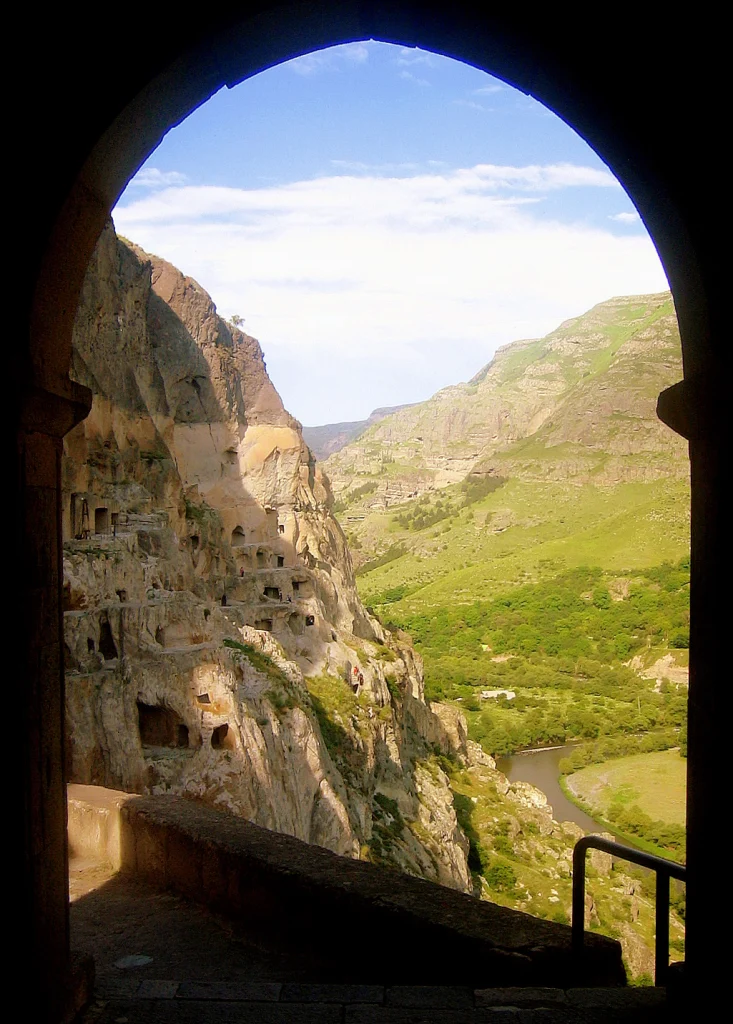
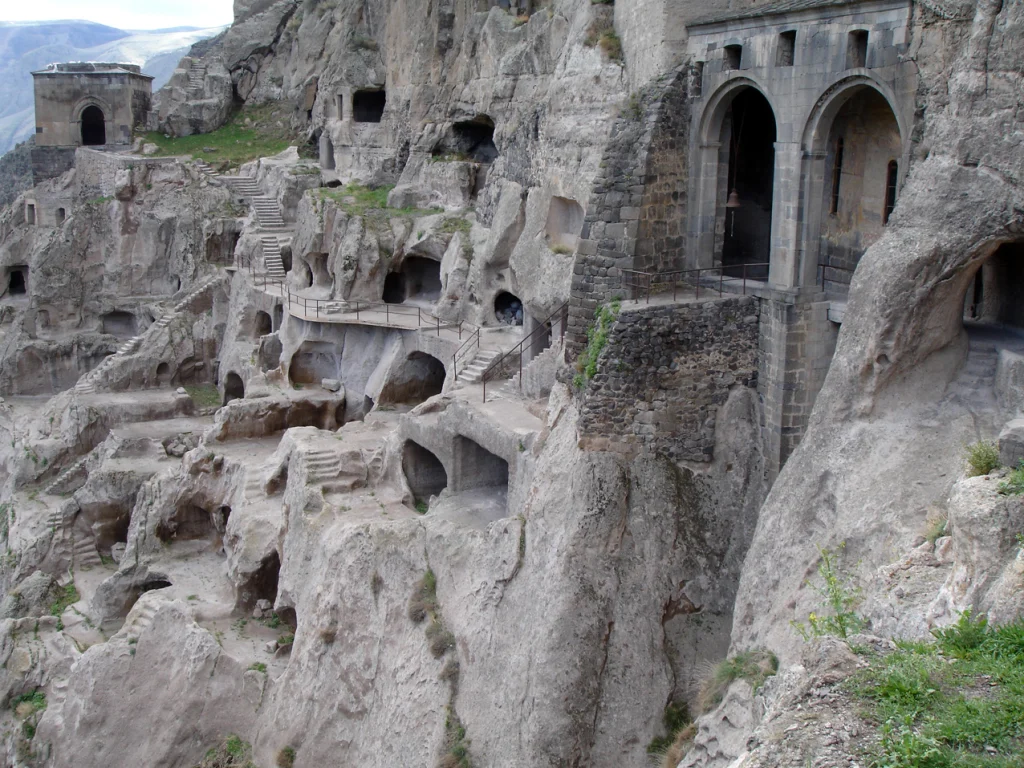
Vardzia, Georgia's famous cave city, a classic day-trip landscape for travellers. · Photo: Andrzej Wójtowicz from Poznań, Poland / Wikimedia Commons, CC BY-SA 2.0
Been to Georgia? Tell us how it went — the best stories are published here.
Share your tripOne email a week: what changed for travellers in Georgia — rules, roads, flights, seasons — plus one place worth the trip. Written by the GTour desk, no advertising, unsubscribe in one click.
This story across our partner network — ქართულად: შენი დასვენება
