

By Prof. Giorgi Pkhakadze, MD, MPH, PhD · 15/09/2026
Ask anyone over forty from Riga to Vladivostok what Borjomi is and they will tell you: the green bottle, the salty fizz, the cure for everything from a hangover to a broken heart. Ask where it comes from and most will not know. It comes from here — a narrow gorge of the Kura river lined with pine forest, a small town of wooden villas, and a park where the spring has been flowing, at 38 degrees, since before anyone bottled it.
The water
Borjomi is a sodium bicarbonate mineral water that rises from 1,500 metres down, where rain that fell on the Bakuriani plateau filtered through volcanic rock for decades and came up carbonated, warm and heavy with minerals. The taste — salty, slightly metallic, faintly of soda — is the taste of the rock it passed through. It was drunk medicinally long before it was drunk for pleasure: for the stomach, the liver, the kidneys, and, in the Soviet canon, for the morning after. It still is. Georgians drink it at the table, especially with the heavier dishes, and swear by a glass before bed.
The Romanovs
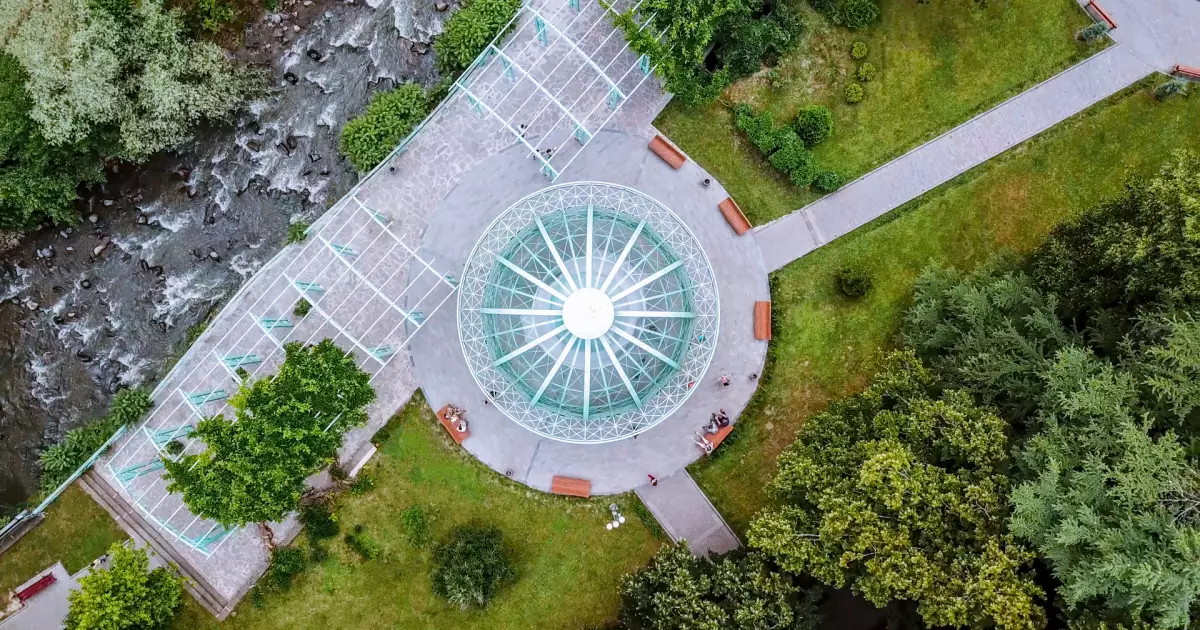
Russian officers stationed in the Caucasus found the springs in the 1820s and reported on them; by the 1860s Grand Duke Mikhail Romanov, the tsar’s brother and viceroy of the Caucasus, had made Borjomi his summer residence and built a palace at Likani, a few kilometres upstream, in a park by the river. The town that grew up around it was a spa in the European manner — villas with carved verandas, a promenade, a bottling plant from 1890, a narrow-gauge railway to the mountains — and it attracted the imperial family, Chekhov, Tchaikovsky and, later, Stalin, who kept a dacha at Likani that is now a hotel. The park in the centre of town, with its pavilion over the spring, is the Romanov park, and the water there is free.
The park and the pools
The spring pavilion is at the entrance: a tap, a queue, people filling bottles. Further into the park, past the cable car and the playgrounds, a path follows the stream for three kilometres through the forest to a set of open-air sulphur pools at about 30 degrees, where you can bathe under the trees. It is the best afternoon in Borjomi and most visitors never find it.
The national park
Borjomi-Kharagauli, opening from the edge of town, is one of the largest protected areas in the Caucasus — 85,000 hectares of forest and alpine meadow, with marked trails from two hours to five days and huts to sleep in. The Green Monastery, a 9th-century church in the woods on the Bakuriani road, is the short version.
See it with GTour
Borjomi is the night on the Borjomi, Bakuriani & Rabati tour and the Vardzia, Rabati & Borjomi tour; both include the park, the spring and the walk to the pools.
ქართულად: ბორჯომის წყალი — წყარო, რომანოვები და რატომ აქვს ეს გემო
