

By Prof. Giorgi Pkhakadze, MD, MPH, PhD · 15/09/2026
Updated 17 October 2026
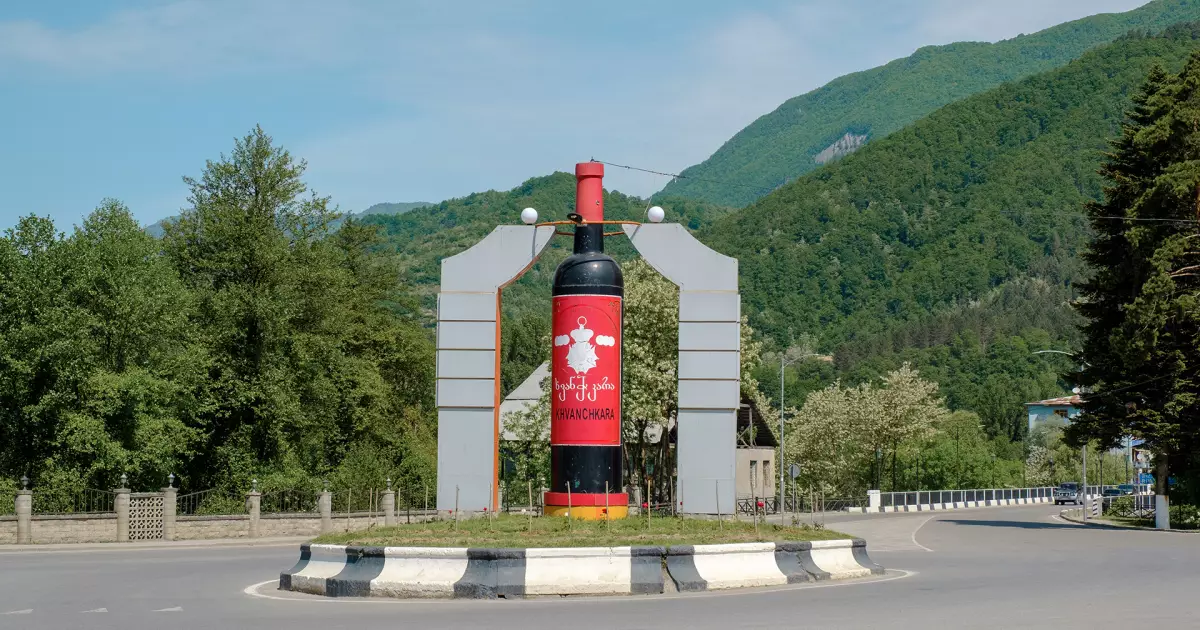
Racha is Georgia’s smallest and highest wine region — a valley of the Rioni river at 500 to 800 metres, ringed by the Caucasus, where the growing season is short and the grapes ripen late and slowly. From a strip of south-facing slopes around the village of Khvanchkara, west of Ambrolauri, comes the wine of the same name: a red, medium-bodied, with the sweetness of ripe raspberries and a clean, dry finish. It is made from two grapes found nowhere else, Alexandrouli and Mujuretuli, and it has been fought over for a century.
Why it is sweet
Not because sugar is added — the good ones have none. Racha’s autumns are cold: the grapes are picked in late October with high sugar, and when they are crushed into the qvevri the fermentation starts and then, as the cellar temperature drops towards winter, stops before all the sugar has turned to alcohol. The wine that results is around 11 per cent alcohol with a natural residual sweetness — semi-sweet by accident of climate, in a method the villages have used for centuries. In spring, if the cellar warms, the wine can start again; traditionally it was drunk young for that reason, and the sweetness was a feature of the place, not a style.
Stalin
The wine was known locally and no further until the 1900s, when the Kipiani family of Khvanchkara began bottling it and won a gold medal in Belgium in 1907. Then Stalin, a Georgian who knew his wines, made it the wine of the Kremlin. He served it at Yalta; the story that he sent cases to Churchill, who preferred it to the sweeter Kindzmarauli, is told in every Rachan cellar. Under the Soviet system it became a brand with a fixed recipe, and demand so far outstripped the few hectares of real vineyard that, for decades, most “Khvanchkara” sold in the USSR was something else with the label. That is the misunderstanding: many people who dislike Khvanchkara have never tasted it.
The real thing
Since Georgia protected the name in the 2000s, only wine from the designated villages and the two grapes may carry it, and a handful of family producers — the Kipianis among them, back on their land — make it properly. It is not a dessert wine: Rachans drink it with the local cooking, which is smoky and rich — lobiani bean pies, the region’s famous ham, shkmeruli chicken in garlic milk — and the sweetness cuts the fat. Try also the dry version of Alexandrouli, which the same families now make, and Tetra, Racha’s white, from the neighbouring gorge.
Visiting
Ambrolauri is four hours from Tbilisi and two from Kutaisi, through the gorge of the Rioni. The wineries are small, in villages, and open by arrangement; the tasting is at a family table with the ham and the bread. Nikortsminda, one of Georgia’s finest carved churches, is twenty minutes away, and Shaori lake above it.
See it with GTour
Two Khvanchkara cellars, Nikortsminda and the lakes are the Racha two-day tour, with a night in a Rachan guesthouse.
This story in Georgian — ქართულად: shenidasveneba.ge
Quick answers
What is Khvanchkara? Khvanchkara is a red, medium-bodied semi-sweet wine made in Georgia's Racha region from two grapes found nowhere else, Alexandrouli and Mujuretuli. It has the sweetness of ripe raspberries with a clean, dry finish and is named after the village of Khvanchkara, west of Ambrolauri.
Why is Khvanchkara sweet if no sugar is added? The sweetness comes naturally from Racha's cold autumns: grapes are picked in late October with high sugar, and fermentation in the qvevri stops as winter cellar temperatures drop before all the sugar converts to alcohol. This results in a wine of about 11 percent alcohol with natural residual sweetness, a method used for centuries in the region.
What is the connection between Khvanchkara and Stalin and Churchill? Stalin, a Georgian who knew his wines, made Khvanchkara the wine of the Kremlin and served it at Yalta. Rachan cellars tell the story that he sent cases of it to Winston Churchill, who reportedly preferred it to the sweeter Kindzmarauli.
Why do many people who think they dislike Khvanchkara actually have never tasted the real thing? Under the Soviet system, Khvanchkara became a mass-market brand with a fixed recipe, but demand far outstripped the few hectares of genuine vineyard. For decades, most wine labeled 'Khvanchkara' sold in the USSR was not authentic, which created the lasting misunderstanding about its quality.
How is authentic Khvanchkara protected today? Since Georgia protected the name in the 2000s, only wine from the designated villages made with the two specific grapes, Alexandrouli and Mujuretuli, may carry the Khvanchkara label. A handful of family producers, including the Kipiani family who originally bottled it and won a gold medal in Belgium in 1907, now make it properly on their own land.
What food is Khvanchkara traditionally paired with? Despite its sweetness, Khvanchkara is not a dessert wine; Rachans drink it with their smoky, rich local cooking such as lobiani bean pies, the region's famous ham, and shkmeruli chicken in garlic milk. The wine's sweetness is said to cut through the fat of these dishes.
How can visitors experience Khvanchkara and the Racha region? Ambrolauri, the gateway to Racha, is about four hours from Tbilisi and two hours from Kutaisi through the Rioni gorge, with small family wineries open by arrangement for tastings at a family table with ham and bread. Nearby attractions include Nikortsminda, one of Georgia's finest carved churches, and Shaori lake, and GTour offers a two-day Racha tour covering two Khvanchkara cellars, Nikortsminda, and the lakes with a night in a Rachan guesthouse.
Been to Georgia? Tell us how it went — the best stories are published here.
Share your tripქართულად: ხვანჭკარა — ტკბილი წითელი, რომელიც სტალინმა ჩერჩილს გაუგზავნა
One email a week: what changed for travellers in Georgia — rules, roads, flights, seasons — plus one place worth the trip. Written by the GTour desk, no advertising, unsubscribe in one click.
This story across our partner network — ქართულად: შენი დასვენება
