

By Prof. Giorgi Pkhakadze, MD, MPH, PhD · 15/09/2026
Updated 17 October 2026
Kazbegi in a day is one thing — the church, the view, the drive back. Kazbegi with a night in the mountains is another, and the difference is Juta.
Where it is
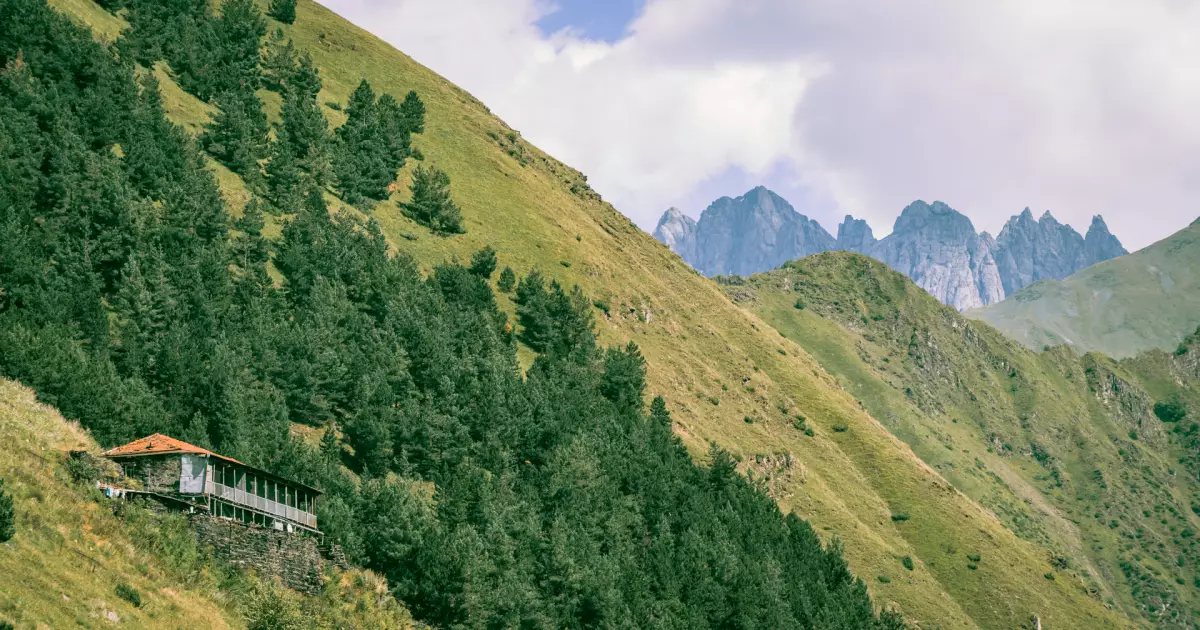
From Stepantsminda a road turns east up the Sno valley, past the village of Sno with its tower, and climbs for twenty kilometres of gravel to Juta, at 2,200 metres — the highest village in the Khevi region and one of the highest in Georgia. A dozen households live here year-round; in winter they are cut off for weeks. Beyond the village there is no road at all, only a footpath into the Chaukhi valley, where the trail ends at the foot of the Chaukhi massif: seven granite pinnacles, the “Georgian Dolomites”, rising a thousand metres straight out of the meadow.
Why dawn
Juta faces east. The first light hits the Chaukhi towers before it reaches anything else, and for twenty minutes they turn from grey to gold to rose while the valley floor is still in shadow. By nine the light is ordinary. By eleven the first groups from Tbilisi arrive. The people who see Juta at its best are the ones who slept in Stepantsminda and left at seven.
The walk
From the last house, a path follows the stream up the valley. It is gentle — an hour to the Fifth Season hut, where there is coffee and a view of the whole massif, and another hour to a small lake below the rock wall. Nothing technical, no altitude problems for most people, and the option to turn back at any point. In June the meadows are full of rhododendron and gentian; in September the grass is yellow and the air has an edge. Bring a layer: 2,200 metres is cold before the sun clears the ridge, even in August.
Above the lake the serious trails begin — over the Chaukhi pass to Roshka and the Abudelauri lakes, a full day for fit walkers. That is a different trip.
Practical
The road is fine for a 4×4 and doubtful for anything else after rain; GTour uses a 4×4 from Stepantsminda. Juta is open from late May to October; earlier and later the road is snowed in. There are two or three simple guesthouses in the village if you want to sleep even higher. No shops — bring water. Phone signal is intermittent, which most guests report as a benefit.
See it with GTour
Juta is the second morning of the Kazbegi 2-day mountain journey, and the third day of Georgia in 7 days.
This story in Georgian — ქართულად: shenidasveneba.ge
Quick answers
Where is Juta and how do you get there? Juta is reached from Stepantsminda by a road that turns east up the Sno valley, passing the village of Sno with its tower, then climbs twenty kilometres of gravel to Juta at 2,200 metres. It is the highest village in the Khevi region and one of the highest in Georgia, best reached by 4×4 since the gravel road becomes doubtful for other vehicles after rain.
Why is dawn the best time to visit Juta? Juta faces east, so the first light hits the Chaukhi towers before anywhere else, turning them from grey to gold to rose over about twenty minutes while the valley floor stays in shadow. By nine the light is ordinary and by eleven tour groups from Tbilisi start arriving, so those who sleep in Stepantsminda and leave at seven see Juta at its best.
What is the Chaukhi massif? The Chaukhi massif is a group of seven granite pinnacles, nicknamed the 'Georgian Dolomites', rising a thousand metres straight out of the meadow beyond Juta village. A footpath leads into the Chaukhi valley where the trail ends at the foot of this massif, since there is no road beyond the village.
What is the walk from Juta like? From the last house, a gentle path follows the stream up the valley, taking about an hour to reach the Fifth Season hut, which has coffee and a view of the whole massif, and another hour to a small lake below the rock wall. It's nothing technical and poses no altitude problems for most people, with the option to turn back at any point; in June the meadows are full of rhododendron and gentian, while September brings yellow grass and crisper air.
Can you continue hiking beyond the lake? Yes, above the lake more serious trails begin, including a route over the Chaukhi pass to Roshka and the Abudelauri lakes. This is a full day for fit walkers and is considered a different, more demanding trip from the easy valley walk.
When is Juta accessible and what facilities does it have? Juta is open from late May to October, as the road is snowed in earlier and later in the year; in winter the dozen year-round households can be cut off for weeks. There are two or three simple guesthouses in the village for those wanting to stay overnight, but no shops, so visitors should bring water, and phone signal is intermittent.
How can you visit Juta with GTour? Juta features as the second morning of GTour's Kazbegi 2-day mountain journey and as the third day of the Georgia in 7 days itinerary. GTour uses a 4×4 vehicle from Stepantsminda to handle the gravel road up to the village.
Been to Georgia? Tell us how it went — the best stories are published here.
Share your tripქართულად: ჯუთა გამთენიისას — ბოლო ხეობა, სანამ მთები დაიხურება
One email a week: what changed for travellers in Georgia — rules, roads, flights, seasons — plus one place worth the trip. Written by the GTour desk, no advertising, unsubscribe in one click.
This story across our partner network — ქართულად: შენი დასვენება
