

By Prof. Giorgi Pkhakadze, MD, MPH, PhD · 15/09/2026
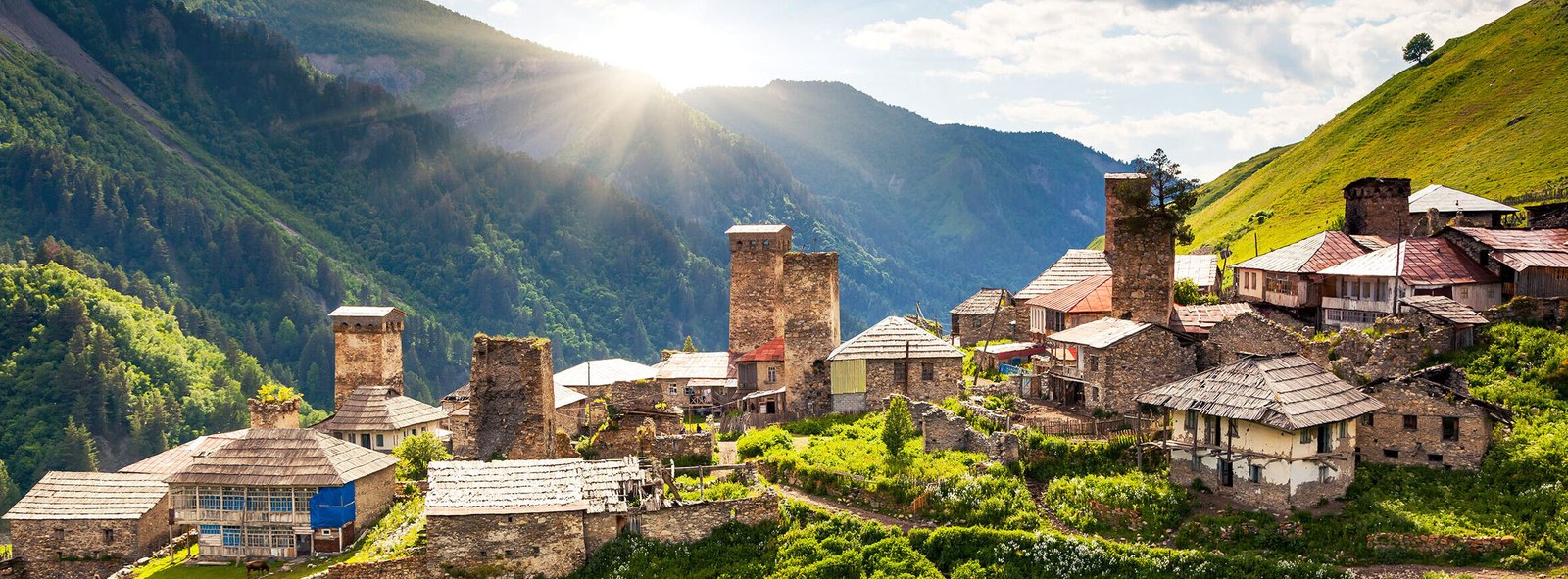
The first sight of Mestia, after seven hours of road from Tbilisi, is not the mountains. It is the towers: two dozen of them, square, tapering, twenty-five metres high, rising out of the town like the masts of a fleet. Further up the valley, in Ushguli, there are more — dozens, packed together, with the snow wall of Shkhara behind them. They look military, and they were. But no army built them.
A fortress per household
A Svan tower, a koshki, belonged to a family. It stood beside the family house, connected to it by a passage, and it was where the family went when trouble came. The ground floor held food; the upper floors, reached by ladders pulled up behind you, held people; the top floor had slit windows for archers and a projecting parapet with holes in the floor for dropping things on whoever was below.
Trouble came from two directions. From outside, occasionally: Svaneti’s altitude and its one narrow road kept most invaders away, and the towers were rarely tested by armies. From inside, constantly. Svan society ran on lineage and honour, and blood feuds between families could last generations. A tower was insurance against your neighbour. The more towers a village had, the more feuds it had.
Most of the towers standing today date from the 9th to the 13th century — Georgia’s Golden Age in the lowlands, and a time of intense building in the mountains. Some were still in use as refuges in the 19th century, when Russian officers arrived to find a society with no lords, no serfs and a great many armed men.
How they are built
Four or five storeys of rough stone bound with lime mortar, walls a metre thick at the base narrowing towards the top, which gives them their characteristic taper and their resistance to earthquakes — Svaneti has plenty. The roof is a pitched slate cap, sometimes with a small wooden gallery. Inside, the floors are timber and the ladders steep; climbing a tower is the best ten minutes of a Svaneti visit, and the view from the top explains everything about the village below.
Ushguli, four villages at 2,100 metres, is a UNESCO World Heritage site because it preserves this landscape whole: towers, houses, church and fields in the arrangement they have had for a thousand years. It is the highest continuously inhabited settlement in Europe, and in winter it is cut off for weeks.
What the towers guarded
Not only people. Svaneti was Georgia’s safe: when the lowlands fell to invaders, icons, manuscripts and church treasures were carried up the Enguri gorge and hidden in village churches and towers. Much of it is still there. The Svaneti Museum in Mestia holds gold and silver icons, illuminated gospels and a collection of Georgian art that would be famous anywhere else; here it sits at the end of the road.
See it with GTour
Our Mestia & Ushguli three-day tour stays two nights in Mestia, climbs a tower, visits the museum and drives by 4×4 to Ushguli beneath Shkhara. Svaneti is also the mountain chapter of Georgia in 10 days.
ქართულად: სვანური კოშკები — რატომ აშენებდა ყოველი ოჯახი ციხეს
