

By Mariam Lomidze, Culture & Events Reporter · 09/11/2026
Yes, you can fly a recreational drone in Georgia in 2026, but the country now runs a genuine licensing and airspace system rather than the informal approach of a few years ago. Drones over 250 grams must be registered with Georgia’s Civil Aviation Agency, flights are banned outright near airports, borders, military sites and most working monasteries, and national parks require written permission before you take off. None of this is designed to stop ordinary travellers photographing Kazbegi or Svaneti; it exists because Georgia shares active land borders with Russia, Abkhazia and South Ossetia, and because several of its best viewpoints sit inside protected areas or active religious sites.
The short version: register your drone if it weighs more than 250 g, check the map before you fly near any airport or border region, ask the Agency of Protected Areas before flying inside a national park, and never fly over a monastery during a service or without asking the resident clergy. Rules and exact distances change periodically, so treat every figure below as a starting point for 2026 and verify against the official source linked before you travel, not after you have already flown.
Who regulates drones in Georgia
Civil drone flights fall under the Civil Aviation Agency of Georgia, which operates under the Ministry of Economy and Sustainable Development. Georgia has moved its rules toward the same open, specific and certified categories used in the European Union, meaning recreational flyers mostly sit in the “open” category with weight and distance limits, while commercial filming, surveying or anything flown beyond visual line of sight needs a specific-category authorisation. Georgian aviation legislation, including secondary acts on unmanned aircraft, is published through the Legislative Herald of Georgia, and it is worth reading the current consolidated text rather than relying on blog summaries, since the agency updates annexes without much international press coverage. Start at Matsne, the Legislative Herald of Georgia and search for the unmanned aircraft systems regulation in force on your travel date.
Registration and weight classes
As a general rule for 2026, treat the following as the baseline, then confirm specifics for your drone model and planned flight before departure.
| Weight / category | Typical treatment |
|---|---|
| Under 250 g, no camera capable of identifying people | Lightest touch, usually no registration, but border, airport and park rules still apply |
| Under 250 g with a camera (most consumer drones, including DJI Mini models) | Registration as an operator is generally required once any camera is fitted |
| 250 g to 25 kg, recreational use, visual line of sight | Operator registration, online remote pilot training or competency test, insurance strongly advised |
| Commercial filming, surveying, beyond visual line of sight, over crowds | Specific-category authorisation from the Civil Aviation Agency, often with a Georgian point of contact |
Registration is done online, bring your drone’s serial number and your passport details, and keep the confirmation on your phone, since border police and park rangers in Georgia routinely ask to see it. For the current registration portal, fee schedule and the official English-language text of the rules, go through the Ministry of Economy’s aviation pages at economy.ge, which lists the Civil Aviation Agency among its subordinate bodies, and cross-check with Matsne for the binding legal text.
No-fly zones: airports, borders and military sites
Every international airport in Georgia carries a control zone, typically several kilometres in radius, inside which any drone flight needs separate air traffic control clearance, which is rarely granted to tourists. This applies around Tbilisi, Kutaisi and Batumi, and around Georgia’s military airbases. Before any flight within sight of an airport, check the current zone and contact details through the airports themselves: Tbilisi International Airport, Kutaisi International Airport and Batumi International Airport.
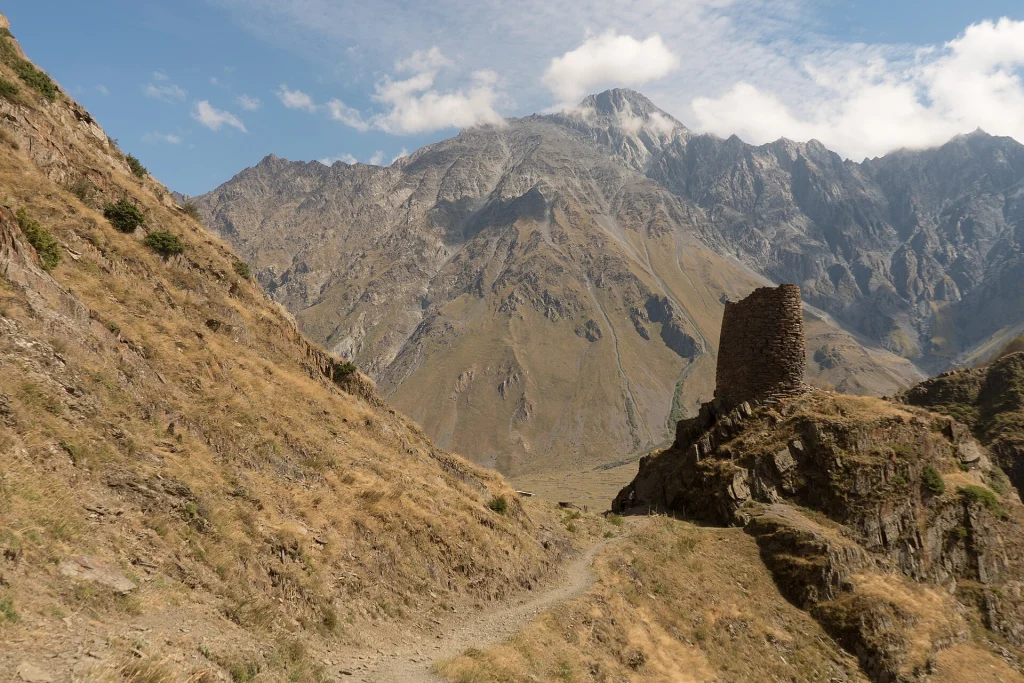
Border areas are stricter in Georgia than in most European countries, for reasons that go beyond aviation law. The administrative boundary lines with the Russian-occupied regions of Abkhazia and South Ossetia, and the state borders with Russia, Azerbaijan, Armenia and Turkey, are patrolled and in places disputed. Flying a drone near any of these lines, even a cheap toy model, can be treated as a security incident rather than a traffic offence, and confiscation and detention are both possible outcomes, not just a fine. Davit Gareji monastery, which straddles the Georgia-Azerbaijan frontier, is a specific example worth naming: do not fly there under any circumstances, and do not assume a civilian-looking fence marks the actual border. Before travelling anywhere within a few kilometres of a border or conflict-adjacent line, check current advice from Georgia’s Ministry of Foreign Affairs and, if you hold a foreign passport, your own government’s travel advisory for Georgia.
Monasteries, Gergeti and other religious sites
Georgia has no single national law naming individual churches as no-fly zones, but in practice flying over an active monastery is treated as a serious breach of etiquette and, at several well-known sites, is actively stopped by resident clergy or park rangers. Gergeti Trinity Church above Stepantsminda is the clearest case: it sits inside Kazbegi National Park, close to the Russian border, on a hilltop where drones already draw complaints from monks and from other visitors trying to photograph the church without a buzzing rotor in every shot. Treat it as off-limits unless you have both protected-area permission and the monastery’s consent, and expect neither to be granted easily during services or pilgrimage days. The same courtesy applies at Jvari Monastery and Svetitskhoveli Cathedral in Mtskheta, at David Gareji, and at working monasteries in Svaneti, Racha and Kakheti. For background on which sites carry UNESCO World Heritage status and therefore extra sensitivity around their setting, see the official listings for the Historical Monuments of Mtskheta and Upper Svaneti. For visiting etiquette at Orthodox sites generally, the Patriarchate of Georgia publishes guidance in English.
If you are travelling with a guide, for example on a Kazbegi trip such as our Georgian Military Highway — Ananuri, Gudauri and Gergeti in a Day or the Gergeti Glacier and Kazbek Base Camp trek, ask in advance whether drone photography is realistic for that day; our guides know which rangers are on duty and whether a given monastery is hosting a service.
National parks and protected areas
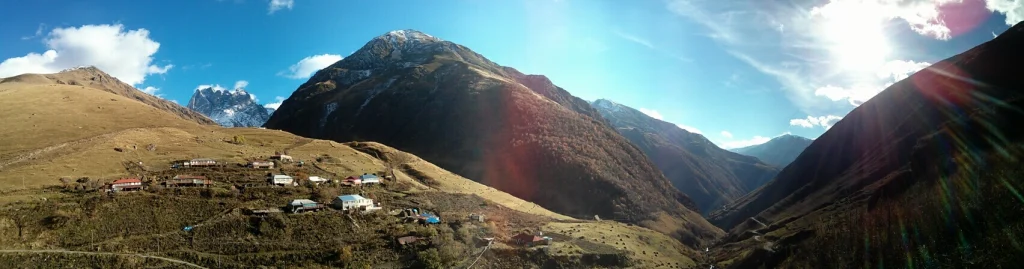
Georgia’s national parks, managed by the Agency of Protected Areas, require prior written permission for drone flights in almost every case, and permission can take days to process, not minutes. This covers Kazbegi National Park, Borjomi-Kharagauli National Park, Lagodekhi Protected Areas, Tusheti Protected Landscape, Kolkheti National Park and the rest of the network. Rules differ park by park on altitude limits, approved launch points and seasonal closures around nesting birds or calving wildlife, so a blanket assumption that “parks allow drones with a permit” is not safe planning. Apply, or at least check current requirements and the application form, through the Agency of Protected Areas before you travel, ideally several weeks ahead if you want footage for commercial use.
Popular landscapes that sit just outside formal park boundaries, such as open hillsides around Mestia or vineyard country in Kakheti away from villages and infrastructure, are generally simpler, but local landowner consent and the general airspace rules below still apply.
Fines and enforcement
Unauthorised drone flights in restricted airspace, over airports, near borders or inside protected areas without permission can draw administrative fines under Georgian aviation and border legislation, and in border-sensitive cases the drone itself may be confiscated pending investigation, with the process handled by border police rather than aviation inspectors. Fine amounts are set in Georgian lari and have been adjusted in recent years, so do not rely on a figure quoted in an older blog post; check the current penalty schedule referenced in the Civil Aviation Agency’s rules via Matsne, and note that a criminal rather than administrative process can follow a flight near a military installation or an active border incident, which is a materially more serious outcome than a parking-ticket-style fine.
Where drone flying is commonly tolerated
Away from airports, borders, military areas, parks and religious sites, recreational drone flying in open countryside, over your own accommodation’s grounds with the owner’s consent, or over agricultural land with the farmer’s permission, is broadly unremarkable in Georgia and raises little local concern. Photographers regularly fly over vineyard rows in Kakheti between villages, over river valleys in Racha and Lechkhumi, and along stretches of the Black Sea coast outside Batumi’s port approach zone, always subject to the airport control zone and border checks above. Svaneti’s wider valley floor outside Mestia and Ushguli‘s immediate village core is another area where flights are common in practice, though Ushguli’s UNESCO status and its position close to sensitive high mountain terrain mean caution and a modest flight ceiling are sensible.
If this guide is part of a trip you are planning, our Caucasus Highlands in 7 Days — Kazbegi, Khevsureti and Tusheti and Tbilisi to Gudauri Transfer — Ski Season 4×4 cover the places it describes with a private guide and driver; a GTour travel expert adapts the route to your dates.
Practical summary
- Register any drone over 250 g with Georgia’s Civil Aviation Agency before travel; check the current rules on matsne.gov.ge and via economy.ge.
- Never fly inside the control zones of Tbilisi, Kutaisi or Batumi airports without separate clearance; check current zones with Tbilisi, Kutaisi and Batumi airports.
- Stay well away from the Abkhazia and South Ossetia administrative boundary lines and all international borders, including David Gareji; check mfa.gov.ge before travel to any border-adjacent region.
- Apply to the Agency of Protected Areas well in advance for any flight inside Kazbegi, Borjomi-Kharagauli, Lagodekhi, Tusheti or other protected areas.
- Treat Gergeti Trinity Church, Jvari, Svetitskhoveli and other active monasteries as off-limits without explicit clergy and park consent.
- Carry your registration confirmation and ask local guides or rangers before flying if you are unsure; rules and distances are revised periodically.
- Build drone-friendly days into a guided itinerary rather than improvising near sensitive terrain, for example a Kazbegi day with our Licensed Private Guide by the Day, who can confirm what is realistic on the day.
Sources
- Legislative Herald of Georgia, English portal
- Ministry of Economy and Sustainable Development
- Agency of Protected Areas
- Ministry of Foreign Affairs of Georgia
- Historical Monuments of Mtskheta, UNESCO
- Upper Svaneti, UNESCO
- Patriarchate of Georgia
Questions this guide does not answer? Write to info@castle.ge or WhatsApp +995 577 41 63 14 — a person in Tbilisi replies. See also our travel services and all guides.
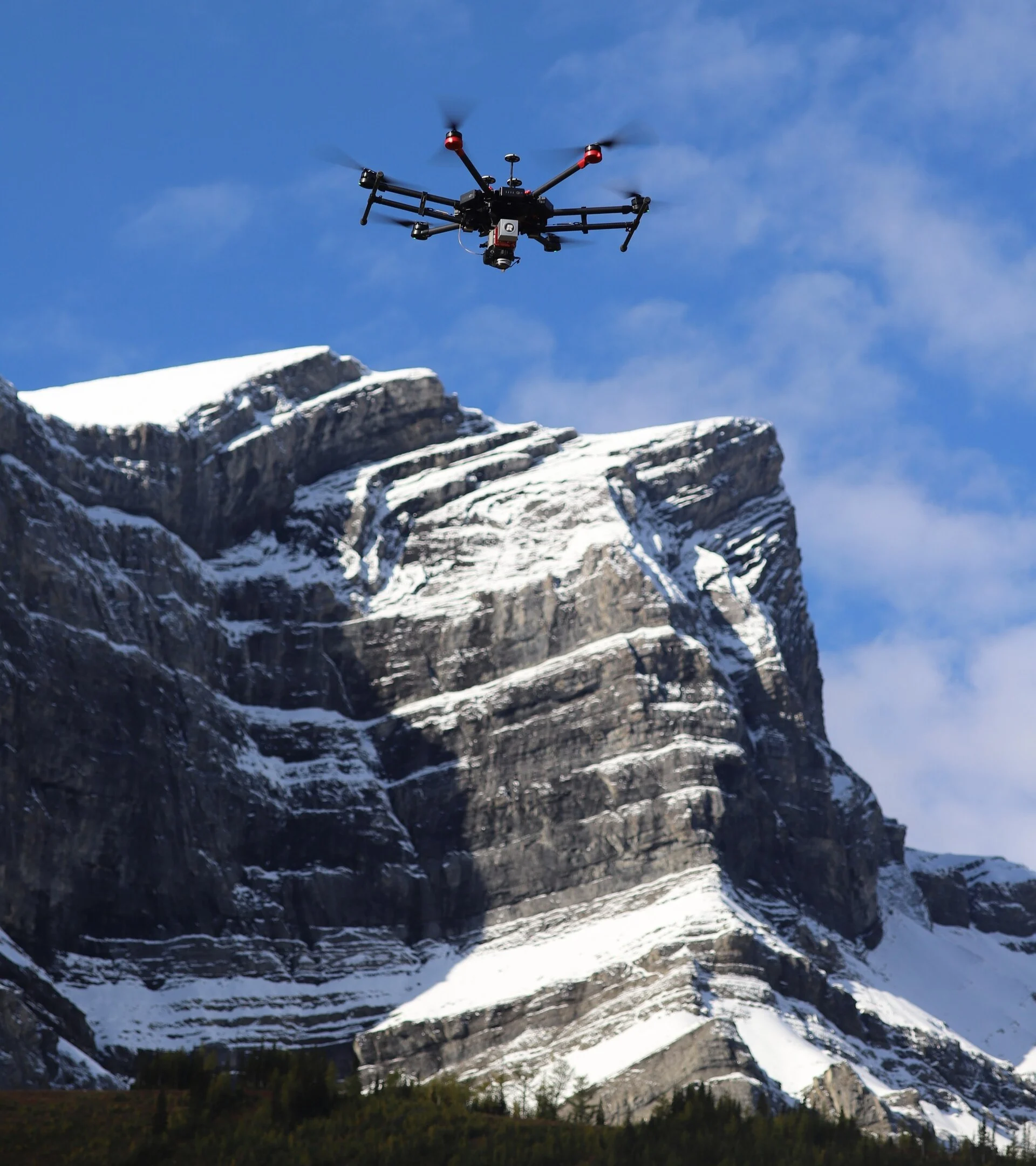
A consumer drone hovers over a snow-capped mountain, illustrating recreational drone flights in Georgia's highlands. · Photo: Km4water / Wikimedia Commons, CC BY 4.0
Been to Georgia? Tell us how it went — the best stories are published here.
Share your tripOne email a week: what changed for travellers in Georgia — rules, roads, flights, seasons — plus one place worth the trip. Written by the GTour desk, no advertising, unsubscribe in one click.
This story across our partner network — ქართულად: შენი დასვენება
