

By David Kiknadze, Transport & Openings Reporter · 09/11/2026
Georgia itself places almost no quantity limit on the wine or chacha a visitor carries out in personal luggage, as long as it looks like personal use rather than a commercial shipment. The number that actually matters is set by the country you are flying into: the European Union, the United Kingdom, the United States and the Gulf states each cap how much alcohol a traveller can bring in duty-free, and several Gulf states restrict alcohol altogether. Churchkhela, cheese, honey and other food souvenirs usually travel without trouble in reasonable quantities, but old icons, manuscripts, carpets or anything that could pass for an antique need a export certificate from Georgia’s heritage authority before they leave the country, regardless of where you are headed.
This guide sets out what Georgia asks of you on departure, what your destination is likely to ask of you on arrival, and the practical steps for cash declarations, drones, medicines and duty-free shopping at Tbilisi and Kutaisi airports. Because customs allowances and thresholds are revised periodically by each government, every figure below is given as a conservative guide with a link to the body that sets the current rule, and you should confirm the exact number before you pack, particularly if you are carrying more than one or two bottles.
What Georgia lets you take out
Georgian customs law treats wine, chacha and other spirits bought in Georgia as ordinary goods in a traveller’s luggage, and there is no published per-bottle ceiling for non-commercial personal export comparable to the duty-free allowances other countries impose on arrival. In practice this means a few bottles of wine and a bottle or two of chacha in checked luggage, properly sealed, rarely attract attention leaving Tbilisi or Kutaisi. Large volumes, multiple identical cases, or anything that looks intended for resale can be treated as a commercial export, which requires a customs declaration and may require phytosanitary or wine-quality paperwork issued through the National Wine Agency of Georgia. If you are buying in bulk from a winery for a wedding, a restaurant or a gift run, ask the winery to help with the export paperwork rather than assuming it is covered by a tourist’s allowance.
The underlying rules sit in Georgia’s Tax Code and customs regulations published through the Legislative Herald of Georgia. Because enforcement practice and thresholds can change, confirm current guidance with Georgian customs before travelling with any quantity beyond normal personal consumption.
What your destination will actually let in
The binding constraint on how much wine or chacha you can keep duty-free is almost always the destination’s own allowance, checked on arrival, not on departure from Georgia. These figures are widely published by the destinations themselves and are given here as a general, conservative guide.
| Destination | Spirits over 22 percent ABV | Wine | Notes |
|---|---|---|---|
| European Union (non-EU arrival) | 1 litre, or 2 litres of fortified/sparkling under 22 percent | 4 litres still wine (additional to spirits allowance) | Combining categories by splitting the allowance is permitted proportionally; confirm current figures at europa.eu |
| United Kingdom | 4 litres, or 9 litres of fortified/sparkling wine under 22 percent | 18 litres still wine | Figures are set by UK border authorities and are reviewed periodically; verify before travel |
| United States | Commonly cited as around 1 litre duty-free per adult | State alcohol laws add further limits | Federal personal exemption and state import rules both apply; verify with US customs before travel |
| Gulf states (UAE, Saudi Arabia, Qatar, others) | Often none for personal non-licensed import | Often none | Several Gulf states prohibit or tightly licence alcohol import; do not assume any duty-free allowance without checking the destination’s own customs authority and your airline |
Chacha, which is typically distilled to 40 to 65 percent alcohol by volume, is counted in the spirits category rather than the wine category almost everywhere, so a bottle of strong chacha uses up your spirits allowance faster than an equivalent volume of wine would.
Churchkhela and other food souvenirs
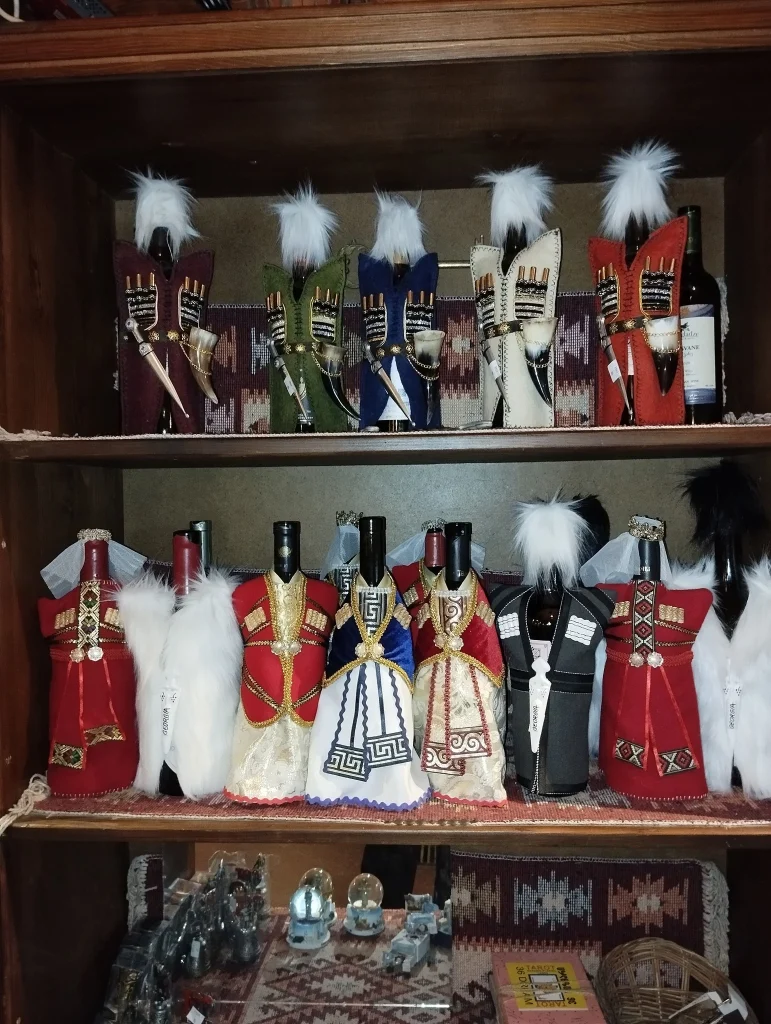
Churchkhela, made from grape must, flour and walnuts, travels well and is generally accepted in reasonable personal quantities by the EU, UK and USA, since it contains no fresh meat or dairy. The EU and several other destinations do restrict or ban the import of fresh meat, dairy and some fruit and vegetable products from outside the bloc, so cheese, cured meats and fresh fruit bought in a Georgian market are a different matter from packaged, shelf-stable sweets. If you are travelling with a large quantity of any food item, declare it on arrival and let the destination’s customs officer decide, rather than guessing.
Antiques, icons and anything that looks old
Georgia classifies icons, manuscripts, antique carpets, old coins, archaeological finds and similar items as cultural heritage, and their export is controlled whether or not they were bought from a licensed antiques dealer. Before any such item leaves the country you need an expert opinion and, where required, an export permit issued by the National Agency for Cultural Heritage Preservation of Georgia, working under policy set by the Ministry of Culture and Sport of Georgia. The process typically involves submitting the item, or clear photographs and a description, for assessment; genuinely old icons and church items are frequently refused an export permit altogether, since they are considered part of the national patrimony.
- Keep receipts and any gallery or workshop paperwork for newly made items that resemble antiques, since customs may ask you to prove an icon or carpet is contemporary reproduction rather than heritage.
- Apply for an export assessment well before your flight; last-minute applications at the airport are not a reliable fallback.
- When in doubt, buy from a dealer who can provide written confirmation that the piece is not subject to export restriction.
Drones, medicines and other controlled items
Drones are legal to bring into and travel with inside Georgia for recreational photography, and operators report no routine confiscation at Tbilisi or Kutaisi airports, but rules on registration, no-fly zones around the parliament, military sites and the airports themselves do apply, and some destination countries require registration or a permit before a drone is brought in at all. Confirm current Georgian aviation rules and any destination-specific drone import restriction well before your trip, since this is an area where national rules change often.
For medicines, carry prescription drugs in original packaging with the prescription or a doctor’s letter, particularly for anything containing codeine, strong painkillers, sleeping tablets or psychiatric medication, since what is sold over the counter in Georgia may be a controlled substance elsewhere and vice versa. If you have a chronic condition and plan to travel with a supply of medication, check both Georgia’s rules and your destination’s rules in advance, and speak to your own doctor about an appropriate travel letter. This is general travel information, not medical advice; for anything specific to your health or medication, consult a physician before you fly.
Cash declaration thresholds
Georgia requires travellers carrying cash or bearer negotiable instruments above a set threshold, commonly cited as being in the region of GEL 30,000 or its equivalent in foreign currency (roughly USD 11,560, EUR 10,350 or GBP 8,630 at the National Bank of Georgia’s rate for 9 November 2026), to declare the amount when crossing the border, in either direction. This threshold and the declaration procedure are set under Georgian law and enforced by customs at the border; because the figure is reviewed periodically, confirm the current threshold and form at the Legislative Herald of Georgia or with Georgian customs before you travel with large sums.
On the other side of your journey, the European Union requires a declaration for cash of EUR 10,000 or more entering or leaving the bloc, and the UK and US apply broadly similar GBP 10,000 and USD 10,000 thresholds respectively. These are well-established figures but are worth reconfirming with your destination’s own customs authority, since undeclared cash above the threshold can be seized even when it was earned and taxed legitimately.
Duty-free at Tbilisi and Kutaisi airports
Both Tbilisi International Airport and Kutaisi International Airport operate duty-free zones after security with a selection of Georgian wine, chacha and brandy alongside the usual perfume, tobacco and confectionery, and both list their current shop and brand line-up on their own websites. Buying wine or chacha in the duty-free zone does not exempt you from your destination country’s arrival allowance: a bottle bought airside in Tbilisi still counts against the EU, UK or US limit when you land, exactly as it would if you had bought it from a Kakheti cellar door. Keep the duty-free receipt and the sealed bag, since some destinations ask to see proof of airside purchase for the security-liquid exemption on connecting flights.
If your itinerary includes a wine region before your flight, cellar visits such as Chacha and Qvevri — a Distillery and Cellar Day in Kakheti or the Kakheti Classic — Sighnaghi, Bodbe and Two Cellars in a Day are a more memorable way to choose bottles than the airport shelf, and most reputable estates will pack bottles for check-in on request.
If this guide is part of a trip you are planning, our Tbilisi to Kakheti Transfer — Telavi or Sighnaghi and Georgia in 4 Days — Tbilisi, Kazbegi and Kakheti cover the places it describes with a private guide and driver; a GTour travel expert adapts the route to your dates.
Practical summary
- Georgia places no fixed personal export limit on wine or chacha, but large or clearly commercial quantities need customs paperwork, not a tourist allowance.
- Your destination’s arrival allowance is the real limit: roughly 1 litre of spirits and 4 litres of wine for the EU, broadly more generous figures for the UK, around 1 litre for the US, and little or no allowance in several Gulf states, each confirmed on the relevant official page before you fly.
- Churchkhela and other packaged, shelf-stable sweets usually travel without issue; fresh meat, dairy and produce are a different, often restricted, category.
- Icons, manuscripts, antique carpets and anything that could pass for heritage need an export assessment and, where required, a permit from the National Agency for Cultural Heritage Preservation before departure.
- Carry prescription medicines in original packaging with documentation, and check both Georgian and destination rules for anything controlled.
- Declare cash above roughly GEL 30,000 (or the destination’s own threshold, commonly EUR, GBP or USD 10,000) when crossing any border, and confirm the exact current figure with the relevant customs authority.
- Duty-free purchases at Tbilisi or Kutaisi still count toward your destination’s arrival allowance, so keep the receipt and sealed bag.
Sources
- EU personal allowances for travellers
- Georgia's Legislative Herald, customs and tax law texts
- National Agency for Cultural Heritage Preservation of Georgia
- Ministry of Culture and Sport of Georgia
- National Wine Agency of Georgia, export certification
- Ministry of Foreign Affairs of Georgia, consular information
Questions this guide does not answer? Write to info@castle.ge or WhatsApp +995 577 41 63 14 — a person in Tbilisi replies. See also our travel services and all guides.
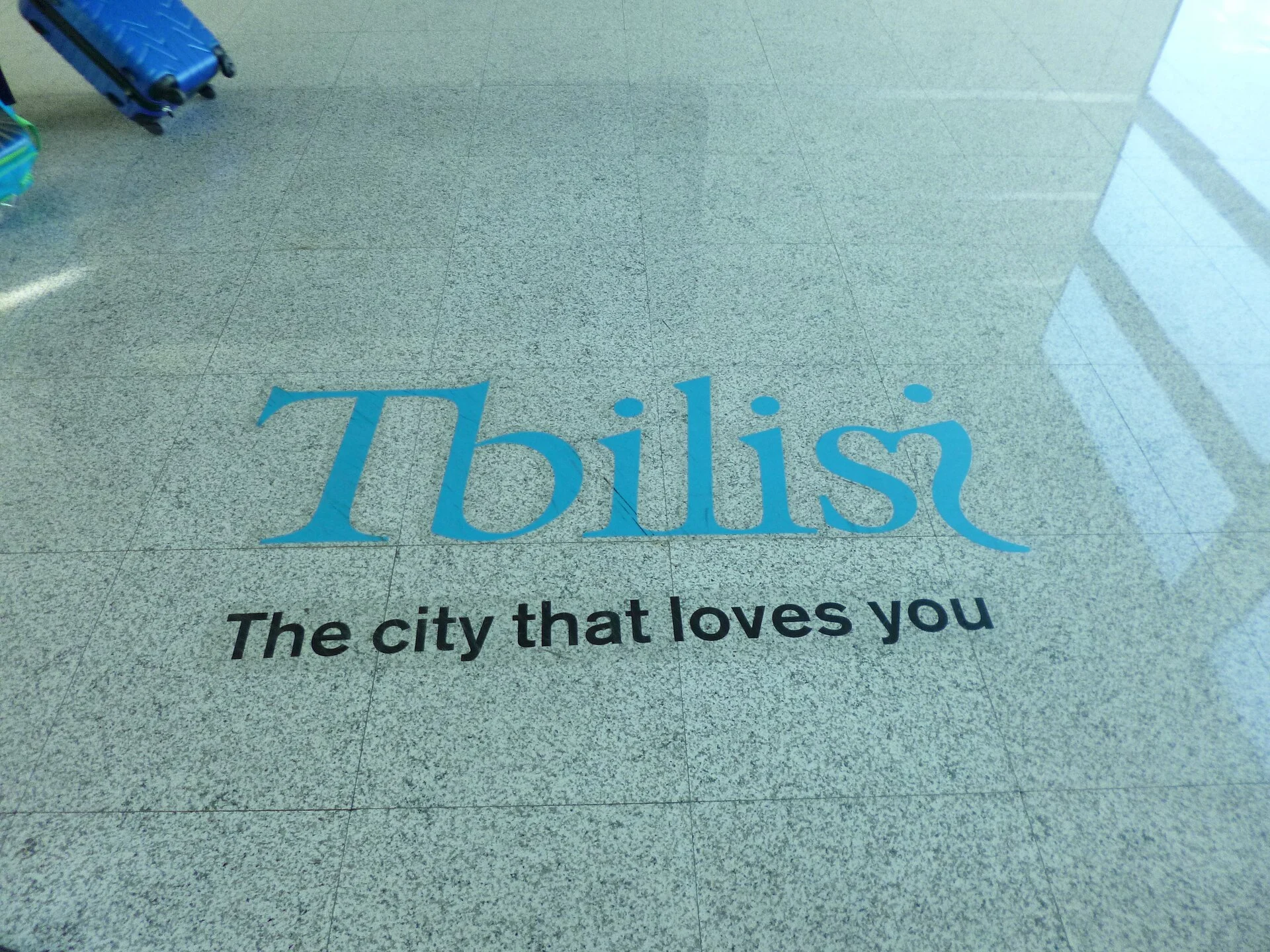
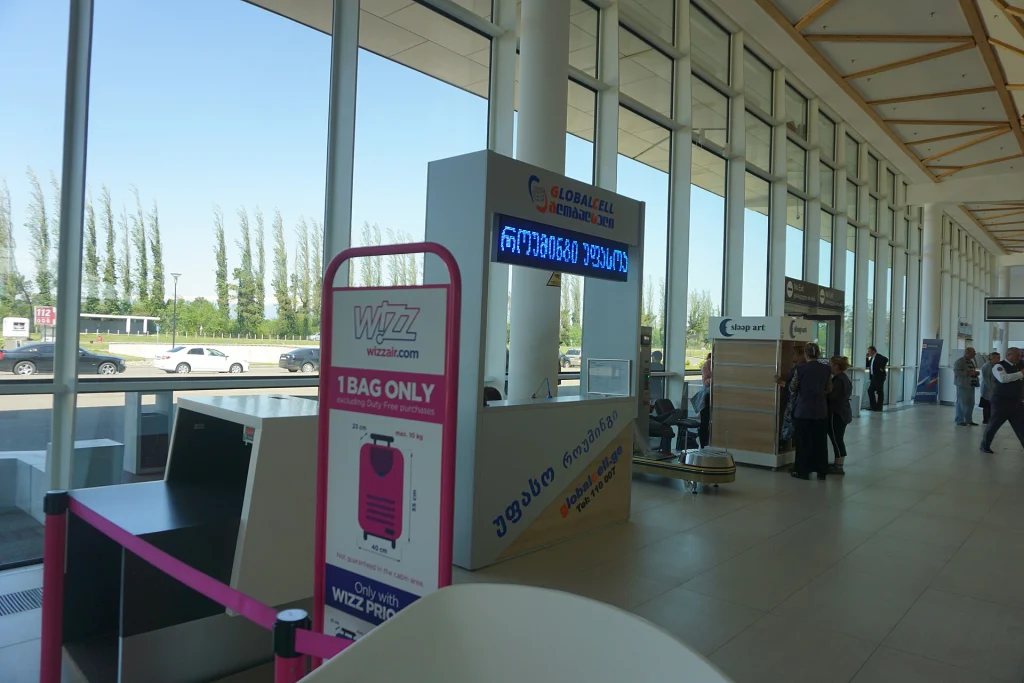
Tbilisi International Airport, where travelers pass customs when leaving Georgia. · Photo: James Emery from Douglasville, United States / Wikimedia Commons, CC BY 2.0
Been to Georgia? Tell us how it went — the best stories are published here.
Share your tripOne email a week: what changed for travellers in Georgia — rules, roads, flights, seasons — plus one place worth the trip. Written by the GTour desk, no advertising, unsubscribe in one click.
This story across our partner network — ქართულად: შენი დასვენება
