

By David Kiknadze, Transport & Openings Reporter · 09/11/2026
For a short stay in Georgia, the simplest answer is to buy a tourist SIM from Magti, Silknet or Cellfie at the airport arrivals hall or at a staffed shop in town, show your passport, and pick a prepaid data bundle valid for 7, 15 or 30 days. All three networks run on modern 4G/LTE infrastructure with growing 5G in Tbilisi, prices are modest by European standards, and an active eSIM option exists on at least one network if you prefer not to swap a physical card. Coverage is excellent in the cities, the Georgian Military Highway and most of Kakheti, patchier in Svaneti‘s side valleys, and genuinely weak to absent in parts of Tusheti, so plan accordingly if you are heading into the high mountains.
Which network to pick depends on where you are going. Magticom has historically built out the most mountain infrastructure and is the safest single choice if your trip includes Svaneti, Khevsureti or Tusheti; Silknet is strong in Tbilisi, Batumi and the main towns and keeps improving its rural footprint; Cellfie is a newer, digitally-registered brand aimed squarely at visitors and expats, running over partner infrastructure, so its coverage mirrors its host network rather than being a separate physical grid. None of this is static: operators revise bundles, prices and coverage maps every year, so treat the figures below as a planning guide and confirm the current offer at the counter or in the operator’s own app before you pay.
Where to buy: airport counters and town shops
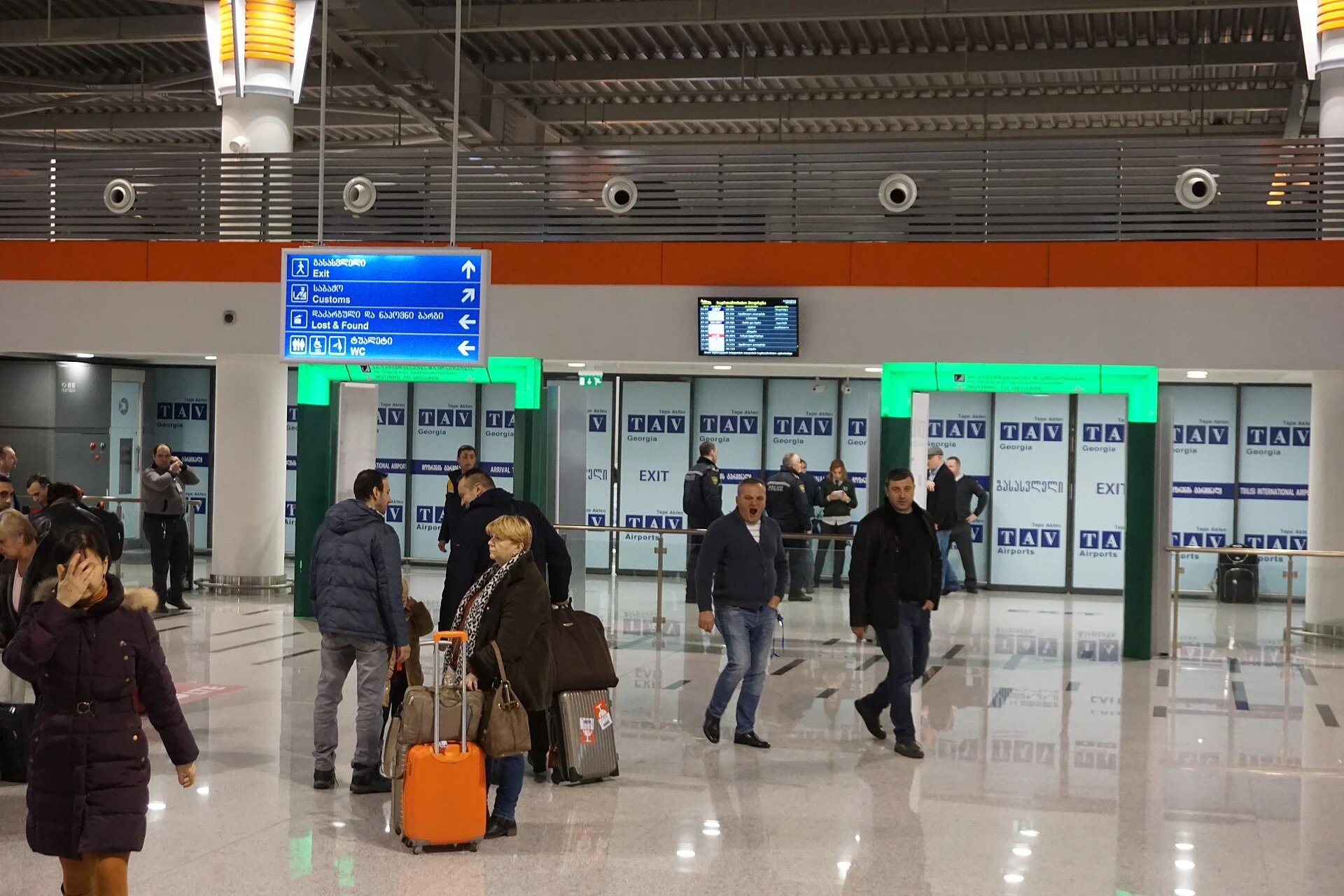
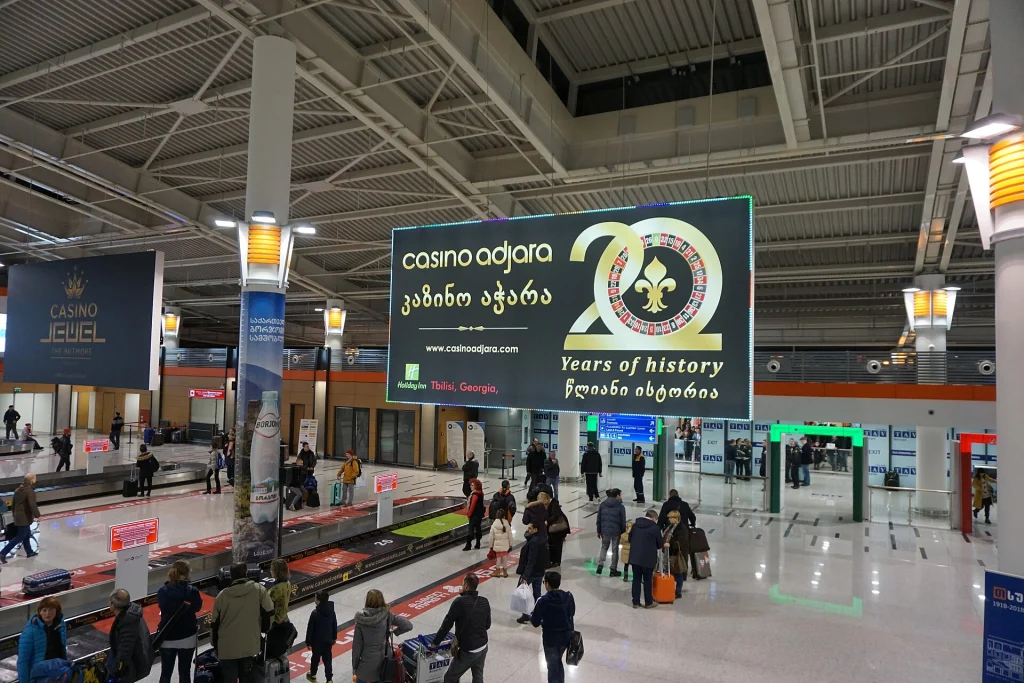
Tbilisi, Kutaisi and Batumi international airports all have telecom desks or vending kiosks in the arrivals area, usually staffed during flight-arrival hours and able to activate a SIM in a few minutes. This is the easiest option on a first trip, since you are already holding your passport and the staff fill in the registration form for you. Buying in town costs the same and gives more time to compare bundles: look for branded Magti, Silknet or Cellfie shops in shopping malls, on Rustaveli Avenue in Tbilisi, and in the centres of Batumi and Kutaisi. Supermarkets and some street kiosks sell top-up vouchers but rarely issue new SIMs with ID registration on the spot, so your first card is best bought at an airport desk or an official shop.
- Tbilisi International Airport: telecom desks in the arrivals hall, open to match incoming flights.
- Kutaisi International Airport: a smaller terminal, so confirm which operator currently staffs a desk before you land.
- Batumi International Airport: desks operate seasonally around the summer charter schedule; off-season visitors may need a town shop.
For live flight and transfer planning around any of the three airports, see our Tbilisi Airport Transfer, Kutaisi Airport to Tbilisi Transfer and Batumi Airport Transfer pages, each with fixed prices confirmed in writing before you fly.
Passport registration: what the law requires
Georgia requires identity registration for every new SIM card, local and foreign nationals alike. In practice this means showing your passport (or, for residents, an ID document) at the point of sale, which the shop scans or photocopies and files with the operator. There is no separate paperwork for you to complete in advance and no cost for the registration itself, only for the SIM and the bundle you choose. The underlying legal framework sits within Georgia’s electronic communications legislation, published and searchable through the national legislative database; if you want the primary text rather than a summary, start at matsne.gov.ge. Because enforcement details and documentary requirements can be adjusted by regulation rather than by headline law, treat a shop assistant’s current request (passport, sometimes also your Georgian address or hotel name) as the operative rule on the day.
Tourist SIM packages and prices in 2026
All three operators sell a prepaid “tourist” or “travel” SIM bundling a fixed data allowance, some in-country minutes and often a small allowance of international minutes, valid for a set number of days rather than a calendar month. As a planning range, expect a short 7-day data bundle to sit roughly in the 15 to 35 Georgian lari band and a fuller 30-day bundle with several gigabytes to sit roughly in the 40 to 90 lari band, with Cellfie’s digital-first plans often priced to compete directly on data volume. At the National Bank of Georgia’s rate on 9 November 2026 of 2.8998 GEL per euro, that is roughly €5 to €12 for a week and €14 to €31 for a month, but operators reprice several times a year, so confirm the live offer at the counter, in the operator’s app, or via the shop’s printed tariff sheet rather than relying on last year’s number.
| Typical bundle | Indicative GEL | Indicative EUR (at 2.8998 GEL/EUR) |
|---|---|---|
| 7-day data-only, a few gigabytes | 15–35 GEL | €5–€12 |
| 15-day data plus some minutes | 25–55 GEL | €9–€19 |
| 30-day, several gigabytes plus minutes | 40–90 GEL | €14–€31 |
Top-up is simple: you can add data or extend validity through the operator’s app, by card payment in a shop, or at some ATM-style recharge terminals, without re-registering your passport.
eSIM: who offers it and how it compares
An eSIM lets you activate a Georgian number on a compatible phone without inserting a physical card, useful if you are already juggling a home SIM and do not want to lose it in a hotel room. Availability changes faster than physical SIM policy, so check each operator’s current app or website for an eSIM option before you fly, and separately check that your handset is unlocked and eSIM-capable, since not every phone sold outside Georgia supports it. International eSIM resellers that pre-provision a Georgian or regional data plan before departure are another route many travellers use, bypassing the in-country passport step entirely because the identity check, where required, happens online with the reseller rather than in a Tbilisi shop; read the specific plan’s coverage map carefully, since some regional eSIM products exclude the South Caucasus or throttle speeds heavily. Whichever route you choose, keep a backup: download offline maps and your hotel confirmations before you leave strong wifi, in case activation takes longer than expected on arrival.

Roaming from the EU, UK, US and neighbouring countries
Georgia is not part of the European Union’s “roam like at home” zone, so an EU-issued SIM does not automatically carry EU domestic rates once you cross into Georgia; the European Commission’s own roaming guidance explains which countries and arrangements are covered and is worth a glance before you travel, at europa.eu. UK, US, Gulf and most other home operators treat Georgia as an international roaming destination with its own daily or per-megabyte charge, which is frequently far more expensive than a local prepaid SIM bought on arrival. For a trip of more than a day or two, buying local data almost always saves money; roaming is best reserved for your arrival day before you reach a SIM counter, or as a backup for your home number to receive banking or two-factor codes.
Coverage in the mountains: Tusheti, Svaneti and other remote valleys
Signal quality drops sharply once you leave the main valleys, and this is the detail that catches out most visitors planning a highland trip. In broad terms:
| Region | Typical signal | Notes |
|---|---|---|
| Mestia and the main Svaneti road | Good 4G on all three networks | Reliable in town, patchy on side roads to Mazeri and Ushguli |
| Ushguli | Partial coverage | Usually one operator’s tower reaches the village; do not count on data |
| Tusheti (Omalo and the Abano Pass) | Weak to absent | Some signal near Omalo in clear weather; Dartlo, Diklo and Parsma are often unconnected |
| Khevsureti (Shatili, Mutso, Juta) | Patchy | Juta and the Kazbegi side generally have signal; Shatili and Mutso can be silent for hours |
| Georgian Military Highway, Kakheti, the Black Sea coast | Strong 4G throughout | Reliable on all three networks in towns and along the main roads |
Coverage maps published by each operator shift year to year as towers are added, so treat this table as a starting assumption rather than a guarantee, and ask locally once you arrive. For multi-day routes into Tusheti or over remote passes, our drivers and guides on trips such as the Tusheti Expedition, Khevsureti and Tusheti by 4×4, and Tusheti to Khevsureti over the Atsunta Pass carry independent communication equipment precisely because mobile signal cannot be relied on; if you are travelling independently in these areas, plan as though you will have no signal for long stretches and tell someone your route and return time.
Tethering, speeds and which network wins where
All three operators allow tethering a phone’s data connection to a laptop or tablet on standard tourist plans, though a few of the cheapest bundles cap hotspot use separately from on-device data, so check the plan description rather than assuming unlimited tethering. Speeds on 4G in Tbilisi, Batumi and Kutaisi are generally fast enough for video calls and streaming; 5G exists in parts of Tbilisi but is not yet the default experience outside the capital. As a rough rule for choosing a network by region: Magticom for Svaneti, Khevsureti, Tusheti and other mountain routes, where its longer-established infrastructure tends to reach furthest; Silknet or Magticom interchangeably for Tbilisi, Batumi, Kutaisi and the main Kakheti wine towns, where both perform well; and Cellfie as a convenient, digitally-managed option for travellers who mainly need data in cities and along the main roads and want the simplicity of app-based top-ups, bearing in mind its coverage follows its host network rather than an independent one. Because all three operators periodically swap partner arrangements and expand towers, confirm current performance with your own phone on day one rather than relying solely on reputation.
If this guide is part of a trip you are planning, our Caucasus Highlands in 7 Days — Kazbegi, Khevsureti and Tusheti and Western Georgia in 6 Days — Kutaisi, Svaneti and the Sea cover the places it describes with a private guide and driver; a GTour travel expert adapts the route to your dates.
Practical summary
- Buy a tourist SIM at the Tbilisi, Kutaisi or Batumi airport arrivals desk, or at a branded shop in town; bring your passport, which is required by law for registration.
- Expect a 7-day data bundle around 15–35 GEL (about €5–€12) and a 30-day bundle around 40–90 GEL (about €14–€31) at the 9 November 2026 rate of 2.8998 GEL per euro; confirm the live price, since tariffs change.
- Check each operator’s current app or site for an eSIM option, or pre-book an international eSIM before departure; verify your phone is unlocked and eSIM-capable.
- EU, UK and US roaming is usually more expensive than a local SIM for more than a day or two; Georgia is not part of the EU’s roam-like-at-home zone.
- Favour Magticom for Svaneti, Khevsureti and Tusheti; expect weak or no signal in Dartlo, Diklo, Parsma, Shatili and Mutso regardless of network.
- Tethering is generally allowed on tourist plans but can be capped separately on cheaper bundles; check before relying on it for work.
- Download offline maps and confirmations before heading into the mountains, and tell someone your planned route and return time.
Sources
- Law database (electronic communications legislation)
- Georgian National Tourism Administration
- Georgia.Travel official tourism portal
- National Statistics Office of Georgia
- Agenda.ge – Telecom and Roaming News in Georgia
Questions this guide does not answer? Write to info@castle.ge or WhatsApp +995 577 41 63 14 — a person in Tbilisi replies. See also our travel services and all guides.
Arrivals hall at Tbilisi International Airport, where travelers can buy SIM cards on landing. · Photo: Andrew Milligan Sumo / Wikimedia Commons, CC BY 2.0
Been to Georgia? Tell us how it went — the best stories are published here.
Share your tripOne email a week: what changed for travellers in Georgia — rules, roads, flights, seasons — plus one place worth the trip. Written by the GTour desk, no advertising, unsubscribe in one click.
This story across our partner network — ქართულად: შენი დასვენება
