

By Mariam Lomidze, Culture & Events Reporter · 02/11/2026
The one museum worth clearing a full morning for is the Simon Janashia branch of the Georgian National Museum on Rustaveli Avenue, where the Colchian and Trialeti gold sits in the same building as the Dmanisi skulls, the earliest hominin fossils found outside Africa. If you have a second half-day, add the Fine Arts Museum for its own Treasury of medieval Georgian gold, enamel and icon covers, plus a room of Niko Pirosmani paintings. Outside the capital, the Svaneti Museum in Mestia and the Dadiani Palace in Zugdidi reward anyone travelling west, and the Open Air Museum of Ethnography is the easiest way to see vernacular Georgian architecture without driving to the regions.
None of these is a quick ten-minute stop. Budget two to three hours for the Simon Janashia Museum alone if you want to see both the gold and the Dmanisi hall properly, and treat the others as half-day additions around a Tbilisi itinerary. Opening hours, ticket prices and photography rules do change from year to year, so this guide gives the structure and what to expect, with official pages to check before you go rather than numbers we cannot guarantee for your travel date.
Georgian National Museum: Simon Janashia Museum, gold and Dmanisi
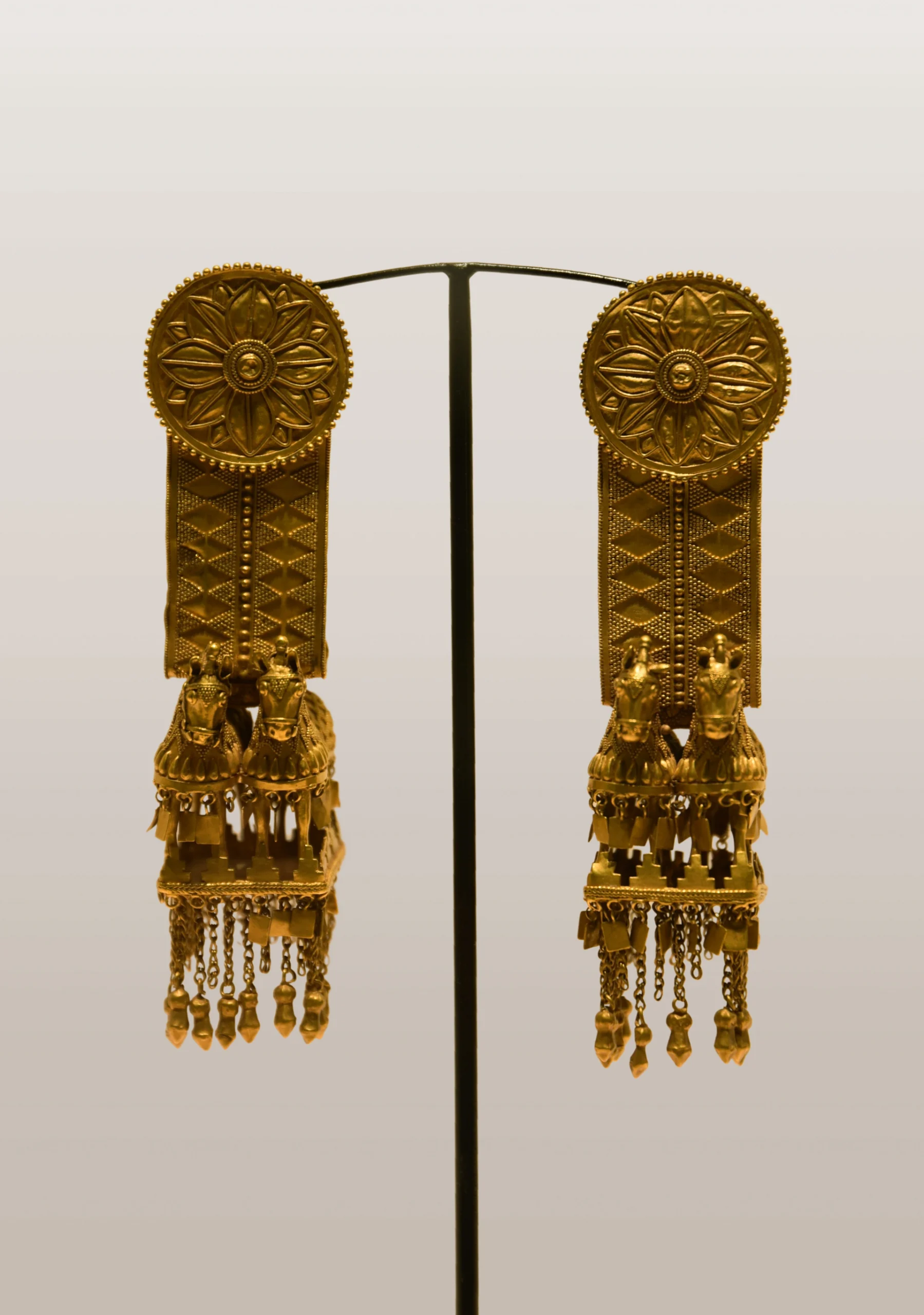
The Simon Janashia Museum of Georgia, the flagship building of the Georgian National Museum at Rustaveli Avenue 3, holds two collections that justify the trip on their own. The archaeological Treasury displays Bronze Age and Colchian gold jewellery, much of it recovered from burial mounds in western Georgia, alongside Hellenistic and Achaemenid-period pieces that trace trade routes along the eastern Black Sea. The pieces are small, intricate, and lit for close viewing, so give the room more time than its size suggests.
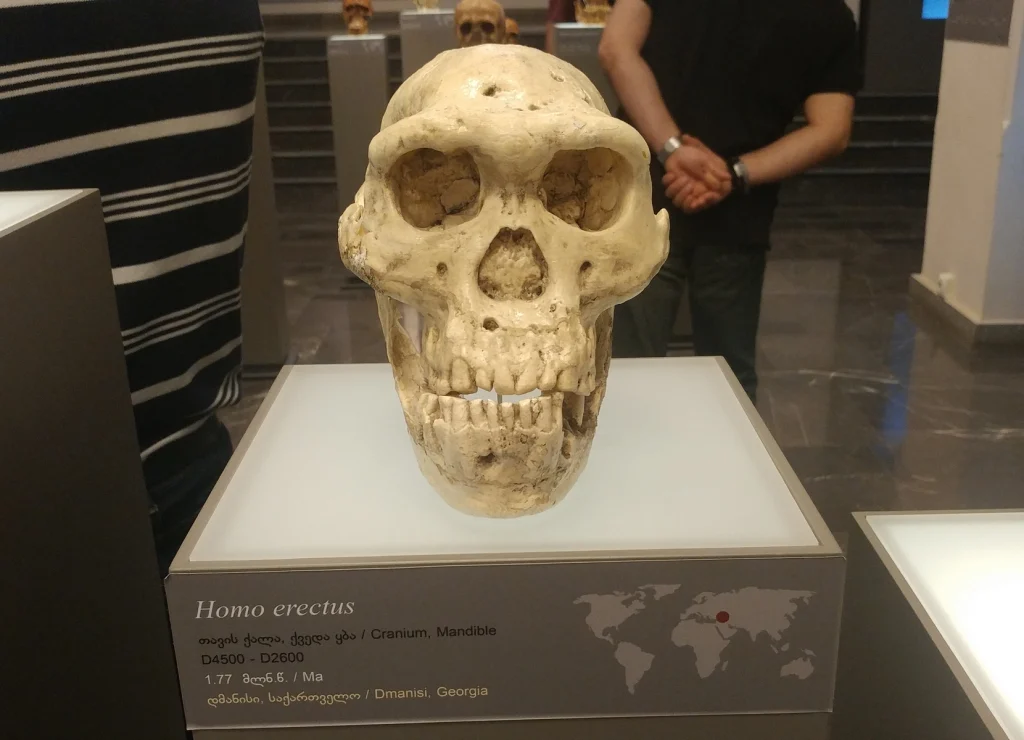
The same building holds the Dmanisi hall, built around fossil material from the Dmanisi archaeological site in Kvemo Kartli, dated to roughly 1.8 million years old and recognised internationally as the earliest evidence of early humans outside Africa. The find has been covered by outlets including National Geographic and Smithsonian Magazine over the years, and the museum display sets the skulls against the wider story of human dispersal out of Africa. If you want to see the original dig site rather than only the museum cast and originals on rotation, GTour runs the Bolnisi and Dmanisi day trip from Tbilisi, which pairs the excavation with Bolnisi Sioni, one of Georgia’s oldest dated churches.
Museum of Fine Arts: the Treasury and Pirosmani
The Shalva Amiranashvili Museum of Fine Arts, also part of the Georgian National Museum network, is a separate building and a separate ticket from the Simon Janashia Museum. Its own Treasury holds medieval Georgian gold work: reliquary crosses, gospel covers, crowns and enamel icons, a different era and a different craft tradition from the Bronze Age pieces across town, so the two “gold rooms” are not duplicates of each other. The museum also holds the main public collection of Niko Pirosmani, Georgia’s best-known naive painter, along with earlier Georgian and Russian icon painting.
Because the two buildings are separately ticketed branches of the same institution, check gnm.ge directly for whether a combined ticket or a multi-branch pass is being sold in the current season, since this has varied in past years and we do not want to quote a bundling arrangement that may no longer apply.
Museum of Soviet Occupation
A dedicated hall inside the Simon Janashia Museum building covers the Soviet period in Georgia from the 1921 Red Army invasion through deportations, the 1937 to 1938 purges, and the final years before 1991 independence. It is a sobering, text-heavy room rather than an object-rich one, and worth twenty to thirty minutes on the same visit as the archaeology halls since it shares the building and, in most seasons, the ticket. If you prefer the Soviet period told through architecture rather than documents, GTour’s Soviet Tbilisi walk covers modernist buildings and mosaics around the city instead.
Open Air Museum of Ethnography
On the road out towards Turtle Lake, the Open Air Museum of Ethnography relocates vernacular houses, wine cellars and farm buildings from Georgia’s different regions onto one hillside site, so you can compare a Svan tower-house footprint with a Kakhetian wine cellar or an Adjarian timber house without driving the country. The buildings are furnished with period tools and textiles, and the site works well as an open-air, low-crowd counterpart to the indoor city museums, best combined with a walk rather than rushed. It sits a short taxi ride from the centre; confirm the current route and hours before you go, since public transport access has changed in past years.
Mestia: Svaneti Museum of History and Ethnography
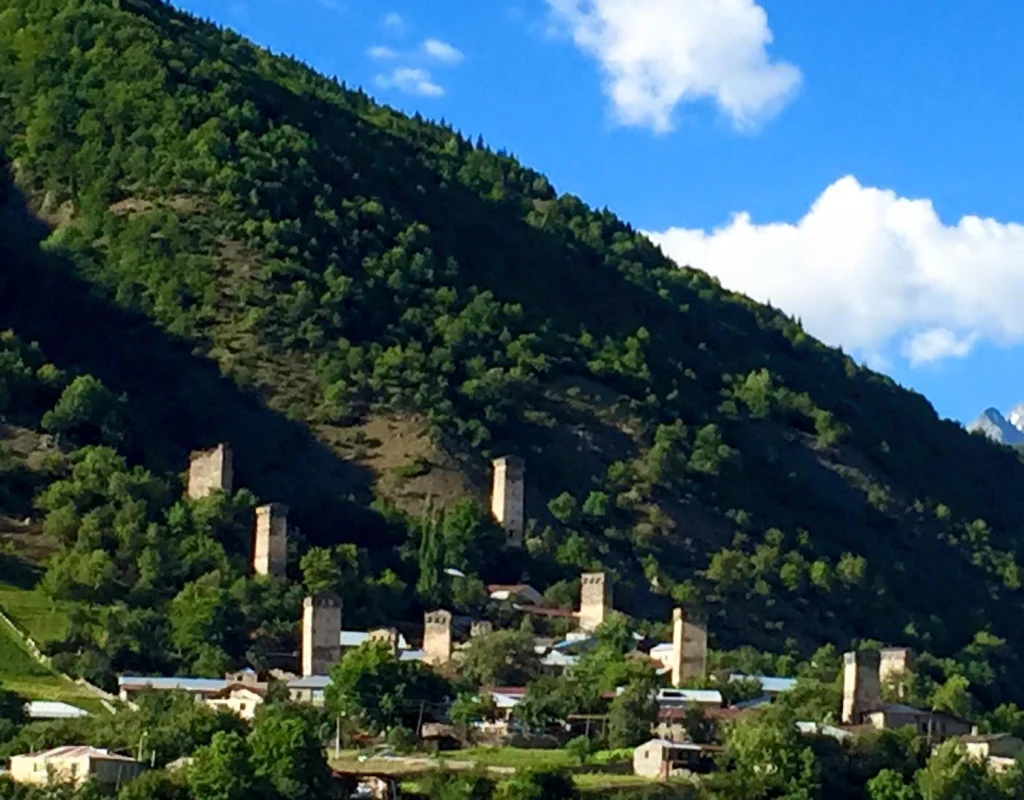
In the Svaneti highlands, the Svaneti Museum of History and Ethnography in Mestia holds a regional collection built around centuries of Svan church treasures: icons, illuminated manuscripts, processional crosses and metalwork kept in Svan towers and churches for safekeeping over generations of conflict. It is one of the few places in Georgia where you see how a mountain community preserved Byzantine-period Christian art in parallel with, rather than instead of, its own pre-Christian traditions. GTour’s Mestia and Ushguli trip and the Mestia to Ushguli trek both build in museum time in Mestia before heading up the valley; check opening days locally, since mountain-town museums sometimes close for one weekday or shorten hours outside the summer season.
Zugdidi: Dadiani Palace Museum
The Dadiani Palace in Zugdidi, former seat of the Dadiani princely family who ruled Samegrelo, combines a 19th-century palace building with a museum collection assembled through the family’s marriage ties to Napoleon’s relatives. The best-known object on display is a death mask said to be Napoleon’s, alongside Napoleon-era furniture and documents, plus the family’s own Georgian regalia and portraits. The surrounding botanical garden, planted by the Dadiani family, is worth the extra half hour. GTour’s Zugdidi, Dadiani Palace and Enguri Dam day trip from Kutaisi covers the palace along with the Enguri hydroelectric dam on the way.
Tickets, hours and photography
Treat the figures below as a planning guide rather than a quote, since museum tariffs and winter hours change between seasons. Confirm current prices, any student or child discounts, and whether branches are bundled into one ticket directly on gnm.ge for the National Museum sites, or at the relevant regional museum before travelling.
| Museum | Typical visit length | Notes |
|---|---|---|
| Simon Janashia Museum (gold, Dmanisi, Soviet hall) | 2 to 3 hours | Usually closed one weekday; verify on gnm.ge |
| Museum of Fine Arts (Treasury, Pirosmani) | 1 to 1.5 hours | Separate building and, in most years, a separate ticket from Janashia |
| Open Air Museum of Ethnography | 1.5 to 2 hours | Outdoor site, dress for the weather |
| Svaneti Museum, Mestia | 45 to 60 minutes | Short or variable hours outside peak summer season |
| Dadiani Palace, Zugdidi | 1 to 1.5 hours with garden | Combine with Enguri Dam or a Samegrelo day trip |
On photography, the general pattern across these museums is that flash-free personal photography is tolerated in archaeology and ethnography halls, while the gold Treasury rooms and some icon galleries in the Fine Arts Museum frequently prohibit cameras altogether for conservation and security reasons. Rules differ by room and can change without notice, so check the signage at the entrance or ask the attendant in each hall rather than assuming the policy from one room applies to the next, and avoid flash everywhere regardless of what is permitted, since it damages pigments and metal surfaces over time.
If this guide is part of a trip you are planning, our Western Georgia in 6 Days — Kutaisi, Svaneti and the Sea and Mestia to Kutaisi or Zugdidi Transfer cover the places it describes with a private guide and driver; a GTour travel expert adapts the route to your dates.
Practical summary
- Start with the Simon Janashia Museum on Rustaveli Avenue for the Colchian gold, the Dmanisi hall, and the Soviet occupation room, all in one building.
- Add the Museum of Fine Arts separately for its own Treasury of medieval gold and the Pirosmani collection.
- Visit the Open Air Museum of Ethnography near Turtle Lake for vernacular architecture from across Georgia’s regions.
- In Svaneti, see the Svaneti Museum in Mestia for church treasures preserved in Svan towers.
- In Samegrelo, see the Dadiani Palace in Zugdidi for the Napoleon-era collection and botanical garden.
- Confirm current hours, tickets and bundling at gnm.ge and ethnomuseum.ge before you go, and ask about photography rules room by room.
- For the Dmanisi excavation site itself, beyond the museum display, consider a dedicated day trip from Tbilisi.
Sources
- National Geographic on early human fossils
- Smithsonian Magazine on human origins
- Georgian National Museum – Official Site
Questions this guide does not answer? Write to info@castle.ge or WhatsApp +995 577 41 63 14 — a person in Tbilisi replies. See also our travel services and all guides.
Gold Akhalgori temple pendants with horse figures, a highlight of the National Museum's treasury. · Photo: Carole Raddato from FRANKFURT, Germany / Wikimedia Commons, CC BY-SA 2.0
Been to Georgia? Tell us how it went — the best stories are published here.
Share your tripOne email a week: what changed for travellers in Georgia — rules, roads, flights, seasons — plus one place worth the trip. Written by the GTour desk, no advertising, unsubscribe in one click.
This story across our partner network — ქართულად: შენი დასვენება
