


By Nino Gelashvili, Travel News Editor · 02/11/2026
Georgia’s national park system is run by a single body, the Agency of Protected Areas (APA) under the Ministry of Environmental Protection and Agriculture, and it covers everything from subtropical rainforest on the Black Sea to semi-desert on the Azerbaijani border. For day walks in Mtirala, Kolkheti, Kazbegi or Lagodekhi you generally need nothing more than a visitor-centre ticket bought on arrival. For multi-day treks with huts or campsites in Borjomi-Kharagauli, Tusheti and Vashlovani, book ahead through the APA reservation system, and for Vashlovani specifically, allow extra time for a border-zone permit because the park sits against the Azerbaijani frontier.
No park in Georgia requires a visa-style advance application for ordinary tourism, and fees remain modest by European standards, but they do change, so this guide gives the mechanism and the verification link rather than a number that could be wrong by next season. Treat every price and opening date here as a starting point to confirm on apa.gov.ge before you travel.
How the Agency of Protected Areas system works
All seven parks in this guide, plus Georgia’s other reserves and managed landscapes, sit under the APA umbrella. Each has a visitor centre (often at the park entrance, sometimes in the nearest town) that sells day tickets, rents basic equipment, issues trail maps and can radio ahead to rangers. Overnight huts and designated campsites inside the parks are booked through the APA’s own reservation channel, not through third-party sites, and payment is usually required before arrival in high season. Rangers do check tickets on popular routes, and camping outside marked sites is discouraged or banned depending on the park’s protection category, since some zones are strict nature reserves closed to all but licensed researchers.
Because fee schedules, hut tariffs and online booking portals are updated from year to year, always check the current figures directly on apa.gov.ge before finalising a trip, and keep a screenshot of your booking confirmation for the ranger station.
The seven parks at a glance
| Park | Headline feature | Best season | Permit note |
|---|---|---|---|
| Lagodekhi | Black Rock Lake, oldest reserve in the Caucasus (1912) | June–September | Standard ticket; some border-adjacent trails restricted |
| Borjomi-Kharagauli | Multi-day forest trek, hut-to-hut network | May–October | Hut and campsite booking required |
| Tusheti | Omalo, Dartlo, Atsunta Pass, highland villages | Mid-June–September (Abano Pass road) | No permit, but road closes with first snow |
| Kazbegi | Gergeti Trinity Church, Juta, Chaukhi massif | Year-round, best May–October | No permit; winter needs crampons/guide |
| Mtirala | Georgia’s wettest rainforest, waterfalls | April–October | Standard ticket |
| Kolkheti | Ramsar wetlands, Paliastomi Lake, boat routes | Year-round, birdwatching best in migration months | Standard ticket; boat fee separate |
| Vashlovani | Semi-desert canyons, Eagle Gorge, border scenery | April–June and September–October | Border-zone permit required, arranged in advance |
Lagodekhi and Vashlovani: ancient forest and semi-desert
Lagodekhi protected areas, established in 1912, run from lowland broadleaf forest up to subalpine meadows on the Dagestan border in Kakheti. The classic trek to Black Rock Lake is a two-to-three-day route with a basic hut and camping options, best walked June to September when the high pass is free of snow; GTour runs this as a guided 2-day Black Rock Lake trek or a slower 3-day version, and the forest also features in our eastern Kakheti day trip combining Nekresi monastery with a lowland walk. Vashlovani, in Georgia’s far southeast, is a different world of eroded canyons, semi-desert steppe and pistachio woodland along the Azerbaijani frontier. Because several of its best viewpoints and canyons sit inside the border security zone, visitors need a border-zone permit arranged with the park administration and, in practice, with Georgia’s Border Police well ahead of the visit; check current requirements on apa.gov.ge and the consular guidance on mfa.gov.ge before planning a self-drive. Spring and early autumn are the only comfortable seasons, since summer heat in Vashlovani regularly exceeds 40°C.
Borjomi-Kharagauli: the hut-to-hut forest trek
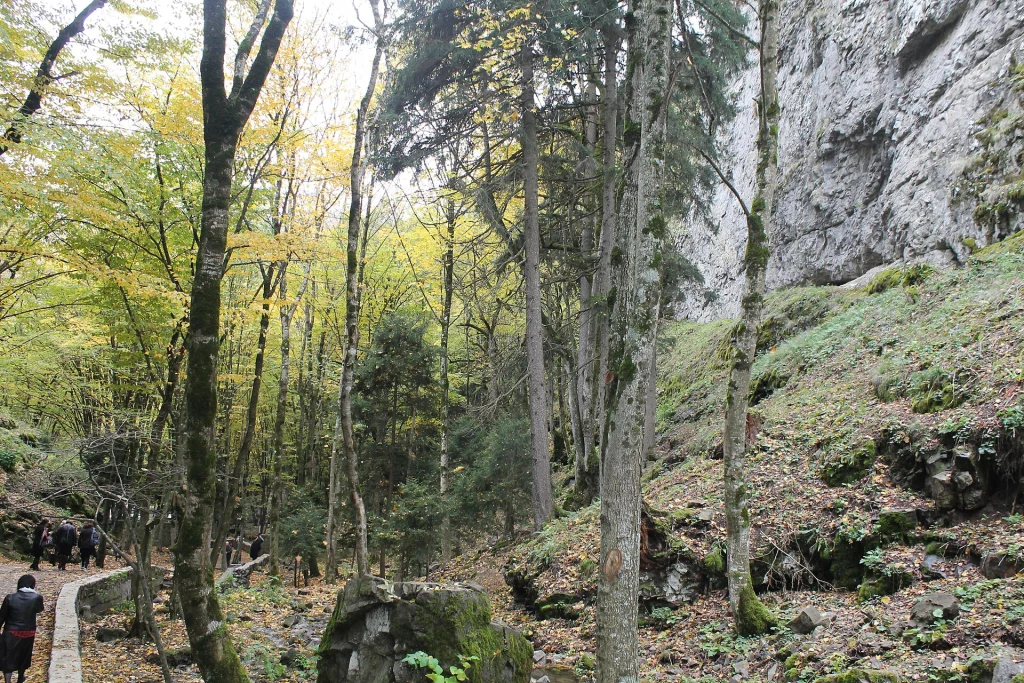
Borjomi-Kharagauli is one of the largest national parks in the Caucasus, a belt of mixed and coniferous forest linking the spa town of Borjomi to Kharagauli in Imereti. Its signature product is a multi-day trek with a chain of APA-run huts and campsites spaced roughly a day’s walk apart, well suited to visitors who want wilderness without carrying a tent. Trails are waymarked with coloured blazes and distance posts, and the terrain is moderate rather than technical, making it a good first multi-day hike in Georgia. The walking season runs May to October; huts can fill in August, so book ahead through the APA system. GTour’s 3-day Borjomi-Kharagauli trek covers the core route with huts pre-booked, and for a gentler combination the Borjomi and Bakuriani day trip samples the forest without the full trek.
Tusheti and Kazbegi: high mountains on opposite calendars
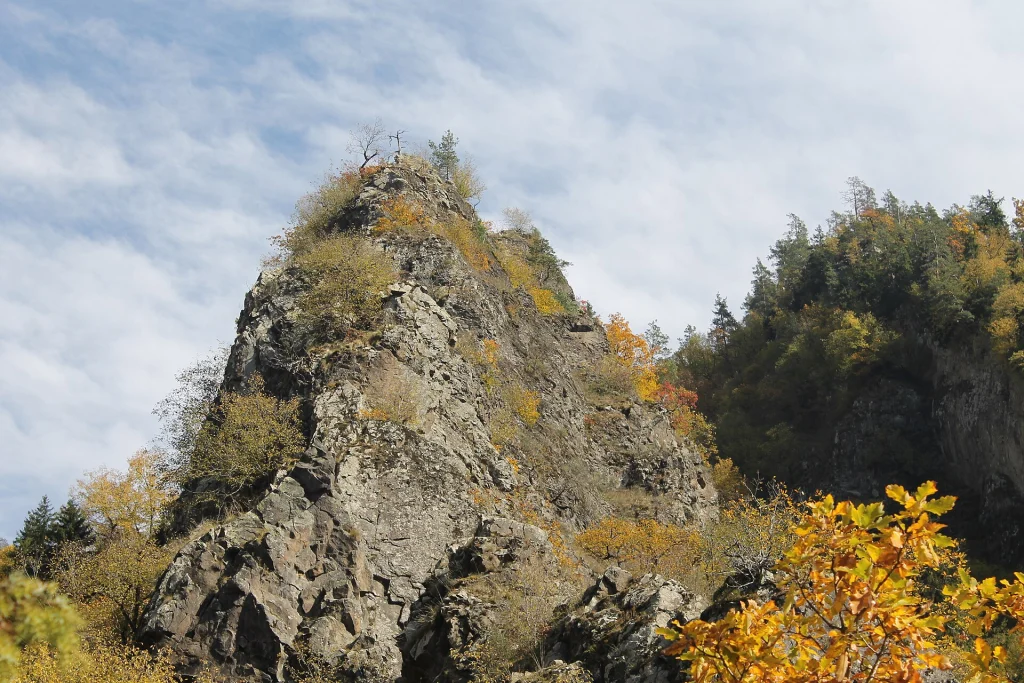
Tusheti, in the far northeast, is reachable only by the Abano Pass road, a high gravel track that the Georgian Road Department typically keeps passable from mid-June to the first serious snowfall, usually in October; check the live status on georoad.gov.ge and our own road status page before committing to dates, and travel only in a proper 4×4 with an experienced driver. There is no formal park permit, but the villages of Omalo, Dartlo and Diklo sit close to the Dagestan border and some routes toward it are restricted. GTour’s 4-day Tusheti expedition and the faster 3-day 4×4 tour both build in the seasonal window. Kazbegi National Park, around Stepantsminda, has the opposite problem: it is open essentially year-round, with Gergeti Trinity Church, Juta and the Chaukhi massif accessible by road in winter too, though snow and ice make the higher trails a job for crampons and, ideally, a guide. Our Gergeti Glacier and Kazbek base camp trek and the Chaukhi Pass day hike from Juta both run May to October, and winter visitors should see our snowshoe itinerary instead of attempting summer routes in snow.
Mtirala and Kolkheti: rainforest and Ramsar wetlands
Mtirala National Park, inland from Batumi, holds the highest recorded rainfall in Georgia, feeding a genuinely humid, moss-draped forest with waterfalls and short to medium hiking loops; it is part of the broader Colchic forest ecosystem that UNESCO inscribed as the Colchic Rainforests and Wetlands of Georgia World Heritage property in 2021. Kolkheti National Park, on the coastal lowlands around Poti, protects a mosaic of peat bogs, reed marsh and Paliastomi Lake that is internationally recognised as a Ramsar wetland of importance for migratory birds; see the site record via ramsar.org and verify current visiting arrangements with the park directly, since parts of the wetland are only reachable by boat with a ranger. Both parks are gentler than the high-mountain reserves and can be visited any season, though birdwatchers get the best results during spring and autumn migration. GTour’s Mtirala rainforest and Chakvi tea plantations day trip combines the forest with a nearby tea estate, and Kolkheti can be added to a Batumi-based itinerary with a car and driver booked by the day.
Trail markings, huts and getting the logistics right
Across APA parks, maintained trails use painted waymarks and numbered signposts showing distance and estimated walking time, with difficulty broadly grouped as easy, moderate or difficult on the posted park maps; pick up or photograph the official map at the visitor centre rather than relying only on phone apps, since mobile coverage disappears quickly in Tusheti, Vashlovani and parts of Borjomi-Kharagauli. Huts inside the parks are basic, dormitory-style shelters with no guaranteed electricity or hot water; bring a sleeping bag liner, cash in Georgian lari for any on-site fees, and a backup tent if you are trekking outside peak season when huts may be locked. For routes that cross border zones, protected strict reserves, or require a 4×4 and local knowledge, such as Vashlovani’s canyons or the Atsunta Pass between Tusheti and Khevsureti, hiring a licensed guide or booking through an operator who handles the paperwork is the practical choice; GTour’s licensed private guide by the day and car with driver by the day services cover exactly this, and our Tusheti to Khevsureti trek over the Atsunta Pass is a fully supported version of one of the hardest routes in the system.
If this guide is part of a trip you are planning, our Caucasus Highlands in 7 Days — Kazbegi, Khevsureti and Tusheti and Borjomi-Kharagauli National Park Trek — 3 Days cover the places it describes with a private guide and driver; a GTour travel expert adapts the route to your dates.
Practical summary
- Check current fees, hut tariffs and opening dates at apa.gov.ge before you travel; figures change yearly.
- Day visits to Mtirala, Kolkheti, Kazbegi and most of Lagodekhi need only a visitor-centre ticket.
- Borjomi-Kharagauli and Tusheti multi-day routes need huts or campsites booked ahead through APA.
- Vashlovani requires a border-zone permit; start the paperwork well before your travel dates and confirm with mfa.gov.ge if crossing-adjacent routes are involved.
- Tusheti’s Abano Pass road is open roughly mid-June to October only; verify live status on georoad.gov.ge.
- Kolkheti’s wetlands are a Ramsar site best explored with a ranger-led boat trip, not on foot alone.
- Carry cash, a paper map and a sleeping bag liner for any hut-based trek; phone signal is unreliable in all seven parks.
- For border zones, technical passes or 4×4-only roads, book a licensed guide or driver rather than self-navigating.
Sources
- Agency of Protected Areas
- Colchic Rainforests and Wetlands of Georgia, World Heritage listing
- Road Department of Georgia
- Ministry of Foreign Affairs of Georgia
- Georgian National Tourism Administration
Questions this guide does not answer? Write to info@castle.ge or WhatsApp +995 577 41 63 14 — a person in Tbilisi replies. See also our travel services and all guides.
Forest trail with morning mist near Likani Station, a gateway into Borjomi-Kharagauli National Park. · Photo: FingerWiki / Wikimedia Commons, CC BY-SA 4.0
Been to Georgia? Tell us how it went — the best stories are published here.
Share your tripOne email a week: what changed for travellers in Georgia — rules, roads, flights, seasons — plus one place worth the trip. Written by the GTour desk, no advertising, unsubscribe in one click.
This story across our partner network — ქართულად: შენი დასვენება
