

By Mariam Lomidze, Culture & Events Reporter · 29/10/2026
Georgia is often introduced to visitors as the cradle of a single, ancient Orthodox church, and Svetitskhoveli or Jvari usually come first on any itinerary. But the country’s working houses of worship include an Armenian Apostolic quarter in Tbilisi, a Catholic cathedral and a cluster of Latin-rite parishes around Akhaltsikhe, a handful of surviving Lutheran kirches built by German colonists two centuries ago, and one of the few purpose-built Yezidi temples outside the Yazidi heartland of Iraq and Armenia. All of these remain active communities, not museum pieces, and all can be visited respectfully with a little planning.
This guide sets out where each site is, what is known about its history, and the practical etiquette for visiting a functioning place of worship that belongs to a minority faith in a majority-Orthodox country. Opening hours, service times and access rules change without much notice, so for anything time-sensitive we link the most relevant official or well-sourced page and suggest you confirm again close to your visit.
Surb Gevorg and the Armenian quarter
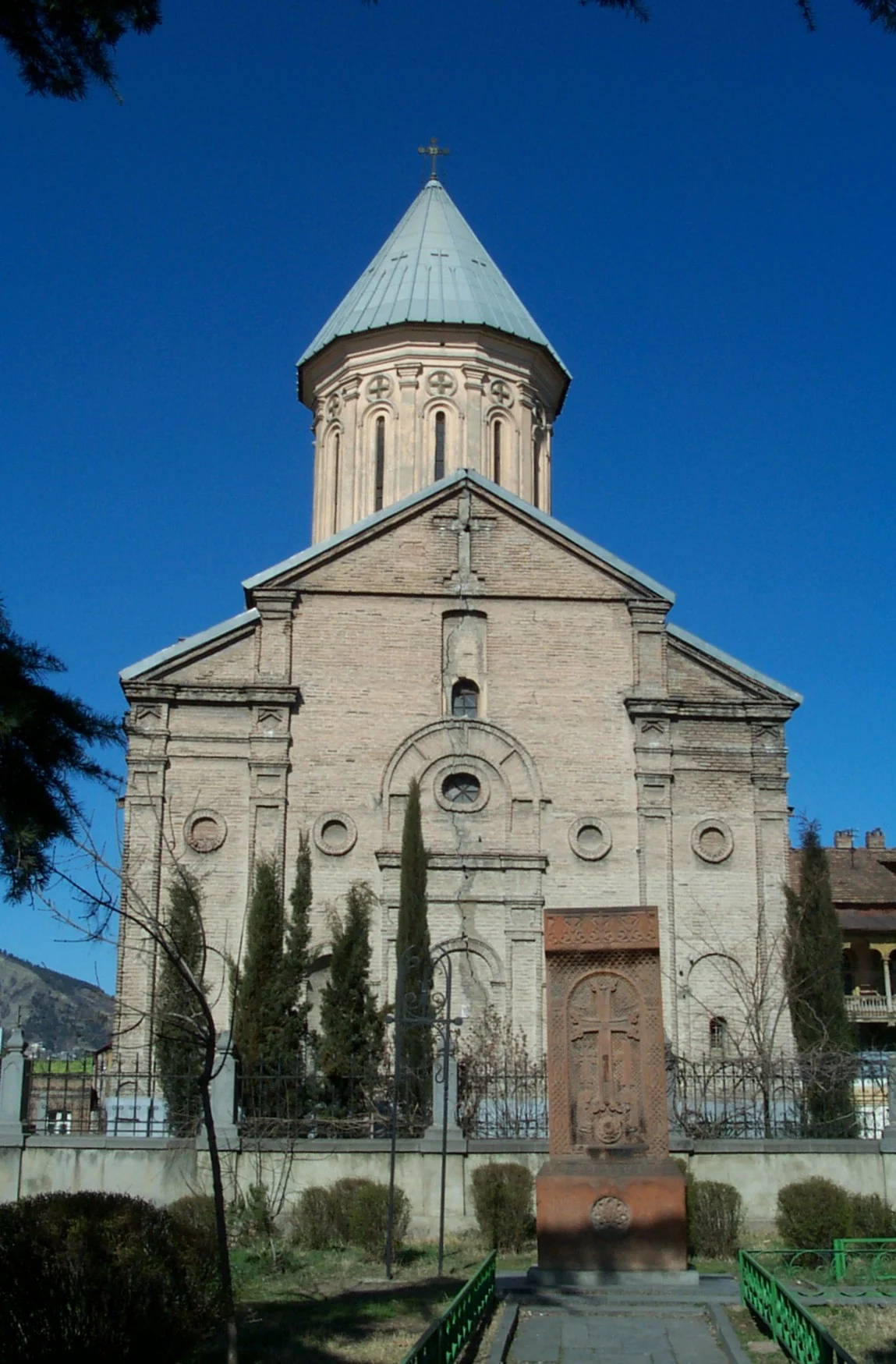
Tbilisi’s Armenian community is centuries old, concentrated historically in Avlabari (also written Havlabar) on the left bank of the Mtkvari, and in the Old Town streets below Narikala. Several Armenian Apostolic churches survive from this period, of which Surb Gevorg (St George) is the most visited, standing in Avlabari a short walk from Metekhi Bridge. It functions as an active parish of the Armenian Apostolic Church, with services in Armenian and Georgian-Armenian liturgical chant, and it has at times also served as a pro-cathedral for the community in Georgia.
Georgia’s statistics office records the country’s Armenian population mainly in Tbilisi and in Samtskhe-Javakheti, a pattern that goes back to Ottoman and Persian-era trade and migration; the detail sits in the national census data rather than in any single plaque at the church door, so travellers wanting numbers should go to the source rather than guidebooks. For a guided walk that puts Surb Gevorg in context alongside Tbilisi’s synagogue and mosque, our Faiths of Tbilisi — Synagogue, Mosque and Armenian Churches Walk covers roughly three hours on foot.
- Location: Avlabari district, left bank of the Mtkvari, Tbilisi
- Status: active Armenian Apostolic parish
- Typical access: open during daylight hours outside services; dress modestly, remove hats (men) and keep voices low during liturgy
The Catholic cathedral in Tbilisi and Latin heritage in Samtskhe
Tbilisi has a functioning Latin-rite Catholic parish church near the historic centre, serving a small but long-established community that traces its presence in the city back to Italian and later Polish and local Georgian Catholic families. The building operates as an ordinary parish, with Mass times posted at the entrance; because clergy and schedules can change, confirm current Mass times on the day rather than relying on older listings.
The deeper concentration of Catholic heritage, however, lies south in Samtskhe-Javakheti, around Akhaltsikhe and the villages toward the Turkish border, where Armenian Catholic and Latin Catholic communities have lived for generations alongside Orthodox, Muslim and Armenian Apostolic neighbours. The region’s layered religious history is visible in Akhaltsikhe’s Rabati fortress complex, where a mosque, church and citadel sit within the same walls, a useful single stop for understanding how many faiths have coexisted in this corner of Georgia. Our The South in 3 Days — Borjomi, Vardzia, Rabati and Abastumani and the shorter Vardzia and Rabati — the Long Day South both route through Akhaltsikhe and can be adjusted with a licensed guide to include a specific parish visit if you ask in advance.
The German Lutheran colonies
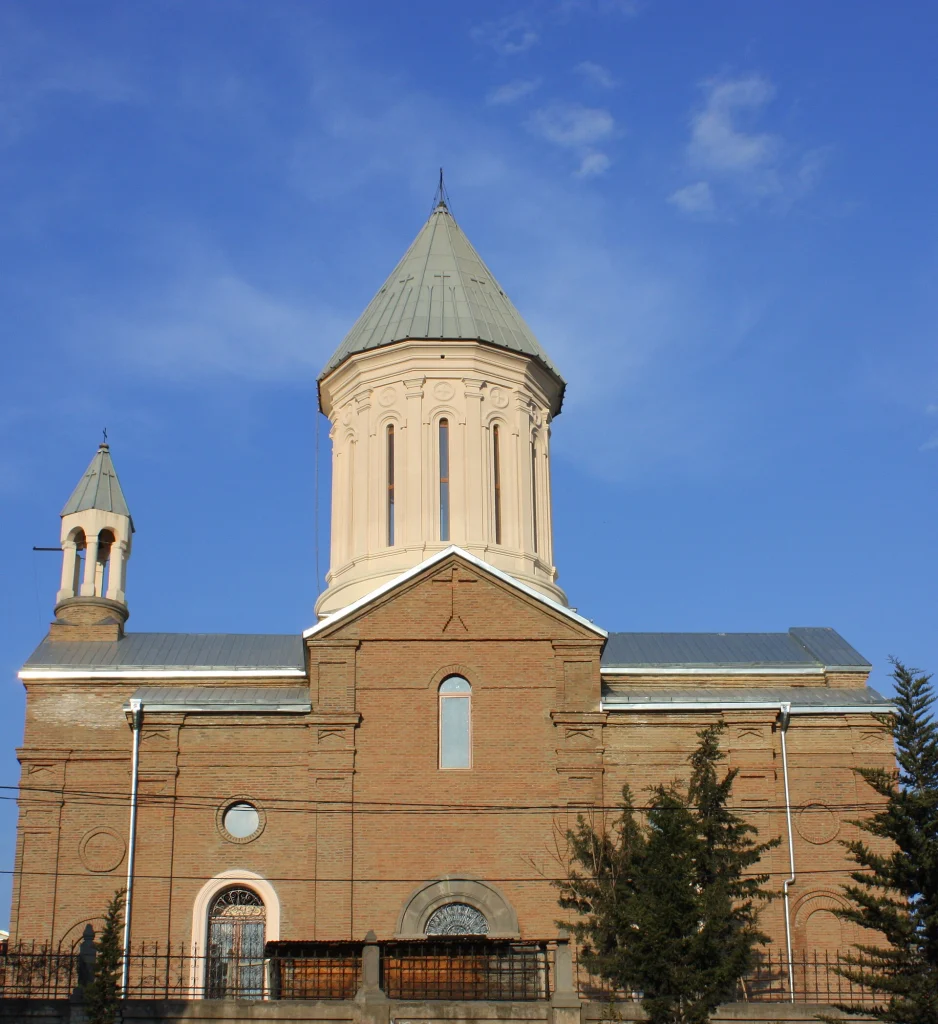
In the early nineteenth century, Swabian Lutheran settlers from southern Germany founded a string of agricultural colonies in the Tbilisi and Bolnisi area, including Katharinenfeld (today’s Bolnisi town), Elisabethtal (Asureti) and Alexandersdorf, the last of which was absorbed into Tbilisi’s Vake district as the city expanded. These colonists built kirches, vineyards and wineries, and introduced winemaking and brewing techniques that left a lasting mark on local agriculture even after most descendants emigrated or were deported in the Soviet period.
Surviving Lutheran church buildings can still be seen in Bolnisi and Asureti, though some have been restored as cultural or concert venues rather than functioning as regular Lutheran parishes, and a small Evangelical-Lutheran congregation continues to meet in Tbilisi. Because the colonies sit close to Bolnisi Sioni, one of Georgia’s oldest dated churches, the two histories make a natural single day out; our Bolnisi and Dmanisi — the Oldest Church and the First Europeans day trip passes through the former Katharinenfeld colony on its way south.
The Yezidi temple in Varketili
Tbilisi is home to a Yezidi (Yazidi) community, Kurdish-speaking followers of a distinct, ancient faith centred on Iraqi Kurdistan, many of whom settled in Georgia from the nineteenth century onward and again as refugees during periods of persecution elsewhere. In the Varketili district on Tbilisi’s eastern edge stands a purpose-built Yezidi temple, one of only a few such structures outside the Yazidi heartland, serving a community that has otherwise worshipped mainly in private homes and at open-air shrines.
The temple has drawn international press attention precisely because it is so rare outside Iraq, Armenia and small diaspora pockets elsewhere, and it remains an active place of worship rather than a tourist attraction, so visits should be arranged quietly and respectfully, ideally with advance notice through a local guide or contact rather than simply turning up. Because Varketili lies outside the usual walking routes of central Tbilisi, the most practical way to see it is with a private car and driver; our Car with Driver by the Day — Sedan, Minivan or 4×4, Your Own Route or a Licensed Private Guide by the Day — English, German, French, Russian, Italian, Hebrew can build this into a wider day covering Avlabari and Varketili together.
Visiting hours and etiquette
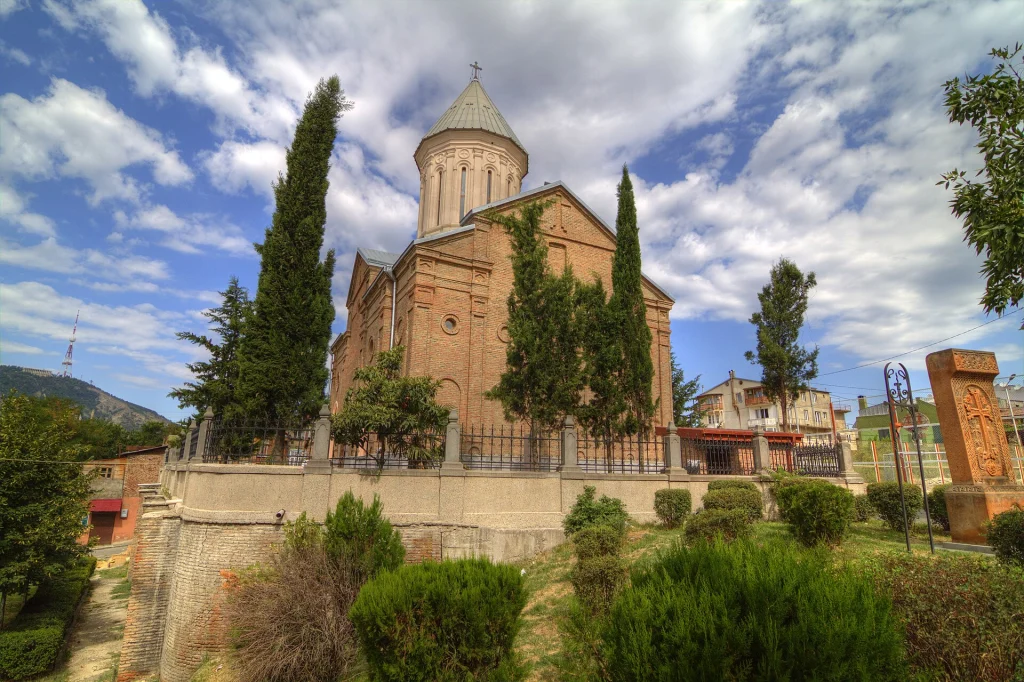
None of these sites publish a single, permanently fixed set of visiting hours in the way a state museum does, because they are working places of worship first. The table below gives a conservative, general guide; always check locally, especially around major feast days (Armenian and Catholic Christmas and Easter fall on different dates from the Georgian Orthodox calendar) when access may be restricted to worshippers.
| Site | General access | Etiquette notes |
|---|---|---|
| Surb Gevorg, Avlabari | Daylight hours outside services | Modest dress, quiet during liturgy, women may wish to cover hair |
| Catholic parish church, Tbilisi | Mass times posted at entrance, confirm on the day | Standard Catholic church etiquette; photography discouraged during Mass |
| Rabati and Samtskhe Catholic parishes | Rabati open as a heritage site with set hours; village parishes by arrangement | Ask permission before entering a working parish outside Rabati |
| Bolnisi and Asureti kirches | Exterior generally viewable; interior access varies by building’s current use | Treat as heritage architecture unless a service is in progress |
| Yezidi temple, Varketili | By arrangement; not a casual walk-in site | Arrange in advance, remove shoes if asked, follow your host’s lead |
For the most current word on access, feast dates and any temporary closures, it is worth checking recent reporting and official tourism pages rather than older travel blogs, since several of these communities are small and arrangements can change year to year.
Planning a route that joins the sites together
A single day on foot can comfortably combine Surb Gevorg and Tbilisi’s Catholic church with the synagogue and mosque in the Old Town, which is the logic behind our Faiths of Tbilisi — Synagogue, Mosque and Armenian Churches Walk. Reaching Varketili and returning the same afternoon is easiest with a private car rather than public transport, and this pairs naturally with a half day in Avlabari if you book a full day of our Car with Driver by the Day — Sedan, Minivan or 4×4, Your Own Route service. For the Samtskhe sites, a dedicated overnight trip gives more room to see Rabati properly alongside Vardzia; both The South in 3 Days — Borjomi, Vardzia, Rabati and Abastumani and Vardzia, Rabati & Borjomi — 2 Days are built for this. The Bolnisi and Asureti colonies fit well into a half-day loop south of Tbilisi, covered by Bolnisi and Dmanisi — the Oldest Church and the First Europeans.
If this guide is part of a trip you are planning, our Tbilisi to Borjomi or Bakuriani Transfer and Georgia Off the Beaten Track — 9 Days in Racha, Samegrelo and Guria cover the places it describes with a private guide and driver; a GTour travel expert adapts the route to your dates.
Practical summary
- Surb Gevorg (Avlabari, Tbilisi): active Armenian Apostolic church, open daylight hours outside services, dress modestly.
- Tbilisi’s Catholic parish church: confirm Mass times at the door on the day of your visit.
- Samtskhe Catholic and Latin heritage: centred on Akhaltsikhe and villages toward the Turkish border, best seen with Rabati fortress and advance notice for any working parish.
- German Lutheran colonies: former Katharinenfeld (Bolnisi) and Elisabethtal (Asureti) kirches survive, some repurposed; a small Lutheran congregation still meets in Tbilisi.
- Yezidi temple, Varketili: one of the few purpose-built Yezidi temples outside Iraq and Armenia; arrange a visit in advance, do not treat it as a casual tourist stop.
- Always verify current hours and feast-day restrictions close to your visit; schedules at small minority congregations change more often than at major Orthodox cathedrals.
- A licensed guide who knows these communities personally is the most reliable way to arrange respectful access, especially at the Yezidi temple.
Sources
- Georgian National Tourism Administration, religious diversity
- National Agency for Cultural Heritage Preservation of Georgia
- National Statistics Office of Georgia, population census
- Agenda.ge, Tbilisi's minority communities
- Georgia Today, Tbilisi heritage features
- BBC Travel, Yazidi temple feature
Questions this guide does not answer? Write to info@castle.ge or WhatsApp +995 577 41 63 14 — a person in Tbilisi replies. See also our travel services and all guides.
The 18th-century Ejmiatsin Armenian Church in Tbilisi's Avlabari district. · Photo: David & Bonnie Smith / Wikimedia Commons, CC BY 2.0
Been to Georgia? Tell us how it went — the best stories are published here.
Share your tripOne email a week: what changed for travellers in Georgia — rules, roads, flights, seasons — plus one place worth the trip. Written by the GTour desk, no advertising, unsubscribe in one click.
This story across our partner network — ქართულად: შენი დასვენება
