

By David Kiknadze, Transport & Openings Reporter · 29/10/2026
Soviet Georgia for travellers means confronting several things in one trip: a museum in Gori that still displays Joseph Stalin’s death mask with little critical framing, a museum in Tbilisi built explicitly to document occupation and repression, a plaque on Rustaveli Avenue marking the night in 1989 when Soviet troops killed demonstrators a few hundred metres from where tourists now queue for the funicular, and a scattering of derelict sanatoriums and cable cars that are becoming fashionable photography subjects faster than they are becoming contextualised heritage. None of this is hidden. It is simply inconsistently explained, and it rewards a visitor who reads a little before arriving.
The short answer to “how do I see this responsibly” is: visit the Stalin Museum in Gori and the Museum of Soviet Occupation in Tbilisi as a pair, not separately, stand at the 9 April memorial and understand what happened there, treat Chiatura and Tskaltubo as inhabited places with ongoing stories rather than abandoned film sets, look at the mosaics and modernist buildings as serious design history, and when you talk to Georgians about any of this, listen more than you editorialise. The rest of this guide works through each of those in turn, with the practical details — opening information, how to get there, and which of our tours cover the ground — kept conservative and linked to sources you can check yourself.
The Stalin Museum in Gori: what it is and is not
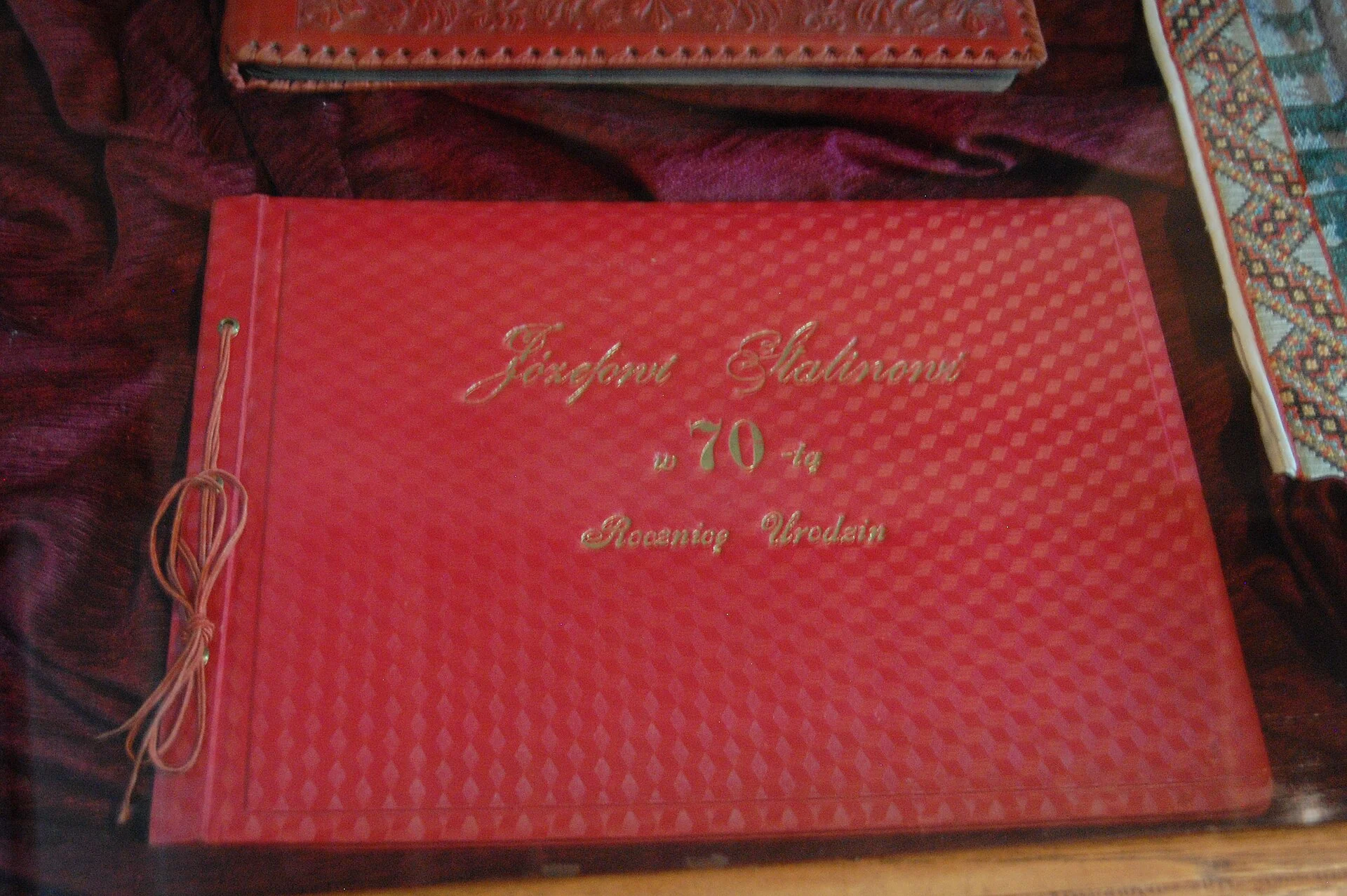
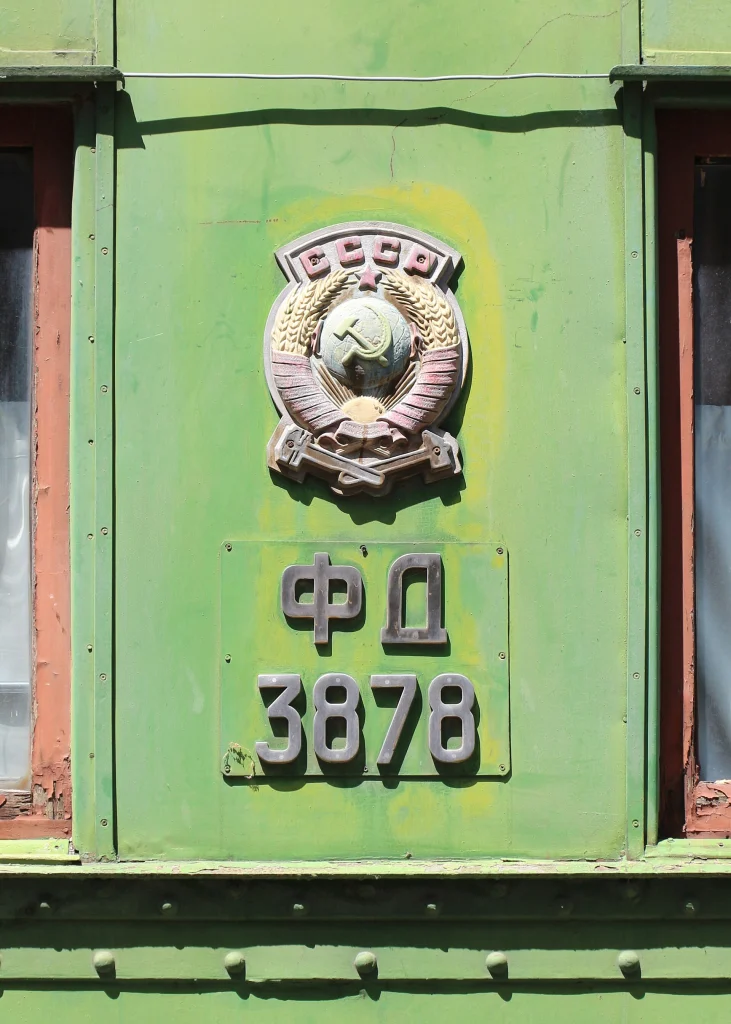
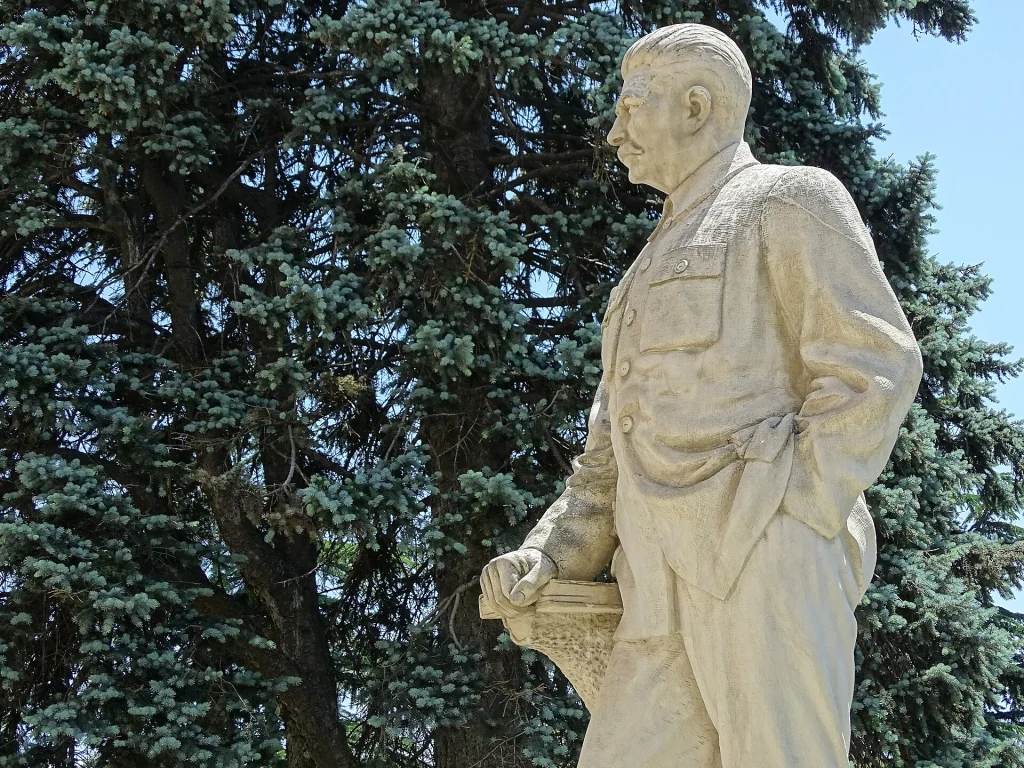
Joseph Stalin was born Ioseb Jughashvili in Gori in 1878, and the town has maintained a museum to him since 1957, built around his childhood house and a purpose-built exhibition hall. The museum today presents his biography largely on its own terms: medals, gifts from foreign communist parties, his personal railway carriage, very little on the Gulag, the famines, or the deportations he ordered. There have been repeated public and government discussions over the years about recontextualising the exhibition, and plans have been announced more than once; whether any new wing or revised narrative has actually opened changes faster than any travel article can track, so check the current state of the exhibition directly with Georgia Travel, the national tourism board, before you go.
What is consistent is the discomfort many visitors feel, and it is worth naming plainly: this is a museum run more as a shrine than a history exhibit, in the birthplace of a man responsible for millions of deaths across the Soviet Union, including inside Georgia itself. Local opinion is not uniform either — some older Gori residents take genuine local pride in a “famous son,” while most Georgian historians and the national museum system treat Stalinism as a chapter of occupation and repression, not achievement. We run a day trip to Gori and the nearby cave city of Uplistsikhe, and our guides are trained to present the museum’s exhibits alongside the history it omits rather than letting the building speak for itself: see Gori & Uplistsikhe — Cave City Day Trip.
The Museum of Soviet Occupation, Tbilisi
A short walk from Rustaveli Avenue, the Museum of Soviet Occupation operates as a branch of the Georgian National Museum and takes the opposite approach to Gori: deportation lists, photographs of executed intellectuals, a reconstructed cattle wagon used to transport deportees, and documentation of the Red Army’s 1921 invasion that ended Georgia’s first independent republic. It is a compact, text-heavy museum rather than a spectacle, and it is the single best starting point for understanding why so many Georgians describe the Soviet period as occupation rather than history. Current hours and ticket prices are listed on the museum’s own pages; confirm them at the Georgian National Museum before visiting, since museum branches occasionally adjust schedules.
Visiting Gori in the morning and this museum in the afternoon, or the reverse, gives a far more honest picture than either alone. We can arrange a private guide for exactly this combination through our Licensed Private Guide by the Day service, paired with a Car with Driver by the Day if you want to do both in one outing from Tbilisi.
9 April 1989: the tragedy and its memorial
On the night of 9 April 1989, Soviet troops and interior ministry forces dispersed a peaceful pro-independence demonstration outside the Parliament building on Rustaveli Avenue, using sharpened sapper shovels and, by most accounts, chemical agents against a crowd that included many women. Twenty-one people were killed, most of them women, and dozens more were injured. The date is now observed annually in Georgia as National Unity Day, and a modest memorial — plaques and a small museum room — stands near the spot, close to the Parliament building. The events are widely credited with accelerating the end of Soviet rule in Georgia, two and a half years before formal independence in 1991.
If you are in Tbilisi around 9 April, you will see official wreath-laying and public commemoration along Rustaveli; it is treated with the gravity of a national day of mourning rather than a tourist event, and visitors should behave accordingly — quiet observation, no posed photography at the memorial itself. Outside that week, the memorial is a short stop that pairs naturally with an Old Tbilisi walking tour; ask your guide to point it out on our Old Tbilisi Walking Tour — 3 Hours with a Licensed Guide.
Soviet architecture and mosaics across Tbilisi
Tbilisi’s Soviet-era building stock is extensive and, in places, genuinely striking: the Ministry of Highways building with its stacked concrete modules, the Wedding Palace (now the House of Justice complex nearby), countless apartment-block mosaics depicting agricultural and industrial themes in tile and glass, and modernist cinemas and sports halls scattered through Vake and Saburtalo. Much of it is unprotected and deteriorating, and some of the finest mosaics have already been lost to demolition or render. Interest in documenting this material, both from Georgian architects and international researchers, has grown faster than any formal conservation programme, which is part of why a dedicated architectural walk is worth doing with someone who knows which courtyards still have their original work.
We run exactly that: Soviet Tbilisi — Modernist Architecture and Mosaics, 3.5 Hours, covering a cross-section of buildings from the 1930s through the 1980s with commentary on who designed them and what has since changed. It pairs well with Street Art, Courtyards and Fabrika — the New Tbilisi Walk if you want to see how the newer generation is reusing some of these spaces.
Chiatura: the cable-car town
Chiatura, in Imereti, grew around manganese mining and became, under Soviet planning, one of the more unusual industrial towns in the region: a network of aerial cable cars was built from the 1950s to move workers up the steep gorge walls to the mines and apartment blocks above, rather than building roads. Many of the original cabins ran, visibly rusting, into the 2010s; a renovation programme has since replaced some lines with modern cabins while others remain closed or in disrepair, so the town today is a genuine mix of working infrastructure and abandoned machinery rather than a preserved museum piece. It is also still an active mining town with ordinary daily life, not a backdrop, and visitors should be mindful of that when photographing residents or apartment blocks.
The nearby Katskhi Pillar, a limestone monolith topped by a small monastery reoccupied by a single monk in the 1990s, is often combined with Chiatura in a single day. We run this as Katskhi Pillar and Chiatura — the Monk’s Rock and the Cable-Car Town from Kutaisi.
Tskaltubo: spa town, war shelter, slow revival
Tskaltubo was built by Soviet planners from the 1930s into one of the most lavish spa complexes in the USSR, drawing on naturally warm radon-carbonate springs that Stalin himself is said to have used for his arthritis. Around nineteen grand sanatoriums and bathhouses were built, each architecturally distinct, many with elaborate colonnades, murals and sculpture. After the 1992-93 war in Abkhazia, several of these buildings were repurposed to house displaced people, and some families lived inside former sanatorium wards for close to three decades. A resettlement and renovation programme in recent years has moved many displaced families into new housing and begun restoring some sanatorium buildings for tourism, though the pace and completeness of this varies by building and changes year to year, so check current status with Georgia’s tourism administration at the Georgian National Tourism Administration rather than relying on older photographs you may find online.
This is a place where the Soviet, post-Soviet war, and present-day tourism stories genuinely overlap, and a guided visit explains that layering far better than wandering alone with a camera. We offer a short combined stop on Gelati, Motsameta and Tskaltubo — Kings, Saints and Soviet Spas from Kutaisi, and for those who want to actually take the waters, a Tskaltubo Cure — 7 Nights of Radon-Carbonate Baths and Mud or the shorter Tskaltubo Short Cure — 3 Nights of Radon Baths.
Talking about the Soviet period: a respectful guide
Opinions about the Soviet period in Georgia are not uniform and often depend on age, region and personal family history. Many older Georgians remember guaranteed pensions, subsidised holidays and stable employment and will say so plainly; most will add, without much prompting, that this coexisted with censorship, repression, and the loss of independence, and that the two things are not in contradiction. Younger Georgians, educated after 1991, are more likely to describe the entire period as occupation, in line with how it is taught in schools and framed in national museums. Neither framing is “the” Georgian view, and it is worth not assuming either in conversation.
- Avoid conflating Stalin’s Georgian birthplace with Georgian national identity; the country’s modern political identity is built substantially around resisting, not claiming, Soviet rule.
- Ask open questions rather than stating conclusions — “how do people here talk about this period” works better than “Georgians must hate the Soviets.”
- Treat 9 April and the 2008 war with Russia as live, sensitive topics, not historical trivia; many families have direct losses from both.
- Do not photograph people in Chiatura’s apartment blocks or Tskaltubo’s remaining IDP households as if they were exhibits.
- If a driver or guide volunteers a strong opinion, it is one voice, not a national consensus — follow up rather than generalise.
If this guide is part of a trip you are planning, our Western Georgia in 6 Days — Kutaisi, Svaneti and the Sea and Mestia to Kutaisi or Zugdidi Transfer cover the places it describes with a private guide and driver; a GTour travel expert adapts the route to your dates.
Practical summary
- Visit the Stalin Museum (Gori) and the Museum of Soviet Occupation (Tbilisi) together, not in isolation, and confirm current hours via georgia.travel and museum.ge.
- Stand quietly at the 9 April memorial near Parliament on Rustaveli Avenue; avoid casual photography there, especially around the 9 April anniversary.
- See Soviet modernist buildings and mosaics with a guide who knows which examples survive, since many are deteriorating or already lost.
- Chiatura and Tskaltubo are inhabited, working or recovering places, not film sets; check current cable-car and sanatorium access before travelling.
- Expect varied, often generational, Georgian opinions on the Soviet period and ask rather than assume.
- For logistics, our Gori & Uplistsikhe, Soviet Tbilisi architecture walk, Katskhi Pillar and Chiatura, and Tskaltubo cure tours cover this ground with trained guides.
Sources
- Georgian National Museum (branches, including Museum of Soviet Occupation)
- Georgia Travel — official tourism board
- Georgian National Tourism Administration
- Agenda.ge — Georgian news coverage
- Georgia Today — English-language Georgian newspaper
- BBC — feature coverage of Georgia
- The Guardian — feature and cities coverage
Questions this guide does not answer? Write to info@castle.ge or WhatsApp +995 577 41 63 14 — a person in Tbilisi replies. See also our travel services and all guides.
Exterior of the Joseph Stalin Museum building in Gori, Georgia. · Photo: Andrzej Wójtowicz from Poznań, Poland / Wikimedia Commons, CC BY-SA 2.0
Been to Georgia? Tell us how it went — the best stories are published here.
Share your tripOne email a week: what changed for travellers in Georgia — rules, roads, flights, seasons — plus one place worth the trip. Written by the GTour desk, no advertising, unsubscribe in one click.
This story across our partner network — ქართულად: შენი დასვენება
