

By Nino Gelashvili, Travel News Editor · 29/10/2026
The quickest way to understand modern Georgia is through five or six names that recur on banknotes, street signs, wine labels and church walls: Queen Tamar, Shota Rustaveli, St Nino, David the Builder, Niko Pirosmani and Ilia Chavchavadze. Each belongs to a different century and a different kind of achievement, from founding the church to painting taverns, but together they trace the arc Georgians themselves tell about their country, a small nation that built cathedrals and wrote epic poetry while surrounded by empires, then had to reinvent its identity against Russian and Soviet pressure.
Visiting the places tied to these figures is not a detour from the main trip, it is the main trip. A fresco of Queen Tamar at Betania, Rustaveli’s verses carved on a Tbilisi avenue, Pirosmani’s lion and feast scenes in the National Gallery, Ilia Chavchavadze’s desk at his Saguramo house museum: these are read by Georgians the way the Houses of Parliament or the Liberty Bell are read elsewhere, as physical proof of a continuous story. What follows is a short who’s who with the sites that matter, the museums that hold the evidence, and plain notes on where facts are settled and where historians still argue.
Queen Tamar, the golden age in stone
Tamar ruled Georgia from 1184 to around 1213, a period Georgians still call the golden age, when the kingdom stretched from the Caucasus to parts of modern Armenia, Azerbaijan and eastern Turkey. She was crowned alongside her father and ruled in her own right after his death, an unusual arrangement that chroniclers and later Georgian national memory both treat as proof of her exceptional authority rather than a formality. She is venerated as a saint in the Georgian Orthodox Church, and her portrait appears in fresco at several churches, most famously at Betania near Tbilisi and Vardzia in the south, the extraordinary cave city on the Mtkvari river carved largely during her reign as a monastic retreat and refuge. A visit to Vardzia Cave City gives a direct sense of the scale of building activity the era produced. Historians agree on the outline of her reign and its military and cultural successes; details of her personal life and burial place are disputed, with Gelati Monastery the most commonly cited but unconfirmed candidate for her tomb.
Shota Rustaveli, the poet who gave Georgia its epic
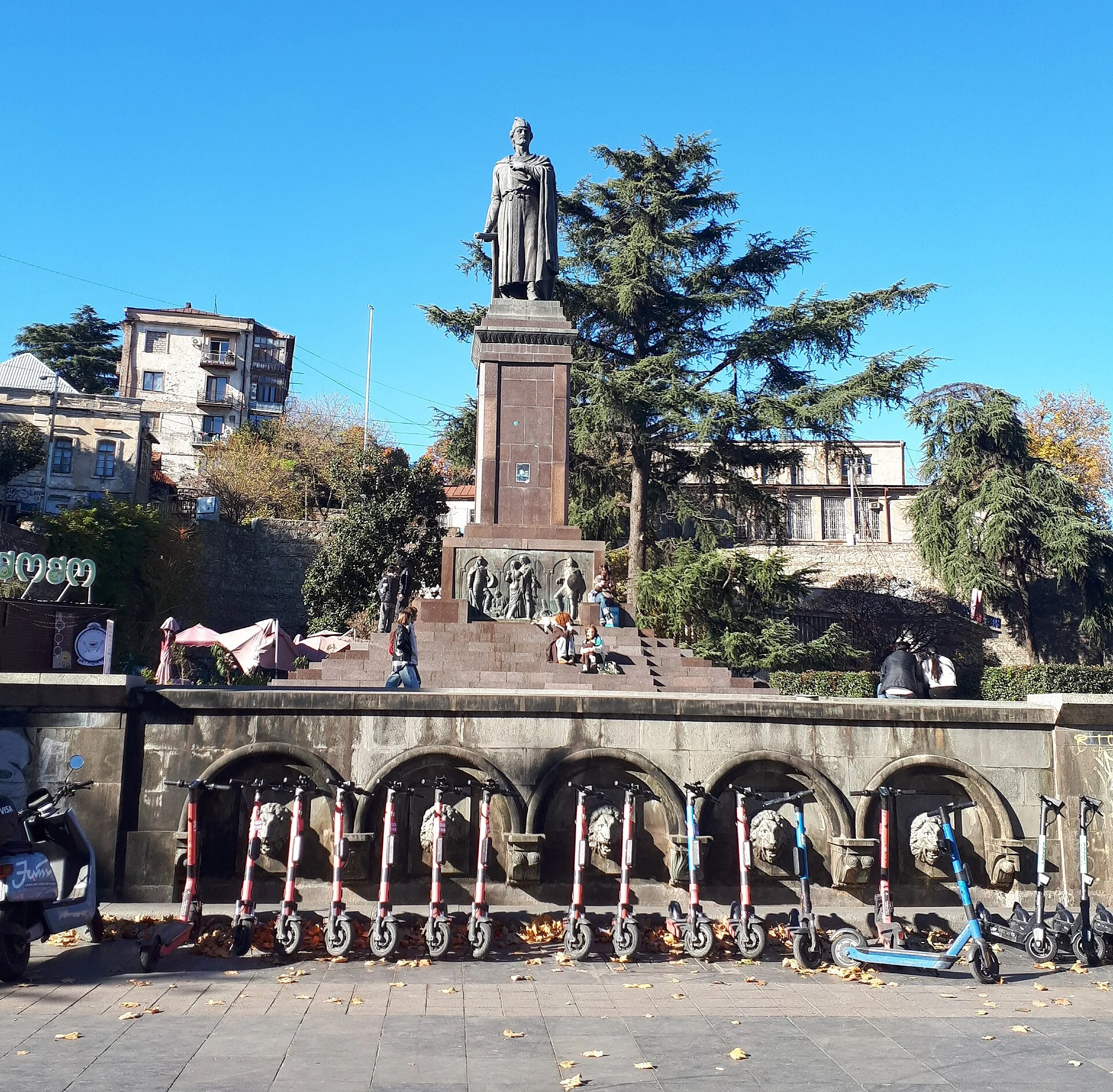
Almost nothing is documented about Rustaveli’s life outside his own poem, which is itself part of why he looms so large. His 12th-century epic “The Knight in the Panther’s Skin” (Vepkhistqaosani) is the closest thing Georgia has to a national scripture of secular literature, a chivalric romance in rhymed verse that Georgian schoolchildren still memorise and that gave the language a stable, elevated literary register centuries before most European vernaculars achieved the same. Tbilisi’s main avenue, its national theatre and its principal metro interchange all carry his name, and a statue of him stands where Rustaveli Avenue meets Freedom Square. Manuscript copies and scholarly editions are preserved and studied through Georgia’s national manuscript and library institutions, and the poem’s survival through later Persian, Mongol, Ottoman and Russian periods of foreign control is treated in Georgian cultural history as evidence that language and literature, not territory, kept the nation intact. An Old Tbilisi Walking Tour with a licensed guide is the simplest way to see the statue, the avenue and the theatre in context on a first day in the city.
St Nino and David the Builder, before the golden age
Two earlier figures explain why Tamar’s Georgia was Christian and unified enough to flourish. St Nino, a woman traditionally said to have arrived from Cappadocia in the early 4th century carrying a cross bound with her own hair, is credited with converting the Georgian royal court to Christianity, making Georgia one of the first states to adopt it as official religion. Her presumed grave is at Bodbe Monastery above Sighnaghi in Kakheti, a working convent that remains a major pilgrimage site, reachable on a Sighnaghi and Bodbe wine country day trip or the dedicated St Nino’s Way route through Mtskheta, Sioni and Bodbe. Mtskheta itself, the ancient capital where her mission is said to have taken root, holds the Svetitskhoveli Cathedral and Jvari Monastery, together inscribed by UNESCO as the Historical Monuments of Mtskheta.
David IV, known as David the Builder, ruled from 1089 to 1125 and did the political work that made the later golden age possible, driving out Seljuk forces, reunifying fragmented Georgian principalities and founding the Gelati Monastery and academy near Kutaisi as a centre of learning. He chose to be buried in the monastery’s gate, reportedly so that visitors would step over his grave, a gesture Georgian tradition reads as a statement of humility from a famously forceful king. Gelati, paired with Bagrati Cathedral, is a UNESCO World Heritage property, Bagrati Cathedral and Gelati Monastery, and is covered on the Gelati, Motsameta and Tskaltubo day trip from Kutaisi.
Niko Pirosmani, the painter who saw Georgia from below
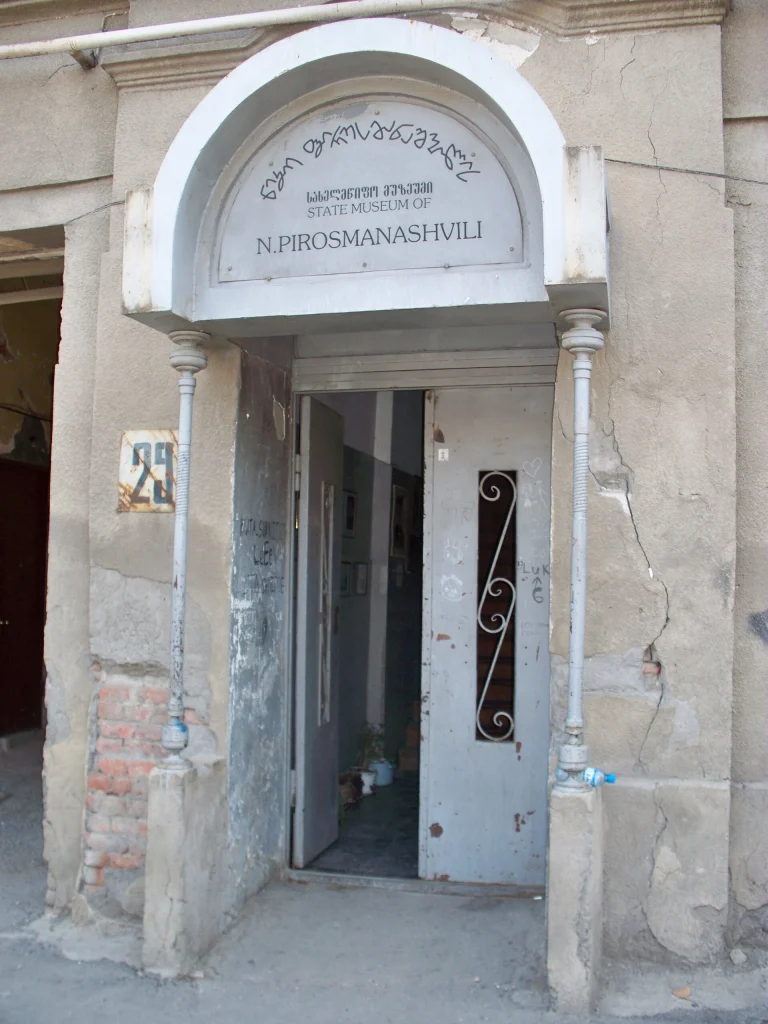
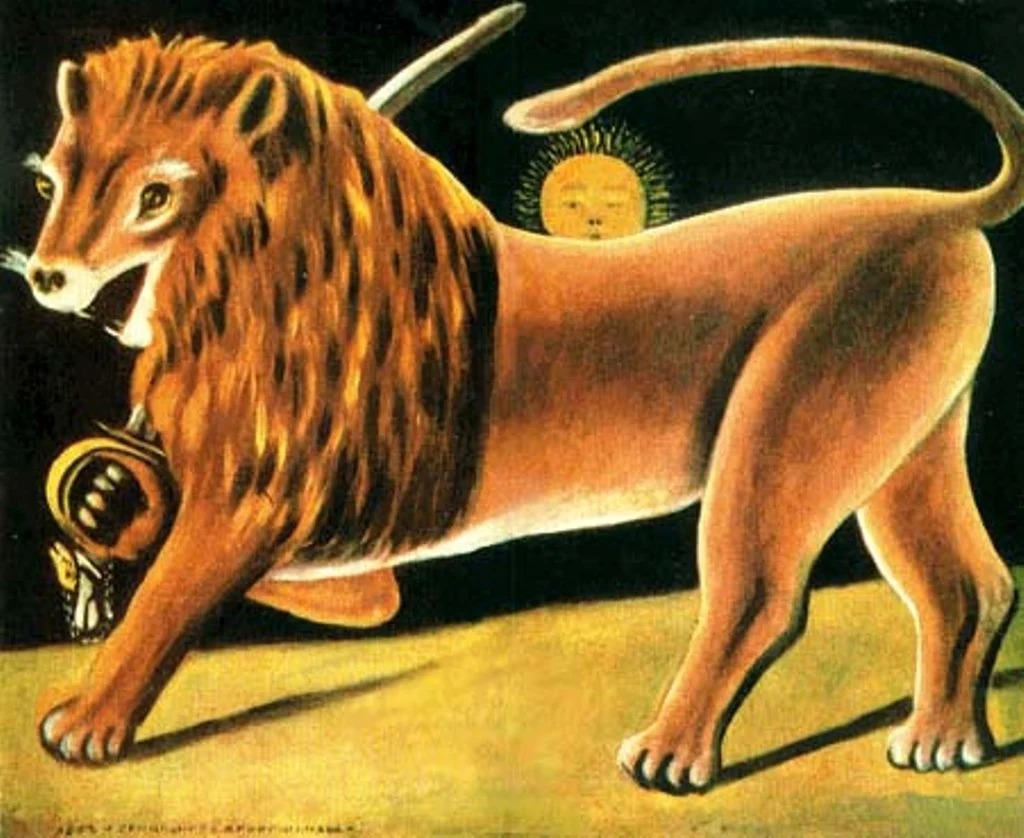
Pirosmani (1862-1918) is the one name on this list from outside the court and church tradition. A largely self-taught sign painter from Mirzaani in Kakheti, he worked for food, drink and lodging in Tbilisi’s taverns and shops, producing black oilcloth paintings of feasts, animals, merchants and city life that were dismissed in his lifetime and recognised only after his death as the work of a major naive-art painter. His image of a lion, a worker’s portrait and his feast scenes are now held mainly at the Georgian National Museum network in Tbilisi, with his family house in Mirzaani preserved as a memorial museum. Pirosmani’s appeal to modern Georgians is partly nostalgic and partly a corrective: he painted ordinary labourers, market traders and the ritual of the supra at a time when official art favoured royalty and clergy, and his rediscovery in the early Soviet period is often cited as proof that Georgian culture kept producing original work even under foreign rule. His paintings previously appeared on Georgian lari banknotes before the currency’s redesign, a detail still mentioned by local guides.
Ilia Chavchavadze, the father of the nation
Chavchavadze (1837-1907) is the figure most directly responsible for modern Georgian national identity. A writer, journalist, publisher and founder of the Society for the Spreading of Literacy among Georgians, he worked under Russian imperial censorship to rebuild Georgian as a modern literary and public language, arguing in essays and fiction that the nation’s survival depended on education, agriculture reform and a confident sense of its own history rather than armed confrontation. He was assassinated in 1907 under circumstances that remain disputed, and the Georgian Orthodox Church later canonised him as St Ilia the Righteous. His grave lies in the Pantheon of Writers and Public Figures on Mtatsminda, visited on the Tbilisi Hills walk that also covers the funicular and Vake Park, and his house museum at Saguramo, a short drive from Tbilisi, preserves his study and personal library. He should not be confused with Prince Alexander Chavchavadze, an earlier relative and romantic poet whose family estate at Tsinandali in Kakheti is now a house museum and wine estate; both men are commonly introduced to visitors under the same surname, and guides generally distinguish them by noting Ilia’s 19th-century nationalist writing against Alexander’s earlier literary and winemaking legacy.
Where to see each of them
| Figure | Era | Key site | Nearest museum or monument |
|---|---|---|---|
| St Nino | 4th century | Bodbe Monastery, Sighnaghi; Mtskheta | Svetitskhoveli Cathedral, Jvari Monastery |
| David the Builder | 1089-1125 | Gelati Monastery, near Kutaisi | Gelati Monastery complex and academy ruins |
| Queen Tamar | 1184-c.1213 | Vardzia, Betania | Fresco portraits at Betania and Vardzia churches |
| Shota Rustaveli | 12th century | Rustaveli Avenue, Tbilisi | Statue at Freedom Square, Rustaveli Theatre |
| Niko Pirosmani | 1862-1918 | Mirzaani, Kakheti | Pirosmani house museum, Mirzaani; Georgian National Museum, Tbilisi |
| Ilia Chavchavadze | 1837-1907 | Saguramo; Mtatsminda Pantheon, Tbilisi | Ilia Chavchavadze house museum, Saguramo |
Reading the story through everyday Georgia
These names surface constantly once you start noticing them. Georgian lari banknotes have carried portraits linked to this history, Tbilisi’s metro stations are named after Rustaveli and other cultural figures, and nearly every town has a street called Chavchavadze or a square with a Tamar statue. Schoolchildren still recite Rustaveli from memory, and the supra, the long ritual feast with a toastmaster, is the same social institution Pirosmani painted over a century ago. Understanding that Tamar’s golden age, Rustaveli’s poem, Pirosmani’s taverns and Chavchavadze’s literacy campaigns are treated as one continuous line, rather than isolated historical trivia, explains a lot about why Georgians speak of their culture as something defended rather than simply inherited, after repeated periods of Persian, Ottoman, Russian and Soviet control. A guided day combining Mtskheta, the old capital, with a Kakheti cellar visit, such as the Kakheti Classic day trip to Sighnaghi and Bodbe, is a practical way to see the religious and literary layers together in a single outing.
If this guide is part of a trip you are planning, our Tbilisi to Borjomi or Bakuriani Transfer and Mtskheta on Foot — the Ancient Capital in 2 Hours cover the places it describes with a private guide and driver; a GTour travel expert adapts the route to your dates.
Practical summary
- St Nino: Bodbe Monastery (Sighnaghi) and Mtskheta, 4th-century Christianisation of Georgia.
- David the Builder: Gelati Monastery near Kutaisi, 12th-century unifier, buried at the gate.
- Queen Tamar: Vardzia and Betania, golden age queen, portrait frescoes rather than a confirmed tomb.
- Shota Rustaveli: Rustaveli Avenue and statue, Tbilisi, author of the national epic “The Knight in the Panther’s Skin”.
- Niko Pirosmani: Mirzaani house museum and the Georgian National Museum, naive-art painter of taverns and feasts.
- Ilia Chavchavadze: Saguramo house museum and Mtatsminda Pantheon, Tbilisi, father of modern Georgian national identity, canonised as a saint.
- Do not confuse Ilia Chavchavadze with Prince Alexander Chavchavadze of Tsinandali, an earlier relative and separate historical figure.
- For disputed details, such as Tamar’s burial site or the circumstances of Ilia Chavchavadze’s death, treat local guiding as tradition rather than settled fact and check the cited sources for the documented record.
Sources
- UNESCO – Historical Monuments of Mtskheta
- UNESCO – Bagrati Cathedral and Gelati Monastery
- Niko Pirosmani House Museum, Mirzaani
- Ilia Chavchavadze – National Parliamentary Library of Georgia biographical archive
Questions this guide does not answer? Write to info@castle.ge or WhatsApp +995 577 41 63 14 — a person in Tbilisi replies. See also our travel services and all guides.
The Rustaveli monument stands in central Tbilisi, honoring the author of the national epic. · Photo: Matti&Keti, Lorenz.King@geogr.uni-giessen.de / Wikimedia Commons, CC0
Been to Georgia? Tell us how it went — the best stories are published here.
Share your tripOne email a week: what changed for travellers in Georgia — rules, roads, flights, seasons — plus one place worth the trip. Written by the GTour desk, no advertising, unsubscribe in one click.
This story across our partner network — ქართულად: შენი დასვენება
