


By David Kiknadze, Transport & Openings Reporter · 27/10/2026
Portuguese citizens need no visa for short tourist stays in Georgia: current policy allows EU and Schengen-area passport holders, including Portugal, to enter visa-free for stays of up to one year, confirmed on the Ministry of Foreign Affairs’ consular portal. There is no direct flight between Portugal and Georgia, so every trip connects through a hub such as Istanbul, Munich, Doha or Dubai, and most visitors land in Tbilisi. The rest is straightforward: the lari is the only legal tender, cards work in every city, Georgian is the spoken and written language with English understood in tourist areas, and the food, built on bread, wine and grilled meat, will feel familiar rather than foreign.
This guide sets out exactly what changes for a Portuguese passport, where rules can shift without notice, and how to verify each point before departure. Where our firsthand experience adds something, such as which roads need a 4×4 or which months the Caucasus passes close, we say so plainly rather than guessing.
Visa and entry rules for Portuguese citizens
As of October 2026, Portuguese nationals travelling as tourists do not need a visa to enter Georgia and may stay up to 365 days per calendar year under the country’s long-standing liberal entry policy for EU and Schengen citizens. This is not a blanket guarantee for every purpose of travel (work, study and long-term residence have separate rules), and visa policy in Georgia has changed for other nationalities in recent years, so confirm your exact entitlement on the Ministry of Foreign Affairs’ consular information page before booking, especially if your passport is near expiry or you plan to stay beyond a few weeks. A passport valid for the intended stay is sufficient; no supporting e-visa application is normally required for Portuguese tourists. If your situation is unusual (dual nationality, travel on an emergency passport, onward travel to breakaway regions), use the official e-Visa and travel information portal, which also lists document checks for land border crossings.
Portugal does not maintain a resident embassy in Tbilisi. Consular protection for Portuguese travellers is typically arranged through Portugal’s diplomatic network for the South Caucasus; the responsible embassy and its current contact details can change, so check with Portugal’s own consular service before you fly and keep its emergency number saved. The Georgian side’s list of foreign missions accredited to Tbilisi is maintained by the Ministry of Foreign Affairs of Georgia, useful if you need to confirm which country’s embassy holds reciprocal arrangements for Portuguese nationals in an emergency.
Flights, routes and the usual hubs
There is no scheduled direct flight from Lisbon or Porto to Tbilisi, Kutaisi or Batumi, so plan on one stop. The connections that reliably apply from Portugal are below; always check seasonality, since some routings are reduced outside the European summer.
| Hub | Typical carriers | Notes |
|---|---|---|
| Istanbul | Turkish Airlines | Frequent Lisbon–Istanbul–Tbilisi connections, often the shortest total journey time |
| Munich | Lufthansa | Good option if starting from Lisbon or Porto with existing Star Alliance mileage |
| Doha | Qatar Airways | Longer routing but strong onward frequency into Tbilisi |
| Dubai | Emirates / flydubai | Useful if combining with a Gulf stopover |
Most Portuguese visitors arrive at Tbilisi International Airport. Kutaisi and Batumi airports mainly serve European low-cost routes to other EU cities rather than Portugal directly, so check current schedules at Kutaisi Airport and Batumi Airport if building a multi-city itinerary, for example flying into Kutaisi and out of Tbilisi. On arrival, a fixed-price private transfer (sedan, Tbilisi airport to any city address, €25) avoids taxi haggling after a long connection; see G Tour’s airport transfers.
Driving licence, money and connectivity
A valid Portuguese driving licence is generally accepted for short tourist stays, but Georgian traffic rules require foreign licences to be in the Latin alphabet (Portuguese licences qualify) or accompanied by an International Driving Permit for longer or more formal rentals; car-hire firms in Tbilisi commonly ask for the IDP regardless, so carry one if you plan to self-drive, particularly toward Kazbegi, Svaneti or Tusheti where mountain roads and seasonal closures make an experienced local driver worth the cost. For the mountains, hiring a car with driver rather than self-driving is usually simpler and often similar in price once fuel, tolls and local knowledge of road closures are factored in; see G Tour’s car-with-driver rates.
The Georgian lari (GEL) is the only legal currency; euros and other foreign cash are not usable for payment outside a handful of hotels. At the National Bank of Georgia’s rate for 26 October 2026, €1 was worth roughly 2.91 GEL. Cards are accepted in Tbilisi, Batumi, Kutaisi and most tourist towns, but carry cash for markets, rural guesthouses, marshrutka minibuses and mountain villages where terminals are unreliable. ATMs are common in cities and tourist centres; withdraw lari rather than relying on dynamic currency conversion, which usually gives a worse rate.
- SIM and eSIM: local operators (Magti, Geocell, Beeline) sell tourist SIM cards at airport kiosks and city shops; eSIM options from international providers also work in Georgia and are worth activating before departure if you want data on arrival.
- Cards: Visa and Mastercard widely accepted in cities; contactless is standard in Tbilisi supermarkets and most restaurants.
- Cash: keep small lari notes for markets, minibuses, and mountain guesthouses.
Language: what to expect
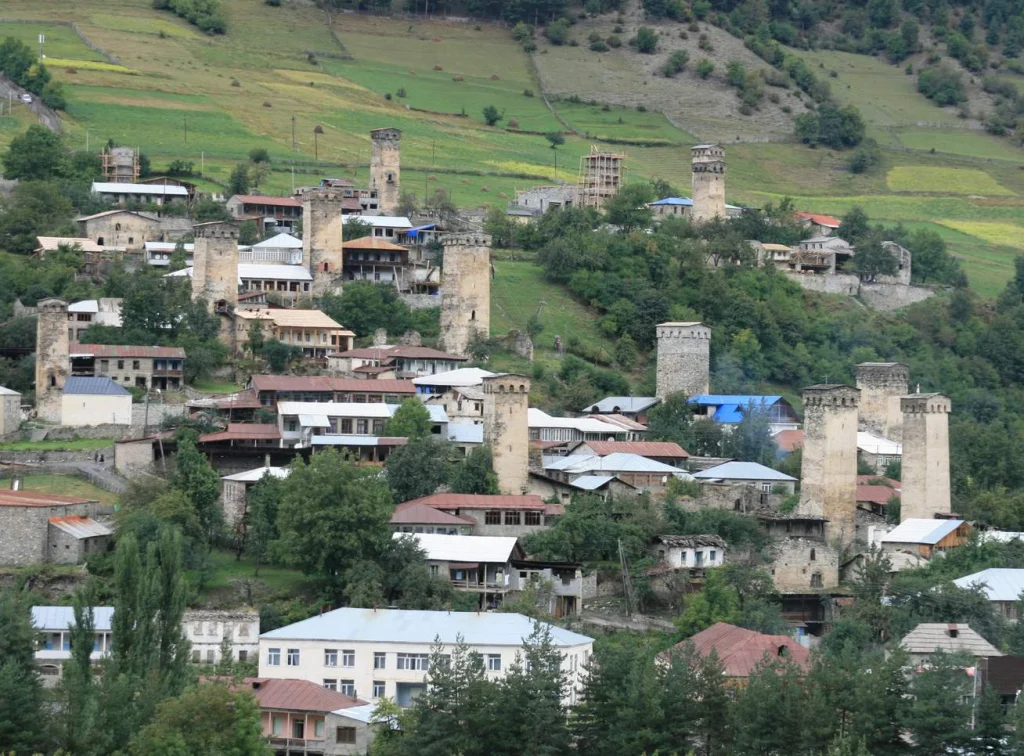
Georgian uses its own script and is unrelated to Portuguese or any Romance language, so there is no linguistic shortcut. English is spoken reasonably well in Tbilisi’s hotels, restaurants and by most licensed guides, less so once you leave the capital for villages in Kakheti, Svaneti or Tusheti. Russian remains widely understood among the older generation nationwide, which can help in rural settings, though it is politically sensitive for some Georgians and best used only when needed. A translation app with offline Georgian support and a photo of your hotel’s address in Georgian script are genuinely useful. Portuguese itself is not spoken or understood beyond the rare hospitality worker who has lived abroad.
Food and dietary notes
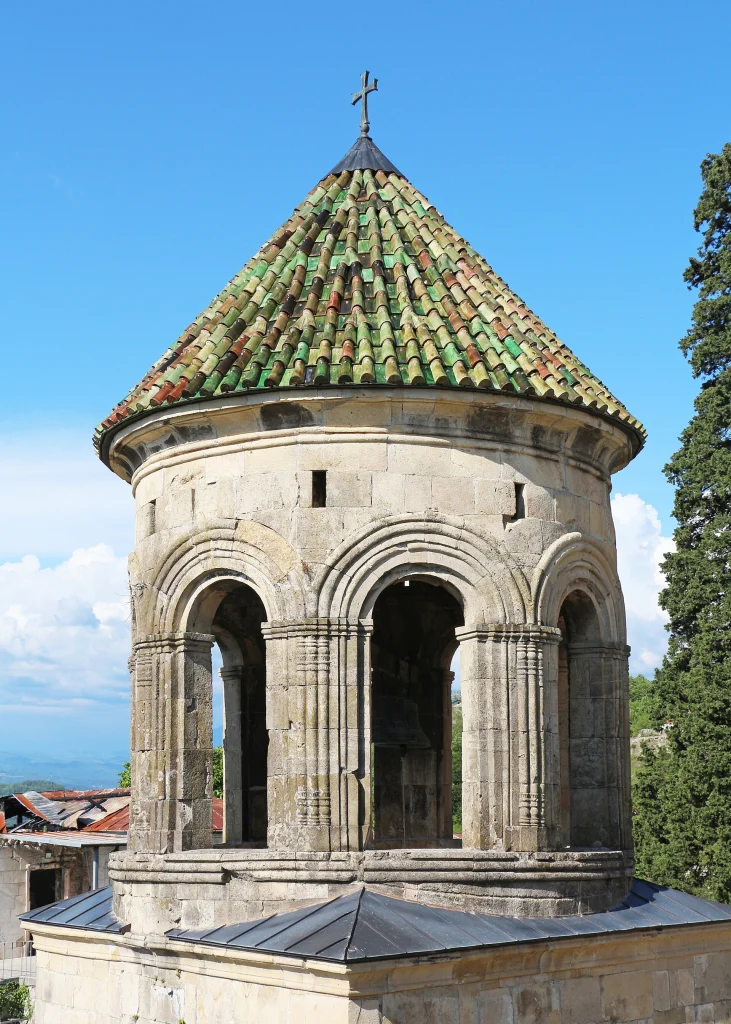
Georgian cuisine will feel more familiar to Portuguese travellers than many other long-haul cuisines: fresh bread (especially the boat-shaped khachapuri), grilled meat (mtsvadi), grape wine made in both modern and ancient qvevri clay-vessel methods, and a strong culture of shared, long meals (supra) with toasting. The qvevri winemaking tradition is recognised on UNESCO’s list of intangible cultural heritage, a point of genuine common ground with Portugal’s own old-world wine regions.
Vegetarians eat well: lobio (bean stew), pkhali (vegetable pastes), eggplant dishes and fresh salads are everywhere and rarely need special requests. Vegan travellers should double-check for butter or cheese in bread and some stews. Pork appears often in Georgian cooking, so halal diners should ask directly or seek out halal-certified or Muslim-run restaurants, concentrated mainly in Tbilisi’s Old Town and in Adjara (Batumi); menus do not always mark this clearly, so confirming with staff is the reliable approach. None of this requires special planning beyond asking, which Georgian hospitality culture generally welcomes.
Culture, history and diaspora ties
Direct historical ties between Georgia and Portugal are thin, and it is honest to say so rather than invent connections. Both countries sit at opposite ends of Europe’s old trade and exploration routes and share no significant historical overlap, colonial link or large resident diaspora in either direction. Where the two genuinely meet is narrower but real: both nations carry UNESCO-recognised wine traditions, both have small resident communities of each other’s nationals in their capitals (reflecting modern European mobility rather than historic migration), and Georgia’s national football team has met Portugal in European qualifying competition, a point of sporting familiarity for Portuguese visitors rather than any deeper tie. Travellers should expect a country that is culturally closer to the Caucasus, Eastern Orthodoxy and the former Soviet space than to Western Europe, and treat the trip as a genuine first encounter rather than an extension of a shared past.
Seasons, health, insurance and safety
Portuguese visitors tend to arrive in the same windows as other Western Europeans: July and August for the Black Sea coast and Svaneti hiking, late September into October for the grape harvest (rtveli) in Kakheti, and increasingly December to March for skiing in Gudauri and Bakuriani. Each season suits different regions; see georgia.travel’s seasonal overview for a general picture.
Georgia does not currently impose a blanket mandatory travel insurance requirement for all tourist entrants, unlike the pandemic-era rules some travellers may remember, but entry and health requirements can change with little notice, including for specific nationalities or circumstances. Confirm the current position before departure on the Ministry of Foreign Affairs travel information pages and buy comprehensive travel medical insurance regardless, since Georgia’s public healthcare system is not free for foreign visitors and private clinics in Tbilisi, while good, are not cheap for serious treatment. Mountain regions such as Svaneti and Tusheti have limited medical facilities; anyone with an existing condition should discuss high-altitude or remote travel with their own doctor before booking.
Georgia is generally a safe destination with low street crime against tourists, but Tbilisi has seen periodic political demonstrations in recent years; these are usually confined to specific streets and rarely affect visitors who avoid the immediate area, though it is sensible to check local news before walking through central Tbilisi during a scheduled protest. Mountain roads, particularly the Gudauri pass and routes into Svaneti, can close for snow or landslides outside anyone’s control; see our road status page before a self-drive day. Church etiquette matters more than in much of secular Western Europe: cover shoulders and knees, and women are generally expected to cover their heads with a scarf at monasteries such as those on the Kakheti wine routes or at Gergeti Trinity Church above Kazbegi.
What a G Tour private guide adds
For a first visit from Portugal, the main friction points are not cost but logistics: no direct flight, a non-Latin script, mountain roads that need local judgement, and a wine and food culture that rewards context (which supra toast to answer, how a qvevri cellar differs from a Douro adega). A licensed English-speaking guide removes that friction, whether for a single day in Tbilisi and Mtskheta or a longer loop through Kakheti’s vineyards and Svaneti’s villages. Drivers who know which Kazbegi or Racha roads need a 4×4 in October, and guides who can translate a winemaker’s explanation of qvevri fermentation into terms a Portuguese visitor used to barrica ageing will immediately recognise, add real value beyond simple navigation. See our ready-made Georgia in 7 Days classic tour or the shorter Kakheti Wine Country day trip as starting points, and the full range of private guides and car-with-driver services for a tailored itinerary.
If this guide is part of a trip you are planning, our Georgia in 10 Days — Tbilisi to Svaneti to the Sea and Monasteries of Georgia — Mtskheta, the Thirteen Fathers and Kakheti in 3 Days cover the places it describes with a private guide and driver; a GTour travel expert adapts the route to your dates.
Practical summary
- Visa: visa-free tourist entry for Portuguese passports up to 365 days under current policy; verify before booking at geoconsul.gov.ge and evisa.gov.ge.
- Flights: no direct route; connect via Istanbul, Munich, Doha or Dubai into Tbilisi (occasionally Kutaisi or Batumi).
- Driving: Portuguese licence usually accepted; carry an International Driving Permit for car hire, or hire a car with driver for mountain regions.
- Money: lari only; cards work in cities, carry cash for villages and minibuses; check the live rate at nbg.gov.ge.
- Connectivity: buy a local SIM or activate an eSIM on arrival; Wi-Fi is reliable in cities.
- Language: English in tourist areas and with guides; Georgian script elsewhere; Russian understood by older generations.
- Food: familiar (bread, wine, grilled meat); vegetarians eat easily, halal and vegan travellers should ask directly.
- Embassy: no resident Portuguese embassy in Tbilisi; confirm current accredited coverage with Portugal’s own foreign ministry before travel.
- Insurance: no blanket mandatory policy currently, but buy comprehensive travel medical cover and confirm rules on mfa.gov.ge before departure.
Sources
- Consular information for foreign visitors
- Georgia e-Visa and travel information portal
- Ministry of Foreign Affairs of Georgia
- Seasonal travel overview
- Qvevri wine-making tradition, UNESCO intangible heritage
Questions this guide does not answer? Write to info@castle.ge or WhatsApp +995 577 41 63 14 — a person in Tbilisi replies. See also our travel services and all guides.
Gergeti Trinity Church perched on a hilltop below Mount Kazbek, Georgia's iconic mountain landmark. · Photo: Adam Jones from Kelowna, BC, Canada / Wikimedia Commons, CC BY-SA 2.0
Been to Georgia? Tell us how it went — the best stories are published here.
Share your tripOne email a week: what changed for travellers in Georgia — rules, roads, flights, seasons — plus one place worth the trip. Written by the GTour desk, no advertising, unsubscribe in one click.
This story across our partner network — ქართულად: შენი დასვენება