

By Mariam Lomidze, Culture & Events Reporter · 27/10/2026
Cover your shoulders and knees, and if you are a woman, cover your hair with a scarf before stepping inside: this is the baseline dress code at Georgian Orthodox churches and monasteries in 2026, unchanged for decades and enforced informally by caretakers (the mt’ori) rather than by written law. Men should avoid shorts and remove hats; trousers are expected, not just encouraged.
The nuance is that enforcement varies by site and by season. At quiet village churches a caretaker may simply hand you a wrap-around skirt and headscarf from a basket by the door; at major pilgrimage sites such as Gergeti Trinity Church or Alaverdi Cathedral, volunteers check more closely, especially during Sunday liturgy or feast days. No site charges an entrance fee for dress non-compliance, but you may be asked to wait outside, borrow a wrap, or come back later.
What to wear: the basics
- Women: shoulders and knees covered, a headscarf over the hair, skirt or trousers below the knee. Trousers are generally tolerated now, though a long skirt is still the safer choice at conservative sites like Alaverdi or Bodbe convent.
- Men: long trousers, shoulders covered, no shorts, hats removed on entry.
- Footwear: no strict rule, but flip-flops are impractical on uneven stone floors and gravel courtyards.
- Colour and style: dark or muted clothing is customary but not mandatory; there is no rule against bright colours.
Headscarves and wraps at the door
Most working churches and monasteries keep a basket or rail of spare skirts and headscarves just inside the gate, free to borrow and meant to be returned on the way out. This is the simplest fallback if you turn up unprepared. At busier sites (Jvari, Gelati, Svetitskhoba in Mtskheta) these baskets can run low on a summer weekend, so carrying a light scarf in your daypack is the more reliable option. A sarong or large shawl works for both the head covering and the knee-length skirt requirement in one piece of fabric.
Photography rules
Photography of the building exterior and courtyard is almost always fine. Inside, the rule is more sensitive: photographing frescoes, icons and the altar area is often discouraged or banned outright, and flash photography of any kind is not acceptable near icons regardless of the site’s general policy. During an active service, put the camera away entirely. Drones are not permitted over monastery grounds without separate permission, which is rarely granted in practice; this matters particularly at Gergeti Trinity Church, a popular drone subject on the approach from Stepantsminda.
Behaviour during a service
- Enter and move quietly; do not walk across the nave during the liturgy.
- Men traditionally stand on the right side of the church, women on the left, though visitors are not expected to know or follow this strictly.
- Do not turn your back to the altar when leaving; step back toward the door where practical.
- Kissing icons is a normal part of worship for believers; visitors are not required to do this and should simply observe respectfully from the side.
- Talking, eating and phone use should stop the moment you are inside, service or not.
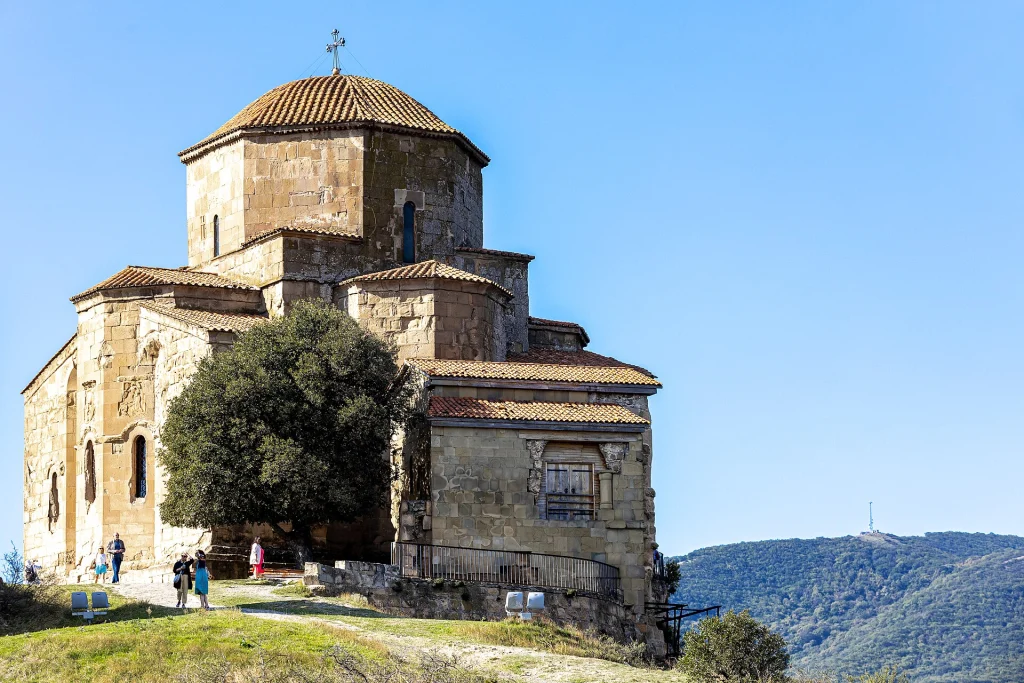
Feel free to / Wikimedia Commons, CC BY 4.0
Four sites where this matters most
| Site | Why dress code is strictly watched |
|---|---|
| Gergeti Trinity Church, near Kazbegi | High foot traffic from day-trippers in hiking gear; caretakers routinely turn away shorts and bare shoulders, especially in summer |
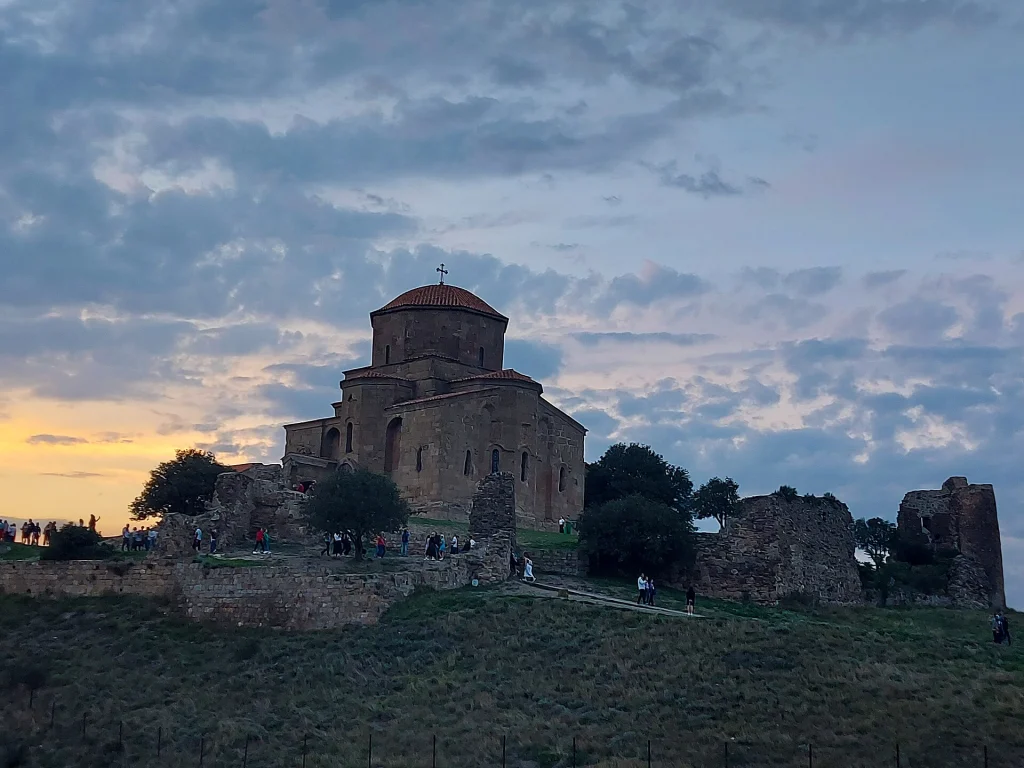
| Jvari Monastery, Mtskheta | Part of the UNESCO-listed Historical Monuments of Mtskheta; coach groups arrive constantly and queues form for the borrowed wraps |
| Gelati Monastery, near Kutaisi | Active monastery and UNESCO World Heritage property; frescoes inside are especially protected from photography, see the Gelati Monastery listing |
| Alaverdi Cathedral, Kakheti | Working men’s monastery with its own vineyard; dress checks are among the more conservative in the country, particularly for women’s skirts |
Our Kazbegi — Gergeti Trinity Church in a Day and Christian Georgia — Pilgrimage and Sacred Heritage in 8 Days both build in time at the church door for this, and guides on our Monasteries of Georgia — Mtskheta, the Thirteen Fathers and Kakheti in 3 Days and Telavi & Kakheti Wine Region — Monasteries and Cellars tours carry spare scarves as standard. Kutaisi & Western Georgia includes Gelati with a guide briefed on the photography limits inside.
Where this comes from
Dress and conduct expectations described here reflect long-standing custom at Georgian Orthodox sites rather than a single written statute, cross-checked against the UNESCO World Heritage listings for Mtskheta’s historical monuments and Gelati Monastery, and against general visitor guidance published by Georgia’s national tourism administration. Practice at individual churches can tighten or relax depending on the caretaker on duty and the liturgical calendar, so when in doubt, carry a scarf and ask quietly at the gate. Checked 27 October 2026; for current entrance arrangements and any fee changes at specific monasteries, see gtour.ge/data.
If this guide is part of a trip you are planning, our Martvili & Okatse Canyons + Prometheus Cave — Day Trip from Kutaisi and Kazbegi — Gergeti Trinity Church in a Day cover the places it describes with a private guide and driver; a GTour travel expert adapts the route to your dates.
Sources
- Historical Monuments of Mtskheta (Jvari)
- Gelati Monastery World Heritage listing
- Georgia national tourism information
- UNESCO World Heritage – Upper Svaneti (churches with medieval frescoes)
- Agenda.ge – News and culture coverage on visiting Georgian Orthodox churches
- GeorgiaToday.ge – Travel and culture section covering church etiquette
Questions this guide does not answer? Write to info@castle.ge or WhatsApp +995 577 41 63 14 — a person in Tbilisi replies. See also our travel services and all guides.
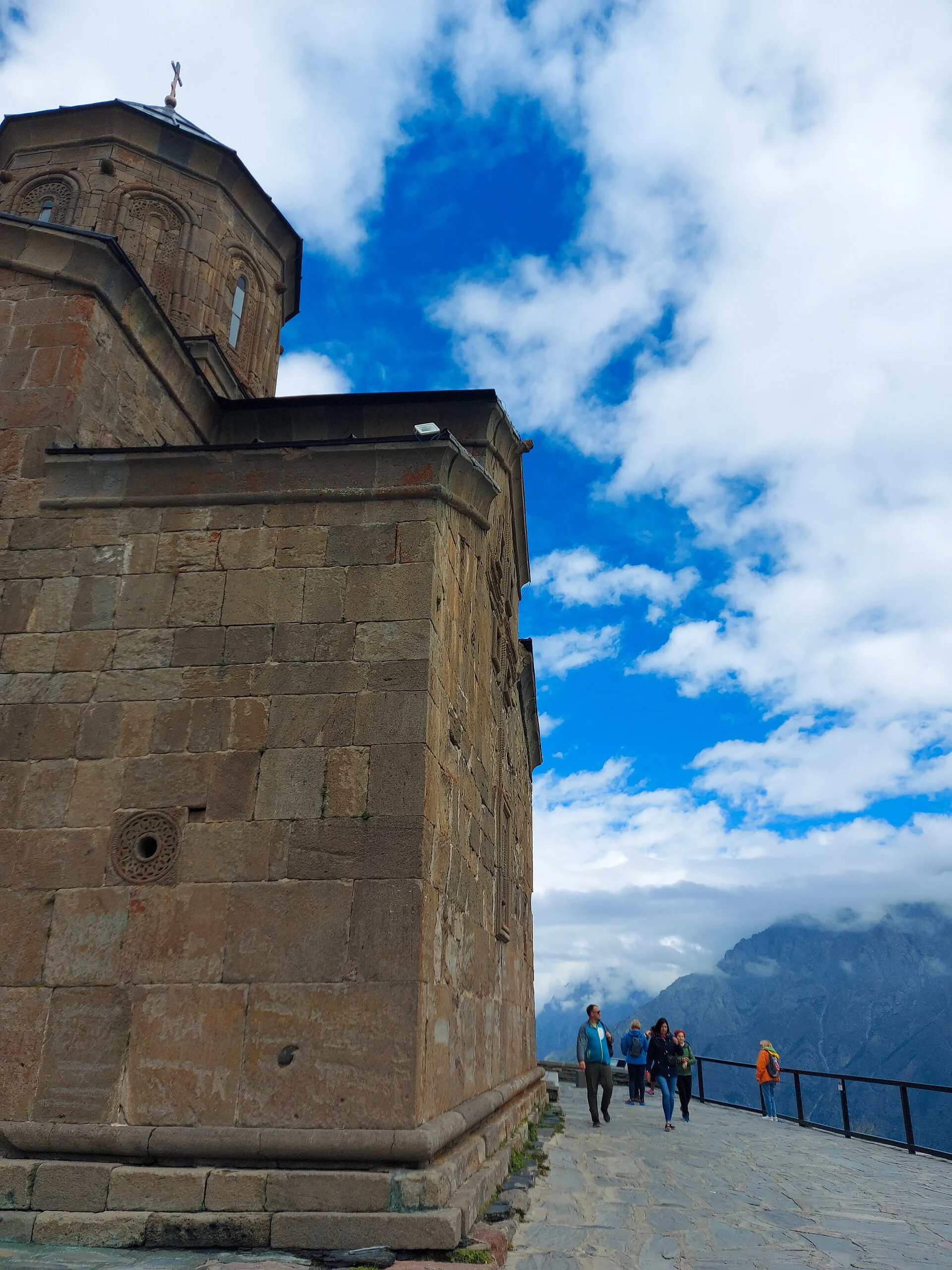
Visitors walk along the stone terrace at Gergeti Trinity Church high above Kazbegi. · Photo: Millodarka / Wikimedia Commons, CC BY-SA 4.0
Been to Georgia? Tell us how it went — the best stories are published here.
Share your tripOne email a week: what changed for travellers in Georgia — rules, roads, flights, seasons — plus one place worth the trip. Written by the GTour desk, no advertising, unsubscribe in one click.
This story across our partner network — ქართულად: შენი დასვენება