

By David Kiknadze, Transport & Openings Reporter · 28/10/2026
The short answer: for most visitors, a single rechargeable Metromoney card covers the metro, city buses and both cable cars, Bolt and Yandex Go handle door-to-door trips cheaply and predictably, and the funicular to Mtatsminda is worth the ride mainly for the view rather than as transport. Tbilisi is compact enough to walk the Old Town, but the city’s hills, the Mtkvari river and sprawling Soviet-era districts mean a card and a ride-hailing app will save you real time.
This guide sets out the metro lines and their hours, how the Metromoney card and fares work, where to find a bus app, what Bolt and Yandex Go typically cost, how the Rike–Narikala and Mtatsminda cable systems operate, the airport bus 337 option, and which taxi habits to avoid. Fares and schedules in Georgia are adjusted periodically, so treat the figures here as a reliable baseline for October 2026 and check the official links before you travel if the exact number matters to your plans.
The Metromoney card: one card for almost everything
Tbilisi’s public transport runs on a single contactless card system, commonly called Metromoney. The same card is used to tap in at metro turnstiles, on buses, and at the Rike–Narikala cable car gate, and transfers between modes within a set time window (historically around 90 minutes) do not incur a second full fare. You buy and top up the card at metro station ticket windows, at some kiosks, and via on-site machines; a small refundable deposit usually applies to the physical card. Cash is not accepted on buses and is being phased out at most metro entrances, so arriving with no card and no working mobile payment can leave you stuck. Because fare levels and transfer rules are reviewed from time to time by the city, confirm the current single-ride price and transfer window before relying on exact figures; the municipal government’s transport pages are the authoritative source.
Tbilisi Metro: two lines, their hours and how to interchange
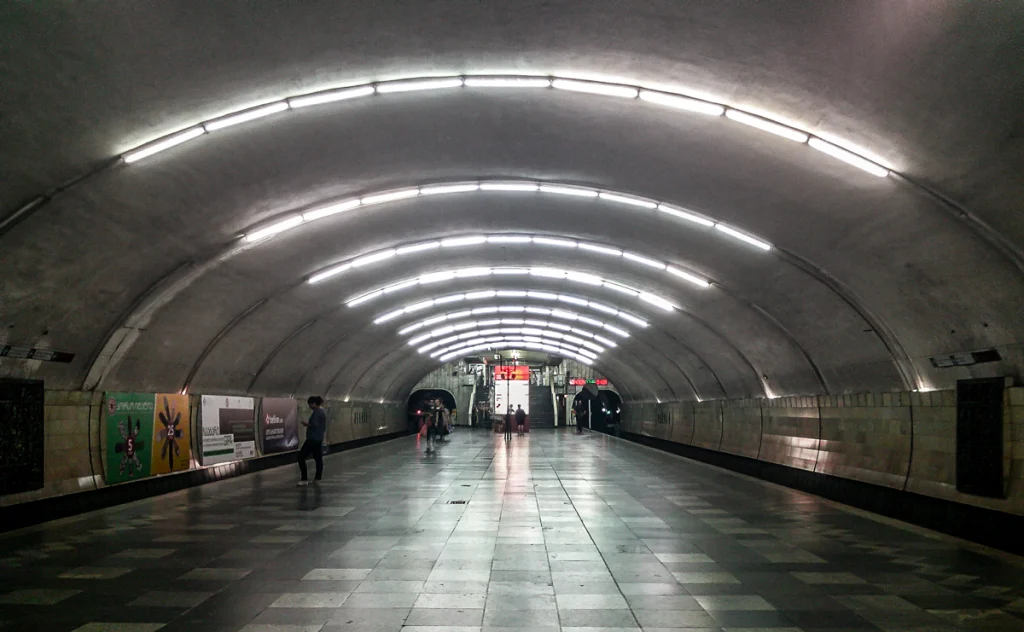
The metro has two lines: the red Akhmeteli–Varketili line running broadly northwest to southeast, and the green Saburtalo line serving the university district and Saburtalo. The two lines cross near the city centre, where Station Square (Sadguris Moedani) and Liberty Square (Tavisuplebis Moedani) stations connect by a walkway, allowing an interchange without leaving the paid area. Trains generally operate from around 6:00 in the morning until midnight, with frequent service of a few minutes at peak times and longer waits late in the evening. The metro is the fastest way to cross town during rush hour, when surface traffic around Rustaveli Avenue and the Saburtalo bridges slows considerably. Expect stations to be deep, Soviet-built and occasionally without working escalators on one side, so allow extra time with luggage.
Buses and the transport app
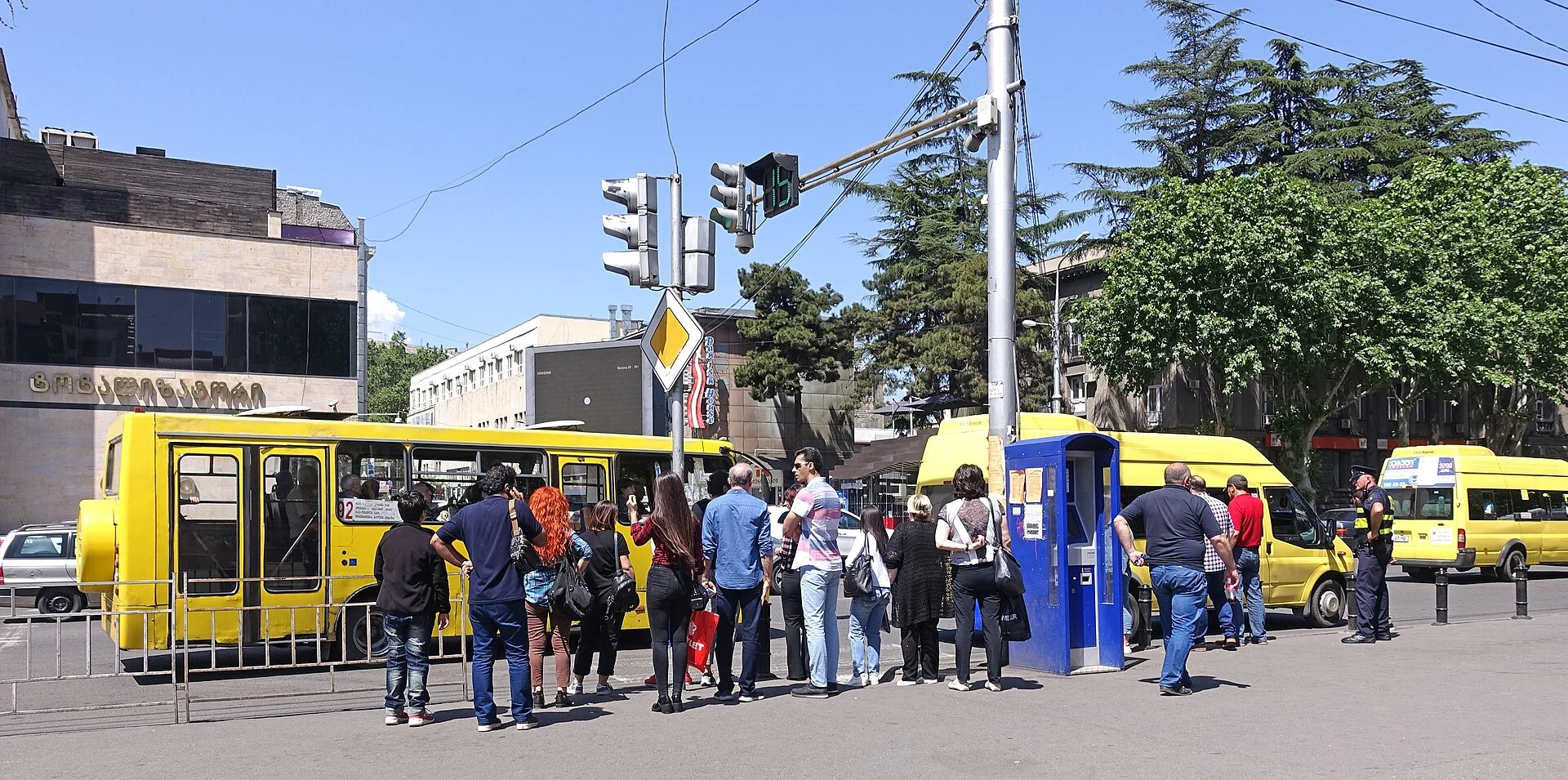
City buses cover routes the metro does not reach, including the airport, outlying residential districts and most of the riverside embankments. Fares are paid with the same Metromoney card by tapping the reader as you board; drivers do not sell paper tickets and do not take cash. Route numbers and stop names are generally shown in both Georgian and Latin script on newer buses and shelters, though older vehicles and some stops remain Georgian-only. For real-time arrivals and route planning, look for the city’s official public transport app and website, since several third-party apps use outdated route data; always check against the current app before relying on a quoted arrival time, particularly outside the city centre where buses are less frequent.
Cable cars: Rike to Narikala, and the fortress views
The short aerial cable car linking Rike Park, on the left bank of the Mtkvari, with the Narikala fortress ridge is one of the easiest ways to reach the Mother of Georgia statue and the fortress walls without the steep walk up from Abanotubani. It uses the same Metromoney card as the metro and buses, so there is no separate ticket to buy if you already have a topped-up card. The cable car typically runs from mid-morning to late evening, and it is suspended in high wind or during maintenance, which happens occasionally in Tbilisi’s exposed hilltop setting, so have a walking route in reserve. The ride itself takes only a few minutes but gives one of the best overviews of the Old Town’s domed roofs, the river bend and Avlabari across the water. Several of our walking tours, including the Old Tbilisi Walking Tour and Tbilisi in a Day, build the cable car into the route rather than the climb on foot.
The Mtatsminda funicular
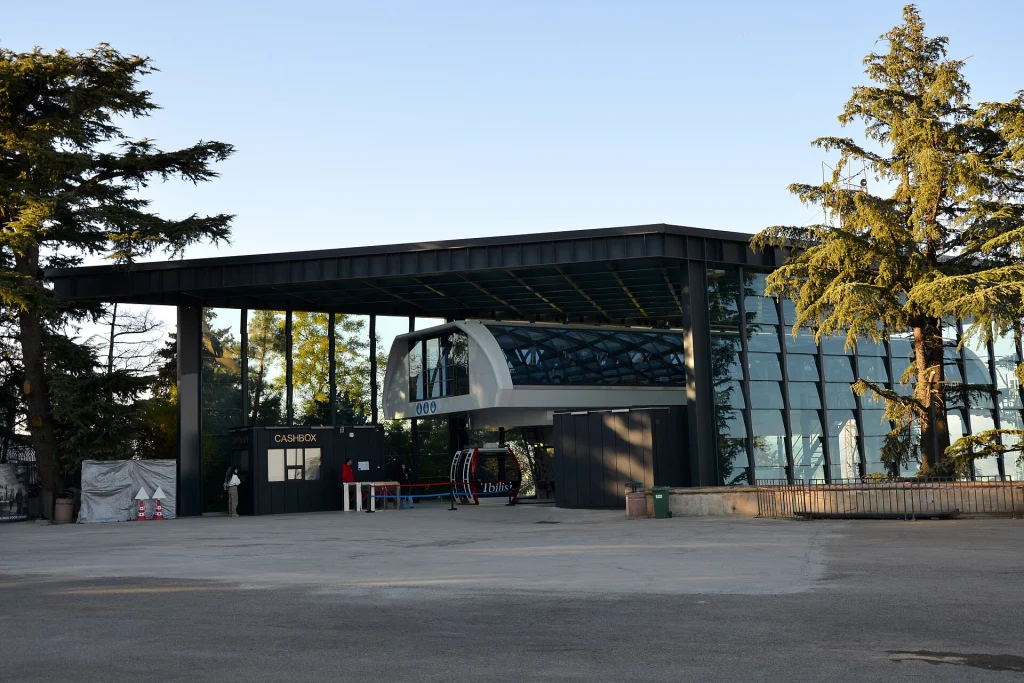
A separate, older funicular climbs from a lower station near Chonkadze Street to Mtatsminda Park and the Pantheon, on the forested hill above the city centre, rather than to Narikala. This is a different system from the Rike–Narikala cable car, built in the early twentieth century and rebuilt since, and ticketing has at times been handled separately from the Metromoney network, so do not assume your metro card will automatically work at the funicular gate without checking current signage at the station. It runs on a daytime and evening schedule that tends to shorten in winter and extend into the evening in summer, largely around sunset hours when the view over the city is best. Our Tbilisi Hills — Mtatsminda Pantheon, Funicular and Vake Park tour times the ascent for golden-hour light and includes the walk through Mtatsminda Park.
Bolt and Yandex Go: prices and how to use them well
Bolt and Yandex Go are the two ride-hailing apps most visitors use in Tbilisi, both priced in Georgian lari with in-app fare estimates shown before you confirm. Short rides across the centre are usually inexpensive by Western European standards, though prices rise during rain, late at night, during major events and at the airport, where demand-based surge pricing can roughly double a quoted fare for a short period. Both apps let you see the driver’s name, car and licence plate and share your trip live, which is useful for solo travellers. Set your pickup pin accurately, since Tbilisi’s one-way streets and the Old Town’s narrow lanes mean drivers sometimes have to approach from an unexpected direction, and confirm the destination address in Georgian or with a saved pin if your hotel’s name does not match local maps. Carrying a small amount of cash is still sensible in case a driver’s in-app payment has an issue, though both apps support card payment.
| Mode | Typical hours | Payment | Notes |
|---|---|---|---|
| Metro (two lines) | ~06:00–00:00 | Metromoney card | Interchange at Station Square / Liberty Square |
| City buses | Early morning to midnight, varies by route | Metromoney card only | No cash, check app for live times |
| Rike–Narikala cable car | Mid-morning to late evening | Metromoney card | Suspended in high wind |
| Mtatsminda funicular | Daytime into evening, shorter in winter | Separate ticket possible, verify locally | Different line from the Rike cable car |
| Bolt / Yandex Go | 24 hours | In-app card or cash | Surge pricing at peak times and airport |
| Airport bus 337 | Roughly 07:00–midnight, every 30–40 min | Metromoney card | City centre terminus near Liberty Square area |
Airport bus 337 versus taxi versus private transfer
Bus route 337 connects Tbilisi International Airport with the city centre, running at a fairly regular interval through the day and evening, and like all city buses it only accepts the Metromoney card, which you can buy from a machine or kiosk in the arrivals area if you do not already have one. The journey takes roughly forty minutes to over an hour depending on traffic and your final stop, which makes it the cheapest option but not always the fastest, particularly late at night with luggage or after a long flight. Bolt and Yandex Go both serve the airport, with designated pickup points a short walk from the terminal to avoid the queue of unofficial taxi drivers who approach arriving passengers directly. For a fixed, pre-booked price with a driver meeting you at arrivals and no haggling, our own Tbilisi Airport Transfer is priced and confirmed before you fly, which several travellers prefer after a long journey.
Taxis to avoid
The main risk in Tbilisi is not the licensed taxi fleet but unmarked drivers who solicit arriving passengers in the airport hall, at the railway station, or outside major hotels and quote an inflated flat fare before you get in. These cars often have no visible company livery or working meter, and the price agreed verbally at the kerb can be several times a normal app fare. The safest approach is to order through Bolt or Yandex Go rather than hail from the street, since both apps fix the price before pickup and record the trip. If you do need to flag a car, agree the fare in writing or on your phone translator before getting in, and avoid drivers who insist on cash only with no price stated upfront. Hotels can also call a reputable local taxi company directly if you prefer not to use an app.
If this guide is part of a trip you are planning, our Tbilisi to Borjomi or Bakuriani Transfer and Mtskheta on Foot — the Ancient Capital in 2 Hours cover the places it describes with a private guide and driver; a GTour travel expert adapts the route to your dates.
Practical summary
- Buy and top up a Metromoney card on arrival for metro, bus and the Rike–Narikala cable car; it is the cheapest way to move around.
- Metro runs roughly 06:00 to midnight on two lines, interchanging at Station Square / Liberty Square.
- Buses take the Metromoney card only, no cash; check the city’s official app for live arrivals.
- The Mtatsminda funicular is a separate system from the Rike–Narikala cable car and may need its own ticket.
- Use Bolt or Yandex Go for door-to-door trips, expect surge pricing at peak times and at the airport.
- Bus 337 is the budget route from Tbilisi International Airport, apps or a pre-booked transfer are faster.
- Avoid unmarked taxi drivers soliciting at the airport or Old Town, order through an app or agree a price in advance.
- Always confirm current hours and fares with the official sources before a trip that depends on exact timing.
Sources
- Tbilisi City Hall, public transport information
- Georgia Travel, practical information for visitors
- Lonely Planet, Tbilisi transport overview
- Agenda.ge, transport and urban mobility coverage
- Georgia Today, visitor transport and taxi safety coverage
Questions this guide does not answer? Write to info@castle.ge or WhatsApp +995 577 41 63 14 — a person in Tbilisi replies. See also our travel services and all guides.
Passengers board a yellow city bus at a busy Tbilisi bus stop on Merab Kostava Street. · Photo: Tiia Monto / Wikimedia Commons, CC BY-SA 3.0
Been to Georgia? Tell us how it went — the best stories are published here.
Share your tripOne email a week: what changed for travellers in Georgia — rules, roads, flights, seasons — plus one place worth the trip. Written by the GTour desk, no advertising, unsubscribe in one click.
This story across our partner network — ქართულად: შენი დასვენება
