

By Mariam Lomidze, Culture & Events Reporter · 27/10/2026
Short answer: check your visa status before you book anything. Georgia periodically revises the list of countries whose citizens may enter visa-free, and Mongolia’s position on that list has not been constant, so the only safe approach is to confirm your own situation on the Ministry of Foreign Affairs consular page shortly before you travel, rather than rely on a figure printed here. If a visa or e-visa is required, Georgia’s e-visa portal processes most applications within about ten business days. There are no direct flights between Mongolia and Georgia, so plan on one stop, most practically through Istanbul. The currency is the Georgian lari, cards are widely accepted in cities, and a local SIM or eSIM costs little and works almost everywhere you will go.
Honesty is useful here: Georgia and Mongolia have a thin modern relationship. There is no resident embassy of either country in the other’s capital, trade volumes are small, and there is no established Mongolian diaspora in Georgia to speak of. The one substantial historical link is centuries old — Mongol armies campaigned through Georgia in the thirteenth century and the Georgian kingdoms spent roughly a hundred years under Mongol overlordship, an episode that shaped borders, taxation and alliances of the time. Beyond that, this is a practical guide for a traveller making a long journey to a country where almost nothing will be familiar except, curiously, parts of the food.
Visa and entry rules for Mongolian citizens
Georgia runs two separate systems: a list of nationalities that may enter visa-free for a set period, and an e-visa system for everyone else. Mongolia’s position has shifted between government decrees in the past, so do not assume either way. The only reliable step is to check the Ministry of Foreign Affairs consular page for Mongolia’s current status before buying tickets, since this is the authoritative source and it is updated when the rules change.
If an e-visa is required, apply through the official portal, not a third-party site. The process asks for a passport scan, a passport photo, your itinerary and proof of funds or an invitation, and standard processing is usually completed within about ten working days, though the portal itself states current timelines and fees and these can change. Apply at least three weeks before departure to allow for delays or a request for extra documents, and print the approval, since border officers may ask to see it alongside your passport.
Georgia has no resident embassy in Ulaanbaatar and Mongolia has no resident embassy in Tbilisi, so consular matters for one country are normally handled by a mission accredited from a third country. Check the Ministry of Foreign Affairs page for the embassy currently accredited to Mongolia before you travel, rather than assuming a specific city, since accreditation arrangements are reviewed periodically.
Flights from Mongolia: routes and hubs
No airline flies nonstop between Mongolia and Georgia. The practical routings all involve one change of plane:
- Via Istanbul — generally the shortest and most frequent one-stop option, landing at Tbilisi, Kutaisi or Batumi depending on the onward carrier and season.
- Via Doha or Dubai — a workable alternative if your outbound flight from Mongolia connects well through a Gulf hub, usually arriving into Tbilisi.
- Via Warsaw or Munich — less common from Mongolia directly but worth comparing if your itinerary already routes through Europe.
Georgia has three international airports: Tbilisi, Kutaisi and Batumi. Kutaisi handles a large share of low-cost European traffic, which can make a Georgia-then-Europe or Europe-then-Georgia combination cheaper than flying straight to Tbilisi. Check live schedules and which hub your chosen airline actually uses before booking, since routings change by season — see the arrivals information on Tbilisi International Airport, Kutaisi International Airport and Batumi International Airport.
Driving licence and getting around
Georgia accepts foreign driving licences for a limited period and recognises International Driving Permits issued under the relevant Vienna Convention framework. Carry both your Mongolian licence and an International Driving Permit if you plan to drive, since officers and rental agencies vary in which they prefer, and confirm current recognition rules on Georgia’s official legislative database before you travel. In practice, most visitors hire a car with an English-speaking driver rather than self-drive, which also solves the unfamiliar road signage and mountain-pass driving that catches out first-time visitors; check seasonal closures on Georgia’s road agency page before any trip toward Gudauri, Kazbegi or Svaneti.
Money, cards and SIM or eSIM
The currency is the Georgian lari (GEL). Mongolian tögrög is not exchangeable in Georgia, so bring US dollars or euros in cash to convert, or rely on an international card. For reference, based on the National Bank of Georgia’s rate on 27 October 2026, one US dollar equals roughly 2.60 lari and one euro roughly 2.91 lari; rates move daily, so check a currency source on the day you exchange.
| Payment method | Where it works |
|---|---|
| Visa and Mastercard | Hotels, most restaurants, supermarkets, fuel stations in towns |
| Cash lari | Markets, small guesthouses, mountain villages, taxis outside apps, church donation boxes |
| US dollars or euros cash | Easily exchanged at bank branches and licensed exchange points in any city |
| ATMs | Common in Tbilisi, Batumi, Kutaisi and regional centres; scarce in high mountain villages such as Ushguli or Omalo |
A local SIM from Magti, Geocell or Beeline, or a tourist eSIM, is the simplest way to stay connected; SIMs are sold at the airport and in city centres on presentation of your passport, and coverage is reliable along main roads and in towns but patchy in remote mountain valleys.
Language: what to expect
Georgian, written in its own script, is the official language, and Mongolian is not understood anywhere in the country. In Tbilisi, Batumi and the main tourist routes, hotel staff, guides and younger service staff generally speak workable English. Outside those areas English thins out quickly. A practical point for Mongolian travellers specifically: Russian is still understood by much of the older and rural Georgian population, and many Mongolians of the generation that studied Russian at school may find it a more useful bridge language than English in villages, markets and with older taxi drivers. Learning a handful of Georgian courtesy words still goes a long way with hosts.
Food and dietary notes
Georgian food is meat- and dairy-heavy in ways that will feel familiar. Khinkali, the boiled dumpling filled with spiced minced meat and broth, sits close to Mongolian buuz and khuushuur in both method and appeal, and mtsvadi, skewered grilled meat cooked over charcoal, needs no introduction to anyone used to Mongolian barbecue traditions. Matsoni, Georgia’s fermented milk, is a near relative of Mongolian tarag. Khachapuri, cheese-filled bread, and the walnut-based pkhali vegetable dishes round out most meals.
Halal food is not the norm nationally but is available: Tbilisi and Batumi have halal-certified or Muslim-run restaurants, reflecting Georgia’s own Muslim communities in Adjara and elsewhere, and asking in advance or using a guide to locate them saves time. Vegetarian and vegan travellers are well served by Georgian Orthodox fasting-day dishes — bean stew (lobio), walnut pastes, mushroom dishes and fresh bread — which appear on most menus regardless of the day. If you are heading into the mountains, carry snacks, since village choices are limited outside guesthouse meal times.
History, ties and best time to come
The genuine historical connection between the two countries dates to the thirteenth century, when Mongol forces invaded the Georgian kingdoms and Georgia then spent roughly a century under Mongol suzerainty, a period that reshaped taxation, nobility and regional power before Georgian kings regained full independence. Beyond that episode, modern ties are limited: trade between the two countries is small, there is no notable Mongolian community resident in Georgia, and cultural exchange is occasional rather than institutional. Travellers coming for family, trade or diaspora reasons specifically should not expect established networks on the ground; this is a country to discover on its own terms rather than through an existing community.
Most visitors come in the warmer months, June to September, for wine country, hiking and the Tbilisi old town, and again in winter for skiing at Gudauri, a resort familiar in feel to visitors used to continental winters. Spring and autumn bring fewer crowds and, in late September and October, the Kakheti grape harvest.
Health, insurance, safety and etiquette
Travel medical insurance is strongly advised for all visitors to Georgia and may be a condition attached to your visa or e-visa depending on current rules, so check the requirement on the official visa or consular page you used to apply, and confirm it covers mountain activities if you plan to hike or ski. For general health guidance before travel, Georgia’s national public health body publishes current advisories.
Georgia is a generally safe country for travellers, with petty crime low by regional standards; ordinary city-travel caution applies. Two etiquette points matter in practice: a Georgian supra (feast) involves structured toasting led by a toastmaster, and declining a toast outright can seem abrupt, so a small sip is the polite minimum even for non-drinkers; and Orthodox churches and monasteries expect covered shoulders and legs, with headscarves offered to women at the door, a dress code that may be unfamiliar if you are not used to Christian religious sites. Parts of Tusheti, Svaneti and other border-adjacent regions require standard border-zone permission for all nationalities, arranged in advance through your guide or accommodation.
What a G Tour private guide adds
For a traveller arriving from Mongolia with no shared language base, no community of past visitors to ask, and genuine uncertainty about visa status until close to departure, a private guide removes the guesswork rather than adding luxury. A licensed English-speaking guide bridges the gap in places where neither English nor Russian is reliable, confirms border-zone and insurance paperwork before you set out, and handles the logistics of getting between Tbilisi, the mountains and the wine regions without you needing to navigate unfamiliar road signage yourself.
Full details, current prices and booking are on our tours and services pages; as examples, Tbilisi & Mtskheta — The Essential First Day gives a first orientation day with a licensed guide, Kazbegi — Gergeti Trinity Church in a Day reaches the high Caucasus in a single day, and a private airport transfer from Tbilisi airport starts at a fixed €25 per car for up to three travellers, arranged in writing before you fly.
If this guide is part of a trip you are planning, our Georgia in 10 Days — Tbilisi to Svaneti to the Sea and Monasteries of Georgia — Mtskheta, the Thirteen Fathers and Kakheti in 3 Days cover the places it describes with a private guide and driver; a GTour travel expert adapts the route to your dates.
Practical summary
- Confirm Mongolia’s current visa status on Georgia’s official consular page before booking flights; apply through the official e-visa portal if required, allowing about ten working days.
- Expect one flight change, most practically via Istanbul, landing at Tbilisi, Kutaisi or Batumi.
- Carry US dollars or euros in cash plus an international card; lari is the only local currency and tögrög is not exchangeable.
- Buy a local SIM or eSIM on arrival; coverage is reliable in towns, patchy in high mountains.
- Carry both your Mongolian driving licence and an International Driving Permit if self-driving, or hire a car with driver instead.
- Russian can be a useful bridge language with older and rural Georgians where English is thin.
- Check that your travel insurance covers mountain activities and confirm any insurance condition attached to your visa.
- Book border-zone permits for Tusheti, Svaneti and similar areas in advance through your guide.
Sources
- Georgia e-visa application portal
- Ministry of Foreign Affairs consular information
- Georgian road agency, pass conditions
- Georgia's legislative database, driving rules
- Georgian National Tourism Administration
Questions this guide does not answer? Write to info@castle.ge or WhatsApp +995 577 41 63 14 — a person in Tbilisi replies. See also our travel services and all guides.
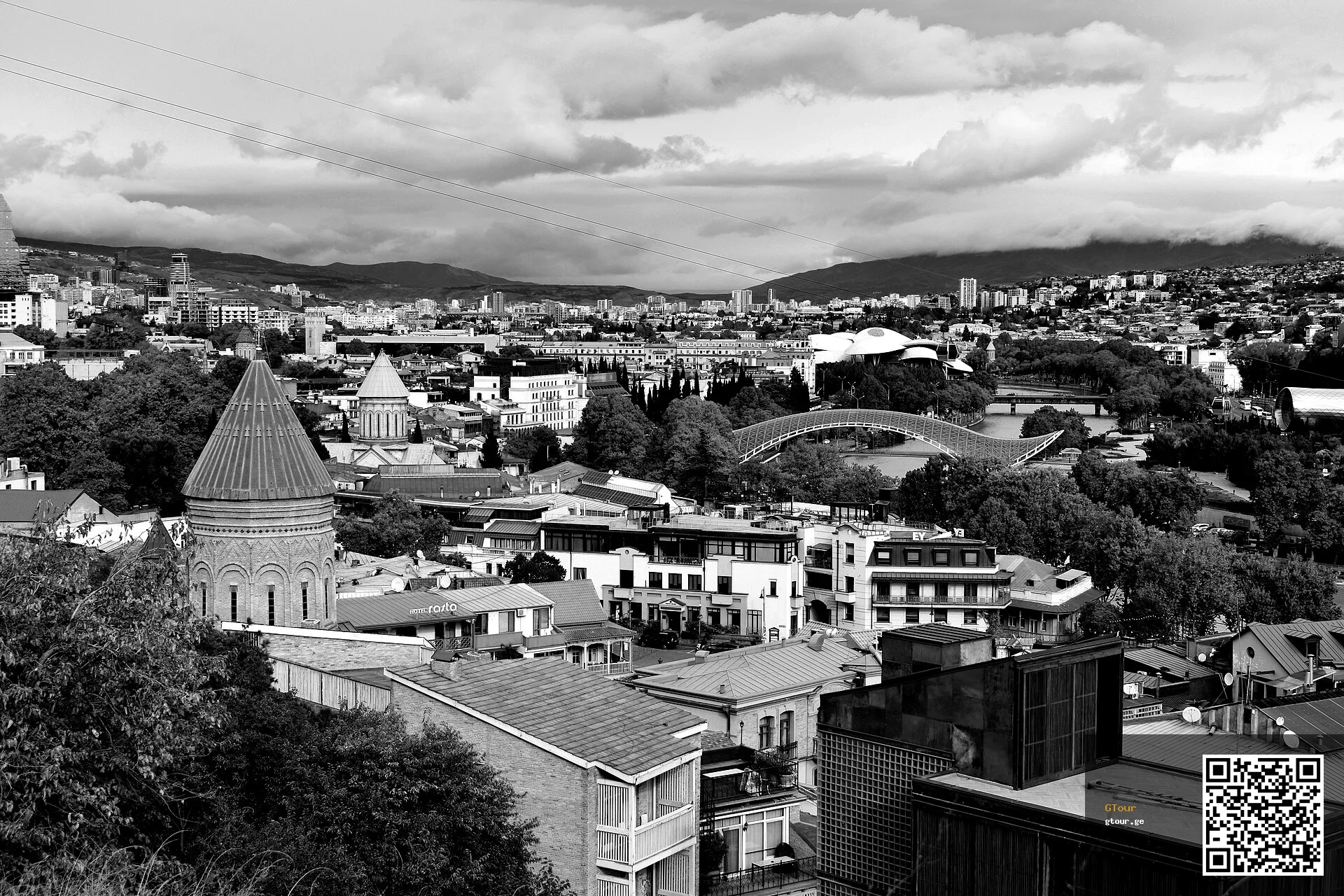
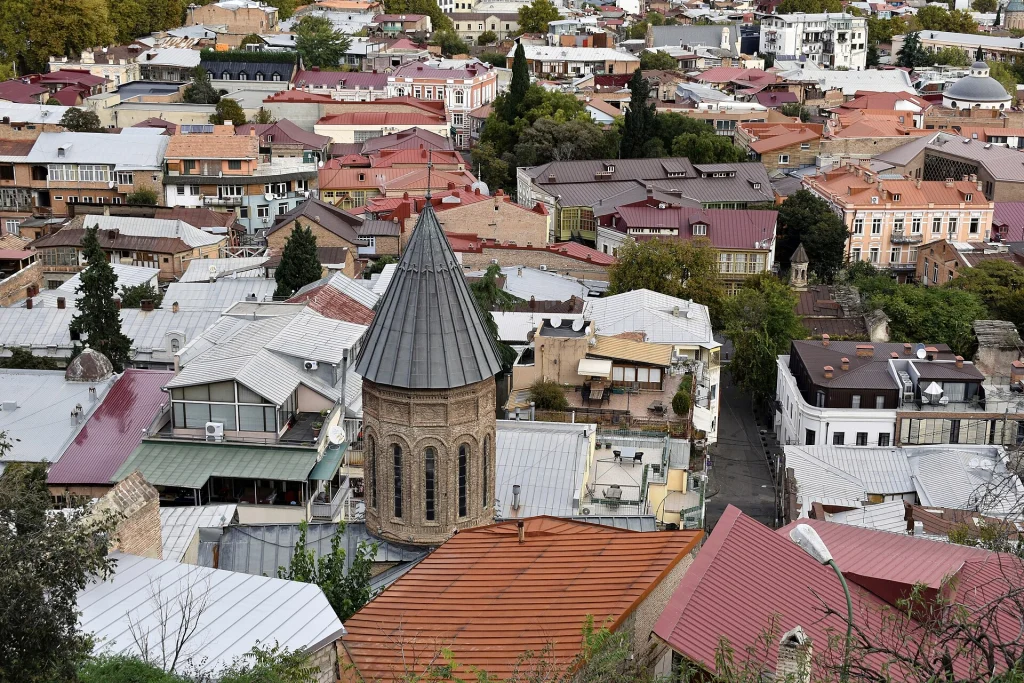
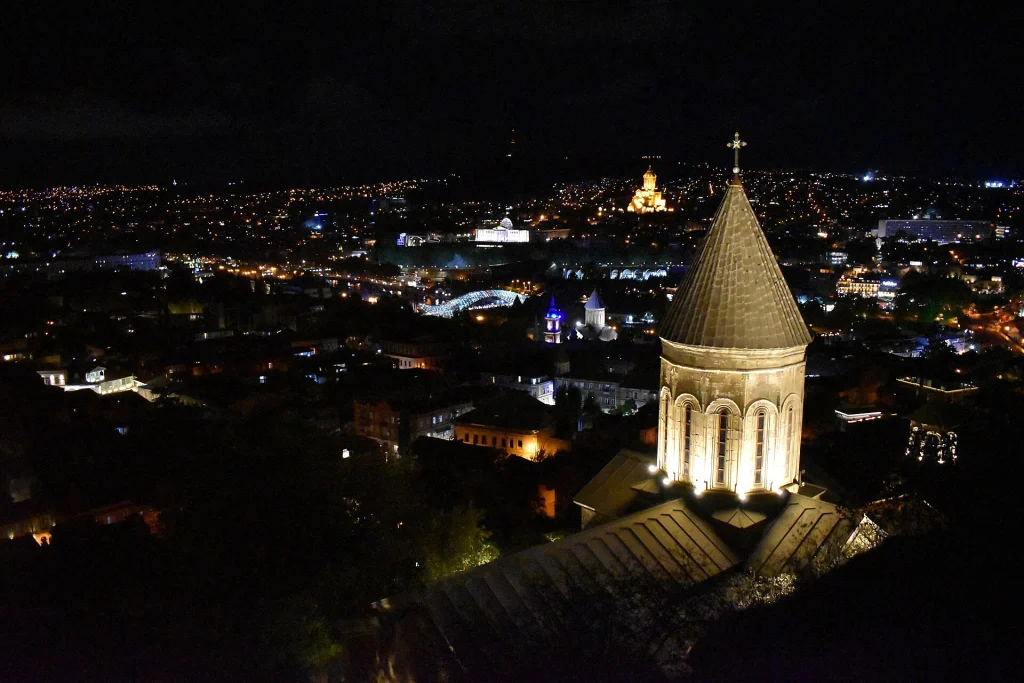
Cityscape of Old Tbilisi, the capital most Mongolian travellers will arrive in. · Photo: Misa.stefanovic.07 / Wikimedia Commons, CC BY-SA 4.0
Been to Georgia? Tell us how it went — the best stories are published here.
Share your tripOne email a week: what changed for travellers in Georgia — rules, roads, flights, seasons — plus one place worth the trip. Written by the GTour desk, no advertising, unsubscribe in one click.
This story across our partner network — ქართულად: შენი დასვენება