

By Mariam Lomidze, Culture & Events Reporter · 27/10/2026
Moldovan citizens currently need no visa for short tourist stays in Georgia; under Georgia’s unilateral visa-free regime, nationals of Moldova may enter for a long period without a visa, though the exact permitted length of stay and the list of visa-free countries are set by government decree and can change without much notice. Before booking, check the current rule on mfa.gov.ge and, if your situation falls outside the visa-free rule (for example an unusual passport type or a planned stay beyond the free period), apply through the official portal at evisa.gov.ge, which normally processes straightforward e-visa applications within a few working days.
There is no scheduled direct flight between Moldova and Georgia at the time of writing, so most travellers connect through Istanbul, Warsaw or Munich. The currency is the Georgian lari (GEL), cards are standard in Tbilisi and Batumi but cash still rules in villages, Russian remains widely understood alongside growing English in tourism, and ties between the two countries are modest but real, built on a shared Soviet and Orthodox past and parallel post-Soviet paths toward Europe rather than on heavy trade or a large diaspora. This guide sets out the practical detail: entry rules, routes, money, connectivity, food, and what to expect on the ground.
Visa and entry rules for Moldovan citizens
Georgia runs one of the more liberal entry regimes in the region, and Moldova is among the countries that have benefited from it, with tourist entry typically permitted without a visa for a lengthy stay. This is a government decision, not a fixed treaty, so it is reviewed periodically and the rules in force on your travel date are what count, not what a blog post said last year. Confirm the current position directly before you fly, using the Ministry of Foreign Affairs consular information at mfa.gov.ge and the e-visa portal at evisa.gov.ge, which also lists which nationalities require a visa or an e-visa and the supporting documents needed, commonly a passport valid well beyond your stay, proof of accommodation, return tickets, and evidence of funds.
If you do need to apply, the e-visa system is the correct channel; it is online, paid by card, and processing is usually quick for complete applications, though you should allow extra days before a fixed departure. Georgian border officers also use their discretion on entry, so arriving with a printed hotel booking and a clear return route avoids delays.
| Quick fact | What to expect in 2026 |
|---|---|
| Visa for tourism | Visa-free entry for Moldovan passport holders is the general rule; verify validity period on evisa.gov.ge |
| Currency | Georgian lari (GEL); 1 EUR ≈ 2.908 GEL on 26 October 2026, see gtour.ge/data |
| Main airports | Tbilisi, Kutaisi, Batumi — none has a direct Moldova route at present |
| Driving licence | Foreign licences are generally recognised for short stays; carry it alongside your passport |
Flights from Moldova and driving to Georgia
There is no nonstop service from Chisinau to any Georgian airport at the time of writing. The practical routing is a one-stop connection, most commonly via Istanbul, where Turkish carriers link to Tbilisi, Kutaisi and Batumi several times daily. Warsaw and Munich are the other hubs worth checking, since European carriers from those cities also serve Tbilisi and occasionally Kutaisi on budget routings. Always confirm current schedules directly with the airport before booking, since routes on this corridor change seasonally: tbilisiairport.com, kutaisiairport.com for low-cost connections, and batumiairport.com for the Black Sea coast.
Driving into Georgia overland from Moldova would mean crossing Romania, Hungary or Ukraine and then Turkey or the Caucasus, a long route that few leisure travellers choose; flying is the realistic option. If you plan to drive once in Georgia, a Moldovan driving licence is normally accepted for the length of a short tourist stay, but confirm the current rule, since recognition periods for foreign licences are set in Georgian traffic legislation and can be revised; check before you rent through the Georgian government’s official information channels at gov.ge. An international driving permit alongside your national licence is sensible insurance against any paperwork question at a rental desk or checkpoint.
From any of the three airports, a fixed-price private transfer removes the guesswork: a Tbilisi airport to city sedan runs €25, a Kutaisi airport to Tbilisi transfer €120 by sedan, and Batumi airport to town €20, all quoted in writing before you fly, with full details on gtour.ge/services.
Money, cards and cash
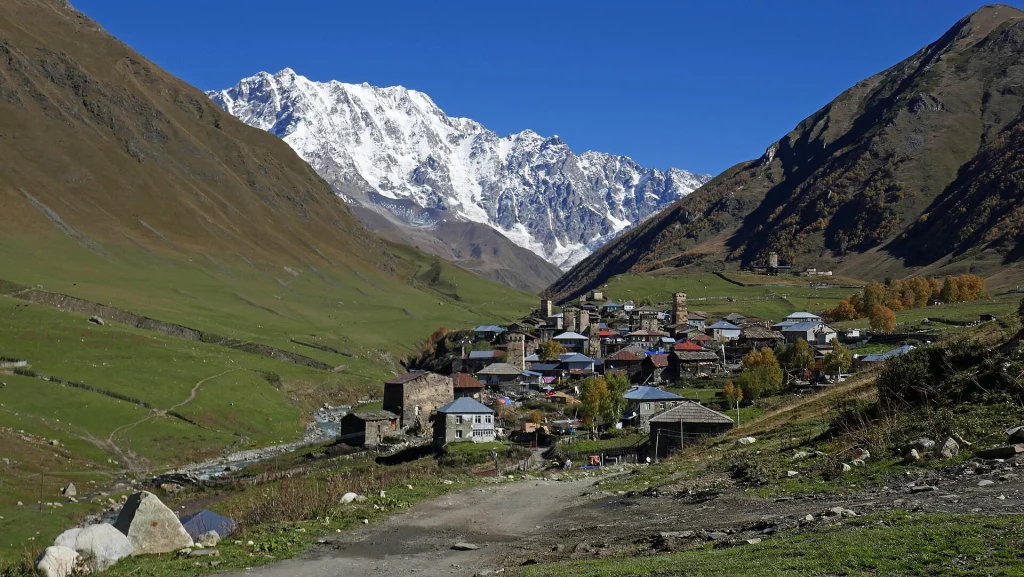
Georgia’s currency is the lari (GEL). On 26 October 2026 the National Bank’s reference rate puts one euro at roughly 2.908 GEL, figures we track on gtour.ge/data; Moldovan travellers coming with euros will find them easy to exchange at banks and licensed exchange points in any city, usually at a better rate than exchanging leu beforehand, since the lari-to-leu market is thin. Cards are accepted in Tbilisi and Batumi restaurants, hotels and most shops, and contactless payment is now routine in cities. In mountain regions such as Svaneti, Tusheti and smaller Kakheti villages, cash is still needed for guesthouses, small shops and market stalls, so carry lari in small denominations once you leave the main towns. ATMs are widespread in cities but sparse beyond them.
SIM, eSIM and language
Local SIM cards from Magti, Silknet or Cellfie are inexpensive and available at the airport arrivals hall or in city shops with just a passport; eSIM options from the same operators and from international eSIM providers are a convenient alternative if your phone supports them, letting you activate data before or on arrival. Coverage is reliable in cities and along the main highways, and patchier in high mountain valleys such as Tusheti and parts of upper Svaneti.
Georgian is the official language and the one used on road signs and official documents, though Tbilisi and Batumi tourism staff increasingly speak English. For Moldovan travellers, Russian is often the more useful bridge language outside the capital, particularly with older Georgians, market vendors, taxi drivers and guesthouse owners in regions such as Kakheti, Racha and Svaneti, a legacy of the shared Soviet period. Do not assume Romanian will be understood; it has no linguistic overlap with Georgian and essentially none with the Russian commonly spoken as a second language here. A private guide who moves fluently between English, Russian and Georgian removes this friction entirely, which is one of the quieter advantages of touring with a local company rather than relying on translation apps in villages.
Embassy, consulate and emergency contacts
We could not independently confirm a resident Georgian embassy in Chisinau or a resident Moldovan embassy in Tbilisi at the time of writing, so state this plainly rather than guess an address or phone number. Before travelling, Moldovan citizens should check the official list of Georgian diplomatic missions and reciprocal arrangements on mfa.gov.ge, which will state which neighbouring mission (commonly in Bucharest, Kyiv or Ankara, depending on current arrangements) covers consular matters for Moldova if no resident post exists. For in-country emergencies, Georgia’s unified emergency number is 112, which operates in Georgian, English and Russian.
Food, dietary notes and familiar dishes
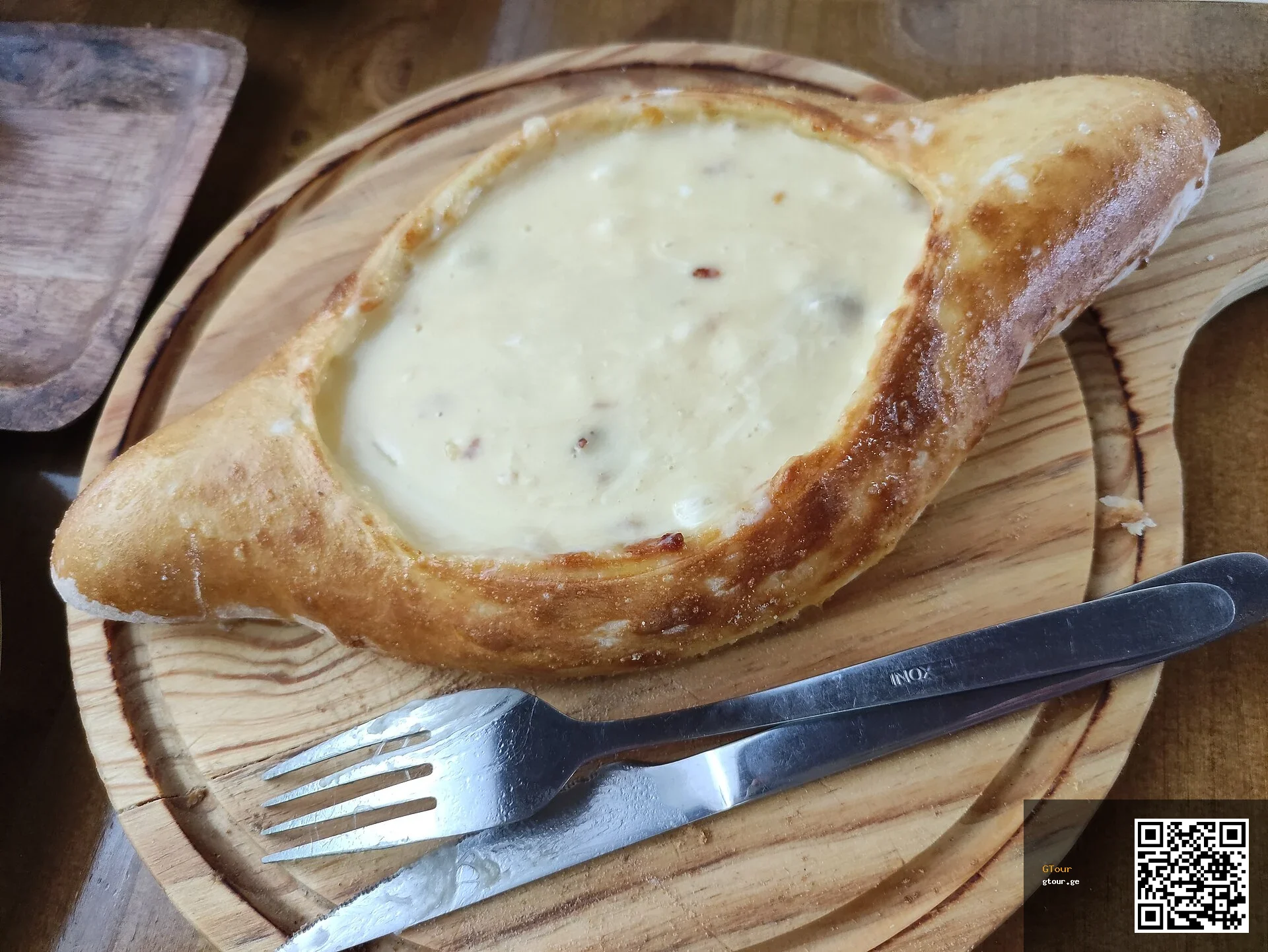
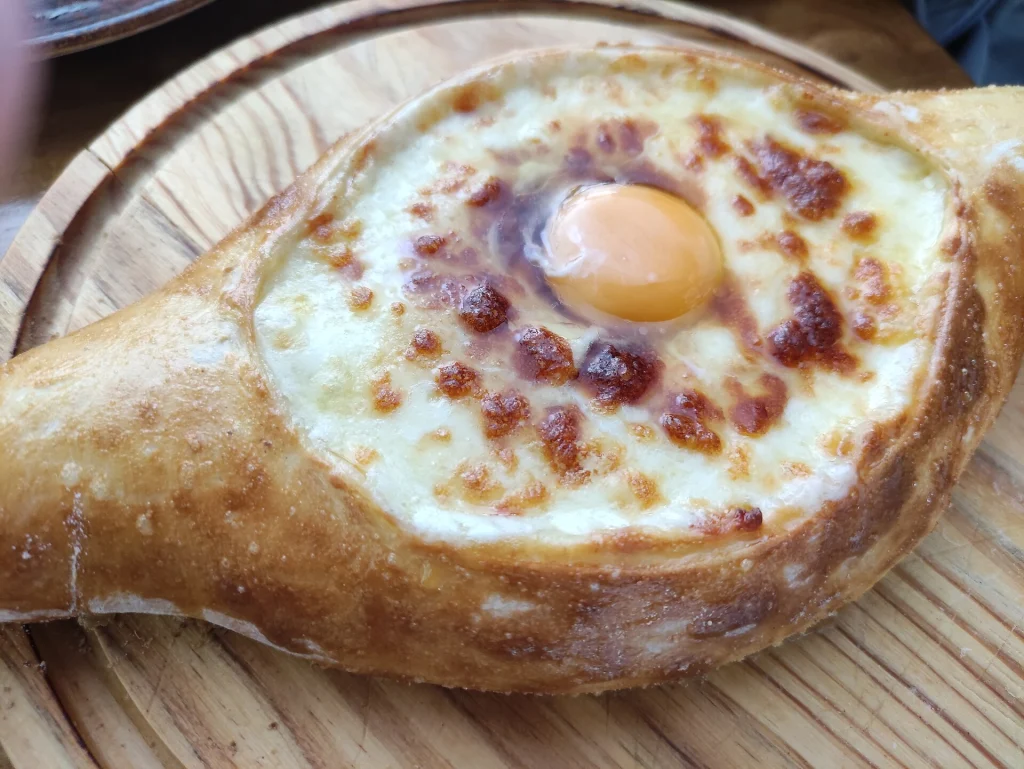
Georgian cuisine will feel approachable to Moldovan visitors through shared Soviet-era culinary habits and a parallel reliance on fresh produce, dairy and good wine. Khachapuri, the cheese-filled bread, and khinkali, the dumplings, are the staples to try first, and the heavy use of walnuts, herbs and pomegranate in dishes like pkhali and badrijani gives the food a distinct character beyond the Soviet-shared basics. Vegetarian travellers are well served thanks to Orthodox fasting traditions that produced an entire category of meat-free dishes, including lobio (bean stew) and a wide range of vegetable and walnut preparations; most restaurants can point to fasting-day options without difficulty. Halal food is harder to find outside areas with larger Muslim populations, notably parts of Adjara and Kvemo Kartli, so travellers with halal requirements should ask in advance, particularly for meat dishes and khinkali, which are usually pork or a pork-beef mix unless otherwise stated. Wine is central to any Georgian meal, including at the famous Kakheti harvest season, covered in our Kakheti Grand Wine & Heritage and Rtveli Wine Harvest tours.
Historical and cultural ties between Georgia and Moldova
It is honest to say the ties are thin rather than deep. Both countries share decades inside the Soviet Union, a history of agricultural and wine economies shaped by that period, and a present-day push toward closer relations with the European Union, which gives travellers a sense of recognition in everything from Soviet-era architecture to post-independence reform debates. Both nations are predominantly Orthodox Christian, which means religious sites, the rhythm of church holidays, and the role of wine in hospitality will feel familiar rather than foreign; Georgia’s monasteries and the Georgian Orthodox Church’s long history are documented by the Patriarchate at patriarchate.ge. Direct trade and migration links are modest, and there is no large settled Moldovan community in Georgia or vice versa, so travellers should not expect dedicated Moldovan cultural infrastructure; the connection is one of parallel post-Soviet experience rather than close historical entanglement.
Health, insurance, safety and etiquette
Georgia does not currently impose a blanket mandatory travel insurance requirement on visa-free tourist entrants, but anyone applying through the e-visa system should check the document checklist carefully, since proof of valid medical insurance for the duration of the stay is commonly requested as part of that application; confirm the current requirement on evisa.gov.ge. Regardless of the legal minimum, travel medical insurance covering mountain activities is strongly advisable given the altitude and remoteness of routes such as Kazbegi, Svaneti and Tusheti, where evacuation can be slow. For general public health guidance, vaccination advice and any current notices, check Georgia’s National Center for Disease Control and Public Health at ncgh.ge, and as with any travel decision involving existing health conditions, speak to your own doctor before departure.
Georgia is a low-crime destination by regional standards and Moldovan travellers will not find anything unusual to navigate beyond ordinary city sense. Etiquette worth noting: toasting customs at a supra (feast) are taken seriously, with a designated tamada leading toasts that it is polite to follow rather than ignore; modest dress is expected inside churches and monasteries for both men and women; and bargaining is not customary in shops, though it is normal in rural markets for small items. Mountain driving on the Georgian Military Highway and in Svaneti demands caution in poor weather, and our live conditions page at gtour.ge/road-status is worth checking before any self-drive day in the mountains.
What a G Tour private guide adds
For a Moldovan traveller without fluent Georgian or confident English, a licensed private guide closes the gap quietly: explaining a monastery’s history in Russian when that is the easiest shared language, negotiating a village homestay in Svaneti, or simply knowing which Kakheti cellar will pour the family’s own wine rather than a tourist menu. A full day with a licensed guide and your own transport runs €110, specialist guides for wine, architecture or hiking run €140, and a car with English-speaking driver for a day in and around Tbilisi runs €90 for a sedan, with full detail on gtour.ge/services. Ready-made itineraries built around these services, such as the Georgia in 7 Days classic grand tour or the shorter Kazbegi two-day mountain journey, are listed on gtour.ge/tours.
If this guide is part of a trip you are planning, our Georgia in 10 Days — Tbilisi to Svaneti to the Sea and Monasteries of Georgia — Mtskheta, the Thirteen Fathers and Kakheti in 3 Days cover the places it describes with a private guide and driver; a GTour travel expert adapts the route to your dates.
Practical summary
- Check current visa-free status and any e-visa requirement for Moldovan citizens on mfa.gov.ge and evisa.gov.ge before booking flights
- Plan a one-stop flight via Istanbul, Warsaw or Munich; no direct Moldova-Georgia route exists at present
- Carry euros to exchange on arrival; cards work in cities, cash is needed in villages and mountain regions
- Buy a local SIM or activate an eSIM at the airport for reliable city and highway coverage
- Expect Russian to be more useful than Romanian outside Tbilisi and Batumi; English is growing in tourist areas
- Confirm which embassy currently covers Moldova’s consular needs in Georgia before you travel, since no resident mission is confirmed
- Ask ahead about halal options; vegetarian dishes are abundant thanks to Orthodox fasting traditions
- Carry travel medical insurance, especially for mountain routes, and check ncgh.ge for current public health notices
Sources
- E-visa portal and document checklist
- Ministry of Foreign Affairs consular information
- Government of Georgia official information portal
- Georgian Patriarchate, Orthodox heritage sites
- GeoStat – International Visitor Arrivals Statistics
- Law of Georgia on Mandatory Travel Insurance for Tourists
Questions this guide does not answer? Write to info@castle.ge or WhatsApp +995 577 41 63 14 — a person in Tbilisi replies. See also our travel services and all guides.
Khachapuri, Georgia's iconic cheese-filled bread, a must-try dish for Moldovan visitors. · Photo: Francesc Fort / Wikimedia Commons, CC BY-SA 4.0
Been to Georgia? Tell us how it went — the best stories are published here.
Share your tripOne email a week: what changed for travellers in Georgia — rules, roads, flights, seasons — plus one place worth the trip. Written by the GTour desk, no advertising, unsubscribe in one click.
This story across our partner network — ქართულად: შენი დასვენება