

By Nino Gelashvili, Travel News Editor · 27/10/2026
Liechtenstein passport holders can currently travel to Georgia without a visa for short tourist stays, under the same visa-free arrangement Georgia extends to Schengen-area and EEA/EFTA nationals. There is no dedicated Liechtenstein e-visa requirement at the time of writing, but the rule is set by Georgian migration policy, not by Liechtenstein, and it has changed before. Always confirm your personal case on the Ministry of Foreign Affairs of Georgia consular pages at mfa.gov.ge and, if in doubt, apply through the official e-visa portal at evisa.gov.ge before you fly.
Beyond entry rules, the practical picture for a Liechtenstein traveller is straightforward: there is no airport at home, so you will connect through Zurich, Munich, Vienna or another European hub; the lari (GEL) is the only legal currency though cards work almost everywhere in cities; German is understood in tourist-facing wine and mountain regions more often than you might expect; and Georgia’s food, wine and alpine scenery have genuine overlap with what Liechtenstein visitors already know from home. Ties between the two countries are thin, and this guide says so plainly rather than inventing connections that do not exist.
Visa and entry rules for Liechtenstein citizens
Georgia’s standard practice has been to allow citizens of EU, EEA and EFTA states, including Liechtenstein, to enter visa-free for tourism, typically for stays measured in months rather than weeks, with the exact duration set by Georgian government decree. This is a policy choice that can be revised, shortened, or made conditional at any time, so do not rely on older blog posts or what a friend experienced last year. The only reliable source is the consular section of the Ministry of Foreign Affairs of Georgia at mfa.gov.ge, which lists current visa-free countries and permitted stay lengths.
If your travel plan falls outside the visa-free allowance, or if the rule changes before your trip, Georgia’s e-visa system is the usual route. The portal at evisa.gov.ge lets you apply online, upload a passport scan and a passport photo, and pay by card; processing is normally quoted at a few working days, though it is sensible to apply at least two weeks ahead during the summer and New Year peaks. Keep a printed or saved copy of any approval, since border officers may ask for it alongside your passport.
A separate and genuinely mandatory point for 2026: Georgia asks visa-free and e-visa entrants to arrive with valid travel medical insurance covering the length of stay. Requirements and minimum coverage amounts have shifted in past years, so check the current wording on gov.ge or the e-visa portal before departure, and buy a policy that explicitly covers Georgia, mountain activities if you plan to ski or hike, and medical evacuation.
Flights from Liechtenstein: routes and the usual hubs
Liechtenstein has no commercial airport, so every journey starts with a drive or train ride to a hub airport, most commonly Zurich, with Munich and Friedrichshafen as secondary options depending on where in the country you live. From there, the routes that actually apply to Tbilisi are built around one-stop connections rather than any direct service:
- Via Istanbul: the shortest and most frequent connection for Central European travellers, with multiple daily flights onward to Tbilisi.
- Via Munich: a convenient option if you are already in the Bodensee area, with connecting service to Tbilisi.
- Via Doha: a longer routing favoured by travellers who prefer a wide-body connection and are combining Georgia with a stopover.
- Via Warsaw: a less obvious but workable option on some seasonal schedules.
Dubai connections exist but usually add more transit time than Istanbul or Munich for a Zurich departure, so weigh the saving in price against the extra hours. Kutaisi International Airport, Georgia’s second gateway, sometimes carries budget routes from Germany and Poland that can undercut Tbilisi fares; check current carriers and schedules directly at tbilisiairport.com, kutaisiairport.com and batumiairport.com, since airline operations into the Caucasus change more often than flights to larger EU capitals.
Driving licence, money, cards and SIM
A Liechtenstein driving licence, built on the same photocard format used across the EEA, is generally accepted for driving in Georgia for the duration of a short tourist stay, but Georgian traffic law sets the specific terms for foreign licences and International Driving Permits for longer stays or licence types not printed in Latin script. Check the current wording via georoad.gov.ge or the legislative text on matsne.gov.ge before renting a car, and carry your licence alongside your passport at all times, since spot checks happen on mountain roads.
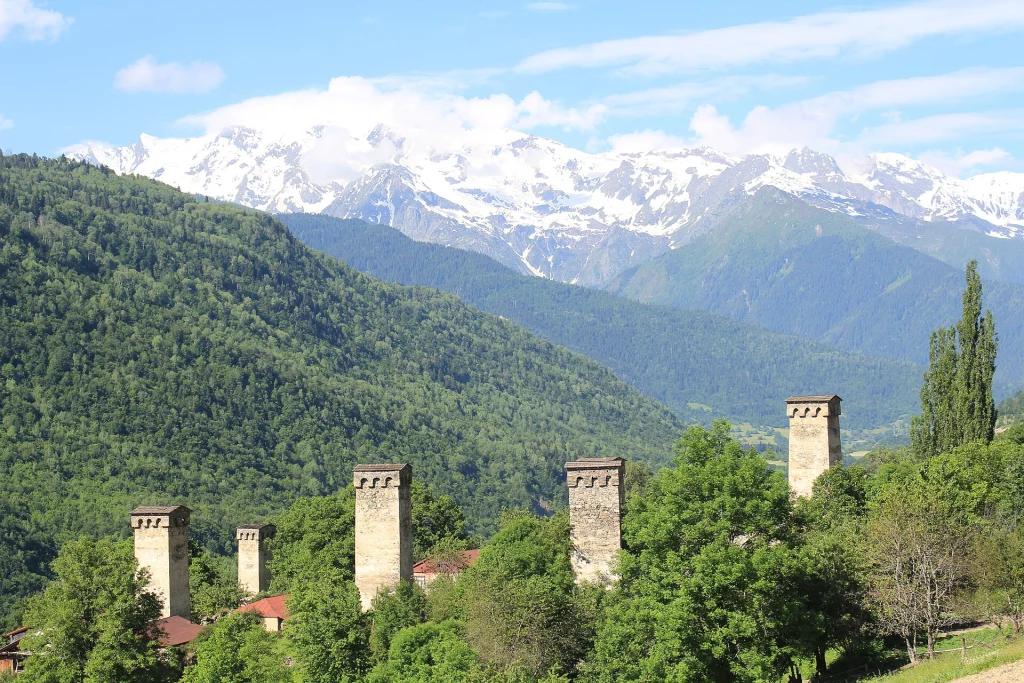
Georgia’s currency is the lari (GEL). As of 26 October 2026 one euro buys roughly 2.91 GEL, though this moves daily and you should check a live rate before changing money. Cards are accepted in almost all Tbilisi, Batumi and Kutaisi restaurants, hotels and shops, but carry cash for village guesthouses, market stalls, marshrutka minibuses and mountain regions such as Tusheti or Svaneti, where card terminals are unreliable or absent. ATMs are common in cities and dispense lari; withdrawing larger amounts less often avoids repeated foreign-transaction fees.
Local SIM cards from Magti, Geocell or Beeline are sold at the airport and in city shops with a passport, and are inexpensive for data-heavy stays. If you prefer not to swap a physical SIM, eSIM options from international providers now cover Georgia reliably; either way, confirm 4G coverage drops in remote mountain valleys and download offline maps before heading to places like Tusheti or Upper Svaneti.
Language: German, English and Georgian
Georgian, written in its own unique alphabet, is the official language, and Russian remains widely understood among the older generation. English is the practical lingua franca in Tbilisi hotels, central Batumi, and along the main tourist routes through Kakheti and Svaneti. German is not an official or widely taught language, but because Germany, Austria and Switzerland send substantial numbers of visitors to Georgia’s wine regions and mountains, many guesthouse owners, wine cellar staff and licensed guides in Kakheti and Kazbegi have picked up working German, and some tour operators, including G Tour, offer German-speaking guides on request. Do not expect this outside tourist infrastructure; a few Georgian words, a phrase app, or a hired guide smooth most situations.
Embassy and consular help
Liechtenstein does not maintain its own embassy in Georgia, and Georgia has no resident mission in Liechtenstein. In practice, Liechtenstein’s foreign and consular interests abroad are frequently represented through Switzerland’s diplomatic network, so the Swiss embassy covering the region, or the Georgian embassy accredited to Switzerland and Liechtenstein, is your likely point of contact in an emergency. Because representation arrangements can change, confirm the current responsible mission and its address and phone number directly through the Ministry of Foreign Affairs of Georgia at mfa.gov.ge before you travel, and save the number locally rather than relying on a search result on the ground.
Food, dietary notes and what feels familiar
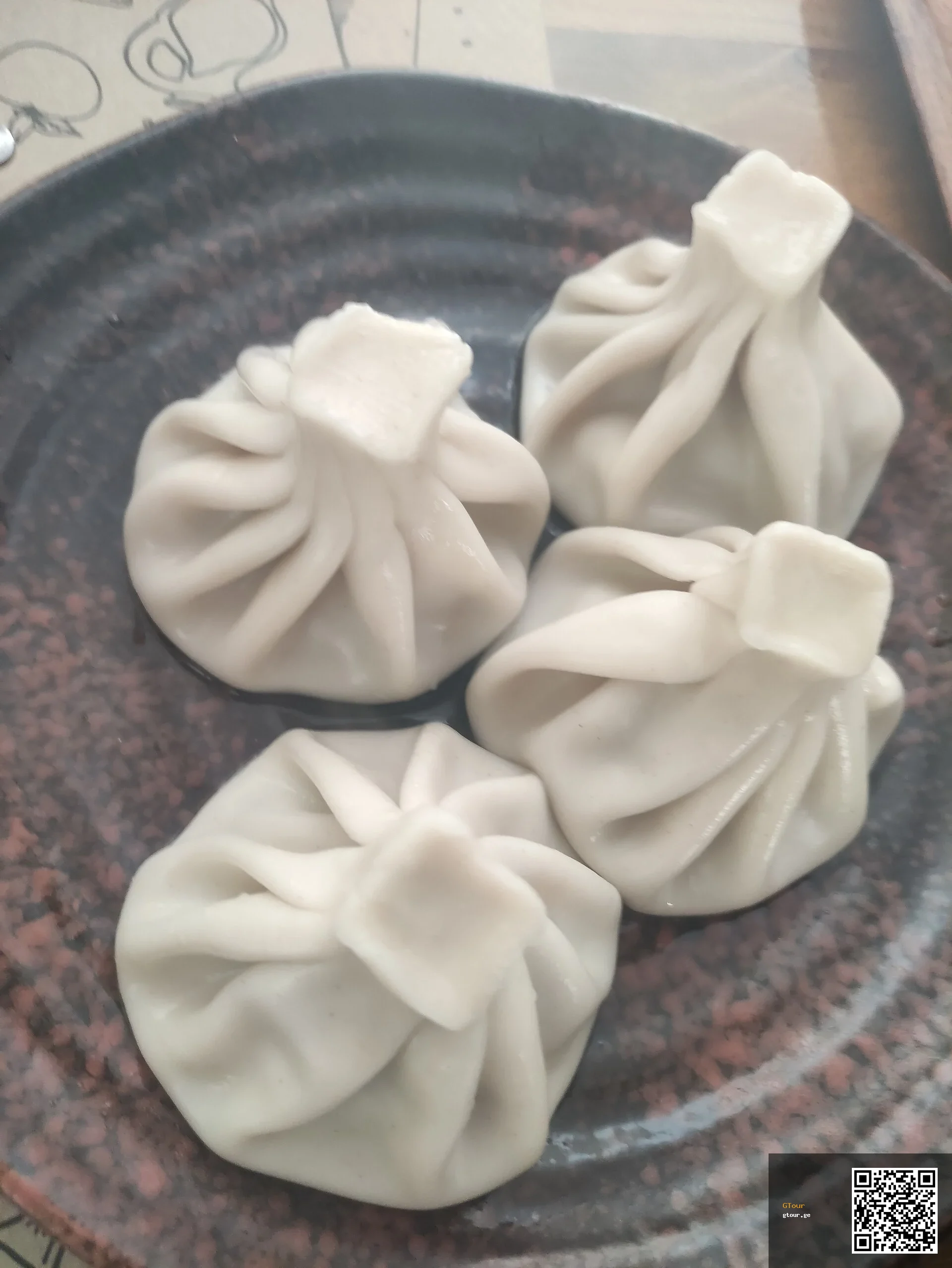
Georgian food shares more with Alpine European tastes than many first-time visitors expect: khachapuri is, at heart, a cheese-filled bread not far from a rich Swiss raclette instinct, and the country’s dairy, bread and cured-meat culture will feel recognisable. Khinkali, the dumplings eaten by hand, are the dish every visitor should try once, ideally guided on etiquette (no fork, no biting the top) by a local. Vegetarian travellers eat very well here thanks to lobio (bean stew), pkhali (walnut and vegetable pastes), and the sheer range of roasted and pickled vegetable dishes that predate any modern vegetarian trend. Halal food is not part of mainstream Georgian cuisine and dedicated halal restaurants are limited to a handful of areas in Tbilisi and Batumi; travellers with specific requirements should research options in advance rather than assume availability. Wine is central to Georgian hospitality and to any supra (feast), and Kakheti’s qvevri winemaking tradition, recognised by UNESCO, is reason enough on its own to extend a Georgia trip; see Kakheti Wine Country — Day Trip or the longer Kakheti Grand Wine & Heritage — 3 Days for a structured introduction.
Ties, seasons, health and safety
It is honest to say that historical, trade and diaspora links between Georgia and Liechtenstein are minimal. There is no significant Liechtenstein community in Georgia, no notable bilateral trade volume to point to, and no shared historical episode worth overstating. What the two countries do share is a small-state, mountain-landscape identity, and visitors from Liechtenstein often arrive drawn by Georgia’s alpine valleys, wine culture and lower cost of a comparable holiday rather than by any family or business connection.
Most Liechtenstein travellers come during the same windows as their Swiss, Austrian and German neighbours: July and August for summer touring and hiking, the Christmas and New Year period, and February for the ski season in Gudauri and Bakuriani, which pairs well with a trip such as Georgia in Winter — Gudauri Skiing, Tbilisi & Kakheti (6 Days). Outside mandatory travel insurance, no vaccinations are specifically required for Georgia, but discuss routine and travel-specific immunisations with your own doctor before departure, since personal medical advice should always come from a qualified physician rather than a travel guide.
Georgia is a safe destination by most measures, and the usual precautions apply: watch belongings in crowded markets and on night trains, agree taxi fares or use a metered app before getting in, and treat mountain roads with respect, particularly the Georgian Military Highway in winter. Toasting is a serious social ritual at a supra; it is polite to listen when a toastmaster speaks, even if you do not drink, and a small sip or a raised glass of water is an accepted alternative.
What a G Tour private guide adds
A private, licensed guide removes the two biggest friction points for a Liechtenstein traveller: language, where German costs an extra €25 per day on top of standard English and Russian guiding rates, and logistics, since a single operator can arrange an airport transfer, a car with driver for mountain routes that need a 4×4, such as Tusheti — Georgia’s Last Wild Frontier (4 Days) or Mestia & Ushguli — 3 Days in Svaneti, and a specialist wine guide in Kakheti all under one invoice. A fixed-price Tbilisi airport transfer costs €25 for a sedan or €35 for a minivan, and a full day with a licensed guide and your own transport runs €110, figures that make planning a first trip considerably less uncertain than piecing it together on arrival.
If this guide is part of a trip you are planning, our Georgia in 10 Days — Tbilisi to Svaneti to the Sea and Tbilisi & Mtskheta — The Essential First Day cover the places it describes with a private guide and driver; a GTour travel expert adapts the route to your dates.
Practical summary
- Check visa-free status and current stay length for Liechtenstein passports at mfa.gov.ge before booking; apply via evisa.gov.ge only if you need to.
- Confirm the mandatory travel insurance wording on gov.ge and buy cover that includes mountain activities if relevant.
- Fly via Istanbul, Munich, Doha or Warsaw from Zurich or Munich; check live schedules at tbilisiairport.com, kutaisiairport.com or batumiairport.com.
- Carry your driving licence and check current foreign-licence rules at georoad.gov.ge before renting a car.
- Use cards in cities, carry cash for villages and mountain regions, and expect roughly 2.9 GEL per euro, checked on the day.
- Buy a local SIM or activate an eSIM on arrival; download offline maps for Svaneti and Tusheti.
- Expect English in tourist areas, occasional German in wine and mountain regions, and little elsewhere.
- Confirm the current diplomatic point of contact for Liechtenstein citizens via mfa.gov.ge rather than assuming an embassy exists locally.
Sources
- Consular information, Ministry of Foreign Affairs of Georgia
- Georgia e-visa portal
- Government of Georgia entry and insurance information
- Georgian Road Department, traffic and licence rules
- Legislative Herald of Georgia (Matsne)
- Georgian National Tourism Administration
- Georgia Travel, official tourism portal
Questions this guide does not answer? Write to info@castle.ge or WhatsApp +995 577 41 63 14 — a person in Tbilisi replies. See also our travel services and all guides.
Khinkali, Georgia's iconic dumplings, a dish travellers from Liechtenstein will encounter everywhere. · Photo: Francesc Fort / Wikimedia Commons, CC BY-SA 4.0
Been to Georgia? Tell us how it went — the best stories are published here.
Share your tripOne email a week: what changed for travellers in Georgia — rules, roads, flights, seasons — plus one place worth the trip. Written by the GTour desk, no advertising, unsubscribe in one click.
This story across our partner network — ქართულად: შენი დასვენება