

By Mariam Lomidze, Culture & Events Reporter · 27/10/2026
Short answer: Icelandic citizens can currently enter Georgia visa-free for tourism, usually for up to a year, because Georgia maintains one of the most liberal visa regimes in the world for EU, EEA and Schengen-area passport holders, and Iceland is part of the Schengen area. There is no direct flight between Iceland and Georgia, so every trip involves at least one connection, typically through Istanbul, Warsaw or Munich. Money, language and food are the main adjustments: Georgia uses its own currency (the lari), Georgian and Russian dominate outside the main tourist areas, and the food is heartier and more bread-and-cheese-based than you might expect from a country this far south.
This guide sets out what actually applies to a Icelandic passport in 2026, with links to the official Georgian pages to check before you book, since visa and insurance rules are exactly the kind of thing governments amend with little notice. Where ties between the two countries are thin, we say so plainly rather than inventing a connection that is not there, and we point out where a private guide from G Tour removes friction, particularly around remote regions and winter roads that behave a little like home.
Visa and entry rules for Icelandic citizens
As an EEA and Schengen-area citizen, an Icelandic passport holder is currently permitted to enter Georgia without a visa for short tourist stays, with Georgia historically granting up to 365 days visa-free to this group of nationalities, though the exact permitted duration and any re-entry conditions can change by government decree. Do not rely on this guide alone: confirm the current rule for your passport and travel dates on Georgia’s official e-visa portal and the Ministry of Foreign Affairs consular pages before booking flights, since the length of stay, the list of visa-free countries and any new registration requirements are set by evisa.gov.ge and the Ministry of Foreign Affairs of Georgia, not by travel companies.
If a visa or e-visa does turn out to be required for your specific situation (for example, a long stay, a change in reciprocal rules, or travel on a non-ordinary passport), the e-visa is applied for entirely online at evisa.gov.ge, with a passport scan, a photo, proof of accommodation and return travel; processing is usually quoted at up to 10 working days, though many applications are decided faster. Apply well before departure and keep the approval PDF on your phone and in print.
Getting there: flights from Iceland
There are no direct flights between Iceland and Georgia, and none are likely soon given the thin demand between the two small countries. Icelandair’s network from Keflavik concentrates on North America and continental European hubs, so the practical routings connect through one of Georgia’s established gateway airports in Europe or the Gulf. The two most workable patterns are a connection through a European hub such as Munich or Warsaw onto a Tbilisi or Kutaisi service, or a connection through Istanbul, which has the densest schedule of flights into Georgia of any hub. Travellers coming via the Gulf (Dubai or Doha) usually do so because they are combining Georgia with onward travel in the Middle East or Asia rather than as the fastest link from Iceland itself.
- Via Istanbul: the most frequent onward schedule to Tbilisi and Kutaisi, usually the shortest total journey time.
- Via Munich or Warsaw: workable if your Icelandair or partner-airline itinerary already routes through one of these cities.
- Via Dubai or Doha: longer overall, best if Georgia is one stop on a wider itinerary.
Always check live routes and terminals before booking, since schedules change seasonally: see Tbilisi International Airport, Kutaisi International Airport and Batumi International Airport. If you arrive at any of the three, G Tour’s fixed-price airport transfer meets you at arrivals with a name board and tracks your flight, so a late connection through Istanbul does not strand you.
Driving licence, money, cards and cash
An Icelandic driving licence is generally usable for short visits, since Georgia’s road authorities recognise foreign licences from Vienna and Geneva Convention countries for tourists; bring an International Driving Permit as a backup if your rental company asks for one, and check current requirements with Georgia’s Roads Department before you drive, since rental firms sometimes apply stricter rules than the law requires. Georgia drives on the right, as Iceland does, which removes one common source of confusion.
Georgia’s currency is the lari (GEL). At the National Bank of Georgia’s reference rate on 26 October 2026, €1 was worth about GEL 2.91. Icelandic krona cannot be exchanged directly in Georgia, so bring a card or convert to euros or US dollars before you travel, then withdraw lari from ATMs in Tbilisi, Batumi or Kutaisi on arrival. Cards are widely accepted in cities, hotels and tour operators including G Tour; carry some cash for markets, small guesthouses, marshrutka minibuses and mountain villages such as Tusheti or Svaneti, where card machines are unreliable.
SIM, eSIM and staying connected
Local SIM cards are inexpensive and sold at kiosks inside Tbilisi, Kutaisi and Batumi airports with a passport for registration; Georgia’s main operators cover the lowland cities well, with patchier signal in high mountain valleys like Tusheti and parts of Svaneti. eSIM options from international providers work in Georgia and can be activated before you land, which suits a short trip better than hunting for a kiosk after a long connection through Istanbul. Hotel and guesthouse wifi is standard in cities; in remote guesthouses expect it to be slow or absent.
Language and communication
Georgian is the official language and uses its own script, unrelated to the Latin alphabet, so written signs will not be guessable the way they might be in much of Europe. Russian is widely understood by the middle-aged and older generations across the country, a legacy of the Soviet period. English is reasonably common among guides, hotel staff and younger people in Tbilisi, Batumi and Kutaisi, and far less reliable in villages, mountain regions and local transport. Icelandic itself is not understood anywhere in Georgia, so a phrasebook, a translation app, or a licensed guide is useful once you leave the capital. This is exactly where a G Tour private guide pays off: English-speaking licensed guides remove the language barrier for city walks, specialist themes like wine or history, and full-day touring, with day rates and multi-day rates set out on our services page.
Food, dietary notes and what feels familiar
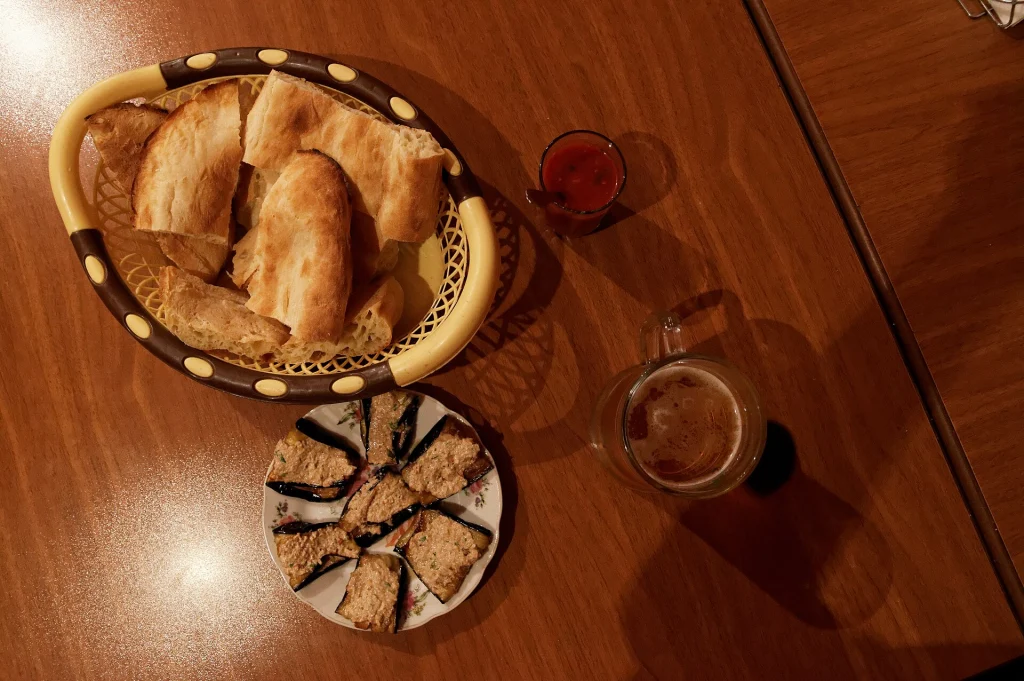
Georgian food centres on bread, cheese, walnuts, beans and grilled or stewed meat, with far more dairy and far more spice than Icelandic cooking, but with enough overlap in staples (lamb, root vegetables, fermented and pickled sides) that nothing should feel alien. Khachapuri, a cheese-filled bread, and khinkali, broth-filled dumplings, are the two dishes every visitor tries. Vegetarians are well served, since bean stew (lobio), walnut-and-vegetable pastes (pkhali) and roasted eggplant dishes are core to the cuisine rather than an afterthought; ask for food “without meat” (ukhmelo khortsistsarod does not work locally, simplest is to say “vegetarian” in English, which most urban restaurants understand). Halal food is uncommon outside a handful of restaurants in Tbilisi and Batumi catering to Gulf tourism; strict halal travellers should check menus in advance rather than assume. Seafood lovers used to Icelandic fish will find Black Sea catch in Batumi worth seeking out, alongside the inland rivers and lakes of Racha and Svaneti for trout.
Health, insurance, safety and etiquette
Georgia has, at various points, required visitors to hold valid travel medical insurance as a condition of entry or of certain visa categories; whether this applies to you depends on your exact route and status, so confirm current requirements on evisa.gov.ge and mfa.gov.ge before you fly, and in any case buy insurance that covers medical treatment, repatriation and mountain rescue, since public healthcare for foreigners is paid, not free. For general health advisories consult Georgia’s National Center for Disease Control and Public Health before departure, and see a doctor at home for personal advice on vaccinations or existing conditions.
Georgia is a comparatively safe destination for travellers, including solo and female travellers, with petty crime low by European standards; the main real risks are road conditions in winter and in the high mountains. Mountain roads to Kazbegi, Gudauri and especially Tusheti can close for snow, ice or landslide with little warning; check our road status page and georoad.gov.ge before any self-drive trip. Etiquette worth knowing: hospitality is taken seriously, a toast at a traditional supra feast is not optional once offered, dress modestly (covered shoulders and knees, and a headscarf for women) when entering Orthodox churches and monasteries, and remove shoes when asked in private homes.
Ties between Georgia and Iceland, and the best time to go
Honestly, direct ties between Georgia and Iceland are thin. There is no meaningful Icelandic diaspora in Georgia, bilateral trade is negligible, and there are no direct flights or sister-city links of note. Both countries do share an interest in geothermal resources, Iceland as a world leader in geothermal power and Georgia with its long tradition of natural hot springs in Tbilisi and the spa town of Borjomi, but this is a point of comparison rather than an established partnership. Icelandic travellers tend to arrive in two windows: winter, for skiing at Gudauri, which Icelanders accustomed to volcanic, treeless terrain often find visually familiar, and the warmer months, for hiking in Svaneti and Tusheti, regions whose scale and remoteness echo Iceland’s own highlands. The grape harvest season of September and October in Kakheti is a third draw for visitors interested in wine and food.
| Season | Why Icelandic travellers come | Suggested G Tour trip |
|---|---|---|
| December to March | Skiing and snow landscapes | Georgia in Winter — Gudauri Skiing, Tbilisi and Kakheti |
| June to September | Remote mountain hiking | Tusheti — Georgia’s Last Wild Frontier; Mestia and Ushguli — 3 Days in Svaneti |
| September to October | Grape harvest and wine | Rtveli — Wine Harvest in Kakheti |
Since Iceland has no resident embassy or consulate in Georgia, and Georgia has none in Iceland, check the full list of missions accredited to Tbilisi on mfa.gov.ge, and in an emergency contact Iceland’s Ministry for Foreign Affairs directly, since consular support for Icelandic citizens in Georgia is handled from outside the country rather than by a local office.
If this guide is part of a trip you are planning, our Georgia in 10 Days — Tbilisi to Svaneti to the Sea and Monasteries of Georgia — Mtskheta, the Thirteen Fathers and Kakheti in 3 Days cover the places it describes with a private guide and driver; a GTour travel expert adapts the route to your dates.
Practical summary
- Visa: Icelandic passport holders are currently visa-free for short tourist stays; confirm duration and any changes on evisa.gov.ge and mfa.gov.ge before booking.
- Flights: no direct route from Iceland; connect via Istanbul, Munich or Warsaw, occasionally via Dubai or Doha; check live schedules at tbilisiairport.com, kutaisiairport.com or batumiairport.com.
- Driving: Icelandic licence generally usable for short visits; carry an International Driving Permit as backup and check georoad.gov.ge.
- Money: currency is the lari (GEL); cards work in cities, carry cash for villages and mountain regions; €1 ≈ GEL 2.91 at the National Bank of Georgia’s late-October 2026 rate.
- Connectivity: buy a local SIM at the airport or activate an eSIM before arrival; signal is patchier in Tusheti and remote Svaneti.
- Language: Georgian and Russian dominate outside tourist hubs; English is reliable in Tbilisi, Batumi and Kutaisi tourism businesses; a guide bridges the rest.
- Insurance: travel medical insurance covering repatriation and mountain rescue is strongly advised and may be a formal entry condition in some cases; verify on evisa.gov.ge.
- Ties: minimal beyond a shared interest in geothermal energy and mountain landscapes; plan the trip on practicalities, not expected cultural overlap.
- Embassy: no Icelandic mission in Georgia; check mfa.gov.ge for the list of accredited embassies and contact Iceland’s Ministry for Foreign Affairs for consular emergencies.
Sources
Questions this guide does not answer? Write to info@castle.ge or WhatsApp +995 577 41 63 14 — a person in Tbilisi replies. See also our travel services and all guides.
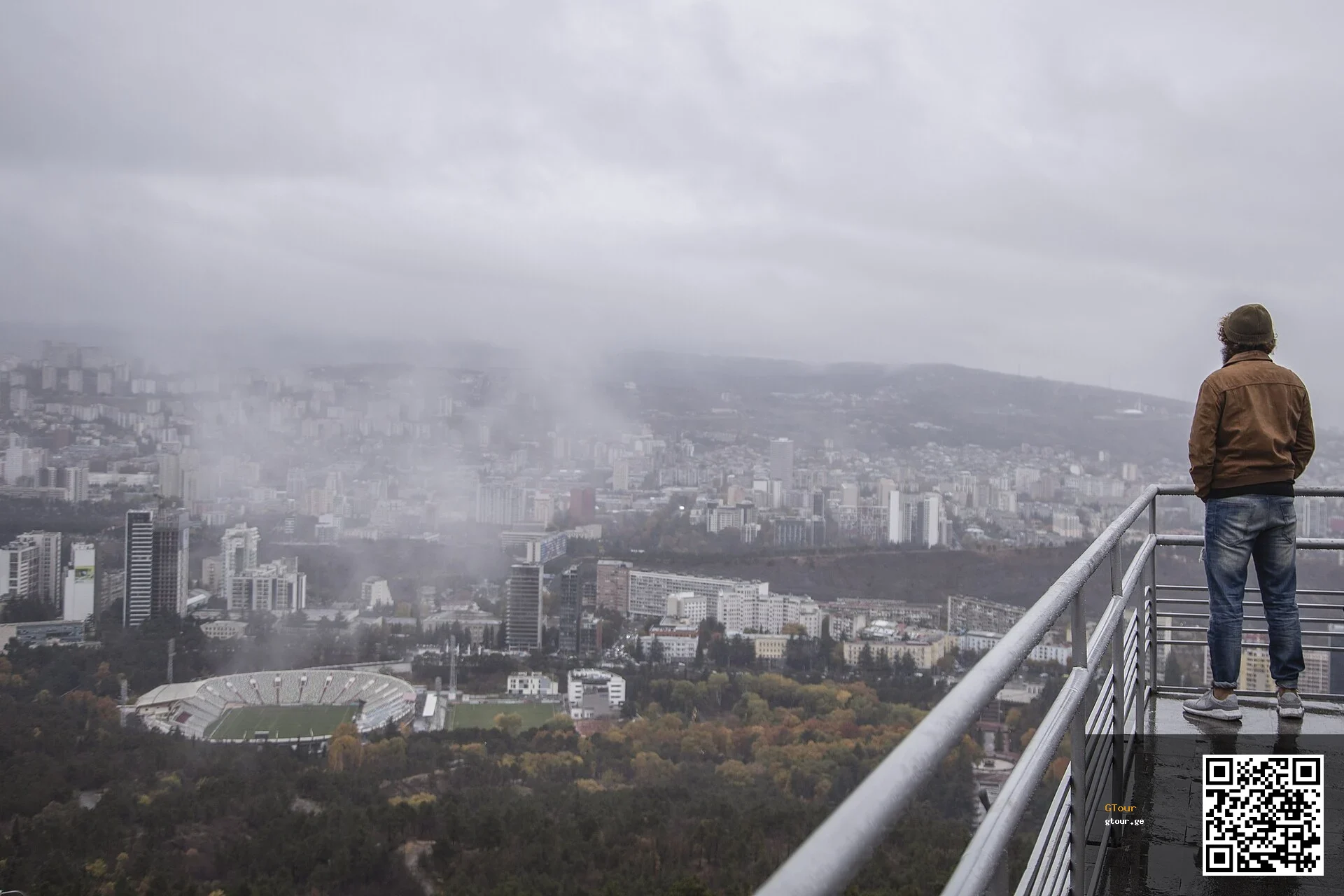
View over Tbilisi from Vake Park, a public park in the Georgian capital. · Photo: Mostafameraji / Wikimedia Commons, CC0
Been to Georgia? Tell us how it went — the best stories are published here.
Share your tripOne email a week: what changed for travellers in Georgia — rules, roads, flights, seasons — plus one place worth the trip. Written by the GTour desk, no advertising, unsubscribe in one click.
This story across our partner network — ქართულად: შენი დასვენება