

By David Kiknadze, Transport & Openings Reporter · 28/10/2026
For a traveller flying from Kinshasa or Lubumbashi, Georgia is reachable but never in one hop: expect one stop, usually in Istanbul, and a total journey of roughly 13 to 20 hours depending on connection times. Whether you need a visa in advance depends on your passport type and the purpose of travel, so the short honest answer is: check the official Georgian consular pages before you book, because the rule that applied last year may not be the rule that applies when you fly.
This guide sets out what we can state with reasonable confidence for October 2026 and flags everywhere that a traveller from the Democratic Republic of Congo should verify directly with Georgian authorities rather than rely on a blog, including ours. Ties between Georgia and DR Congo are currently thin, so this is deliberately a practical guide rather than a cultural-affinity piece, and where our own tours are useful for a first visit we link to them plainly.
Visa and entry rules for Congolese citizens
Georgia operates a layered entry system: some nationalities enter visa-free, some need an e-Visa obtained in advance online, and some need a visa from a Georgian consulate or embassy. The Democratic Republic of Congo is not on Georgia’s short visa-free list, so in practice a Congolese passport holder should expect to apply for an entry visa before travelling, either through the e-Visa portal if the category is listed as eligible for your purpose of travel, or through the nearest Georgian diplomatic mission if it is not. The authoritative current list, categories and documents required are published by Georgia’s Ministry of Foreign Affairs and its consular services portal, and this is the only place to confirm your exact situation, since Georgia revises its visa lists periodically and a rule correct in 2025 can change without much notice.
Start with the e-Visa system at evisa.gov.ge, which lets you check eligibility by nationality, upload documents and pay online; processing is typically quoted at a few working days once the application is complete, though the portal itself gives the current service-level estimate and that is what you should trust, not a fixed number repeated elsewhere. For anything the online system does not cover, go to the Ministry of Foreign Affairs consular pages at mfa.gov.ge and the dedicated consular services portal at geoconsul.gov.ge, which list which countries’ applicants must apply in person, what supporting documents are expected (hotel booking, return ticket, bank statement, invitation letter if relevant) and the current fee. Because the Democratic Republic of Congo has no Georgian embassy on its soil, applications are often routed through a neighbouring mission; the consular portal confirms which embassy currently holds accreditation for your region, and we recommend contacting that office directly by email before travelling rather than relying on any secondary source, including this one.
Getting there: flights and connections
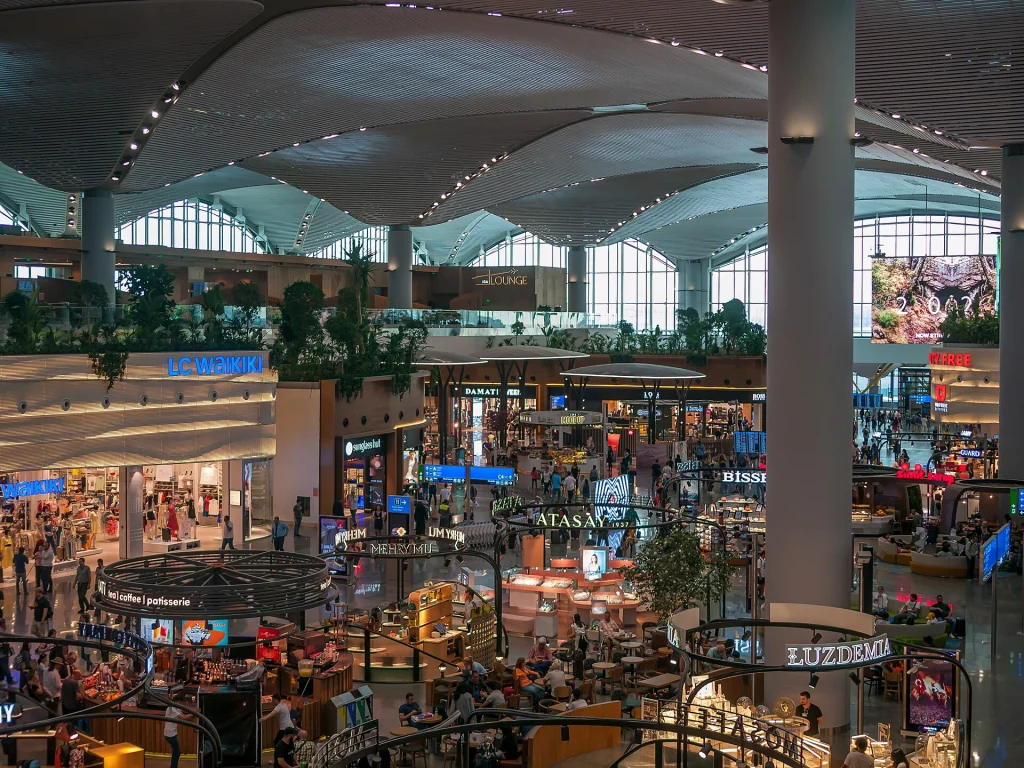
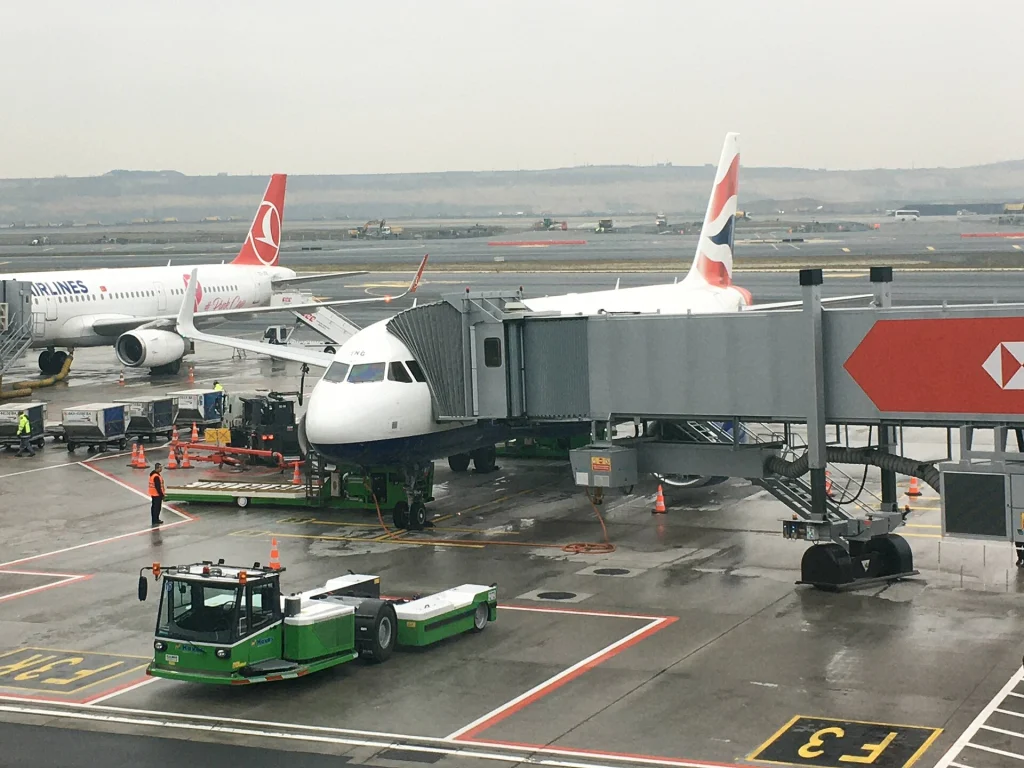
There are no direct flights between any DR Congo airport and Tbilisi, Kutaisi or Batumi, and that is unlikely to change in the near term given the route economics involved. The most workable routing for most travellers is Kinshasa to Istanbul, then Istanbul to Tbilisi, since Turkish Airlines operates a dense network between its Istanbul hub and both Kinshasa and Tbilisi, keeping the whole itinerary on one or two tickets. Gulf hubs are a secondary option if your onward schedule or fare works better: Doha and Dubai both connect onward to Tbilisi, though you should check current Gulf-carrier service to Kinshasa and Lubumbashi directly with the airline, as West and Central African route networks shift more often than European ones. Warsaw and Munich are realistic only if your first leg already routes you into Europe for other reasons, since neither is a natural first hop from DR Congo.
| Typical routing | Change at | Notes |
|---|---|---|
| Kinshasa – Istanbul – Tbilisi | Istanbul | Usually the shortest total connection, one carrier group |
| Kinshasa/Lubumbashi – Gulf hub – Tbilisi | Doha or Dubai | Confirm current DR Congo service with the airline before booking |
| Via a European hub | Warsaw or Munich | Only sensible if already transiting Europe |
Check live arrivals and the current list of airlines serving each Georgian airport at tbilisiairport.com, kutaisiairport.com and batumiairport.com, since budget carriers add and drop Georgian routes more often than legacy ones. If you land at Kutaisi and your plans centre on Tbilisi or Batumi, our fixed-price transfers cover both, and a private car with driver is usually simpler than chaining buses after a long-haul flight; see the Tbilisi Airport Transfer and Kutaisi Airport to Tbilisi Transfer pages for current prices.
Money, cards and cash
The Georgian lari (GEL) is the only legal tender for everyday purchases, and the National Bank of Georgia publishes the daily reference rate; on 28 October 2026 one euro bought roughly 2.89 lari and one US dollar roughly 2.60 lari, but these move daily and you should check the current rate before changing a large sum. Congolese francs are not exchanged in Georgia, so travel with euros or US dollars in cash as your base currency and change what you need at a licensed exchange office (look for the black-on-yellow “exchange” signs) rather than at a hotel desk, where rates are usually worse. Cards are widely accepted in Tbilisi and Batumi hotels, restaurants and supermarkets, less so in mountain villages and small guesthouses, so carry some cash for Svaneti, Tusheti and rural Kakheti. ATMs are common in cities and tourist towns and generally accept Visa and Mastercard; confirm with your home bank before departure whether your card works internationally and what the withdrawal fees are, since Congolese banks vary in this respect.
SIM, eSIM and staying connected
Local SIM cards are inexpensive and sold at kiosks inside both Tbilisi and Kutaisi airport arrivals halls, as well as at mobile operator shops in any town centre; bring your passport, since registration is required. eSIM options from international providers can be activated before you fly and are a practical choice if your phone supports them, avoiding the need to find a working physical SIM late at night after a long connection. Coverage is reliable in Tbilisi, Batumi, Kutaisi and along the main highways; it thins out in Svaneti, Tusheti and Khevsureti, where a trip planned with a local guide who knows which valleys have signal is genuinely useful rather than a luxury.
Driving licence, language and what to expect
Georgia generally recognises foreign driving licences that comply with the 1949 Geneva Convention on Road Traffic, in some cases alongside a certified translation, and separately recognises International Driving Permits. Because the Democratic Republic of Congo’s status under these conventions is not something we can confirm with certainty, the safe approach for a Congolese driver is to carry both your national licence and an International Driving Permit obtained before travel, and to confirm current recognition rules with the Georgian road authority at georoad.gov.ge or by asking at a car-rental desk, since enforcement in practice can differ from the letter of the regulation. Many visitors prefer a car with an English-speaking driver rather than self-driving, particularly for mountain roads with unlit hairpin bends and no hard shoulder; see our Car with Driver by the Day service for current rates.
Georgian is the national language and uses its own script, so written signage in Latin letters is inconsistent outside the capital. English is spoken by younger staff in Tbilisi and Batumi hotels, tour operators and many restaurants, and French, while not widely spoken, is occasionally understood by older Georgians who studied it at school or by staff in international hotels, which can help Francophone Congolese travellers more than in most other post-Soviet countries. Russian remains widely understood across the older generation and in rural areas, which is useful information rather than a political statement, since many Congolese travellers who speak French or Lingala as a first language will find Russian a more common shared second language with ordinary Georgians than English. A licensed private guide removes this friction entirely; our Licensed Private Guide by the Day service covers English, French and several other languages.
Food and dietary notes
Georgian food centres on bread, cheese, grilled and stewed meat, walnuts, herbs and fresh vegetables, and a Congolese visitor used to cassava-leaf stews, grilled fish, rice and plantain will find some genuine overlaps: Georgian khinkali (dumplings) and mtsvadi (grilled skewered meat) are close in spirit to dishes built around a central protein and strong seasoning, and the use of walnut sauce (satsivi, bazhe) will feel familiar to anyone who knows West and Central African groundnut stews. Pork appears often in Georgian cooking, including in some khinkali fillings and most supra feasts, so if you avoid pork for any reason, ask specifically, since beef, lamb or chicken versions are usually available on request. Halal-certified restaurants are not common outside a handful of establishments in Tbilisi and Batumi near mosque areas; if halal is a firm requirement rather than a preference, tell your guide or hotel in advance so meals can be planned around it rather than discovered too late. Vegetarian eating is straightforward: Georgian cuisine has an entire tradition of bean, bread, cheese and vegetable dishes (lobio, khachapuri, pkhali) that long predates modern vegetarianism and is not treated as a compromise meal. Our Cooking Class in Tbilisi and Bread, Cheese and Churchkhela workshop are useful low-pressure ways to understand the menu before committing to a longer trip.
Health, insurance and safety
Georgia does not currently impose a blanket requirement that all foreign tourists hold travel insurance to enter the country, but this has changed before during past health emergencies and could change again, so confirm the current entry conditions at mfa.gov.ge or the government portal gov.ge close to your travel date rather than assuming last year’s rule still applies. Independent of any legal requirement, GTour’s founder, a public-health professor, recommends every traveller carry medical and repatriation insurance regardless: Georgian private clinics bill foreign patients directly and fees can be substantial, public facilities vary in English-language capacity, and altitude destinations such as Kazbegi, Svaneti and Tusheti are remote from major hospitals. No routine vaccination certificate is required for entry from DR Congo under ordinary circumstances, but yellow fever and other vaccination requirements for travel between African and other countries change with global health advisories, so check with a travel clinic and Georgia’s own national health authorities before departure rather than relying on general assumptions. Georgia is a low-crime destination by most measures and street crime against tourists is rare; the practical risks for visitors are mostly road-related (mountain roads, unmarked edges, sudden weather) and altitude-related in the high Caucasus, both of which a licensed guide or driver familiar with current conditions can reduce meaningfully. Ordinary courtesy, modest dress at churches and monasteries, and asking before photographing people cover most etiquette situations; there is nothing specific to a Congolese nationality that differs from general good practice elsewhere in this guide series.
Ties between Georgia and DR Congo, and what G Tour adds
We should be straightforward: cultural, trade and diaspora ties between Georgia and the Democratic Republic of Congo are currently thin. There is no significant Congolese diaspora community in Georgia, no direct trade relationship of note, and no deep historical connection comparable to Georgia’s ties with, say, Russia, Iran or Western Europe. That is not a reason to avoid the trip, simply a reason to focus this guide on logistics rather than invented affinity. What a first-time Congolese visitor gains from travelling with a private guide is mostly the removal of friction: navigating a visa system and consular process that has no established Congolese-specific pathway, finding halal or dietary-specific meals without guesswork, driving unfamiliar mountain roads with the right documentation already resolved, and having someone bridge the English-French-Russian-Georgian language gaps in real time. A short Tbilisi city introduction such as Tbilisi in a Day or a longer first trip like Georgia Essentials in 3 Days or Georgia Classic in 7 Days is a sensible way to use a guide’s local knowledge on a first visit, with the practical details in this guide handled in advance rather than discovered at the airport.
If this guide is part of a trip you are planning, our Tbilisi to Borjomi or Bakuriani Transfer and Mtskheta on Foot — the Ancient Capital in 2 Hours cover the places it describes with a private guide and driver; a GTour travel expert adapts the route to your dates.
Practical summary
- Visa: assume you need one; check evisa.gov.ge for e-Visa eligibility and mfa.gov.ge/geoconsul.gov.ge for embassy applications; confirm which Georgian mission handles DR Congo applications.
- Flights: no direct route; Kinshasa–Istanbul–Tbilisi via Turkish Airlines is usually simplest; check Gulf-hub options directly with the carrier.
- Money: carry euros or US dollars cash; change at licensed exchange offices; cards work in cities, less so in mountain villages.
- SIM/eSIM: buy at airport arrivals or activate an eSIM before flying; coverage thins in Svaneti and Tusheti.
- Driving: carry both your national licence and an International Driving Permit; confirm recognition at georoad.gov.ge.
- Language: English in cities, French occasionally understood, Russian widely understood by older Georgians; a private guide closes most gaps.
- Food: ask about pork substitutions and halal needs in advance; vegetarian eating is easy and traditional.
- Health: no blanket mandatory-insurance rule currently, but GTour recommends travel medical insurance regardless; verify current entry health rules before flying.
Sources
- Ministry of Foreign Affairs of Georgia
- Georgian consular services portal
- Georgia government portal
- Georgian road authority
- Georgian National Tourism Administration
- Matsne Legal Acts Database
Questions this guide does not answer? Write to info@castle.ge or WhatsApp +995 577 41 63 14 — a person in Tbilisi replies. See also our travel services and all guides.
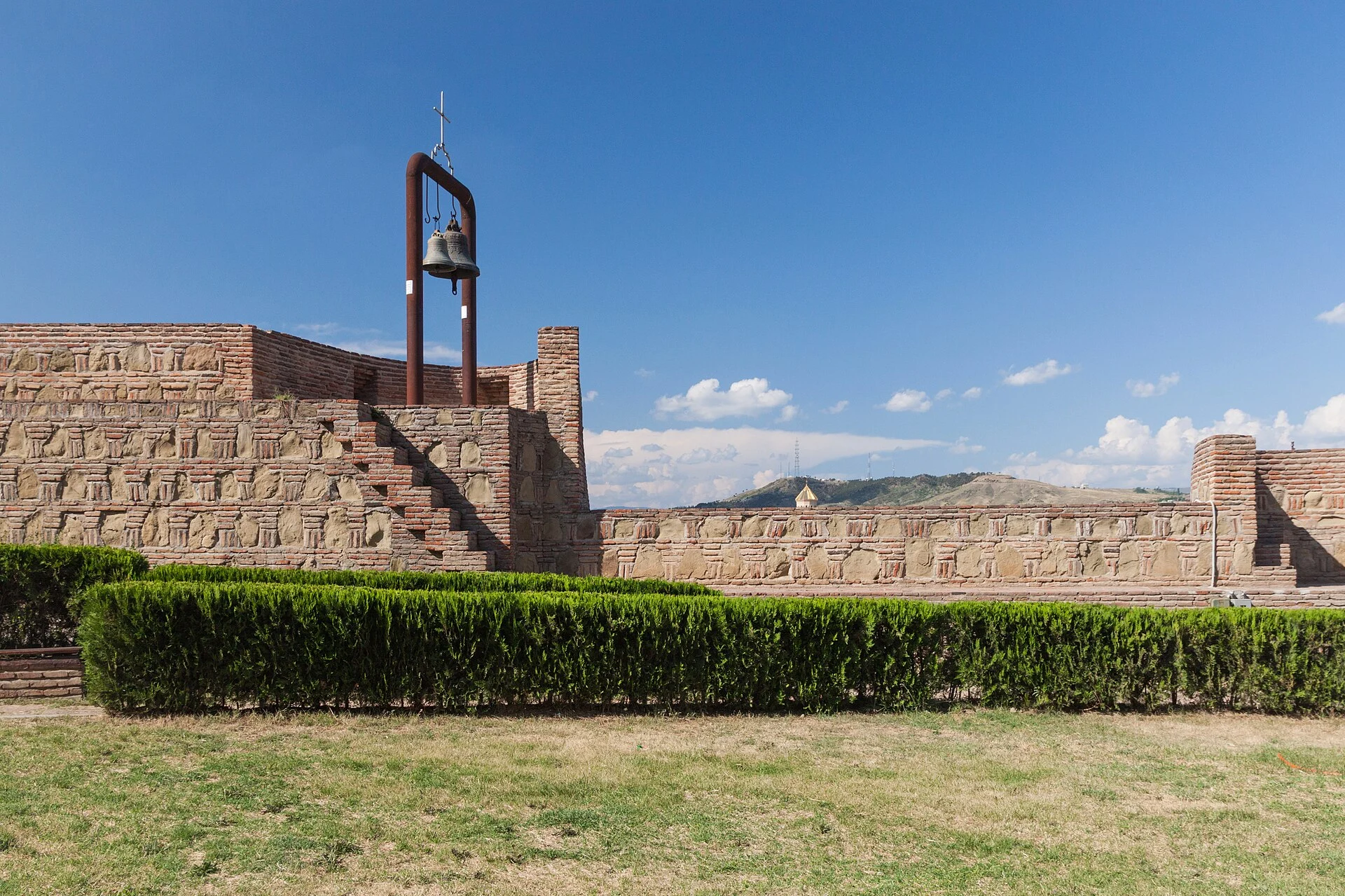
Narikala Fortress walls overlook Tbilisi, the Georgian capital travellers will explore. · Photo: Marcin Konsek / Wikimedia Commons, CC BY-SA 4.0
Been to Georgia? Tell us how it went — the best stories are published here.
Share your tripOne email a week: what changed for travellers in Georgia — rules, roads, flights, seasons — plus one place worth the trip. Written by the GTour desk, no advertising, unsubscribe in one click.
This story across our partner network — ქართულად: შენი დასვენება
