

By David Kiknadze, Transport & Openings Reporter · 14/11/2026
The best market for you depends on what you want. For a working Tbilisi bazaar with the full range of Georgian spices, cheese and churchkhela, go to Dezerter. For Soviet relics, carpets and genuine antiques, go to the Dry Bridge, but read the export rule below before you buy anything that looks old. For the best value cheese and khachapuri ingredients, Kutaisi‘s Green Bazaar beats the capital on price. Telavi gives you Kakheti‘s wine-country produce, and Batumi adds hazelnuts, tea and the Black Sea catch to the list.
All five are working markets, not stage sets, so go early, bring small notes, and taste before you buy. Prices below are approximate November 2026 figures gathered on site; they move with the season and with the lari-euro rate, so treat them as a guide rather than a quote. We run guided walks through two of these markets if you would rather taste your way through with someone who knows the vendors: Dry Bridge and Dezerter Bazaar and the Tbilisi Market and Street-Food Walk.
Dezerter Bazaar, Tbilisi: the market locals actually use
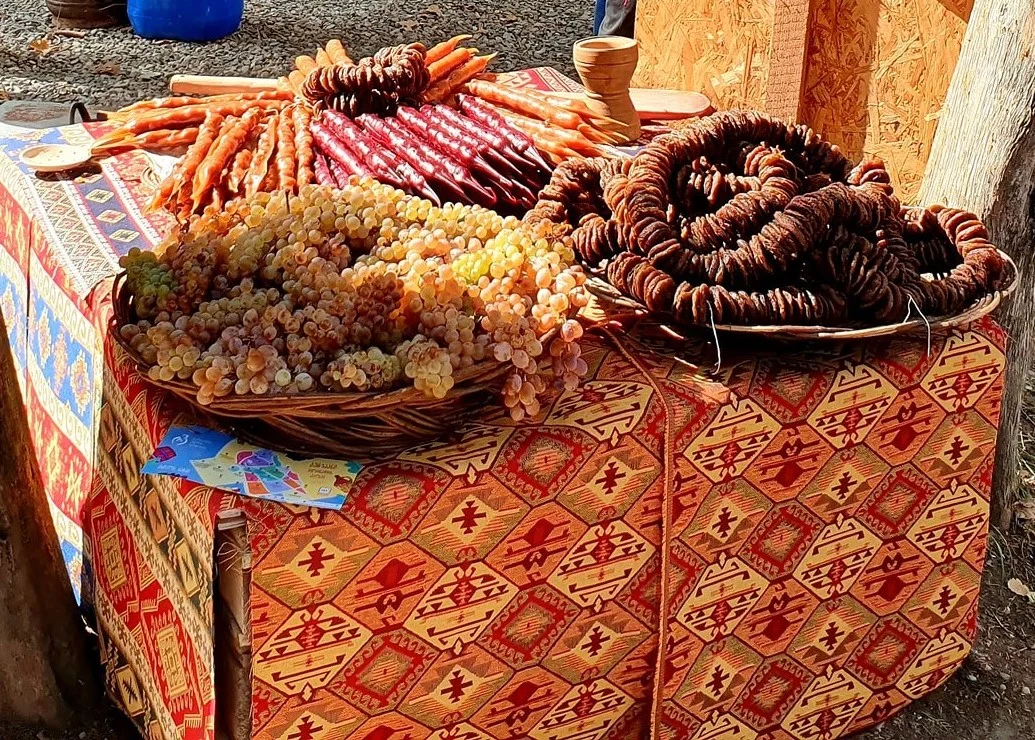
Dezerter sprawls beside Station Square and Tbilisi’s central railway station, and it has supplied the capital with produce since the market stalls that gave it its name sprang up after the First World War. It opens daily, roughly 7am to 7pm, with the best selection and the calmest aisles before 10am. Come for churchkhela in long ropes of walnuts, hazelnuts and sometimes almonds; fresh sulguni and imeruli cheese by the wheel; khmeli-suneli, utskho-suneli (blue fenugreek), dried Imeretian saffron (marigold petals) and Svan salt by the scoop; tklapi fruit leather; honey; and a produce hall that runs from autumn persimmons to winter citrus from Adjara. A kilo of good walnuts runs roughly 20–28 GEL, a churchkhela stick 3–6 GEL depending on length, and 100g of a spice mix 4–8 GEL. Light bargaining is accepted on bulk purchases of nuts, spice or dried fruit, but it is unusual and faintly rude to haggle over a single cheese or one churchkhela stick. If you want the market folded into a wider food walk, our Bread, Cheese and Churchkhela workshop and the Tbilisi Market and Street-Food Walk both start or pass through here.
Dry Bridge: flea-market finds and the antiques rule you need to know
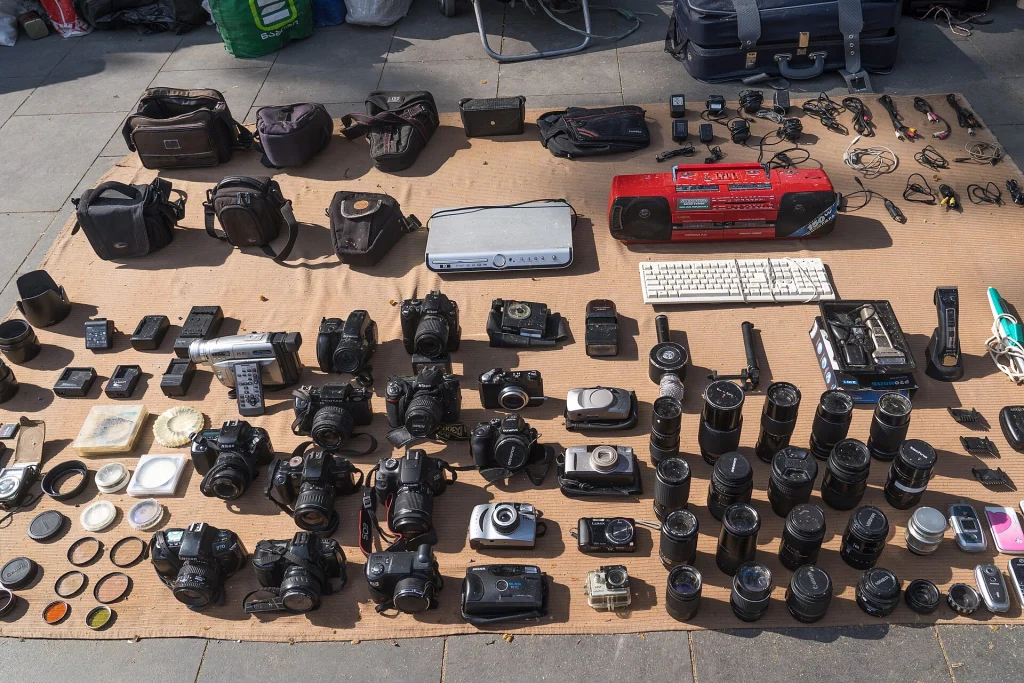
A ten-minute walk along the Mtkvari from Dezerter, the Dry Bridge flea market lays out Soviet medals, cameras, carpets, icons, porcelain, jewellery and vinyl on blankets and trestle tables every day, with Saturday and Sunday mornings the busiest and best stocked. Bargaining here is expected and part of the transaction: start at roughly half the asking price and settle somewhere in the middle, in cash, in GEL.
The rule to know before you buy anything that looks genuinely old: Georgia restricts the export of cultural property, which can include icons, archaeological pieces, old manuscripts, pre-Soviet coins and certain paintings or carpets judged to have historical or artistic value. Taking such an item out of the country without the correct paperwork risks confiscation at the airport. Before buying anything you suspect is a real antique rather than a modern reproduction, ask the seller for a receipt describing the piece, and check current export-certificate requirements with Georgia’s cultural heritage protection agency, which examines items and issues the certificate when export is permitted, at apa.gov.ge, overseen by the Ministry of Culture and Sport. Most tourist-stall items, reproduction medals and modern enamel pins carry no such restriction, but a pre-revolutionary icon or an old manuscript fragment does, so when in doubt, ask first and buy later.

Kutaisi’s Green Bazaar: Imereti’s pantry at better prices
Kutaisi’s covered Green Bazaar, by the Rioni river in the city centre, is the biggest market in western Georgia and, by most visitors’ estimate, the best value of the five. Open daily, it runs long tables of Imeretian khachapuri cheese, jonjoli (pickled bladdernut flowers), fresh and dried tkemali, walnuts for satsivi and churchkhela, Megrelian ajika in jars of varying heat, and a spice section that undercuts Tbilisi prices by perhaps 15 to 20 percent. This is also where to try and buy churchkhela straight from the women who make it, often with grapes from their own vines. Pair a visit with the Bagrati Cathedral above town: our Kutaisi Half-Day — Bagrati, the Green Bazaar and the Rioni and the shorter Kutaisi Walking Tour — Bazaar, Bridges and the Old Quarter both build the market into a short city visit.
Telavi: Kakheti’s wine-country market
Telavi’s central market is smaller and plainer than the other four, which is part of its appeal: farmers sell their own tonir-baked bread, walnuts, dried fruit, honey, and plastic bottles of homemade wine alongside the usual spice stalls. It operates daily for produce; some stallholders only appear on weekend mornings, so if a specific vendor matters to you, call ahead through your hotel or confirm locally rather than relying on a fixed schedule. Telavi is at its best paired with a cellar visit, since the market itself is modest next to Kakheti’s wine estates: see our Telavi & Kakheti Wine Region and Telavi, Alaverdi and Tsinandali tours, or a direct Tbilisi to Kakheti Transfer if you are driving yourself.
Batumi: hazelnuts, tea and the Black Sea catch
Batumi’s central market sits a short walk inland from the boulevard and sells what the Black Sea coast does best: Adjarian hazelnuts, Chakvi-grown tea, citrus in season (mandarins arrive from November), persimmons, fresh anchovy and other small fish when the catch is in, and sulguni from Adjara’s hill villages. It trades daily, with the fish counters freshest in the early morning. Along the seafront itself, informal sellers offer corn on the cob and churchkhela to passing walkers rather than running a formal market. For the tea side of the picture, our Mtirala Rainforest and the Chakvi Tea Plantations day trip visits the plantations the market’s tea comes from; for the city itself, the Batumi Half-Day — Old Town, Boulevard and the Botanical Garden covers the Old Town and seafront around it.
| Market | City | Typical hours | Best for | Bargaining |
|---|---|---|---|---|
| Dezerter Bazaar | Tbilisi | Daily, 7am–7pm | Spice, cheese, churchkhela, produce | Light, on bulk only |
| Dry Bridge | Tbilisi | Daily, busiest Sat–Sun | Antiques, Soviet memorabilia, carpets | Expected, start at half |
| Green Bazaar | Kutaisi | Daily | Imeretian cheese, ajika, walnuts | Light, on bulk only |
| Telavi market | Telavi | Daily for produce | Bread, honey, farm wine | Minimal, confirm locally |
| Batumi market | Batumi | Daily, mornings best for fish | Hazelnuts, tea, citrus, fish | Light, on bulk only |
Churchkhela season: when it is freshest
Churchkhela is made from grape must boiled down with flour into tatara, then poured over strung walnuts, hazelnuts or almonds and hung to dry. It follows the grape harvest, so the freshest rope comes onto market stalls from October, once rtveli is over, and stays in good supply through the winter, including as a gift around Orthodox Christmas and New Year. By spring and summer much of what is sold is older stock, firmer and less fragrant. Mid-November, when this guide is written, is close to the best window of the year: ask the seller when it was made, look for a slightly glossy, still-soft coating rather than a hard chalky one, and keep it cool once you buy it, since it softens and sweats in a hot car or suitcase. A visit timed to the harvest can be built into a trip with our Rtveli — the Harvest Week in Kakheti or the shorter Rtveli — Wine Harvest in Kakheti, both run in the September–October window the following year.
Spices, cheese and wine to bring home
Spice is the easiest souvenir: khmeli-suneli, utskho-suneli, dried marigold and Svan salt all travel well in sealed bags and face no special restriction in hand luggage. Cheese is the harder case. Sulguni and other fresh Georgian cheeses are best eaten within a few days or frozen, since they are not aged like a hard Western cheese; pack them in an insulated bag for the flight home. If your next stop is inside the European Union, be aware that the EU restricts personal imports of meat and dairy products brought in from outside the bloc, with only narrow exemptions for small quantities of baby food and medical diet products; check current allowances before you fly, at europa.eu’s guide to carrying food and animal products. Bottled wine and chacha generally travel fine in checked luggage within the usual liquid limits for hand baggage, and Georgia’s wine-export rules concern commercial shipments rather than a personal bottle or two in your suitcase, but confirm anything above a casual quantity with your airline and the customs page relevant to your destination.
If this guide is part of a trip you are planning, our Batumi to Kutaisi Transfer — Private Car and Chkhaveri and Tsolikouri — the Wines of Adjara and Guria cover the places it describes with a private guide and driver; a GTour travel expert adapts the route to your dates.
Practical summary
- Dezerter Bazaar, Tbilisi: daily, 7am–7pm, best before 10am, for spice, cheese and churchkhela.
- Dry Bridge, Tbilisi: daily, busiest weekends, bargain from half the asking price.
- Before buying anything old-looking at Dry Bridge, ask for a description and check export rules at apa.gov.ge.
- Kutaisi’s Green Bazaar: daily, generally 15–20 percent cheaper than Tbilisi for the same items.
- Telavi’s market: daily for produce; confirm specific vendors locally rather than assuming fixed hours.
- Batumi’s market: daily, mornings best for fish, strong on hazelnuts, tea and citrus in season.
- Churchkhela is freshest October through winter, straight after the grape harvest.
- Pack cheese cool and check EU dairy-import limits at europa.eu before your next leg.
Sources
- Cultural heritage export rules
- EU rules on carrying food and animal products
- Tbilisi City Hall
- Batumi City Hall
- Georgia National Tourism Administration
- Official travel portal of Georgia
Questions this guide does not answer? Write to info@castle.ge or WhatsApp +995 555 42 38 45 — a person in Tbilisi replies. See also our travel services and all guides.
Baskets of grapes, dried fruit and churchkhela displayed for sale at a Georgian market stall. · Photo: Ekkatterrinna / Wikimedia Commons, CC BY-SA 4.0
Been to Georgia? Tell us how it went — the best stories are published here.
Share your tripOne email a week: what changed for travellers in Georgia — rules, roads, flights, seasons — plus one place worth the trip. Written by the GTour desk, no advertising, unsubscribe in one click.
This story across our partner network — ქართულად: შენი დასვენება
