

By David Kiknadze, Transport & Openings Reporter · 28/10/2026
The short answer: Batumi‘s small international airport sits about 7 kilometres south of the city centre, close enough that a taxi, a Bolt ride or a prebooked transfer gets you downtown in 15 to 20 minutes; there is no dedicated airport express bus, so most visitors use ride-hailing or a private car. The Sarpi border crossing into Turkey (the Hopa side) lies a further 11 kilometres south, past the airport, and is usually a straightforward walk-or-drive crossing with occasional queues in July and August. Around the region, Bolt and city buses cover Batumi itself, marshrutkas (shared minibuses) link the coast to Kobuleti and Ureki and climb into the Adjara highlands toward Khulo, and the boulevard and Argo cable car remain the two fixed points of any first visit.
This guide sets out exactly how each of these pieces fits together, with the caveat that bus numbers, fares and seasonal schedules in Georgia change more often than headline attractions do. Where we give a figure, we say where to check it has not moved. For planning help or a door-to-door transfer instead of working out a timetable, our Batumi Airport Transfer and the Batumi & the Ajara Mountains tour are built around exactly these logistics.
Batumi airport: bus, taxi or private transfer
Batumi International Airport (BUS) is a single small terminal a short drive south of the city, near the village of Chakvi–Sarpi road junction. There is currently no branded airport express bus; the practical options are the taxi rank directly outside arrivals, the Bolt app, or a prebooked private car. Because route numbers and stop locations for Batumi’s city buses are revised periodically, confirm the current service to the airport, if any, at gobatumi.com before relying on it, especially if you are travelling with luggage or arriving late at night.
Official taxis at the stand are generally metered or quote a fixed fare to the centre; agree the price before getting in if the meter is not running. Bolt usually works out cheaper and lets you see the fare in advance, but pickup points at small airports can be a short walk from the terminal door, so check the pin the app gives you. GTOUR’s Batumi Airport Transfer is a fixed-price alternative with a driver holding a name board: €64 for a solo traveller, €40 each for two, €38 each for three, and €34 each for four to six, by sedan or minivan, with flight tracking included.
Crossing at Sarpi: the border with Turkey
Sarpi is a village split by the Georgia-Turkey border, roughly 18 kilometres south of central Batumi along the coastal road, with the Turkish town of Hopa a short drive beyond it. It is a working land and pedestrian crossing: travellers on foot, by car, or by shared minibus from Batumi’s bus station can all cross here, and many day-trippers simply walk across and pick up a dolmuş or taxi on the Turkish side.
A valid passport is required and visa rules depend on nationality on both sides of the border; check current Georgian entry requirements at evisa.gov.ge and consult Turkish consular sources for entry into Turkey, since requirements and fees do change. The crossing itself is usually quick outside peak summer weekends, but queues can build in July and August and during Turkish and Georgian holidays; the Ministry of Foreign Affairs publishes general travel guidance at mfa.gov.ge and it is worth checking current wait-time reports before a tight connection. GTOUR’s Gonio Fortress, Sarpi and the Batumi Botanical Garden day trip stops at the beach and fortress near the border without crossing it, which is the easiest way to see Sarpi if you do not need to continue into Turkey.
Getting around Batumi: buses, Bolt and taxis
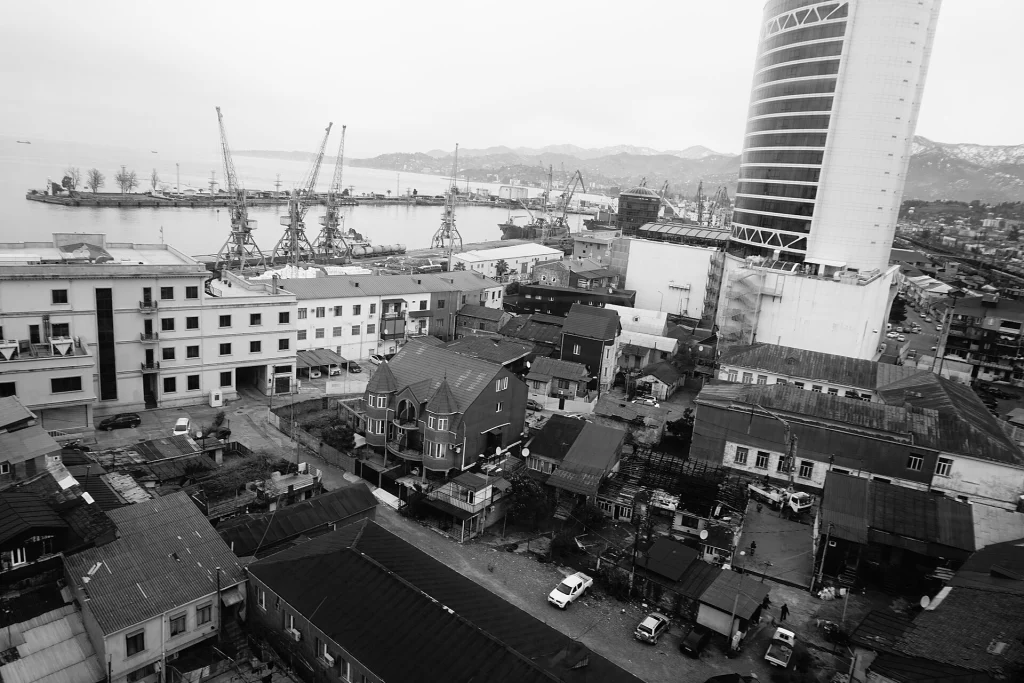
Batumi’s city bus network reaches the old town, the boulevard, the central bus station and the main residential districts, with fares paid in cash or by card reader on board. Because fares and routes are set locally and revised from time to time, confirm the current flat fare and the route map at gobatumi.com rather than relying on a figure quoted online months earlier.
Bolt is the dominant ride-hailing app in Batumi, as it is across Georgia, with an English-language interface, cashless payment and generally short wait times within the city. It is the simplest way to reach the botanical garden, Gonio fortress, or dinner outside the old town without negotiating a fare. Street taxis still operate but are fewer than a few years ago; if you flag one down rather than booking through an app, agree the price before you set off.
The boulevard and the cable car
Batumi Boulevard is the city’s defining public space, a seafront promenade running several kilometres along the Black Sea shore, free to walk at any hour and popular for cycling, running and scooter hire by the day. It links naturally to the old town at its northern end and to the newer high-rise hotel district further south.
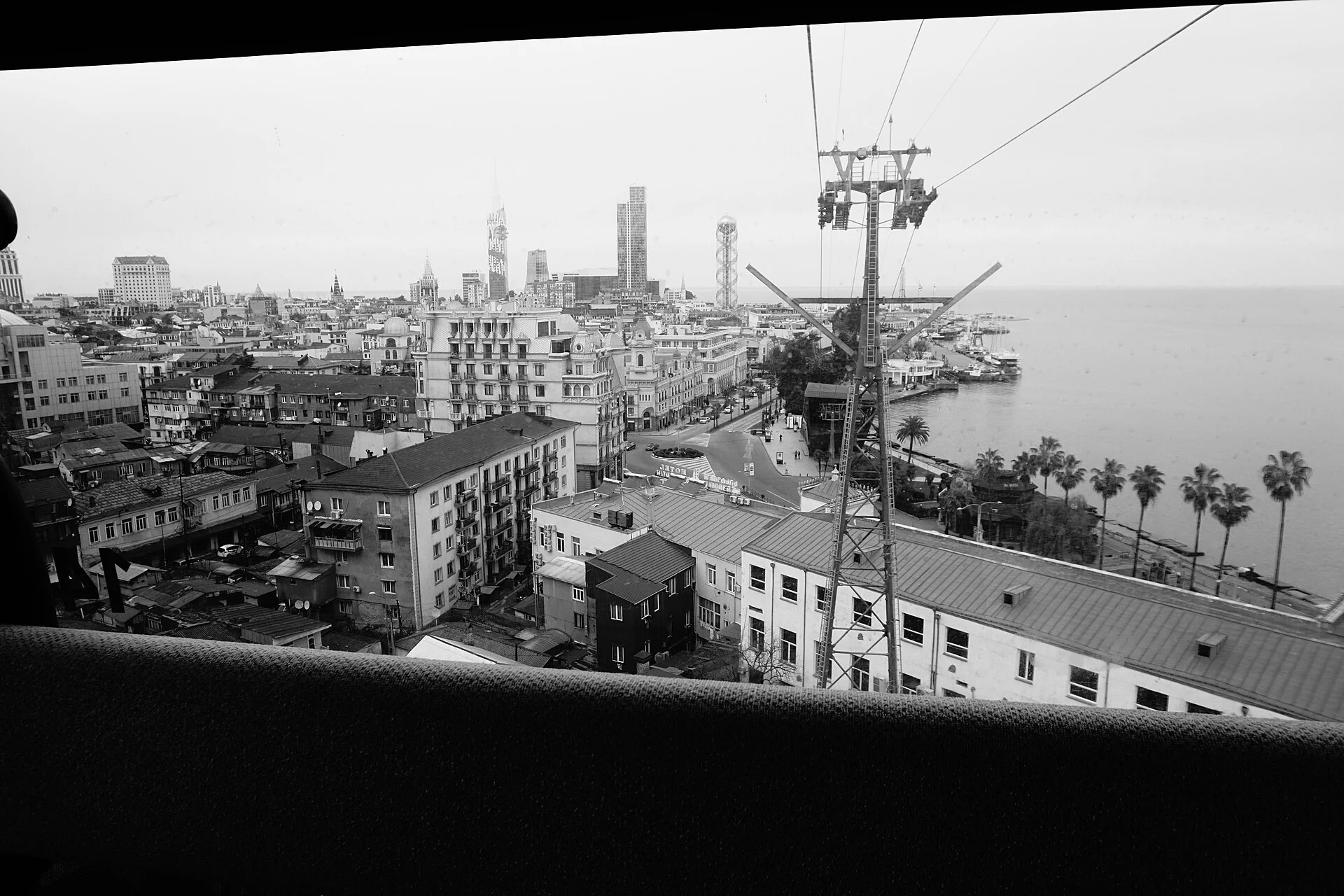
The Argo cable car rises from a lower station near the boulevard to Anuria Hill above the city, giving a panoramic view over Batumi, the port and the coastline on a clear day. Operating hours and ticket prices are set seasonally and have changed in recent years, so check the current schedule and fare at gobatumi.com or visitbatumi.com before planning around it, particularly outside the summer season when hours are often shorter. GTOUR’s Batumi Old Town and Boulevard Walk and the longer Batumi Half-Day tour both build in time for the boulevard and, where it is running, the cable car.
South and north along the coast: Kobuleti and Ureki
Marshrutkas to Kobuleti and onward to Ureki leave frequently through the day from Batumi’s central bus station, with the ride to Kobuleti taking around 30 to 40 minutes depending on traffic on the coastal road. Ureki, known for its dark, iron-rich sand and shallow, gently warming water, is a further 20 to 30 minutes beyond Kobuleti and is reachable on the same route with a change of minibus in Kobuleti if your first service terminates there.
Georgian Railway also runs trains along the Tbilisi-Batumi corridor that call at stations on this stretch of coast; if a direct train to Kobuleti suits your schedule better than a marshrutka, check current timetables at railway.ge, since suburban services are adjusted between seasons. For a guided day covering this stretch without working out connections, GTOUR’s North of Batumi tour takes in Petra Fortress, Kobuleti and the Shekvetili pine forest in a single private outing.
Into the mountains: marshrutkas to Khulo and the highland villages
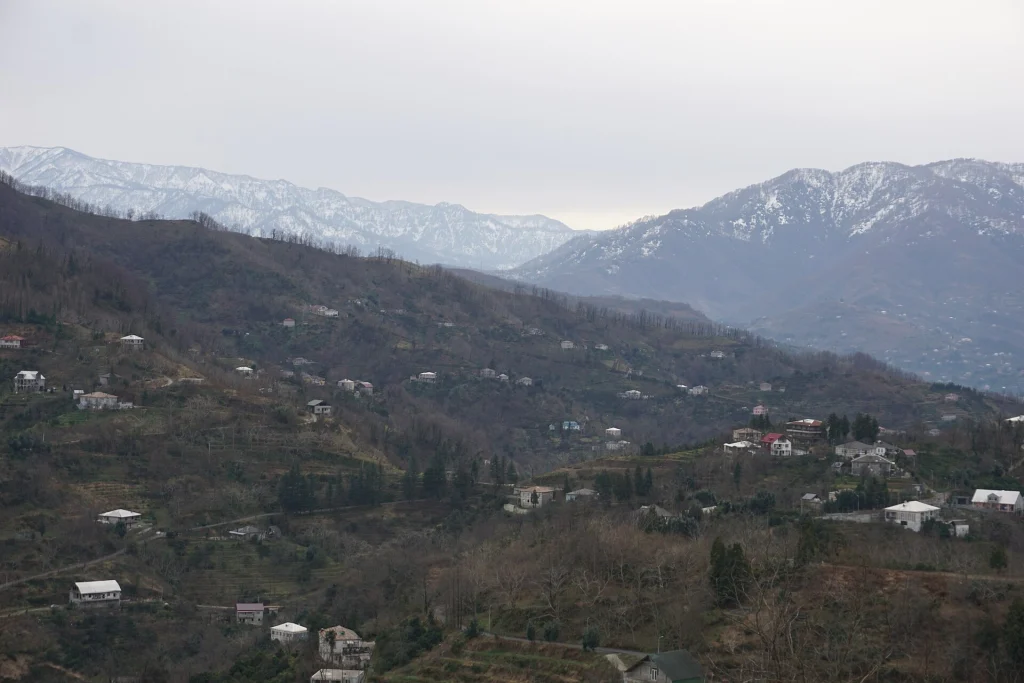
Marshrutkas up the Adjaristsqali valley toward Khulo leave from Batumi’s main bus station, typically once or twice in the morning, and take roughly two and a half to three hours on a winding but paved road through the Keda district. Onward travel past Khulo toward the Goderdzi Pass, Beshumi and the alpine villages beyond is thinner on public transport and usually means arranging a local taxi or a seat in a shared jeep once you arrive, particularly outside the summer months.
The pass itself is unpaved in sections and can be affected by weather and snow well into late spring and again from autumn; check current road status before counting on it at georoad.gov.ge. Adjara’s regional government also publishes general information on the highland districts at adjara.gov.ge. For travellers who would rather not build a trip around marshrutka timetables, GTOUR runs the Adjara Highlands day tour to Khulo, the Goderdzi Pass and the Green Lake, the two-day Adjara Highlands by 4×4 trip to Beshumi and the alpine villages, the Keda Wine Villages and Dandalo Bridge day, and the Machakhela Valley day trip to the arched bridges and Mirveti waterfall, all with a private driver who knows the current state of the road.
If this guide is part of a trip you are planning, our Georgia Off the Beaten Track — 9 Days in Racha, Samegrelo and Guria and Batumi to Kutaisi Transfer — Private Car cover the places it describes with a private guide and driver; a GTour travel expert adapts the route to your dates.
Practical summary
- No dedicated airport bus at Batumi (BUS): use the taxi stand, Bolt, or a prebooked transfer; confirm any public bus route at gobatumi.com first.
- GTOUR’s fixed-price Batumi Airport Transfer runs from €64 solo down to €34 per person for four to six travellers.
- Sarpi border (into Hopa, Turkey) is 18 km south of Batumi; check passport and visa rules at evisa.gov.ge and mfa.gov.ge, and allow extra time in July-August.
- Bolt is the easiest way to move around Batumi; city buses work but confirm current fares and routes locally.
- The boulevard is free and open at all hours; the Argo cable car’s hours and price change seasonally, so check gobatumi.com or visitbatumi.com before you go.
- Marshrutkas to Kobuleti and Ureki run frequently from Batumi’s bus station; a parallel rail option exists via railway.ge.
- Marshrutkas to Khulo run once or twice daily; the Goderdzi Pass beyond it is seasonal and best checked at georoad.gov.ge, or booked as a private day or overnight trip.
Sources
- Georgia e-visa and entry rules
- Ministry of Foreign Affairs travel guidance
- Road conditions and pass status
- Batumi city tourism portal
- Visit Batumi official site
- Georgian Railway timetables
Questions this guide does not answer? Write to info@castle.ge or WhatsApp +995 577 41 63 14 — a person in Tbilisi replies. See also our travel services and all guides.
View over Batumi from the Argo Cable Car, a way of getting around the city. · Photo: Andrew Milligan sumo / Wikimedia Commons, CC BY 2.0
Been to Georgia? Tell us how it went — the best stories are published here.
Share your tripOne email a week: what changed for travellers in Georgia — rules, roads, flights, seasons — plus one place worth the trip. Written by the GTour desk, no advertising, unsubscribe in one click.
This story across our partner network — ქართულად: შენი დასვენება
