By David Kiknadze, Transport & Openings Reporter · 06/11/2026
- Do not plan a November visit to Ghebi itself; treat this as research for the late May to early October window.
- If travelling in Racha now, focus on Oni and Ambrolauri and their guesthouses rather than the high valley road to Ghebi.
- When the season reopens, budget a full day for the Khikhani Fortress climb alone and arrange a local guide well ahead for any pass crossing toward Svaneti.
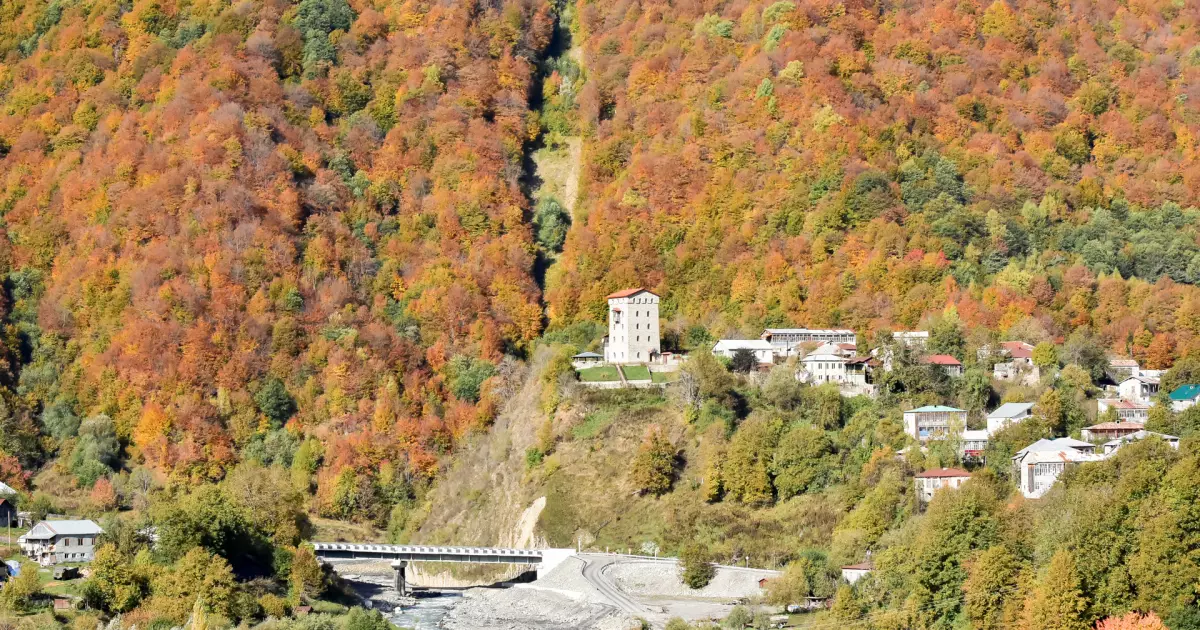
Ghebi sits at the head of a Rioni valley tributary in Oni Municipality, in the Racha-Lechkhumi and Kvemo Svaneti region, roughly four and a half hours from Tbilisi and under three from Kutaisi. It is one of the last inhabited places before the road gives out and mountain trails take over, climbing toward the Lukhuni and Zekari passes and, eventually, Svaneti on the far side of the main Caucasus ridge.
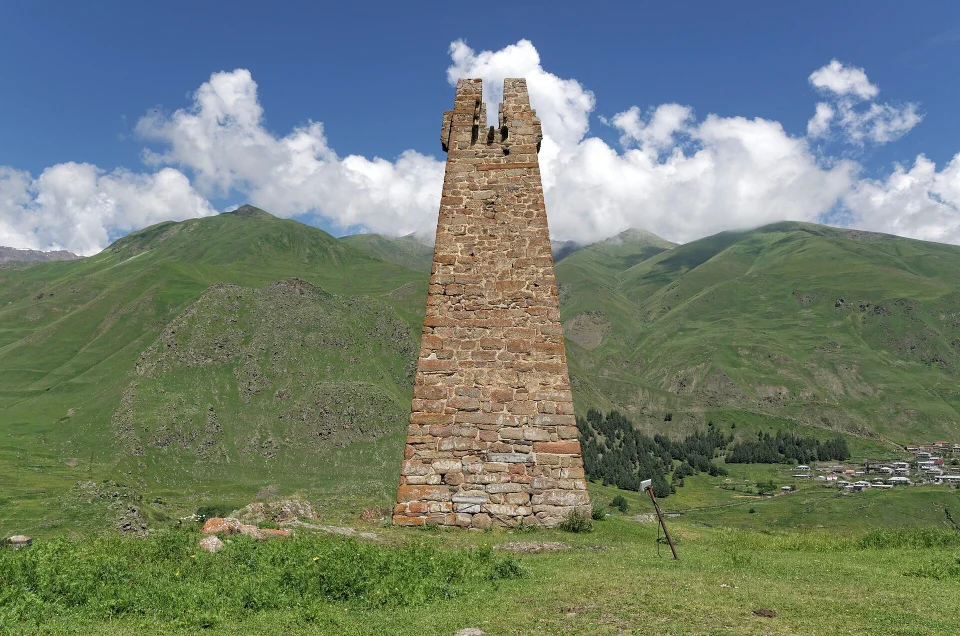
What makes Ghebi worth the detour is not a single sight but a texture: a ruined medieval fortress, Khikhani, perched on a rocky outcrop above the village and linked to the Eristavi dynasty of Racha; stone houses with carved wooden balconies built to shoulder heavy winter snow; and a setting that has stayed largely outside organised tourism. A short distance away, Zopkhito is a small Soviet-era mineral-water settlement in forest, offering quiet rather than facilities.
Why November, and who it suits
November is honest territory for Ghebi: this is not the season to attempt it. The practical window for the valley road, the Khikhani path and any trekking toward the passes runs from late May to early October, with July and August giving the most stable conditions for multi-day routes. By November, snow and reduced road maintenance make the village difficult to reach without strong local knowledge, and daylight hours are short. Travellers reading this now are better served treating Ghebi as a target for next year’s itinerary rather than this month’s trip.
That said, Ghebi suits a particular kind of traveller when the season allows: those comfortable with long mountain drives, basic guesthouse stays, and multi-day trekking with a guide, rather than anyone seeking resort comfort or a day trip. It rewards patience and planning more than spontaneity.
Getting there runs via Kutaisi, Ambrolauri and Oni, with no railway and no direct marshrutka into Ghebi itself; onward transport from Oni must be arranged locally or privately. For now, Ghebi pairs well on paper with the wider Racha-Lechkhumi region, where other verified villages, guesthouses and viewpoints around Oni and Ambrolauri remain accessible later into the autumn and offer a gentler, lowland counterpart to Ghebi’s high-mountain character.
Read more on gtour.ge: Ghebi
What to see — a daily GTour desk feature drawn from the verified-place register and our destination guides. Not sponsored.
Source: National Parliamentary Library of Georgia (nplg.gov.ge)
Been to Georgia? Tell us how it went — the best stories are published here.
Share your tripOne email a week: what changed for travellers in Georgia — rules, roads, flights, seasons — plus one place worth the trip. Written by the GTour desk, no advertising, unsubscribe in one click.
One email a week: what changed for travellers in Georgia — rules, roads, flights, seasons — plus one place worth the trip. Written by the GTour desk, no advertising, unsubscribe in one click.
Planning a trip to Georgia?
GTour runs private tours with English-speaking guides from Old Tbilisi. See all tours or ask the desk on WhatsApp +995 577 416 314.
Source: National Parliamentary Library of Georgia (nplg.gov.ge). Reported by the GTour desk; updated 6 November 2026, 15:45 (Tbilisi).