

By Mariam Lomidze, Culture & Events Reporter · 04/11/2026
Autumn is Georgia’s most rewarding season to travel, and the short answer is this: come between mid-September and the end of October. Warm, dry days, cool nights, the grape harvest (rtveli) moving west across the country as the weeks pass, Tbilisoba filling the capital’s streets with music and food on the first weekend of October, and the beech and chestnut forests of Racha and Svaneti turning gold from late September. There is no single “best week” because Georgia’s regions ripen at different times, but any date from mid-September to mid-October gives you a realistic chance of grape-picking, good light in the mountains, and comfortable hiking temperatures.
What changes year to year is the exact start of rtveli, which depends on sugar content in the grapes rather than the calendar, and the precise Tbilisoba dates, which Tbilisi City Hall confirms only a few weeks ahead. This guide gives conservative, checkable ranges for 2026 and tells you where to confirm the final dates before you book flights.
September–October weather by region
Georgia’s climate in autumn is shaped by altitude and distance from the Black Sea more than by latitude. Tbilisi and Kakheti see warm, often cloudless days in September (commonly 22–28°C) cooling into the high teens by late October, with little rain until November. Kutaisi and the west stay more humid, with occasional showers blowing in from the coast. Batumi and the Adjara lowlands remain mild and can still be swimmable in early September, though rain becomes more frequent through October. In the high mountains — Svaneti, Kazbegi, Tusheti and Racha’s upper valleys — the first snow can arrive on passes any time after late September, and Tusheti’s single access road typically closes for the season around early-to-mid October depending on weather; always check current conditions before planning a high-altitude trip.
- Tbilisi and Kakheti: warm days, cool evenings, best light of the year for vineyards and old towns.
- Imereti, Racha, Svaneti: forest colour peaks late September to mid-October; nights turn cold early in the high valleys.
- Adjara and the coast: mild and still beach-adjacent in September, wetter by late October.
- High passes (Tusheti, Mestia–Ushguli, Zagar): weather-dependent closures from early October; always confirm before departure.
For live conditions on mountain roads before a trip, check Georgia’s road agency and our own road status notes at gtour.ge/road-status.
Rtveli timing by region
Rtveli, the grape harvest, is Georgia’s defining autumn event and the origin of much of its food and wine culture, including the clay-vessel qvevri method recognised by UNESCO as intangible cultural heritage (UNESCO ICH listing for qvevri wine-making). Dates are set by grape variety and sugar levels, so they shift by a week or two each year; treat the ranges below as a planning guide, not a guarantee, and confirm closer to your travel dates with the National Wine Agency of Georgia.
| Region | Typical harvest window | Notable grapes |
|---|---|---|
| Kakheti (eastern Georgia, the main wine region) | Mid-September to mid-October | Rkatsiteli, Saperavi, Mtsvane |
| Kartli (around Tbilisi and Mukhrani) | Mid-September to early October | Chinuri, Goruli Mtsvane |
| Imereti | Late September to mid-October | Tsitska, Tsolikouri |
| Racha-Lechkhumi | Early to late October | Alexandrouli, Mujuretuli (Khvanchkara) |
| Adjara and Guria (west, near the coast) | Late September to mid-October | Chkhaveri |
Kakheti, as Georgia’s largest wine region, is where most visitors experience rtveli, and it is also where the logistics of joining a family harvest are easiest to arrange; see Rtveli — the Harvest Week in Kakheti, 5 Days or the shorter Rtveli — Wine Harvest in Kakheti (3 Days, September–October) for a structured introduction. Racha and Lechkhumi, further west and higher, ripen later and make a good second stop if you want to see two harvests on one trip, covered in Racha — Khvanchkara Wine & Mountain Lakes (2 Days) and Western Wine — Imereti and Racha in 3 Days.
How to join a family harvest
Most rtveli participation for travellers happens through a family winery, a guesthouse with its own vines, or an organised day with a licensed guide who already has a relationship with the host — this is the model GTour uses rather than arriving unannounced at a stranger’s vineyard. A typical morning starts early, before the heat: pickers move down the rows with secateurs and plastic crates, grapes go into a press or are trodden by foot for ceremonial batches, and the must is carried to the qvevri cellar. Expect two to four hours of genuinely useful, moderately strenuous outdoor work, followed by a long lunch.
What hosts generally welcome from a visiting guest:
- Sturdy closed shoes, old clothes you don’t mind staining purple, and a sun hat.
- A willingness to follow the family’s pace rather than set your own; this is their harvest, not a photo shoot, even if photography is usually fine once you ask.
- A small gift is appreciated but not expected — good local chacha, sweets for children in the household, or a bottle of wine from a region you’ve visited is a common and welcome gesture; cash is not customary unless you are hiring the stay as a paid experience.
- An appetite: the midday supra that follows a morning’s picking is usually the highlight, with a tamada (toastmaster) leading toasts over new wine and grilled food.
Independent travellers sometimes arrange this through a guesthouse directly, but language and the informality of the arrangement can make timing unpredictable, since picking dates change at short notice with the weather and sugar readings. Booking a dedicated harvest tour removes that uncertainty: Rtveli — the Harvest Week in Kakheti, 5 Days and Kakheti Table — 3 Days of Supras, Cellars and Village Kitchens both build in flexible picking days, and Qvevri Masterclass or Chacha and Qvevri — a Distillery and Cellar Day in Kakheti suit visitors who want the cellar side of the process rather than the fieldwork. For those more interested in the look of the season than the labour, Kakheti in Autumn — Harvest Photography, 2 Days and Kazbegi and Kakheti Photography — 3 Days of Mountains and Vineyards are built around light and colour rather than picking.
Tbilisoba: the capital’s autumn festival
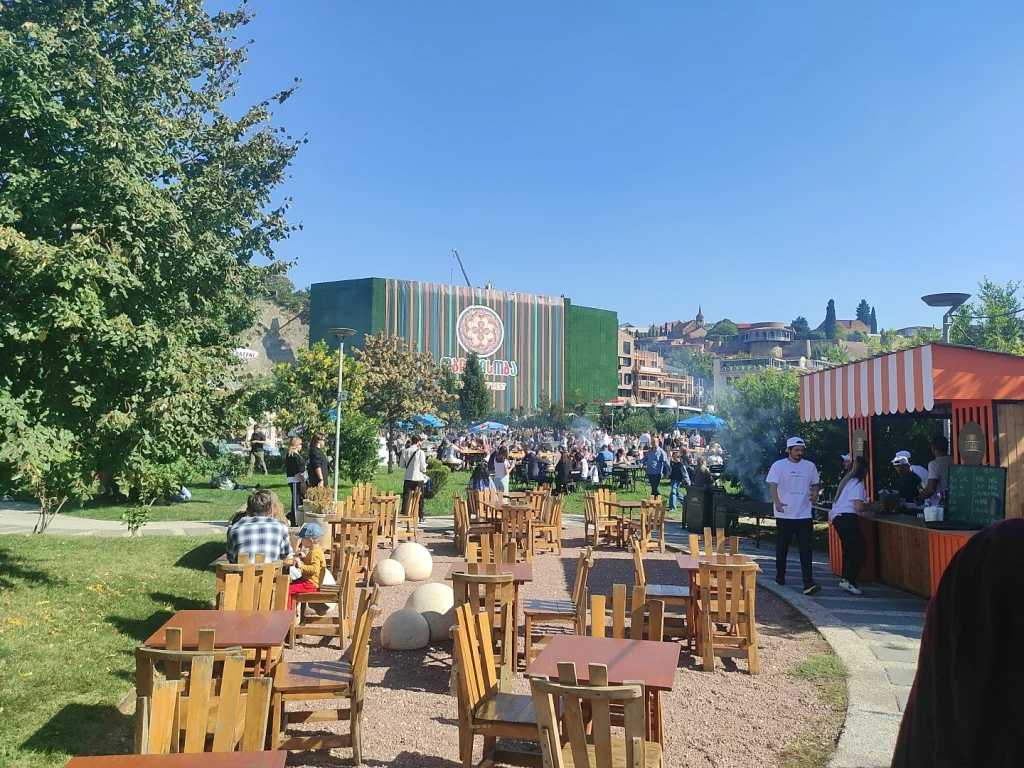
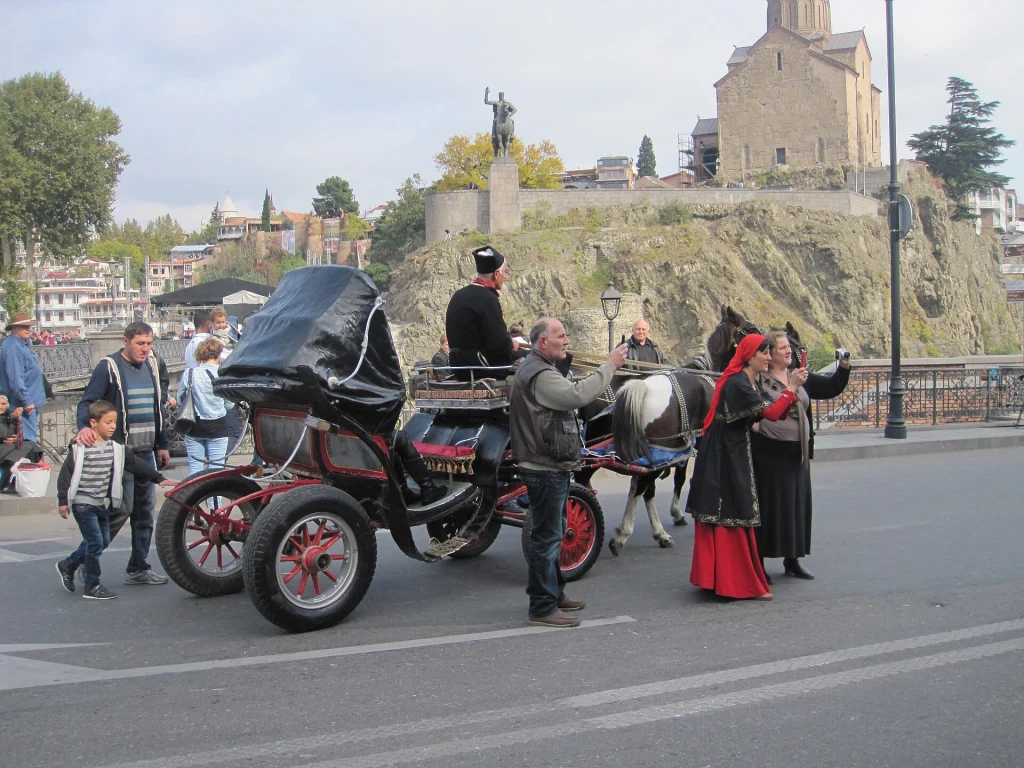
Tbilisoba, the City Day festival, is Tbilisi’s main annual celebration and usually falls on a weekend in the first half of October, marking the city’s founding. Expect Rike Park, Old Tbilisi’s streets and squares, and the riverside filled with folk and polyphonic music, craft stalls, regional food tents, and free concerts running from afternoon into evening; past editions have drawn large crowds, so early arrival matters for the best stages. Exact 2026 dates and the official programme are published by Tbilisi City Hall closer to the event; check tbilisi.gov.ge for the confirmed schedule, and watch English-language coverage on Agenda.ge or Civil.ge in the weeks before. If your trip dates are fixed well in advance, build in flexibility rather than anchoring a whole itinerary to a single festival weekend that is confirmed only a few weeks out.
Autumn in Svaneti and Racha
Svaneti’s defensive towers, a core part of the Upper Svaneti UNESCO World Heritage listing (UNESCO World Heritage: Upper Svaneti), look especially striking against turning birch and beech forest from late September into mid-October, with Mount Ushba and Tetnuldi often carrying their first fresh snow while the valley floor is still gold and green. The trade-off is weather: roads and passes become less predictable, and some high trekking routes close earlier than in summer. Mestia & Ushguli — 3 Days in Svaneti and the more active Mestia to Ushguli Trek — 4 Days on the Svaneti Trail both run into October depending on conditions; confirm road status before fixed dates, especially for the Zagar Pass route covered in Svaneti by 4×4 — Mestia, Ushguli and the Zagar Pass to Lentekhi, 4 Days.
Racha, reached from Kutaisi, pairs autumn colour with its own late harvest of Alexandrouli and Mujuretuli grapes for Khvanchkara wine, plus chestnut forests around Ambrolauri and Oni. It is quieter than Svaneti in October and a practical base for seeing both forest colour and a later-ripening rtveli; Racha and Lechkhumi by 4×4 — 3 Days and Racha in a Day — Shaori Lake, Nikortsminda and Khvanchkara cover the main routes.
Chestnuts, persimmons and the autumn table
Two fruits mark the season on Georgian streets and village roadsides. Sweet chestnuts, roasted over coals, appear as a Tbilisi street snack from late September and remain common through November, sold warm in paper cones near markets and metro exits. Persimmons (khurma) ripen on trees across Imereti, Guria and Samegrelo from October, often still hanging on bare branches after the leaves have fallen, a familiar sight on the drive between Kutaisi and the Black Sea coast. Neither needs a special booking, but they appear naturally on the kind of food-led days built into Megrelian Cooking Day — Elarji, Kharcho and Ajika, Culinary Georgia in 6 Days, and the Supra Evening — a Georgian Feast with a Tamada and Polyphonic Song that typically closes a day of picking or tasting.
If this guide is part of a trip you are planning, our Georgian Wine Grand Tour — 8 Days, Five Regions and Georgia Off the Beaten Track — 9 Days in Racha, Samegrelo and Guria cover the places it describes with a private guide and driver; a GTour travel expert adapts the route to your dates.
Practical summary
- Travel window: mid-September to end of October for harvest and colour; book flights with some flexibility since exact rtveli start dates move with the weather.
- Rtveli by region: Kakheti and Kartli lead (mid-September onward), Imereti and Adjara/Guria follow (late September), Racha-Lechkhumi is last (into late October); confirm current-year dates with wine.gov.ge.
- Joining a harvest: go through a guesthouse or a booked tour rather than arranging it cold; bring old clothes, closed shoes, and a modest gift such as chacha or sweets rather than cash.
- Tbilisoba: usually a weekend in early-to-mid October; verify the confirmed date on tbilisi.gov.ge close to your trip.
- Mountain colour: Svaneti and Racha peak late September to mid-October, but check road and pass status before fixed-date bookings at georoad.gov.ge or gtour.ge/road-status.
- Street food of the season: roasted chestnuts in Tbilisi from late September, persimmons across the west from October.
Sources
- UNESCO ICH — Qvevri wine-making method
- UNESCO World Heritage — Upper Svaneti
- National Wine Agency of Georgia
- Tbilisi City Hall
- Georgia's road agency
- Agenda.ge news
- Civil.ge news
Questions this guide does not answer? Write to info@castle.ge or WhatsApp +995 577 41 63 14 — a person in Tbilisi replies. See also our travel services and all guides.
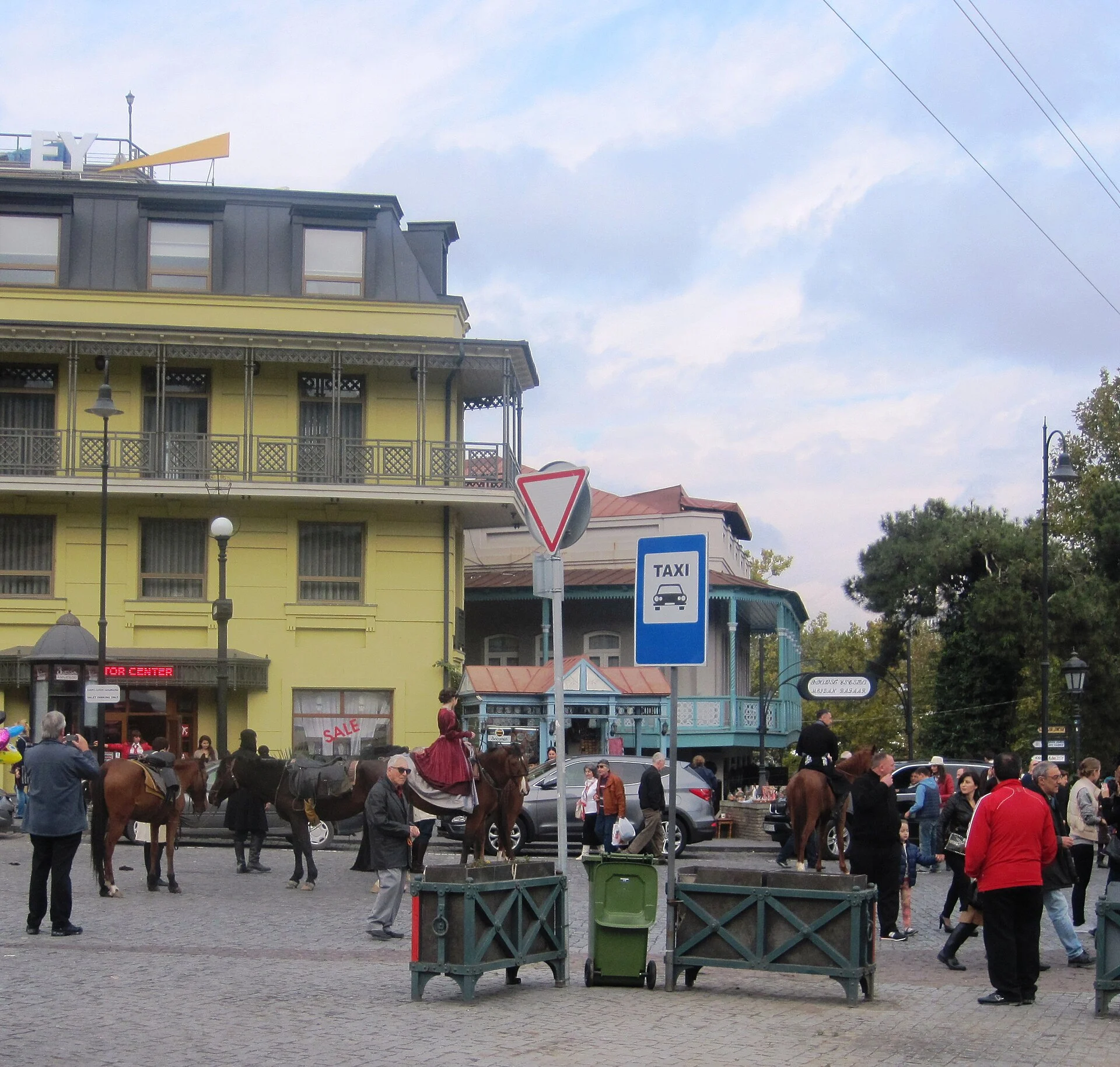
Crowds, horses and carriages fill a Tbilisoba festival square in Old Tbilisi. · Photo: Kober / Wikimedia Commons, CC BY-SA 4.0
Been to Georgia? Tell us how it went — the best stories are published here.
Share your tripOne email a week: what changed for travellers in Georgia — rules, roads, flights, seasons — plus one place worth the trip. Written by the GTour desk, no advertising, unsubscribe in one click.
This story across our partner network — ქართულად: შენი დასვენება
