

By Nino Gelashvili, Travel News Editor · 04/11/2026
In Tbilisi, July and August routinely bring afternoons above 35°C, with the Mtkvari valley holding heat long after sunset, so most residents who can leave the city do, heading for altitude in Bakuriani, Kazbegi, Racha or Tusheti, or for sea breeze on the Black Sea coast around Batumi, Kobuleti and Ureki. The short answer for a visitor planning a summer trip: expect genuine heat in the capital, treat the mountains and coast as the real summer destinations, and book accommodation for August and for Tusheti’s brief season well in advance, because both fill months ahead.
This guide sets out what the heat actually feels like in Tbilisi, where Georgians go to escape it, when the coast season runs, which festivals shape the summer calendar, and the practical hydration and sun advice worth following in a continental climate that swings from alpine cool to lowland heat within a few hours’ drive.
Tbilisi in July and August: what the heat is really like
Tbilisi sits in a basin, and its summer climate is markedly more severe than the green hills around it suggest. Daytime highs of 32–38°C are common through late July and August, with humidity lower than the coast but with hot nights that keep the Old Town’s stone streets warm until the early hours. The city is walkable in the morning and after roughly 19:00; the hours either side of midday are better spent indoors, in the shaded courtyards of Betlemi and Sololaki, or on one of the funicular rides up Mtatsminda, where the hill air is a few degrees cooler. Visitors doing a short city stay should plan outdoor time around this rhythm rather than against it; our Old Tbilisi Walking Tour and the Tbilisi Photo Walk at dusk are both built for the cooler parts of the day.
Where locals escape: the mountain resorts
Georgians with the option to leave the capital in summer go uphill, and the destinations fall into a rough hierarchy of altitude, distance and how organised the infrastructure is.
| Destination | Altitude | Character | Typical access |
|---|---|---|---|
| Bakuriani | ~1,700 m | Family resort, cable car, pine forest, easiest reach from Tbilisi | 2.5–3 hours by car via Borjomi |
| Bakhmaro | ~1,926 m | Guria‘s traditional summer pasture village, wooden cottages, fog and cool air | Rough road from Chokhatauri, best with high clearance |
| Kazbegi (Stepantsminda) | ~1,740 m | Georgian Military Highway, Gergeti Trinity Church, glacier hikes | 3–3.5 hours via the Jvari Pass |
| Racha (Ambrolauri, Shaori) | 900–1,700 m | Alpine lakes, Khvanchkara wine, quiet villages | 4–5 hours from Tbilisi or Kutaisi |
| Tusheti (Omalo) | 1,800–2,100 m | Remote highland towers, shepherds’ routes, strict short season | 4×4 only, over the Abano Pass |
Bakuriani is the easy choice for a day or two of mountain air without logistics; our Borjomi and Bakuriani day trip and Tbilisi to Borjomi or Bakuriani Transfer both work well in summer. Kazbegi rewards a fuller visit, from a single long day on the Georgian Military Highway — Ananuri, Gudauri and Gergeti in a Day — to a two-day Kazbegi — 2-Day Mountain Journey with a hike toward the Gergeti Glacier. Racha is less visited and better for slow travel; see Racha — Khvanchkara Wine & Mountain Lakes (2 Days) or the fuller Racha and Lechkhumi by 4×4 — 3 Days.
Tusheti and Svaneti at their best
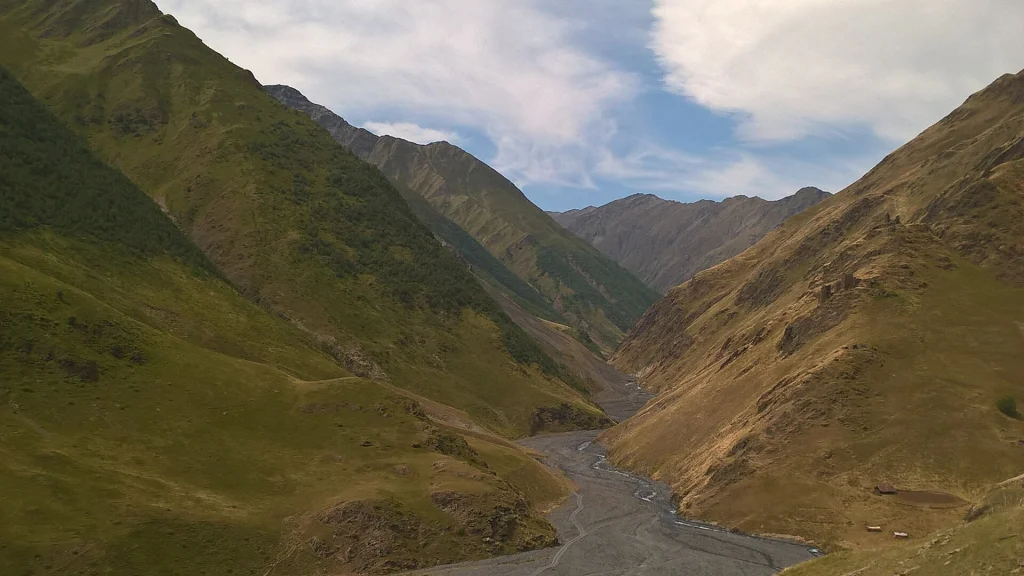
Tusheti has the shortest reliable season in the country. The Abano Pass, the only vehicle route into the region, is typically open from early or mid-June to some point in October depending on snow and landslide conditions each year, and it closes without much notice once autumn weather sets in; travellers should check current status directly with the Agency of Protected Areas, which manages the Tusheti Protected Landscape, before finalising dates. Mid-July through August is the most dependable window, when the high pastures around Omalo, Dartlo and Diklo are green and the mule and shepherd tracks are passable. Because guesthouses in Tusheti are few and family-run, rooms for peak weeks are often booked by early spring; our Tusheti — Georgia’s Last Wild Frontier (4 Days), the faster Tusheti by 4×4 — Omalo, Dartlo and Diklo in 3 Days, and the combined Khevsureti and Tusheti by 4×4 — 5 Days all need to be arranged well ahead of a summer date.
Svaneti, reached through Mestia, has a longer and gentler season than Tusheti, with June to September offering clear high routes to Ushguli, the Chalaadi Glacier and the Koruldi Lakes above Mestia, though afternoon thunderstorms are routine in July and August and mountain weather can change within an hour. July and early September, after the main school-holiday crowds thin but before the roads turn wintry, tend to give the best combination of clear trail conditions and lighter visitor numbers. Mestia & Ushguli — 3 Days in Svaneti and the more active Svaneti Day Hikes — Koruldi Lakes, Chalaadi Glacier and Hatsvali, 3 Days both sit in that window; for trekkers, the Mestia to Ushguli Trek — 4 Days on the Svaneti Trail follows the classic multi-day route between villages.
The Black Sea coast season
Batumi and the Adjara coast run on a shorter, warmer calendar than the mountains. Sea temperatures are swimmable from roughly mid-June, peak through late July and August at around 24–26°C, and stay pleasant into mid-September; locals treat late June to early September as the core season, with the Batumi Boulevard, Botanical Garden and the beaches at Kobuleti and Ureki busiest in August. Humidity on the coast is higher than inland, so the subjective heat can feel heavier even at lower thermometer readings than Tbilisi; shade and sea breeze make the afternoons more bearable than in the capital. Short visits work well with the Batumi Old Town and Boulevard Walk or the longer Batumi Half-Day — Old Town, Boulevard and the Botanical Garden, and travellers combining the coast with the Adjara highlands can add the Adjara Highlands — Khulo, the Goderdzi Pass and the Green Lake or the overnight Adjara Highlands by 4×4 — Beshumi, Goderdzi and the Alpine Villages for cooler mountain air a short drive inland. Official event listings and seasonal notices for the municipality are posted by Batumi City Hall.
Summer festivals
Summer is the busiest part of Georgia’s cultural calendar, and several festivals are worth building a trip around.
- Tbilisi Open Air — a multi-day outdoor music festival, usually held in July on the city’s outskirts; dates and lineup are published by the organisers at Tbilisi Open Air.
- Black Sea Jazz Festival, Batumi — an established jazz programme on the coast, typically in July, with international and Georgian acts; current dates are on the festival’s own site.
- Smaller town festivities, church feast days and highland horse races also take place through July and August in Kazbegi, Tusheti and Racha; these are informal and best confirmed locally rather than from a fixed calendar.
Because festival weekends overlap with peak holiday travel, hotel rooms in Tbilisi and Batumi for these dates can sell out faster than usual; building a booking around a known festival date is sensible only if accommodation is secured early.
Hydration, sun and heat safety
Georgia’s summer combines strong UV at altitude with genuine lowland heat, and both deserve ordinary precautions rather than special alarm. Carry water on any walk, including short city outings in Tbilisi and half-day mountain hikes; tap water in Tbilisi and most towns is municipally treated and generally fine to drink, but in remote highland villages such as those in Tusheti, bottled or filtered water is the more cautious choice. Sun exposure is stronger than it appears at altitude in Kazbegi, Svaneti and Tusheti, where thinner air and reflective snow patches on high routes increase UV intensity even on cloudy days; a hat, sunglasses and reapplied sunscreen are basic kit for any of the high treks mentioned above. Heat-related illness, including heat exhaustion and heatstroke, is a real risk during Tbilisi’s hottest August afternoons, particularly for older travellers, young children and anyone with cardiovascular conditions; symptoms include heavy sweating, dizziness, nausea and confusion, and anyone showing them should be moved to shade, cooled and given fluids, with medical attention sought promptly if symptoms do not ease. This is general information, not personal medical advice; travellers with existing health conditions should consult a doctor before planning strenuous high-altitude days in Svaneti or Tusheti.
Booking early: why it matters this season
Three bottlenecks recur every summer. First, Tusheti’s guesthouses are genuinely few, and the Abano Pass season is short enough that demand concentrates into about ten weeks; rooms and transport for July and August are often arranged months ahead. Second, Batumi’s coastal hotels and Tbilisi’s centrally located guesthouses both sell out around festival weekends and the second half of August, the traditional domestic holiday period. Third, 4×4 vehicles and licensed mountain guides for Svaneti, Tusheti and Racha are a limited pool nationally, and a short-notice request in peak season may mean a wait or a compromise on dates. Travellers wanting a specific combination of coast, mountains and a fixed festival date are better served booking the full route together; our Georgia in 10 Days — Tbilisi to Svaneti to the Sea and Western Georgia in 6 Days — Kutaisi, Svaneti and the Sea are built around exactly this kind of multi-region summer itinerary.
If this guide is part of a trip you are planning, our Caucasus Highlands in 7 Days — Kazbegi, Khevsureti and Tusheti and Georgia Off the Beaten Track — 9 Days in Racha, Samegrelo and Guria cover the places it describes with a private guide and driver; a GTour travel expert adapts the route to your dates.
Practical summary
- Tbilisi: expect 32–38°C in July–August; plan outdoor time before 11:00 or after 19:00.
- Mountain escape options, easiest first: Bakuriani, Kazbegi, Racha, Bakhmaro, Tusheti.
- Tusheti’s Abano Pass season runs roughly June to October; confirm current status with the Agency of Protected Areas before booking.
- Svaneti’s best trekking window is July to early September, with afternoon storms common.
- Black Sea coast swimming season: mid-June to mid-September, peaking in August.
- Major summer festivals: Tbilisi Open Air and the Black Sea Jazz Festival in Batumi, both typically in July.
- Carry water and sun protection on any altitude hike; treat heat-related symptoms seriously and seek medical help if they persist.
- Book Tusheti guesthouses, Svaneti 4×4 transport and coastal hotels for August well in advance.
Sources
- Agency of Protected Areas, Tusheti
- Batumi City Hall, official site
- Tbilisi Open Air festival
- UNESCO World Heritage – Upper Svaneti
- UNESCO World Heritage – Tentative List, Tusheti
- Georgian National Tourism Administration – Kazbegi
- Georgian National Tourism Administration – Bakuriani
- Agenda.ge – Tbilisi summer heat wave coverage
- Geostat – Tourism statistics
- Adjara Tourism (Batumi) – Beach Season
Questions this guide does not answer? Write to info@castle.ge or WhatsApp +995 577 41 63 14 — a person in Tbilisi replies. See also our travel services and all guides.
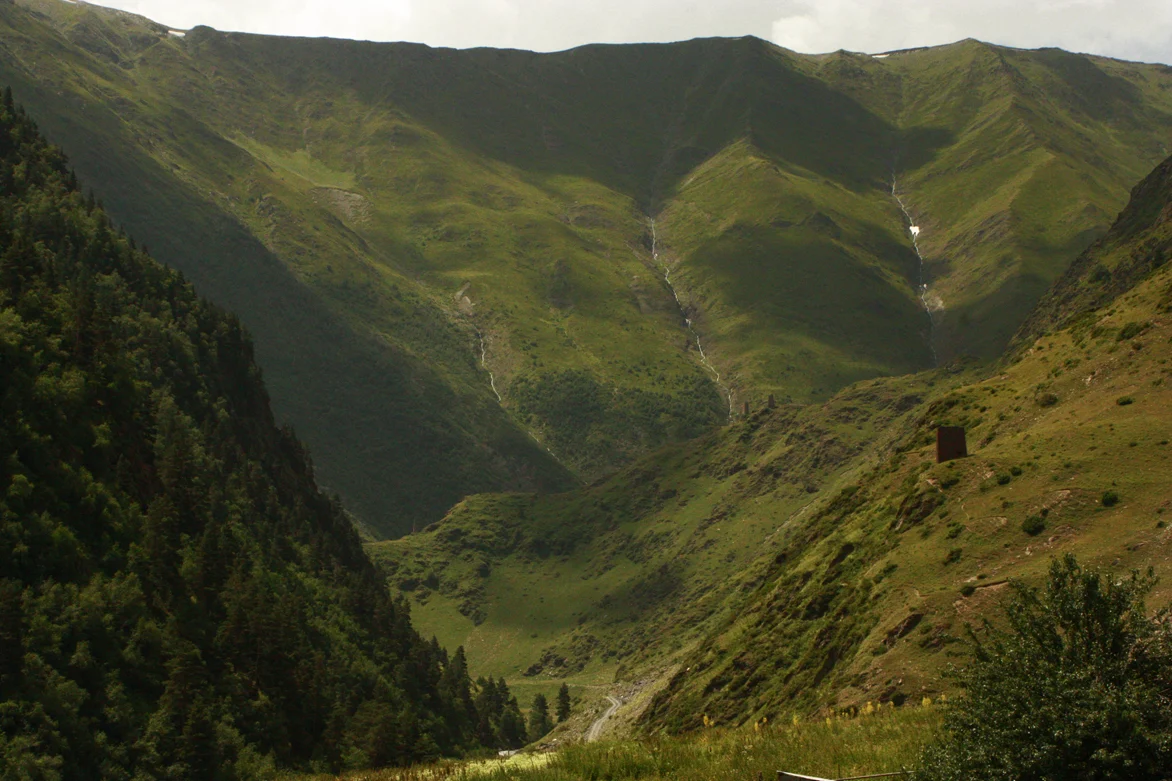
Lush green mountains of Tusheti National Park, a favourite summer escape from Tbilisi's heat. · Photo: MIKHEIL / Wikimedia Commons, CC BY-SA 3.0
Been to Georgia? Tell us how it went — the best stories are published here.
Share your tripOne email a week: what changed for travellers in Georgia — rules, roads, flights, seasons — plus one place worth the trip. Written by the GTour desk, no advertising, unsubscribe in one click.
This story across our partner network — ქართულად: შენი დასვენება
