

By Mariam Lomidze, Culture & Events Reporter · 29/10/2026
Tbilisi‘s sulphur baths are the brick-domed bathhouses of Abanotubani, the old quarter below Narikala fortress, where hot sulphur-bearing water rises naturally from the ground and has been channelled into communal and private pools for centuries. A visit means renting either a spot in a public steam hall or, far more commonly today, a private room with its own pool, steam bench and massage table for an hour or two, then adding a kisa scrub and soap massage if you want the full local treatment. Expect to pay from roughly the mid-double digits in euros for a simple private room booked directly at the baths, more for the larger domed rooms at Orbeliani, and about €94–€176 per person for a guided version that includes the history, the room and the scrub in one booking.
This guide covers the city’s founding legend, the three bathhouses visitors actually use — Orbeliani, Chreli Abano and Gulo’s — how public and private rooms differ, what the kisa scrub involves, what to bring, the unwritten etiquette, and when in the year the experience is at its best. Because Abanotubani’s bathhouses are privately or municipally run businesses rather than a single regulated attraction, prices and opening hours shift; always confirm the day’s rate at the counter or through the operator’s own listing before you go, and treat the figures below as a guide rather than a fixed tariff.
The legend behind a warm city
Tbilisi’s name is widely explained by the Georgian word tbili, meaning warm, and the best-known foundation story ties the city directly to its sulphur springs. According to the legend, King Vakhtang Gorgasali was hunting in the forested gorge of the Mtkvari river in the fifth century when his falcon, chasing a pheasant, plunged into a hot spring and both birds were found boiled. Taking this as a sign of the valley’s thermal waters, the king is said to have ordered a city built on the spot, which became Tbilisi. Historians treat the tale as foundation mythology rather than a documented event, and the city’s actual early history is more layered, but the legend is repeated in Georgian cultural material and tourism literature as the accepted origin story for the name, and a statue of Gorgasali stands near the old town today. For a sourced overview of the city’s early history, Georgia’s national tourism pages and Tbilisi City Hall’s own heritage material are a reasonable starting point, and both can be checked for the latest wording of the story (georgia.travel, tbilisi.gov.ge).
Abanotubani: the bathhouse quarter
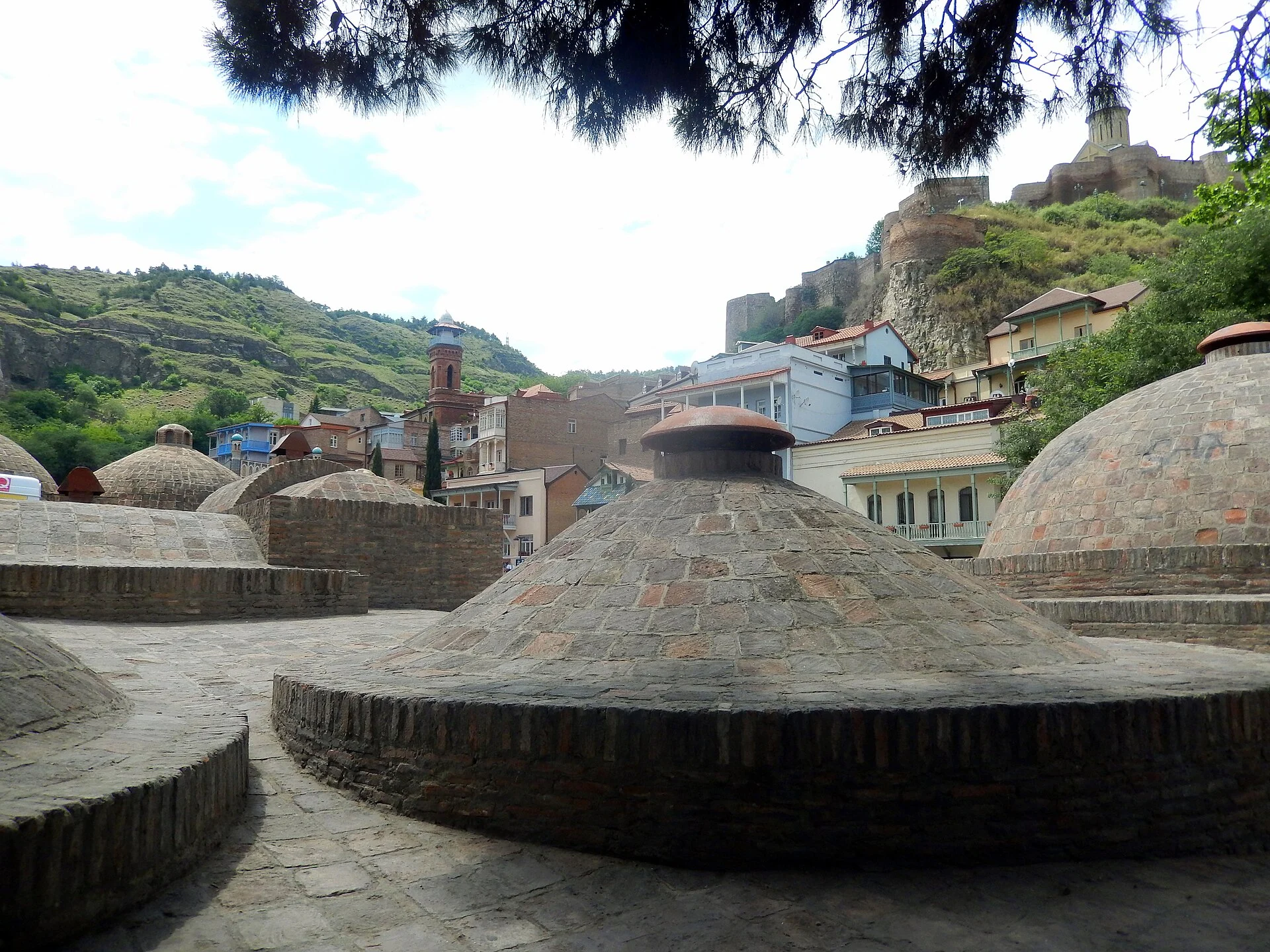
Abanotubani sits at the southern edge of the old town, in the narrow gorge between Narikala and the river, and its name simply means “bath district.” The brick domes that break the skyline here are the roofs of bathhouses built over the natural hot springs, some dating to the Persian-influenced rebuilding of the quarter in the seventeenth and eighteenth centuries after earlier structures were destroyed in invasions. Three houses matter most for a visitor today.
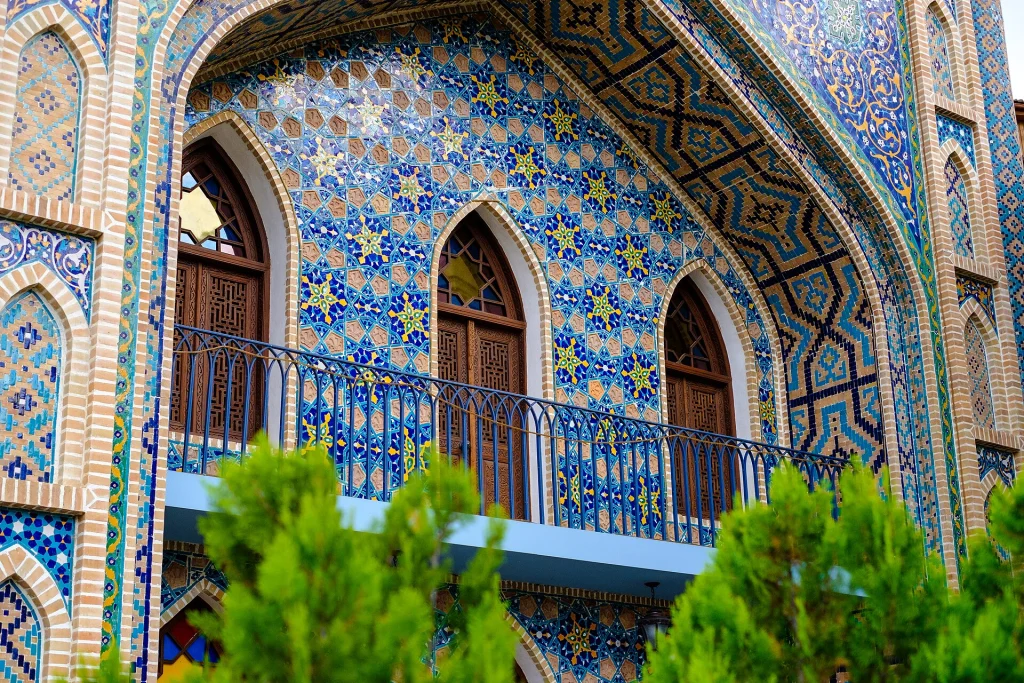
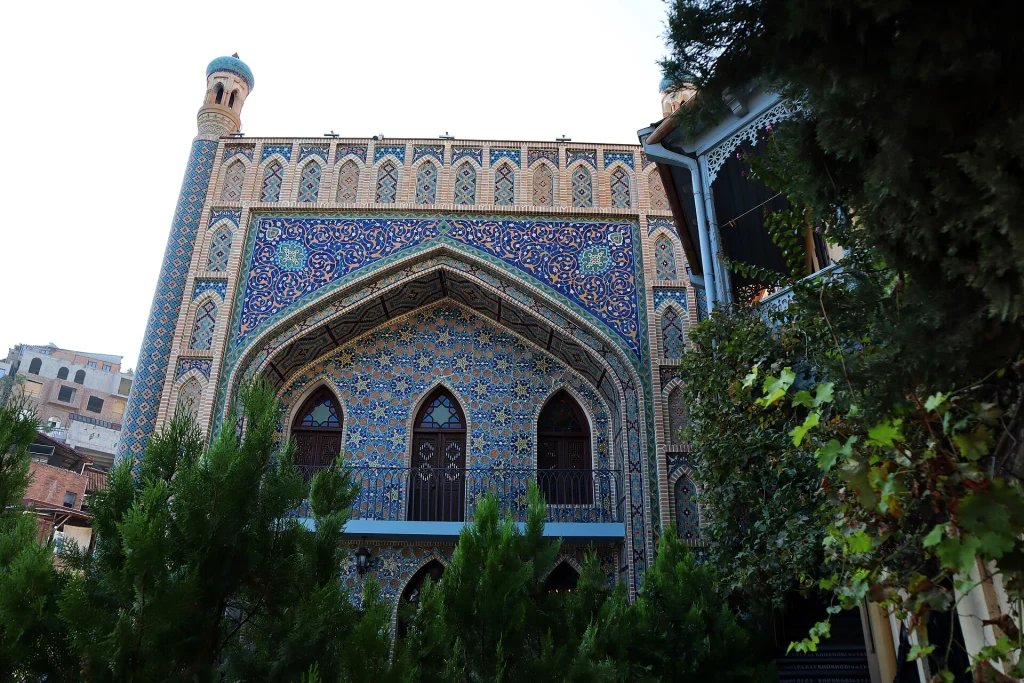
- Orbeliani Baths (also called the Blue Mosque-style baths for their tiled, Islamic-influenced facade) are the most photographed, with a decorated entrance of blue and turquoise tilework and a mix of public and private rooms inside, including some of the larger, more ornate domed chambers.
- Chreli Abano, meaning “colourful bath,” is next door and similarly decorated on the outside, offering a range of private rooms of different sizes and price points, generally aimed at couples, families and small groups.
- Gulo’s Thermal Spa is a smaller, plainer operation nearby, often quoted as a simpler and slightly cheaper alternative to the two grander houses, with private rooms and basic massage and scrub services.
All three draw on the same underground sulphur water source, so the mineral content and smell (a mild rotten-egg note that fades once you are in the water) are similar across the quarter; the differences are in décor, room sizes, waiting times and price.
| Bathhouse | Style | Typical rooms | Good for |
|---|---|---|---|
| Orbeliani Baths | Ornate, tiled facade, domed interiors | Public hall plus private rooms, several sizes | First-time visitors, photography of the exterior |
| Chreli Abano | Colourful facade, modernised interior | Mostly private rooms | Couples and families wanting predictable comfort |
| Gulo’s Thermal Spa | Plain, functional | Private rooms | Budget visits, shorter waits |
How a visit works: public hall or private room
Historically, Tbilisi’s baths operated as communal spaces, separated by sex, where locals soaked, scrubbed and socialised in shared steam halls — a tradition with echoes of the hammam culture across the wider region. A few of these public, single-sex halls still exist and are the cheapest way in, but most visitors today, especially couples, families and foreign travellers, book a private room instead. A private room comes with its own small pool of hot sulphur water, a steam bench, and usually a massage table, rented by the hour; you lock the door and have the space to yourselves or with whoever you have booked it for. Expect to be shown the room, told the time limit, and left alone unless you have booked a scrub or massage, which the attendant will come in to perform partway through your slot. Booking ahead by phone or through the bathhouse’s own front desk is normal in high season; walk-ins are common outside peak hours.
The kisa scrub and other treatments
The signature add-on is the kisa scrub: an attendant uses a coarse mitt (the kisa) to vigorously exfoliate the skin after it has softened in the hot sulphur water, followed by a wash with a lathered soap pillow and, often, a brief oil or soap massage. It is physically firm rather than gentle, removes a visible layer of dead skin, and leaves the skin noticeably smoother; most first-timers describe it as closer to a thorough scrub-down than a relaxing spa treatment, though it is usually finished off as a relaxing rinse and rest. Sessions typically run fifteen to twenty-five minutes and are booked as an addition to your room time, not instead of it. If you have sensitive skin, open wounds, sunburn, a skin infection, or a cardiovascular or respiratory condition, ask your doctor before booking a hot sulphur soak or a vigorous scrub, since heat and mineral water are not advisable for everyone; Georgia’s public-health and health-ministry guidance on balneotherapy more generally is worth checking if you have a chronic condition, and the same caution applies to any thermal spa (gov.ge).
What to bring and bathhouse etiquette
Bathhouses supply towels and slippers for a small fee or as part of the room price, but many regular visitors bring their own flip-flops, a swimsuit if they prefer not to bathe nude in a private room, a hair tie, and a reusable water bottle, since the hot sulphur water and steam are dehydrating. Soap and shampoo are usually available for purchase at the counter if you do not bring your own. In single-sex public halls, nudity is the norm and swimwear is generally not worn; in private rooms, it is entirely up to the group booking the space. Cash in Georgian lari is the safest payment assumption for smaller, family-run operations, though the larger houses increasingly take cards; confirm on arrival. Basic etiquette: keep noise down in shared corridors, do not overstay a booked slot if others are waiting, and tip the scrub attendant modestly in cash if you are happy with the service, which is customary though not compulsory.
Prices and booking
Because Abanotubani’s bathhouses are independent or municipally leased businesses rather than a single ticketed attraction, each sets its own room rates, which vary by room size, time of day and season, and these change from year to year; the only reliable way to get today’s figure is to ask at the bathhouse counter or check its own current listing before you go. As a planning benchmark, a guided version that bundles the history walk, entry, a private room and the kisa scrub is a fixed, published price, useful if you would rather not negotiate on the day.
| Option | Duration | Price per person |
|---|---|---|
| Sulphur Baths Experience — Abanotubani history and a private bath room (gtour.ge) | 2.5 hours | Solo €176 · pair €110 each · three €105 each · four to six €94 each |
This can also be folded into a wider day, for example Tbilisi in a Day, which pairs the baths with the old town, Mtatsminda and the markets. If you are booking directly with a bathhouse instead, budget more for the grander domed private rooms at Orbeliani Baths than for a plain room at Gulo’s, and expect weekend evenings to be the busiest and priciest slot.
Best time to visit
Early morning on a weekday, shortly after opening, is the quietest window, with the shortest wait for a private room and the least queuing for the scrub. Weekend afternoons and evenings are the busiest, particularly in the warmer months when the baths double as an evening outing after dinner in the old town. Winter is, if anything, the most atmospheric season, since stepping from cold air into a hot sulphur pool is the point of the experience, and the domes are easiest to photograph without heat haze. If you are combining a bath visit with sightseeing, an Old Tbilisi Walking Tour in the late afternoon followed by the baths in the early evening is a comfortable sequence that avoids the worst of any queue.
If this guide is part of a trip you are planning, our Tbilisi to Borjomi or Bakuriani Transfer and Mtskheta on Foot — the Ancient Capital in 2 Hours cover the places it describes with a private guide and driver; a GTour travel expert adapts the route to your dates.
Practical summary
- Abanotubani means “bath district”; the founding legend credits a falcon, a hot spring and King Vakhtang Gorgasali with naming Tbilisi “the warm place.”
- Orbeliani Baths, Chreli Abano and Gulo’s Thermal Spa are the three main houses, offering public halls and private rooms with their own pools.
- A private room, booked by the hour, is the standard choice for couples, families and most foreign visitors.
- The kisa scrub is a vigorous exfoliation with a coarse mitt, usually followed by a soap massage; book it as an add-on, allow fifteen to twenty-five minutes.
- Bring flip-flops, a swimsuit if preferred, cash in lari, and check for skin or cardiovascular conditions with a doctor before a hot sulphur soak.
- Prices are set independently by each bathhouse and change; confirm the day’s rate at the counter, or book a fixed-price guided experience such as the Sulphur Baths Experience for €94–€176 per person.
- Early weekday mornings are quietest; winter evenings are the most atmospheric time to go.
Sources
- Georgia national tourism portal
- Tbilisi City Hall
- Government of Georgia portal
- UNESCO Tentative List – Georgia (includes Historic District of Tbilisi/Abanotubani)
- Lonely Planet – Abanotubani attraction guide, Tbilisi
- Smithsonian Magazine – feature on Tbilisi's sulfur bathhouses
- Agenda.ge – feature on Abanotubani and the sulphur bathhouses
Questions this guide does not answer? Write to info@castle.ge or WhatsApp +995 577 41 63 14 — a person in Tbilisi replies. See also our travel services and all guides.
Brick domes of Tbilisi's historic sulphur baths rise beneath the Narikala fortress in Abanotubani. · Photo: Armineaghayan / Wikimedia Commons, CC BY-SA 4.0
Been to Georgia? Tell us how it went — the best stories are published here.
Share your tripOne email a week: what changed for travellers in Georgia — rules, roads, flights, seasons — plus one place worth the trip. Written by the GTour desk, no advertising, unsubscribe in one click.
This story across our partner network — ქართულად: შენი დასვენება
