

By Mariam Lomidze, Culture & Events Reporter · 29/10/2026
The twenty-five dishes worth knowing in Georgian cooking fall into a few families: the cheese-filled breads (several regional khachapuri types and the bean-filled lobiani), the soup-dumpling khinkali, a long list of cold starters built on walnut paste (pkhali, badrijani nigvzit, mtskhlebi), hearty stews and grills (mtsvadi, chakapuli, kharcho, ajapsandali, satsivi, ostri, kuchmachi), and the sweets you take home in your suitcase (churchkhela, tklapi, gozinaki). None of this is exotic or hard to order: menus in Tbilisi, Kutaisi and Batumi are largely bilingual, and a single supra, the Georgian feast, will put most of the list in front of you in one sitting.
What trips visitors up is not the ingredients but the etiquette and the arithmetic: khinkali has a correct way to be eaten (no fork), a supra has an unwritten running order led by a toastmaster called a tamada, and portion sizes are generous enough that three people can comfortably order six dishes rather than three each. This guide sets out the regional variations, how to behave at the table, and what things cost in 2026, with notes on where our own cooking classes and food days let you learn to make several of these dishes yourself.
Khachapuri: the regional map
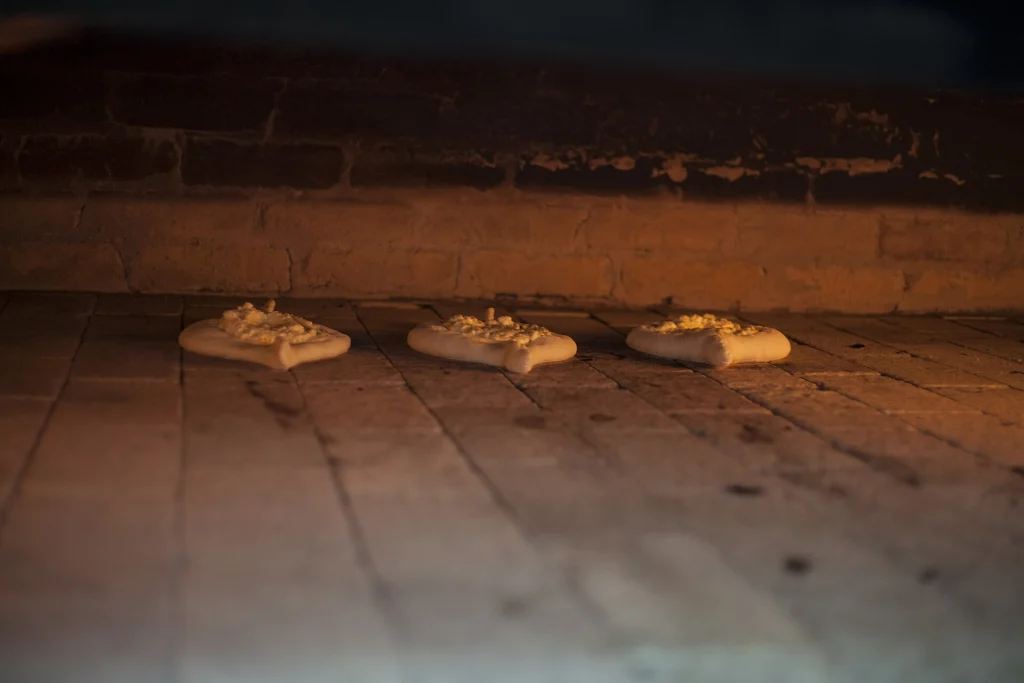
Khachapuri is cheese-filled bread, but the shape, dough and cheese change by region, and locals are particular about which is which. The soft, salty-tangy sulguni cheese appears in most versions; Imeretian khachapuri uses a milder, crumblier cheese baked into the dough itself.
| Type | Region | Shape and filling |
|---|---|---|
| Imeruli | Imereti | Round, cheese baked inside a closed dough disc |
| Megruli | Samegrelo | Round, cheese inside and on top, double the cheese |
| Adjaruli | Adjara | Open boat shape, cheese, a raw egg and butter stirred in at the table |
| Guruli | Guria | Crescent-shaped, cheese plus boiled egg and sometimes greens |
| Rachuli | Racha | Thicker dough, cheese and a layer of ham or meat |
| Lobiani | countrywide | Same dough, filled with spiced red beans instead of cheese |
Adjaruli is the one visitors photograph most, and the ritual matters: break the bread rim off first, swirl it through the molten cheese and egg, and eat with your hands rather than cutting the boat open flat. Our Adjarian Khachapuri Class in Batumi covers the dough, the cheese blend and the egg timing in a three-hour session, and the Bread, Cheese and Churchkhela — Tbilisi Food Workshops does the Imeretian and Megrelian versions alongside sulguni-making.
Khinkali: how to eat the dumpling correctly
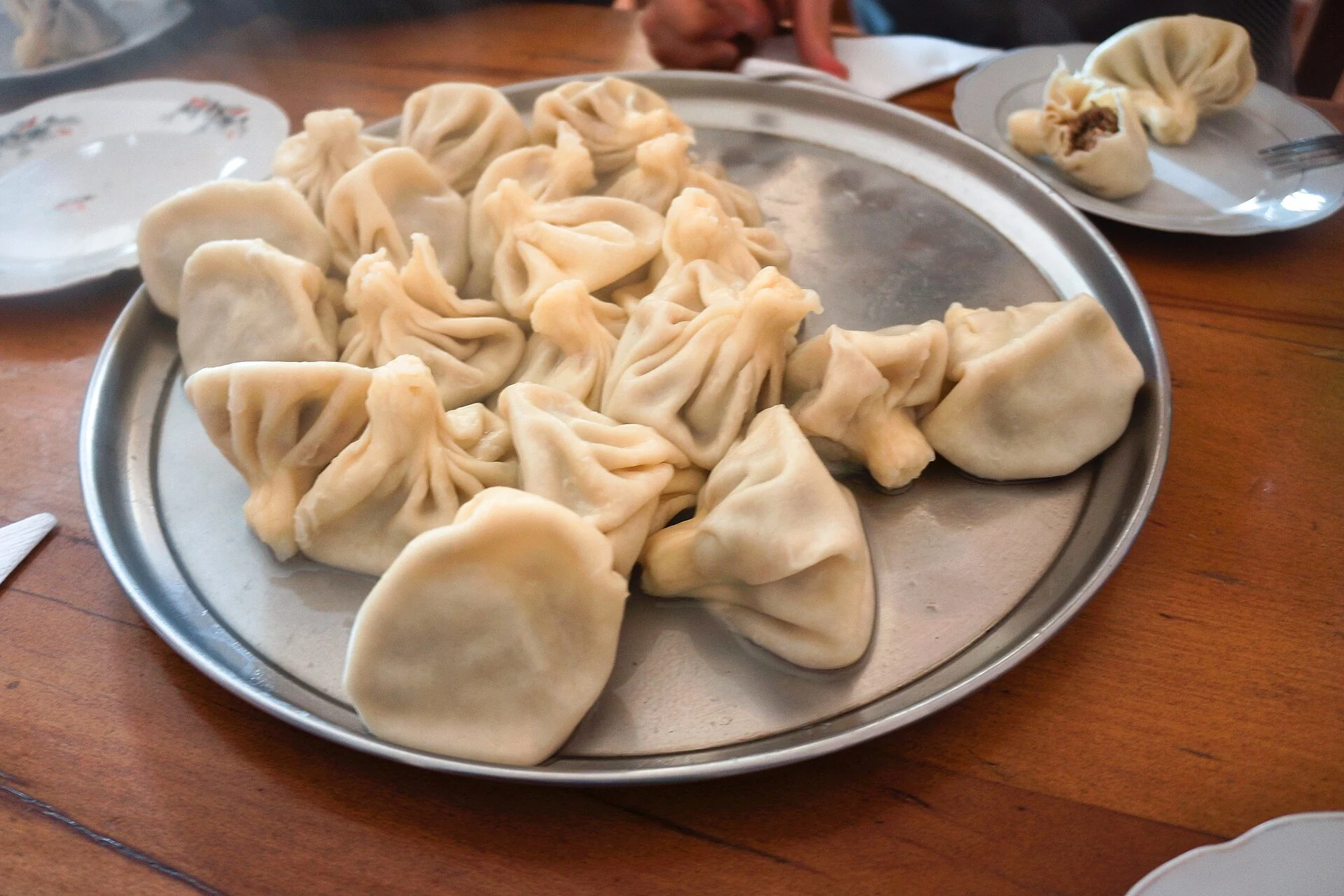
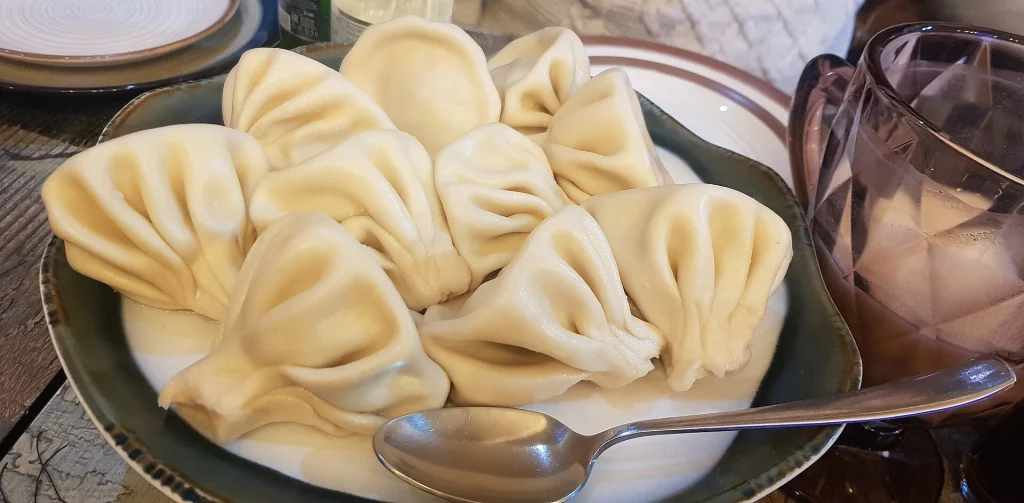
Khinkali is a large, hand-pleated dumpling, usually filled with spiced minced pork and beef and a spoonful of broth that forms as it steams, though mushroom, cheese (kalakuri) and potato versions are common for vegetarians. It is ordered by the piece, typically five to ten per person, and the pleated knot on top, the “tail,” is traditionally left uneaten as a way of counting how many each person has had.
- Pick it up by the tail, never with a knife and fork; cutlery is considered a sign the cook let the dough go soggy.
- Bite a small opening at the side first and sip the broth inside, rather than biting straight through the top, which lets the hot liquid spill.
- Eat the dumpling, leave the thick dough knot on the plate; stacking the leftover knots is how the table’s waiter, and the other diners, tally the bill and the bragging rights.
- Season with black pepper only; sauces are not traditional and are rarely offered.
Our Cooking Class in Tbilisi — Khinkali, Khachapuri and a Family Lunch teaches the dough and the pleat count (a well-made khinkali has around eighteen to twenty folds) before a shared lunch.
The cold table: pkhali, badrijani nigvzit and ajapsandali
A Georgian table starts cold. Pkhali is a family of vegetable pâtés, usually spinach, beetroot, cabbage or leek, minced and bound with crushed walnut, garlic and blue fenugreek, then formed into small rounds. Badrijani nigvzit is the eggplant cousin: thin fried or grilled aubergine slices rolled around the same walnut paste. Ajapsandali is looser, a warm stewed mix of eggplant, pepper, tomato and onion closer to a ratatouille, served at room temperature.
- Pkhali — three or four small rounds per plate, usually ordered as an assortment.
- Badrijani nigvzit — four to six rolls, often garnished with pomegranate seeds.
- Ajapsandali — a shared bowl, closer to a side dish than a starter.
All three keep well and travel, which is why walnut sauces are central to the cuisine generally, including the chicken-in-walnut-sauce dish satsivi, usually served around New Year and at larger feasts.
Meat, stews and soups
Mtsvadi is Georgia’s answer to a barbecue, pork or beef marinated simply and grilled over vine or oak coals on long skewers, usually ordered by weight or by skewer and eaten with raw onion and a sharp plum sauce called tkemali. Chakapuli is a spring and early-summer stew of lamb or veal cooked with fresh tarragon, green plums and white wine, pale and sour rather than rich. Kharcho is a thick, spiced beef-and-rice soup flavoured with walnut and plum, not to be confused with the lighter chicken soup chikhirtma. Lobio, red or white kidney beans stewed with herbs and usually served bubbling in an individual clay pot with cornbread (mchadi) on the side, is the closest thing Georgia has to a national comfort dish, and it is the cheapest substantial meal on most menus.
Rounding out the twenty-five: ostri, a spicy beef stew; kuchmachi, chicken or beef offal fried with walnut and pomegranate, mostly ordered with wine rather than as a main; elarji, the Megrelian cornmeal-and-cheese dish stretched at the table; and kubdari, the Svan meat-filled bread, drier and spicier than khachapuri. Our Megrelian Cooking Day — Elarji, Kharcho and Ajika and the Kakheti Farm-to-Table Day — Bread, Cheese, Mtsvadi and a Cellar both work through these in a village-kitchen setting.
Sweets to travel with: churchkhela and tklapi
Churchkhela is strings of walnuts or hazelnuts dipped repeatedly in thickened, spiced grape juice (not sugar syrup) until it forms a firm candle shape, then air-dried; it is sold everywhere from market stalls to petrol stations and keeps for months. Tklapi is the thin, chewy fruit leather made from the same reduced fruit purée, usually plum, tart and sold rolled or folded. Gozinaki, a brittle honey-and-walnut bar, appears mainly around the New Year. All three are naturally road-trip food, and tasting a proper qvevri-grape version of churchkhela, made with real grape must rather than sugar, is one of the better reasons to take a market walk; our Tbilisi Market and Street-Food Walk — Dezerter Bazaar to the Old Town stops specifically for this.
The supra: how a Georgian feast works
A supra is a structured feast, not a casual dinner. A toastmaster, the tamada, is chosen at the start and leads a sequence of toasts, traditionally beginning with peace, then ancestors, then parents, before moving on to guests, love and country; guests are expected to stay seated, listen to each toast, and drink (wine, or for the final toasts sometimes chacha) rather than sip through it. Refusing a toast outright is unusual, though saying you will drink a smaller amount, or asking for water alongside, is normal and accepted.
- Bread is treated with some respect; it is not usually left upside down or wasted openly on the table.
- Dishes arrive together and stay on the table rather than coming in courses, so the table looks crowded by design.
- Polyphonic singing, in three-part harmony, often accompanies a longer supra and is worth asking for if you are hosting a group.
- Qvevri, the buried clay vessels used for ageing wine, are central to how supra wine is made; the method is recognised by UNESCO as part of Georgia’s intangible cultural heritage, and tasting straight from a qvevri cellar is widely offered in Kakheti.
For a structured first supra with a licensed tamada and singers rather than an improvised one, the Supra Evening — a Georgian Feast with a Tamada and Polyphonic Song runs in Tbilisi, and the Kakheti Table — 3 Days of Supras, Cellars and Village Kitchens builds a short trip around several village tables.
Portions and prices: what to expect to pay
Georgian restaurant portions are large and meant for sharing; three dishes between two people, plus bread, is usually enough. Prices below are typical mid-range Tbilisi restaurant ranges for 2026, converted at roughly 2.89 GEL to the euro; Batumi and Kutaisi run similar, tourist areas of Old Tbilisi somewhat higher, and village guesthouses lower. Menus change with inflation and season, so treat these as a planning guide and check the posted menu on the day.
| Dish | Typical serving | Price (GEL) | Approx. (EUR) |
|---|---|---|---|
| Khachapuri Imeruli | whole, serves 1-2 | 15-25 | 5-9 |
| Khachapuri Adjaruli | one boat | 18-30 | 6-10 |
| Khinkali | per piece, order 5-10 | 1.5-3 | 0.5-1 |
| Pkhali assortment | 3-4 rounds | 12-20 | 4-7 |
| Badrijani nigvzit | 4-6 rolls | 14-22 | 5-8 |
| Lobio in a clay pot | individual pot with mchadi | 12-18 | 4-6 |
| Mtsvadi | one skewer, pork or beef | 20-35 | 7-12 |
| Chakapuli | seasonal, spring/early summer | 25-40 | 9-14 |
| Kharcho | one bowl | 12-18 | 4-6 |
| Churchkhela | one string | 5-10 | 2-3 |
| Tklapi | one rolled sheet | 3-6 | 1-2 |
For a wider tasting in one trip rather than restaurant by restaurant, Culinary Georgia in 6 Days — Tbilisi, Kakheti, Imereti and the Sea moves through the regional variations above with cellars and cooking sessions built in, and a Supra Evening with a Tamada and Polyphonic Song or the Chacha and Qvevri — a Distillery and Cellar Day in Kakheti both put the wine and chacha side of the table into context alongside the food.
If this guide is part of a trip you are planning, our Georgian Wine Grand Tour — 8 Days, Five Regions and Tbilisi to Kakheti Transfer — Telavi or Sighnaghi cover the places it describes with a private guide and driver; a GTour travel expert adapts the route to your dates.
Practical summary
- Order khinkali by the piece (5-10 per person), hold it by the dough knot, and leave the knot uneaten.
- Know your khachapuri: Imeruli (closed, round), Adjaruli (open boat with egg), Megruli (double cheese), Guruli (crescent with egg).
- Cold starters (pkhali, badrijani nigvzit) and stews (lobio, kharcho) are all walnut- or bean-based and vegetarian by default; ask if meat stock was used for soups.
- At a supra, let the tamada lead the toasts, stay seated through each one, and treat the sequence of toasts as the structure of the meal rather than an interruption to it.
- Churchkhela and tklapi travel well; buy from a market stall rather than a souvenir shop for the real grape-must version.
- Budget roughly 15-40 GEL (5-14 EUR) per main dish in a mid-range restaurant in 2026, and check the menu on the day since prices move with inflation.
- Learn to make several dishes yourself on a half-day class such as the Cooking Class in Tbilisi — Khinkali, Khachapuri and a Family Lunch or the Megrelian Cooking Day — Elarji, Kharcho and Ajika.
Sources
- Qvevri traditional wine-making method
- Oldest evidence of winemaking found in Georgia
- Ancient wine residue research in Georgia
- Georgia and the origins of wine
- Georgian feast and supra traditions
- Lari exchange rate, National Bank of Georgia
Questions this guide does not answer? Write to info@castle.ge or WhatsApp +995 577 41 63 14 — a person in Tbilisi replies. See also our travel services and all guides.
A plate of khinkali, Georgian dumplings, being eaten at Dmanisi, Georgia. · Photo: Luca Bezzi / Wikimedia Commons, CC BY-SA 4.0
Been to Georgia? Tell us how it went — the best stories are published here.
Share your tripOne email a week: what changed for travellers in Georgia — rules, roads, flights, seasons — plus one place worth the trip. Written by the GTour desk, no advertising, unsubscribe in one click.
This story across our partner network — ქართულად: შენი დასვენება
