

By Nino Gelashvili, Travel News Editor · 29/10/2026
A dorm bed in Tbilisi, Kutaisi or Batumi typically runs 20 to 45 Georgian lari a night in low season, roughly 7 to 16 euros at the National Bank of Georgia’s late-October 2026 rate of about 2.89 GEL to the euro, rising by a third or more in Batumi’s July-August beach rush. A private double in a hostel or budget guesthouse costs 60 to 150 GEL (about 21 to 52 euros) depending on city, season and whether the bathroom is shared. Choosing well matters more than chasing the lowest number: the same five euros of difference can separate a warm, quiet room from a cold one above a bar that keeps its generator running until 3am.
This guide sets out what each city’s hostel scene actually looks like, which neighbourhoods suit different travellers, what dorms and privates cost through the year, the specific things to check before you pay (heating is the one most visitors get wrong), where a family guesthouse beats a hostel, and how to book without surprises. Prices and rules shift year to year, so we note where to verify current figures rather than guessing.
The hostel scene in each city
Tbilisi has by far the largest and most mature hostel market, with everything from 20-bed party dorms to small design-led properties in restored Sololaki courtyards. Supply is dense enough that prices stay competitive outside major events. Kutaisi’s scene is smaller but has grown steadily since Kutaisi International Airport became a hub for European low-cost carriers; most hostels cluster near the Rioni river and the old centre, aimed at travellers heading on to Svaneti, Martvili or Batumi the next morning. Batumi’s hostel count swells dramatically for the summer season and contracts hard in winter, when many simply close from November to April; a seaside dorm that is lively and cheap in July can be a near-empty, cold building in January, so always check a property is actually open before booking off-season.
Best neighbourhoods for hostels and guesthouses
- Tbilisi Old Town (Sololaki, Abanotubani): the most atmospheric, walking distance to the sulphur baths and the main sights, but also the noisiest at night around bar streets; ask for a courtyard-facing room.
- Tbilisi Vera and Vake: quieter, residential, popular with guesthouses rather than party hostels, a short taxi or metro ride from the centre.
- Marjanishvili and Chugureti: central, near the metro and the train station, useful if you are arriving or leaving on an overnight or early train, with a good mix of hostel budgets.
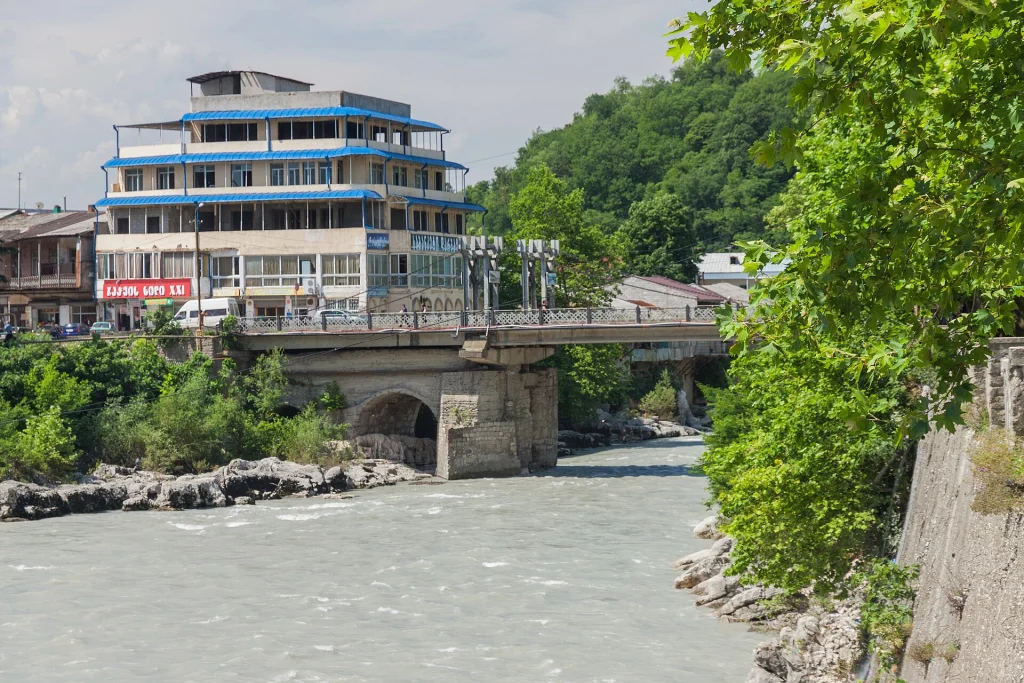
- Kutaisi centre near Bagrati Cathedral and the Green Bazaar: walkable to the old bridges and within easy reach of minibuses for Martvili, Okatse and Prometheus Cave day trips.
- Batumi Old Town and the Boulevard: liveliest in summer, close to everything, but expect street noise until late; buildings further back from the seafront, in the Bagrationi area, are calmer and usually cheaper.
What dorms and private rooms cost
These are typical market ranges for 2026, based on the kind of listings you will find across the main booking platforms; individual properties vary and prices move with demand, so treat this as a planning guide rather than a quote. Figures are per person per night, converted at roughly 2.89 GEL to the euro.
| City | Season | Dorm bed (GEL) | Dorm bed (EUR, approx.) | Private double (GEL) | Private double (EUR, approx.) |
|---|---|---|---|---|---|
| Tbilisi | Low (Nov–Mar, excl. New Year) | 20–35 | 7–12 | 80–130 | 28–45 |
| Tbilisi | High (May–Sep, plus Tbilisoba in Oct) | 30–50 | 10–17 | 100–180 | 35–62 |
| Kutaisi | Low (Nov–Mar) | 15–25 | 5–9 | 55–90 | 19–31 |
| Kutaisi | High (Apr–Oct) | 20–35 | 7–12 | 70–120 | 24–41 |
| Batumi | Low (Oct–May, many hostels closed) | 18–30 | 6–10 | 60–110 | 21–38 |
| Batumi | High (Jun–Aug) | 35–70 | 12–24 | 150–250 | 52–86 |
What to check before you book
Three things cause most complaints in Georgian budget stays, and none of them show up clearly in photographs.
- Heating: many older buildings in Tbilisi and Kutaisi, including the Soviet-era courtyard blocks popular with hostels, rely on individual electric radiators or gas convectors rather than reliable central heating. Between November and March, ask directly whether heating is included in the price or costs extra, and whether it runs all night. Batumi’s seafront buildings handle damp cold differently again; a sea-facing room without double glazing can feel colder than it looks.
- Noise: ground-floor dorms above bars, rooms facing Old Tbilisi’s Shardeni or Erekle II streets, or anything near Batumi’s summer beach clubs will be loud until at least 1am in season. If you need to sleep early, ask for an upper floor or courtyard room, or choose a guesthouse outside the main strip.
- Hot water and bathrooms: ask whether hot water comes from a boiler (which can run out with several guests showering) or an instant gas heater, and check the guest-to-bathroom ratio in larger dorms.
Also worth a quick message before you pay: wifi reliability for remote workers, whether breakfast or a kitchen is included, lockers for valuables, and the exact cancellation terms, which vary far more between independent Georgian properties than between international chains.
Guesthouse alternatives
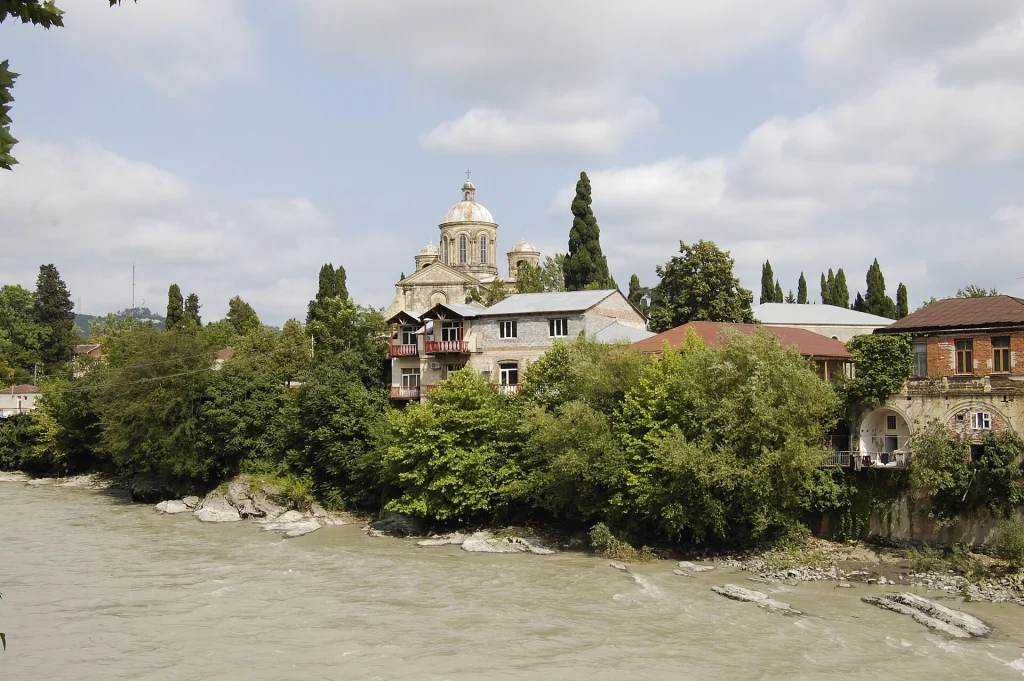
Family-run guesthouses are a long Georgian tradition and often a better value than a hostel private room, particularly outside the three big cities. A typical guesthouse offers a private room with its own bathroom, breakfast included, and a host who will happily pour a glass of homemade wine, for a price close to or sometimes below a hostel’s private double. The trade-off is usually less English, fewer shared social spaces, and a more fixed arrival time, since many hosts live on site and plan their day around guests. Guesthouses are especially strong in Kakheti, Svaneti and the Black Sea towns north of Batumi, and are worth considering even inside Tbilisi and Kutaisi if you want quiet over nightlife. The Georgian National Tourism Administration maintains general guidance on accommodation standards and categories that can help you judge what a listing’s star or category claim actually means.
Booking tips
- Book one to two weeks ahead for ordinary travel, but much earlier for Tbilisoba in October, New Year in Tbilisi, and Batumi’s July-August peak, when the cheapest beds sell out first.
- Read recent reviews specifically for heating and noise complaints if travelling November to March; older reviews from summer tell you nothing about winter conditions.
- Confirm a property is open before booking in Batumi outside May-September, since a surprising number of hostels close for the winter entirely.
- Pay deposits through the booking platform or a traceable card payment rather than a bank transfer to a personal account requested outside the platform.
- Pin the address on a map before you travel; Georgian street numbering is not always intuitive, and taxi drivers sometimes need a nearby landmark rather than the exact address.
If you would rather not compare dozens of listings yourself, GTOUR’s hotel and guesthouse booking help is free for recommendations, with a flat 15 euro service fee per reservation if you want us to book on your behalf; when hotels are part of a full itinerary we arrange, there is no separate fee. See the services and price table pages for the current figures. Budget travellers mixing hostel stays with occasional private transport can also add a fixed-price Tbilisi Airport Transfer from 45 euros per sedan, or a Batumi Airport Transfer from 40 euros, rather than negotiating with unmetered taxis.
If this guide is part of a trip you are planning, our Batumi to Kutaisi Transfer — Private Car and Prometheus Cave and Martvili Canyon from Batumi cover the places it describes with a private guide and driver; a GTour travel expert adapts the route to your dates.
Practical summary
- Dorm beds: roughly 7-16 euros in Tbilisi, 5-12 in Kutaisi, 6-24 in Batumi depending on season.
- Private rooms: roughly 28-62 euros in Tbilisi, 19-41 in Kutaisi, 21-86 in Batumi depending on season.
- Pick a courtyard or upper-floor room if you need quiet; ask about heating directly between November and March.
- Confirm Batumi hostels are open if travelling October to April.
- Consider a guesthouse for a private bathroom and breakfast at a similar price to a hostel private room.
- Book well ahead for Tbilisoba, New Year and Batumi’s summer peak.
- Pay through traceable channels and pin the address before you arrive.
Sources
- Geostat — international travel and tourism statistics
- Lonely Planet – Tbilisi destination guide
- Lonely Planet – Batumi destination guide
- Lonely Planet – Kutaisi destination guide
- The Guardian – Tbilisi travel guide
- Agenda.ge – Tourism news section
- Georgia Today – Travel section
- Georgian National Tourism Administration – Official travel portal
Questions this guide does not answer? Write to info@castle.ge or WhatsApp +995 577 41 63 14 — a person in Tbilisi replies. See also our travel services and all guides.
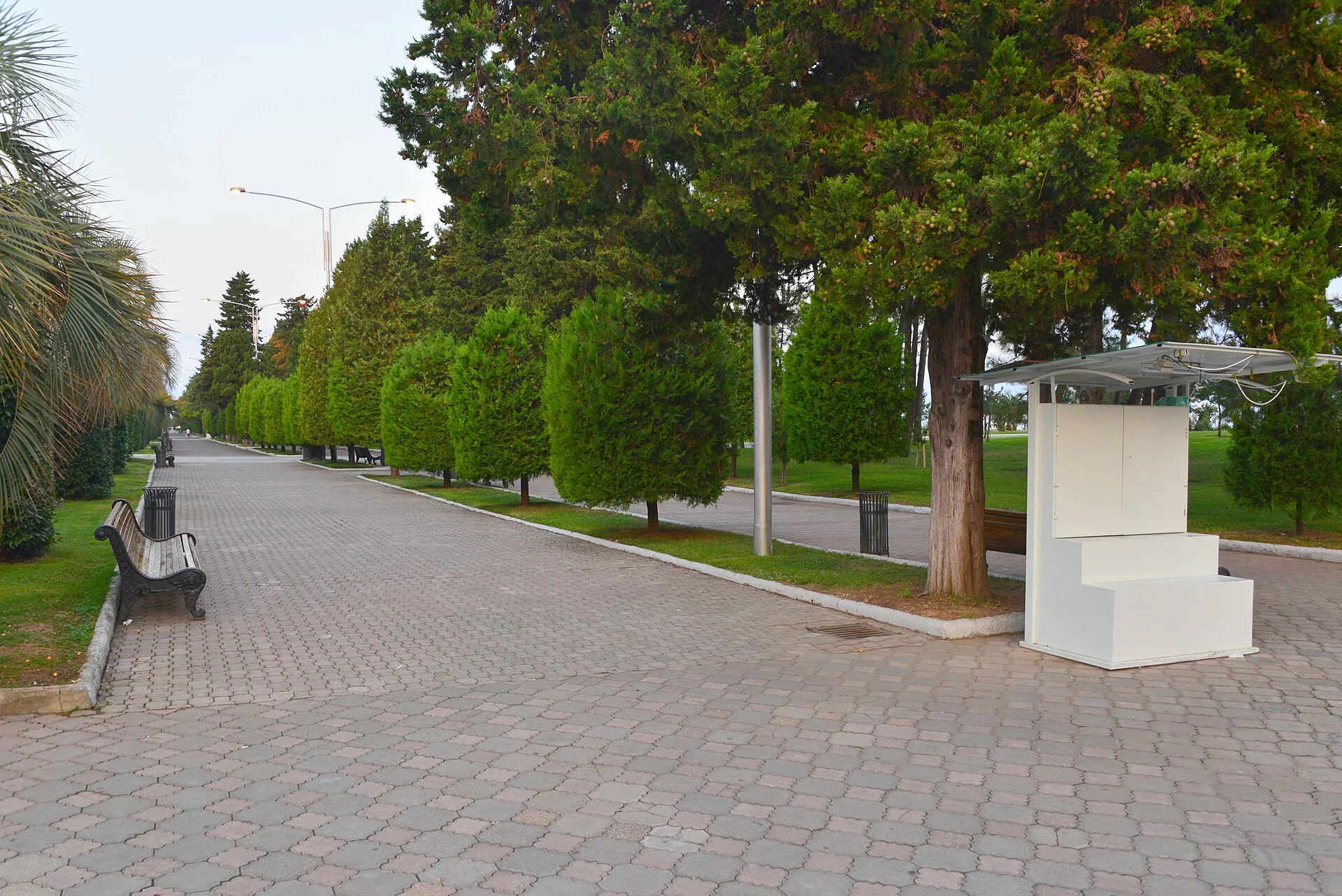
Tree-lined seaside boulevard in Batumi, one of the cities covered in this budget-stay guide. · Photo: Андрей Бобровский / Wikimedia Commons, CC BY 3.0
Been to Georgia? Tell us how it went — the best stories are published here.
Share your tripOne email a week: what changed for travellers in Georgia — rules, roads, flights, seasons — plus one place worth the trip. Written by the GTour desk, no advertising, unsubscribe in one click.
This story across our partner network — ქართულად: შენი დასვენება
