

By Mariam Lomidze, Culture & Events Reporter · 28/10/2026
August is Georgia’s hottest, busiest and most contradictory month, and the right answer depends on what you want from it. Tbilisi regularly sits above 35°C with little relief until after sunset, the Black Sea coast around Batumi is at its most crowded and expensive, and the high mountains of Tusheti and Khevsureti are open for only a few short weeks a year, with August squarely inside that window. If you want cool air, this is the month to go up, not down: Kazbegi, Svaneti, Tusheti, Bakuriani and Borjomi all sit 15–20 degrees cooler than the capital.
It is also the month of Mariamoba on 28 August, one of the most widely observed days in the Georgian Orthodox calendar, and of smaller but distinctive events such as Shatiloba in remote Khevsureti and a growing calendar of mountain running races around Kazbegi. This guide sets out the coast-versus-mountains trade-off, what Mariamoba actually involves, how short the Tusheti season is, what to expect from prices in peak season, and the general rhythm of a Georgian August so you can plan around it rather than be surprised by it.
Why Tbilisi empties out in August
Tbilisi’s summer heat is real and sustained: daytime temperatures commonly reach the mid-to-high 30s Celsius through July and August, with humidity making the old town and Rustaveli Avenue uncomfortable by midday. Locals who can afford it leave the city for the coast, for family houses in the mountains, or for Kakheti, and August is traditionally when offices run on skeleton staff and many restaurants close for a week or two around Mariamoba. For visitors this means two reasonable strategies: build your day around the cool hours, with museums, the sulphur baths and covered markets at midday and walking tours in the early morning or evening, or skip the city altogether for a few days and head to altitude. A half-day Tbilisi highlights tour or an evening photo walk at dusk both work well if you are passing through rather than basing yourself here for a week.
Mariamoba, 28 August
Mariamoba marks the Dormition of the Virgin Mary and is one of the principal feasts of the Georgian Orthodox Church, observed on 28 August under the civil calendar the church uses for fixed dates. It is both a religious and a deeply social holiday: church services run through the morning at major monasteries and cathedrals, women named Mariam, Maia, Mariami and related names celebrate their name day, and extended families gather for a meal that is often the last big outdoor supra of the summer. Pilgrimage traffic rises at churches dedicated to the Virgin’s Dormition, among them the main cave church at Vardzia, and smaller village churches across Kakheti, Imereti and Samtskhe-Javakheti see a noticeable uptick in visitors for the day itself. If you plan to visit a working monastery on 28 August, expect queues, modest dress requirements enforced more strictly than usual, and some roads around popular pilgrimage sites busier than normal. For the religious calendar itself, the Georgian Patriarchate’s own pages are the reference point to check in case of any local scheduling notes.
The Black Sea coast at its peak
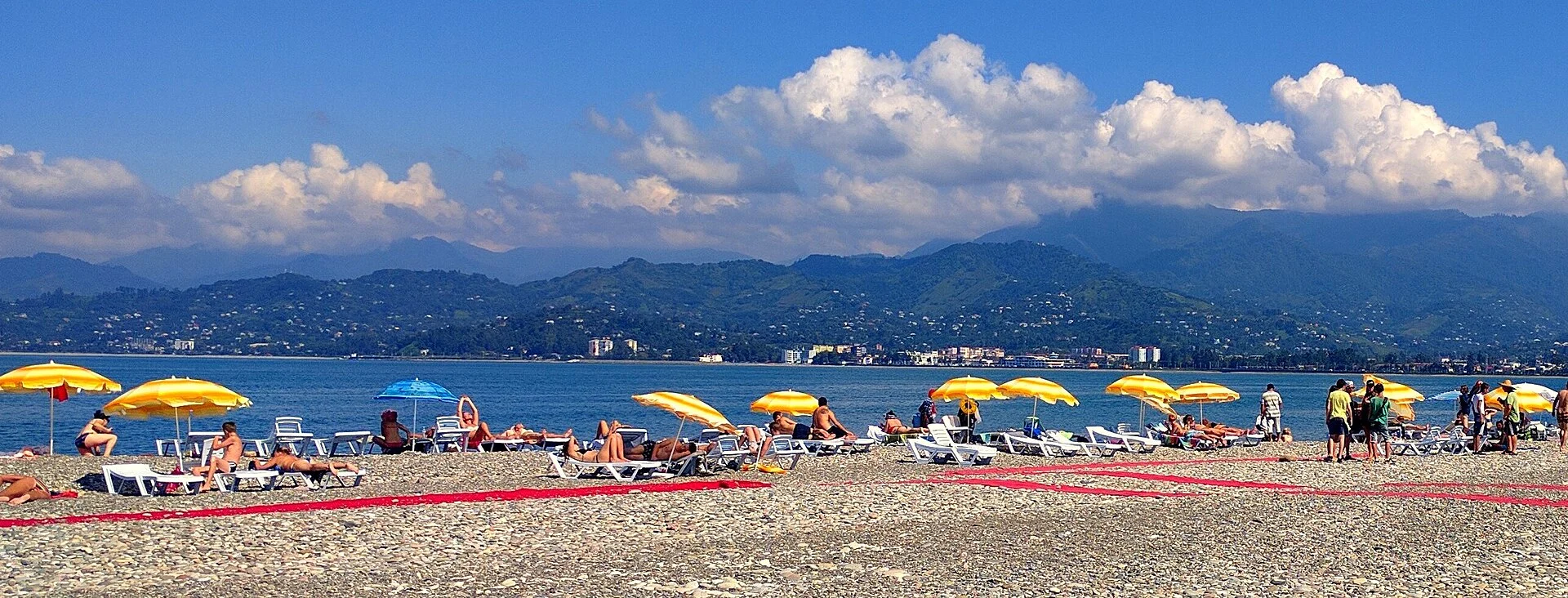
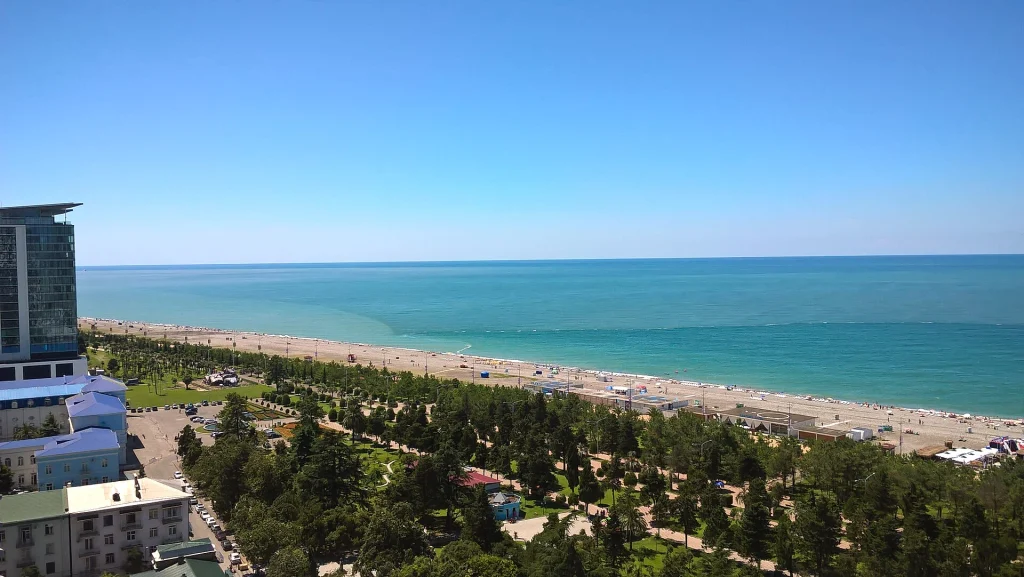
August is the single busiest month on the Adjara coast. Batumi’s boulevard, beaches and restaurants run at full capacity, sea temperatures are at their warmest of the year, and hotel rates in the city and along the coast toward Kobuleti and Sarpi rise accordingly, often by 30–50 percent over shoulder-season prices. Booking two to three months ahead is sensible if you want a specific hotel on the seafront. The upside is a genuinely festive atmosphere: live music on the boulevard, a full restaurant scene, and day trips inland to the cooler Adjara highlands around Khulo and the Goderdzi Pass that let you combine beach mornings with mountain afternoons. A Batumi half-day covering the old town, boulevard and botanical garden is an easy way to get oriented before deciding how much beach time you actually want in the heat, and the Adjara Highlands day trip to Khulo and the Green Lake is a popular way to cool off without leaving the region.
| Coast or mountain escape | Duration | Price per person (2 travellers) |
|---|---|---|
| Batumi Old Town and Boulevard Walk | 2.5 hours | €70 |
| Adjara Highlands — Khulo, Goderdzi Pass, Green Lake | 10 hours | €225 |
| Batumi and the Ajara Mountains, 2 Days | 2 days | €540 |
| Georgian Military Highway — Ananuri, Gudauri, Gergeti | 11 hours | €210 |
| Kazbegi, 2-Day Mountain Journey | 2 days | €520 |
Tusheti: a short, specific season
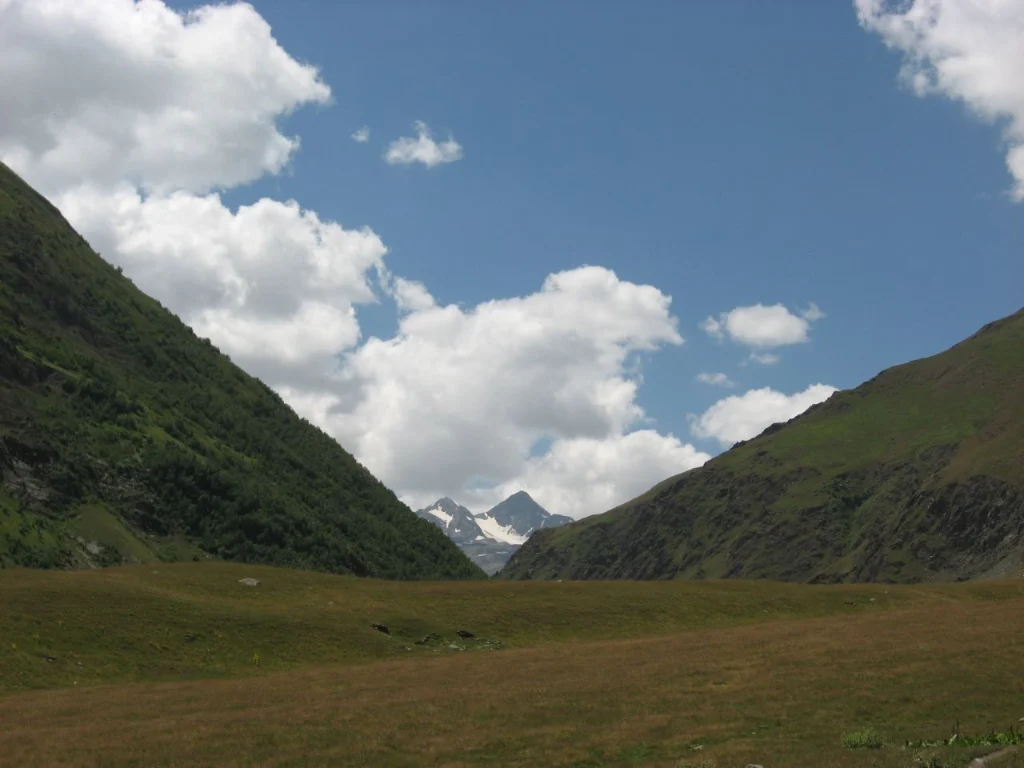
Tusheti is Georgia’s remotest inhabited highland region, reached by a single unpaved road over the Abano Pass that is normally passable only from around June to early October, weather and snow depending. August sits in the safest part of that window, when the pass is reliably open and the villages of Omalo, Dartlo and Diklo are fully functioning with guesthouses open for the season. Outside roughly June to September the road is effectively closed by snow, and even within season sudden storms can close it for a day or two, so flexibility matters more than a fixed schedule. The region is managed partly as protected landscape, and road and access conditions are worth checking close to your travel date rather than assumed from a previous year. A multi-day 4×4 trip, rather than a rental car on this particular road, is the standard and sensible way to see Omalo, Dartlo and Diklo, and pairing Tusheti with neighbouring Khevsureti makes good use of the narrow season.
- Tusheti — Georgia’s Last Wild Frontier, 4 Days: solo €2,400, two travellers €1,500 each
- Tusheti by 4×4 — Omalo, Dartlo and Diklo, 3 Days: solo €1,424, two travellers €890 each
- Khevsureti and Tusheti by 4×4, 5 Days: solo €2,544, two travellers €1,590 each
- Tusheti to Khevsureti over the Atsunta Pass, 6 Days: solo €2,704, two travellers €1,690 each
Shatiloba and the Khevsureti festival calendar
Shatiloba is an annual gathering in and around Shatili, the fortress village of Khevsureti close to the border with Chechnya, celebrating highland Khevsur identity through traditional dress, horsemanship, music and communal feasting. Like much of Georgia’s highland festival calendar it is a summer event, typically falling in the warmer months when the mountain road to Shatili is open, but the exact date can shift from year to year and is best confirmed close to your travel dates rather than assumed from a previous season. The practical difficulty is access: Shatili is a long drive even by 4×4 from Tbilisi, and the single road in and out is unpaved and weather-dependent in the same way as the Tusheti road. A long single-day 4×4 trip to Shatili and the ruined tower village of Mutso is possible for visitors based in Tbilisi or Kazbegi who do not want to commit several days, though an overnight stay gives a less rushed visit to a genuinely remote part of the country.
The Kazbegi marathon and the mountain running calendar
Kazbegi and the Georgian Military Highway corridor have become a focus for mountain and trail running events in recent summers, with a race based around Stepantsminda typically held in the warmer months when the high trails toward Gergeti and the Kazbek base camp area are clear of snow. Dates, distances and organisers can change year to year, and the event is not yet as fixed a fixture as, for instance, the autumn Tbilisi Marathon, so runners should confirm the current year’s details directly rather than rely on an old date. Whether or not you are racing, August is also simply a good month to walk rather than run in this area: the hike to Gergeti Trinity Church and on toward the Gergeti glacier is at its most accessible, snow permitting at altitude, and overnight trips to the Kazbek base camp area are realistic for reasonably fit visitors.
- Kazbegi — Gergeti Trinity Church in a Day: solo €336, two travellers €210 each
- Gergeti Glacier and Kazbek Base Camp, 2 Days: solo €736, two travellers €460 each
- Juta, Sno and Gergeti — Kazbegi off the main road: solo €384, two travellers €240 each
- Mount Kazbek Summit Expedition, 7 Days: solo €3,024, two travellers €1,890 each
Prices and the Georgian holiday rhythm
August combines two separate pressures on price: it is peak international tourist season on the coast and in the high mountains, and it is also peak domestic holiday season, since Georgian schools break for summer and many families take their own main holiday around Mariamoba. The practical effect is that coastal hotel rates, mountain guesthouse rates in Kazbegi and Svaneti, and seats on shared marshrutka minibuses to popular destinations are all tighter in August than in June or September, and it is worth booking accommodation and any private transfers several weeks ahead rather than on arrival. For reference, the official lari rate against the euro from the National Bank of Georgia was 2.8943 GEL per EUR on 28 October 2026; rates move daily, so check the current figure before converting larger sums. Our own fixed tour and transfer prices are quoted in euros and do not change with the daily exchange rate, and the full current price list is kept at a single page for easy checking.
If this guide is part of a trip you are planning, our Caucasus Highlands in 7 Days — Kazbegi, Khevsureti and Tusheti and Georgia in 4 Days — Tbilisi, Kazbegi and Kakheti cover the places it describes with a private guide and driver; a GTour travel expert adapts the route to your dates.
Practical summary
- Expect 30s Celsius in Tbilisi through August; plan midday indoors, mornings and evenings outdoors, or head to altitude for a few days
- Mariamoba falls on 28 August: expect busy churches and pilgrimage sites, family gatherings, and some restaurants closed around the date
- The Black Sea coast is at its most crowded and most expensive in August; book hotels well ahead, or combine the coast with a cooler inland day trip
- The Tusheti road over the Abano Pass is normally open from around June to early October; August sits safely within that window but check current conditions before departure
- Shatiloba in Shatili and the Kazbegi mountain running events are both summer fixtures with dates that can shift year to year; confirm the current year’s schedule before building a trip around them
- Book private transfers and multi-day 4×4 trips into Tusheti, Khevsureti and Svaneti in advance, since vehicles and guesthouses in these regions are limited and heavily used in August
- Check the official lari exchange rate before converting large sums, and use the current GTour price list for any booking rather than an old quote
Sources
- National Bank of Georgia official rates
- Georgian Road Department conditions
- Tusheti (UNESCO Tentative List)
- Mariamoba Coverage
- Tbilisi–Batumi Train Schedule
Questions this guide does not answer? Write to info@castle.ge or WhatsApp +995 577 41 63 14 — a person in Tbilisi replies. See also our travel services and all guides.
Sunbathers with umbrellas on the pebbly Batumi beach along the Black Sea coast. · Photo: Vicuna R from Germany / Wikimedia Commons, CC BY-SA 2.0
Been to Georgia? Tell us how it went — the best stories are published here.
Share your tripOne email a week: what changed for travellers in Georgia — rules, roads, flights, seasons — plus one place worth the trip. Written by the GTour desk, no advertising, unsubscribe in one click.
This story across our partner network — ქართულად: შენი დასვენება
