

Pirosmani House Museum, Mirzaani — opening hours, tickets, how to get there and what to see
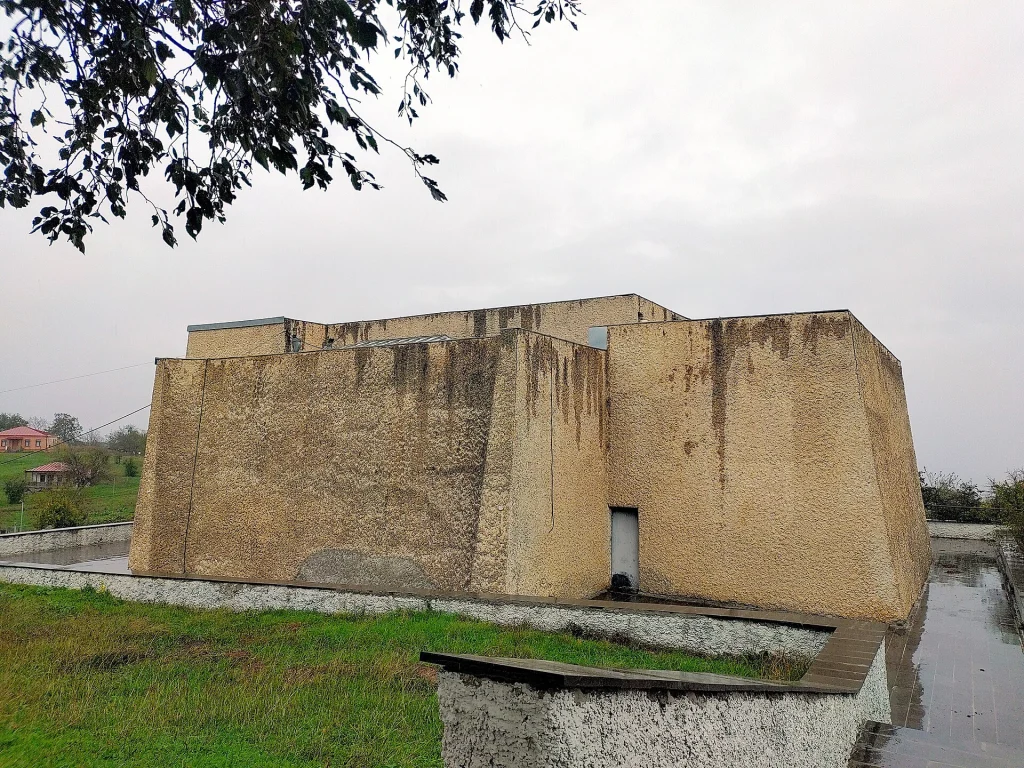
The Pirosmani House Museum occupies the reconstructed family home of self-taught painter Niko Pirosmanashvili (1862–1918) in Mirzaani, a farming village in Sighnaghi municipality, Kakheti, about 15 kilometres from Sighnaghi town. It opened to the public in 1965 as a branch of what is now the Georgian National Museum, and it remains the only site where visitors can stand inside the rooms where Pirosmani was born. The museum matters because Pirosmani, largely ignored in his own lifetime, is now Georgia’s best-known painter internationally, and Mirzaani is the one place that ties his work directly to a physical, lived setting.
What you see
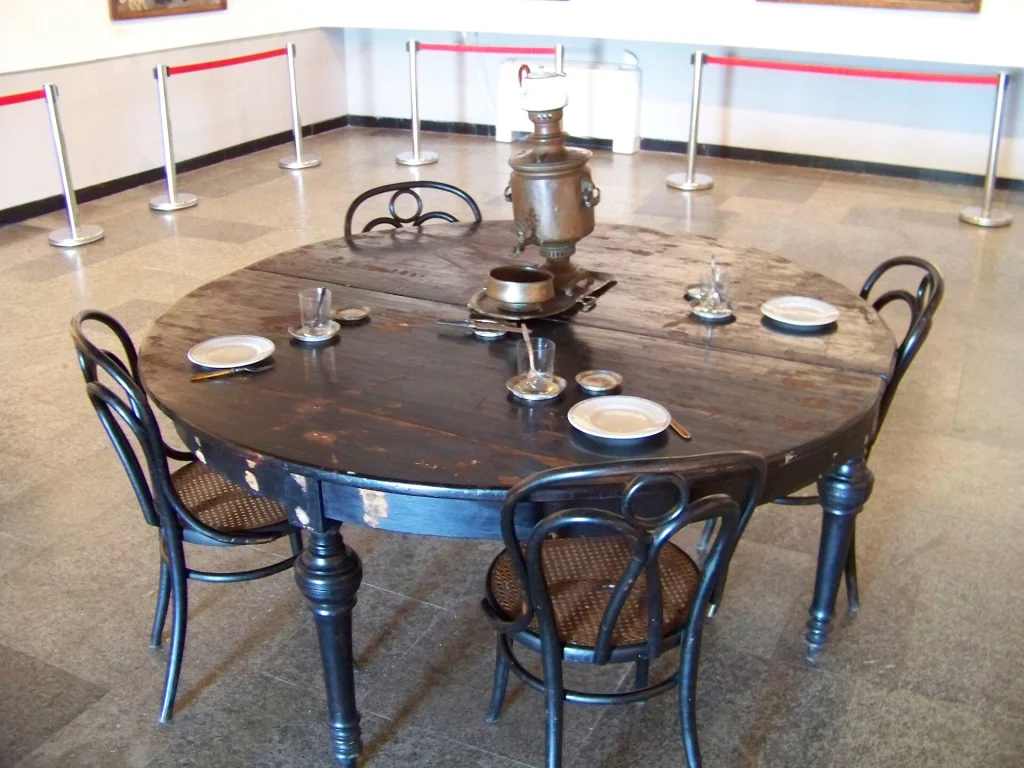
The museum is built around a small, traditional Kakhetian peasant house: a stone-and-timber dwelling with a low wooden gallery, a cellar used for wine storage, and a kitchen area, furnished as it would have been in the mid-nineteenth century. An adjoining modern exhibition hall, added after the original house opened as a memorial site, holds photographic reproductions of Pirosmani’s paintings, some original works and sketches on loan from larger collections, personal documents, and panels on his biography. Outside, a garden and vineyard plot surround the house, with a bust of the artist and views over the Alazani valley that recall the rural Kakheti landscapes he painted. The scale is modest: this is a one-building village museum, not a large gallery, and most of Pirosmani’s major paintings remain in Tbilisi.
History
Niko Pirosmanashvili was born in Mirzaani in 1862 into a peasant family and was orphaned as a child. He later worked in Tbilisi as a railway conductor and shopkeeper before turning, from around the 1890s, to painting signboards for taverns and shops and, increasingly, scenes of feasts, animals and city life in a flat, self-taught style now classed as primitivism (Britannica, biography of Niko Pirosmanashvili). He died in poverty in Tbilisi in 1918, shortly after a small circle of avant-garde artists, including the Zdanevich brothers, had begun to take serious interest in his work in 1912. Recognition grew through the Soviet period, and his birth house in Mirzaani was restored and opened as a memorial museum in 1965, later incorporated into the state museum network that is now the Georgian National Museum (Georgian National Museum). The house and its surrounding plot are protected as part of Georgia’s immovable cultural heritage (Ministry of Culture, Sport and Youth of Georgia).
Opening hours and tickets
| Item | Usual pattern |
|---|---|
| Days | Typically Tuesday to Sunday; closed Monday |
| Hours | Around 10:00–18:00, last entry roughly 30 minutes before closing |
| Adult ticket | Modest fee, in the range of a few GEL |
| Photography | Often allowed for a small extra fee; flash and tripods usually restricted |
Hours and fees for small branch museums in Georgia change without much notice; checked at booking.
How to get there
From Tbilisi, Mirzaani is roughly 100 kilometres away, about 2 hours by car via Sagarejo and Tsnori, or via Sighnaghi if combined with a town visit. There is no direct marshrutka to Mirzaani; the practical public option is a marshrutka to Sighnaghi or Tsnori followed by a local taxi for the final 15 kilometres. With us, the Kakheti Classic — Sighnaghi, Bodbe and Two Cellars day trip or a Car with Driver by the Day can route through Mirzaani on request; see https://gtour.ge/tour/kakheti-sighnaghi-wineries-day-trip/ and https://gtour.ge/tour/car-with-driver-by-the-day/. A Licensed Private Guide by the Day is worth adding if you want context on Pirosmani’s life rather than just the building.
How long and the best time
Most visitors need 45 minutes to an hour, including the garden. The museum is a reasonable add-on to a Sighnaghi and Bodbe day, best done in the morning or early afternoon so there is time left for wine cellars or the town wall at sunset. Spring and autumn give the clearest light over the Alazani valley; the site is quiet year-round, so there is no real need to plan around crowds.
Tips
- Casual dress is fine; there is no religious dress code, unlike at nearby Bodbe convent.
- Ask before photographing the original works in the exhibition hall; the house itself is generally fine to photograph.
- The approach road and garden paths are unpaved in places, so rain makes them muddy; bring solid footwear.
- Queues are not a factor here; it is a small rural museum, not a major attraction.
- Combine with a stop in Sighnaghi itself and a working wine cellar, since Mirzaani alone does not fill a day.
Nearby
- Sighnaghi old town and wall
- Bodbe Convent of St Nino
- Tsnori and the Alazani valley wine villages
- Kvareli and Kvareli Lake
- Alaverdi Cathedral
Pirosmani House Museum, Mirzaani is on these private tours: Georgia in 4 Days — Tbilisi, Kazbegi and Kakheti · Keda Wine Villages and the Dandalo Bridge · Sighnaghi at Sunset — Afternoon Wine Trip from Tbilisi. A travel expert adapts any of them to your dates.
Questions
Is the Pirosmani House Museum the same as where his main paintings are kept?
No. Most of Pirosmani's well-known paintings are held in Tbilisi collections; Mirzaani preserves his birth house with reproductions, some original works, and biographical material.
Can I visit Mirzaani without a car?
It is difficult. Take a marshrutka to Sighnaghi or Tsnori, then a local taxi for the final stretch, or join an organised day trip.
How much time should I budget?
45 minutes to an hour is typical, plus travel time from Sighnaghi or Tbilisi.
Is the museum open every day?
Usually not; it is commonly closed one day a week, typically Monday. Confirm hours when booking.
Sources
The modest house where Niko Pirosmani was born, in Mirzaani village near Sighnaghi. · Photo: Jelger Groeneveld / Wikimedia Commons, CC BY 4.0