

By Mariam Lomidze, Culture & Events Reporter · 27/10/2026
Kyrgyz citizens travelling to Georgia currently benefit from one of the most relaxed entry regimes in the wider region: under Georgia’s long-standing unilateral visa-free policy, nationals of Kyrgyzstan have generally been able to enter for tourism without a visa, for stays of up to one year. That is the position at the time of writing, but visa policy is set by government decree and can change with little notice, so the single most important thing any Kyrgyz traveller can do before booking flights is check the current rule directly on the Ministry of Foreign Affairs consular portal, geoconsul.gov.ge, and keep a screenshot or printout of the confirmation.
The practical picture beyond the visa question is straightforward. There are no direct flights from Bishkek or Osh, so you will connect through a regional hub, most commonly Istanbul. Georgian lari is the only currency that matters day to day, cards work in cities but cash is still useful outside them, and Russian is understood widely enough that language is rarely a real barrier. Ties between the two countries are modest rather than deep — this guide says so plainly rather than inventing connections that do not exist — and focuses instead on what actually helps you plan a trip: visas, routes, money, food, and the etiquette differences worth knowing before you land.
Visa and entry rules for Kyrgyz citizens
As of October 2026, Kyrgyzstan appears on Georgia’s list of nationalities exempt from a visa for short tourist stays, with Georgia’s unusually generous allowance of up to 365 days per entry for several Central Asian and CIS countries. This is the kind of rule that is genuinely subject to change — it has shifted for other nationalities in recent years — so verify it afresh close to your travel date on geoconsul.gov.ge rather than relying on older blog posts, including this one past its publication date.
If your trip falls outside the visa-free category (business visits, longer study stays, or if the exemption changes before you fly), Georgia’s e-visa system at evisa.gov.ge handles applications online. You will typically need a scanned passport bio page, a digital photo, proof of accommodation, evidence of onward or return travel, and payment of the visa fee by card. Processing is usually quoted at a few working days up to roughly ten; apply with margin before departure and check current fees and document lists on the portal itself, since both change periodically.
Flights from Kyrgyzstan to Georgia
There is no scheduled direct service between Bishkek or Osh and any Georgian airport. The realistic routing is a one-stop connection through Istanbul, which carries the bulk of Central Asia–Caucasus traffic and has frequent onward flights to Tbilisi. Dubai is a workable second option for travellers already routing through the Gulf, with onward connections to Tbilisi or Batumi. Georgia has three international airports worth knowing: Tbilisi (the main gateway), Kutaisi (a low-cost hub, useful if your connection happens to route that way), and Batumi (seasonal, mainly useful if you are heading straight to the Black Sea coast). Check live schedules and arrivals information directly with the airports before booking, since Central Asian routings change seasonally: tbilisiairport.com, kutaisiairport.com, batumiairport.com.
Driving licence, money and staying connected
Kyrgyz driving licences are issued in Kyrgyz and Russian, generally in Cyrillic script. Georgian traffic law recognises foreign licences for a limited period of stay, but a licence not in Latin script is far easier for traffic police and rental agencies to accept alongside an International Driving Permit obtained before you leave Kyrgyzstan. Confirm current requirements on matsne.gov.ge (Georgia’s official legislative herald, where the Law on Road Traffic is published) or via georoad.gov.ge.
The currency is the Georgian lari (GEL). According to the National Bank of Georgia’s rate for 26 October 2026, one euro bought roughly 2.908 GEL and one US dollar roughly 2.597 GEL; rates move daily, so check your bank’s app rather than this figure on the day you exchange. Cards are standard in Tbilisi, Batumi and Kutaisi hotels, restaurants and supermarkets; smaller guesthouses, mountain villages, marshrutka minibuses and local markets often want cash. Kyrgyz som is not exchanged inside Georgia, so carry US dollars or euros to convert, or withdraw lari directly from an ATM. One point worth flagging honestly: some Kyrgyz-issued bank cards, including Mir-network cards, may not be accepted by Georgian terminals or ATMs. Confirm with your bank before departure and carry a Visa or Mastercard as backup, or enough cash to cover the gap.
Local SIM cards (Magticom, Geocell, and Beeline, which also operates in Kyrgyzstan under the same VEON group, a small point of brand familiarity) are sold at airport arrivals with your passport, and prepaid data bundles are inexpensive. eSIM options are widely available for travellers who prefer to activate data before landing.
Language and getting around
Georgian, written in its own alphabet, is the official language. Russian is still widely understood, particularly among people over roughly 35 and throughout the tourism and hospitality sector, which makes everyday communication considerably easier for Russian-speaking Kyrgyz visitors than the language barrier might suggest. English is reliable in central Tbilisi, Batumi and Kutaisi and at major sights, but thins out in mountain villages such as Svaneti or Tusheti, where a guide who can bridge Georgian, Russian and local dialects (Svan, Megrelian) is genuinely useful rather than a luxury.
Embassy and consular coverage
As far as we can verify, Kyrgyzstan does not maintain its own embassy in Tbilisi. Consular coverage for Georgia is typically handled from a regional Kyrgyz mission, most likely the nearest one accredited to cover the South Caucasus — confirm the current arrangement directly with Kyrgyzstan’s Ministry of Foreign Affairs before travelling, since honorary consul arrangements do shift. For the Georgian side of any consular matter, the full list of foreign missions resident in Tbilisi is maintained by Georgia’s own Ministry of Foreign Affairs at mfa.gov.ge.
Food, halal options and what will feel familiar
Georgian food leans on bread, dumplings and grilled meat, which gives it more overlap with Central Asian tables than many visitors expect. Khinkali (large dumplings, often lamb or beef, sometimes pork) echo manti; mtsvadi (skewered grilled meat) sits close to shashlik; khachapuri, the cheese-filled bread, has no direct equivalent but is universally liked. Lobio (bean stew), pkhali (vegetable pâtés) and most bread and fruit dishes are vegetarian or vegan by default, which helps travellers avoiding pork or simply eating lighter.
Wine and chacha (grape spirit) sit at the centre of the Georgian supra, the long toast-driven feast, which can feel at odds with the habits of observant Muslim travellers. Hosts generally respect a polite “I don’t drink” without pressure. For halal food specifically, dedicated halal restaurants exist in Tbilisi, often near the historic Jumah Mosque in the Meidan district, and Adjara‘s Muslim community around Batumi (a legacy of the Ottoman period) means halal and Muslim-friendly options are more common on the coast than inland. Ask your G Tour guide in advance and they will route you to verified options rather than guessing on arrival.
Ties between Georgia and Kyrgyzstan: an honest picture
There is no deep historical relationship to overstate here, and this guide will not pretend otherwise. Both countries share a Soviet past, which left common infrastructure habits, a wide base of Russian speakers, and broadly similar post-Soviet administrative systems — useful practical overlap more than cultural kinship. A modest, visible link exists in education: some of Tbilisi’s private medical and pharmacy universities actively recruit across Central Asia, and Kyrgyz names do appear among the student body, though exact numbers are not something we can verify and state with confidence. On trade, the more concrete tie is geographic rather than bilateral: Georgia’s Black Sea ports at Poti and Batumi are a hinge point of the Middle Corridor, the Trans-Caspian route connecting Central Asia to European markets, discussed in detail by the World Bank’s regional trade analysis at worldbank.org. Direct consumer trade and a resident Kyrgyz diaspora in Georgia remain small; treat this section as background rather than a reason to expect widespread awareness of Kyrgyzstan on the ground.
Health, insurance, safety and etiquette
Georgia has at times required visitors to show proof of travel medical insurance on entry, and the rule’s scope and minimum coverage amount have changed more than once since 2020. Confirm the current requirement, if any, on geoconsul.gov.ge or mfa.gov.ge before you fly. Independent of what the law requires at any given moment, our founder’s public-health background leads us to recommend travel medical insurance with evacuation cover for anyone heading into the mountains — Svaneti, Tusheti, Kazbegi — where the nearest hospital can be several hours away by road. For any personal medical concern before or during the trip, see a doctor rather than relying on travel advice alone.
Georgia has low rates of violent crime and is generally considered safe for independent travel. The realistic risks are road-related: narrow mountain roads, winter pass closures, and variable driving standards. Check live conditions before a mountain day trip at gtour.ge/road-status or georoad.gov.ge, and consider hiring a driver rather than self-driving on routes like the Tusheti pass or the Cross Pass above Gudauri in winter.
On etiquette: Orthodox churches and monasteries expect modest dress — shoulders and knees covered, a headscarf for women, hats off for men — a modesty norm that will feel familiar rather than strange to many Kyrgyz visitors. Photography inside active monasteries is sometimes restricted; ask first. Hospitality is warm and sincere, and a firm handshake and direct eye contact are the norm in both business and casual settings.
What a G Tour private guide adds
A licensed, Russian- and English-speaking guide removes most of the friction described above in one step: confirming visa and insurance status before you fly, finding halal or vegetarian meals without guesswork, and arranging the 4×4 vehicles that mountain routes like Tusheti genuinely require rather than merely recommend. Popular starting points for first-time visitors from Central Asia include a Tbilisi and Mtskheta introduction, a two-day trip to Kazbegi for high-mountain scenery that Kyrgyz travellers, coming from a mountain country themselves, tend to appreciate on its own terms rather than as a novelty, and a winter programme combining skiing at Gudauri with Tbilisi and Kakheti.
| Tour | Length | Price per person (2 travellers) |
|---|---|---|
| Tbilisi & Mtskheta — The Essential First Day | 8 hours | €140 |
| Kazbegi — 2-Day Mountain Journey | 2 days | €390 |
| Georgia in Winter — Gudauri Skiing, Tbilisi & Kakheti | 6 days | €1190 |
| Kakheti Wine Country — Day Trip | 10 hours | €150 |
| Tusheti — Georgia’s Last Wild Frontier | 4 days | €1150 |
For independent travel, a private airport transfer runs from €25 for a sedan between Tbilisi airport and the city, and a car with an English-speaking driver starts at €90 per day for Tbilisi-area routes; full details are on gtour.ge/services and the complete price table at gtour.ge/data.
If this guide is part of a trip you are planning, our Georgia in 10 Days — Tbilisi to Svaneti to the Sea and Monasteries of Georgia — Mtskheta, the Thirteen Fathers and Kakheti in 3 Days cover the places it describes with a private guide and driver; a GTour travel expert adapts the route to your dates.
Practical summary
- Visa: check current rules for Kyrgyz citizens on geoconsul.gov.ge before booking; apply via evisa.gov.ge only if told to.
- Flights: no direct route from Bishkek or Osh; connect via Istanbul or Dubai; confirm schedules with the Georgian airport you are flying into.
- Driving: bring an International Driving Permit alongside your Kyrgyz licence.
- Money: carry USD or EUR cash plus a Visa or Mastercard; confirm with your bank whether Mir cards will work, since many will not.
- SIM: buy a local SIM at arrivals or set up an eSIM before you fly.
- Language: Russian is widely understood; English works in cities and at major sights.
- Insurance: confirm whether mandatory travel medical insurance currently applies, and carry evacuation cover regardless if you are heading into the mountains.
- Food: halal and vegetarian options exist but need asking for outside Batumi; a guide can route you reliably.
- Verify everything time-sensitive — visa rules, insurance requirements, exchange rates, road conditions — close to your travel date using the official links above.
Sources
- MFA consular visa information
- Georgia e-visa portal
- Foreign missions in Georgia
- Road traffic legislation
- Road conditions and closures
- Middle Corridor trade analysis
Questions this guide does not answer? Write to info@castle.ge or WhatsApp +995 577 41 63 14 — a person in Tbilisi replies. See also our travel services and all guides.
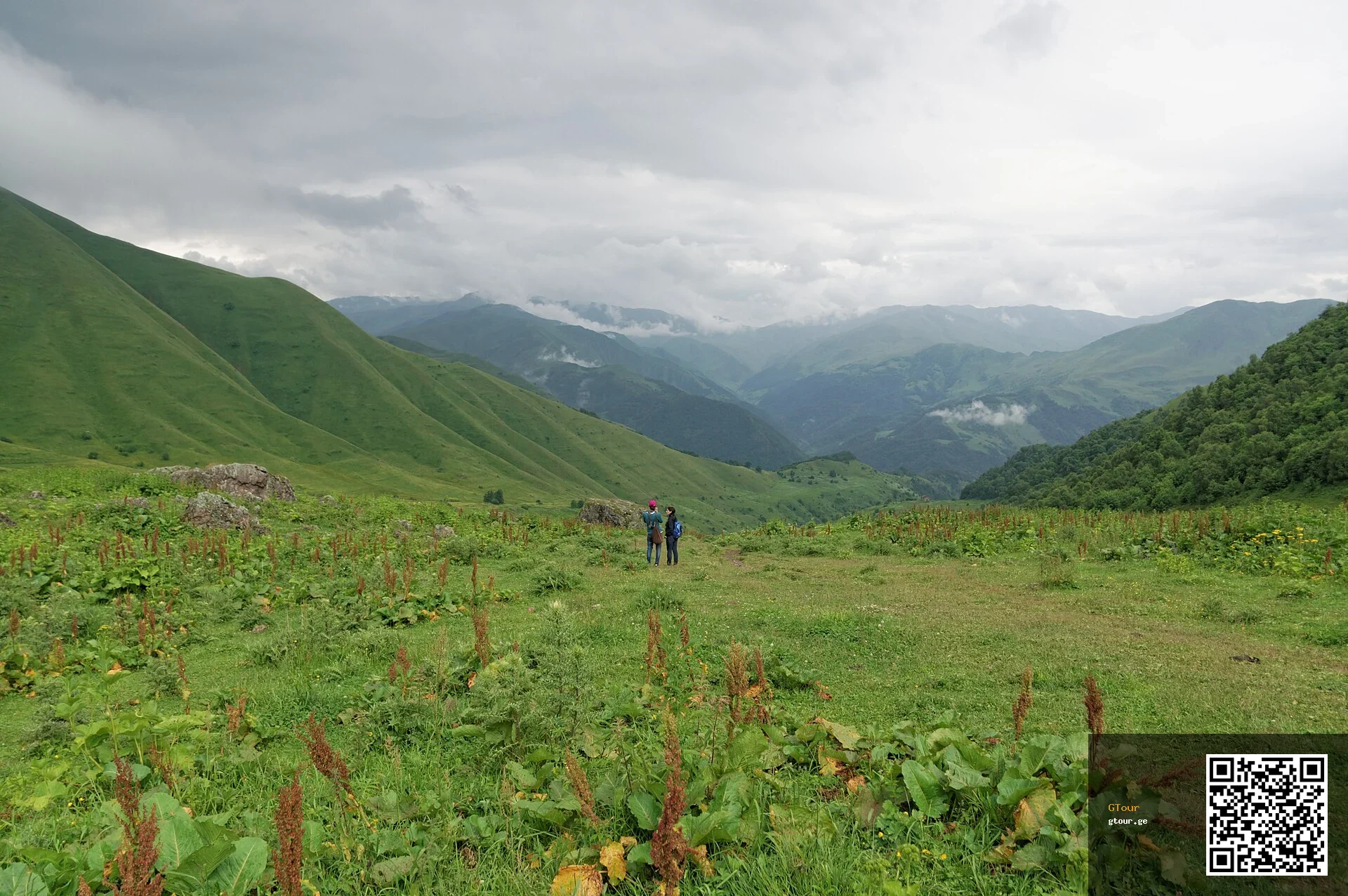
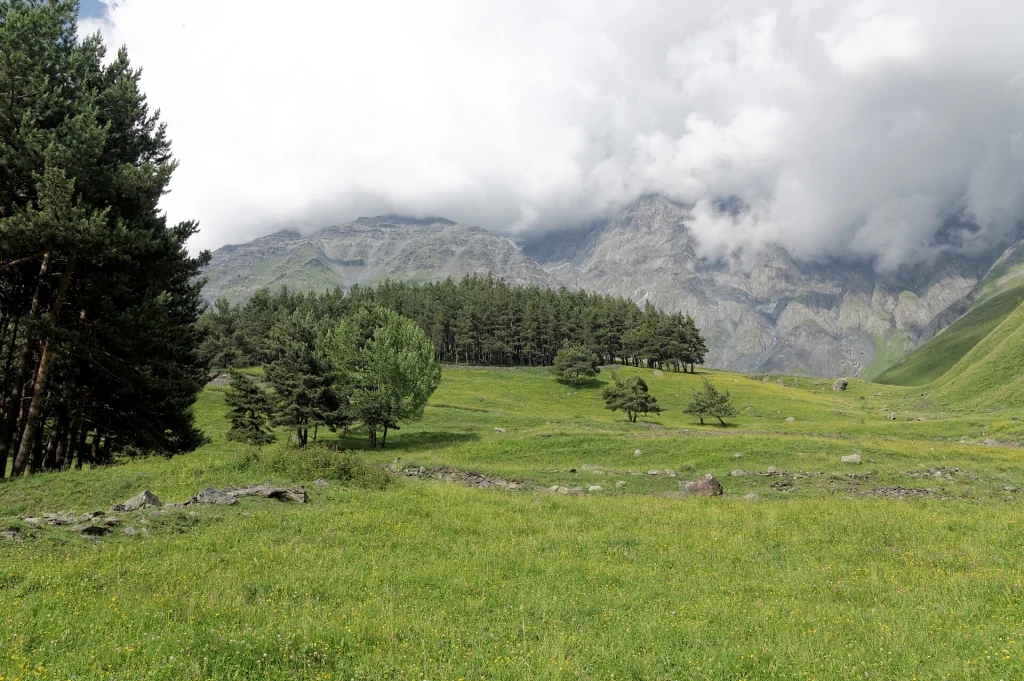
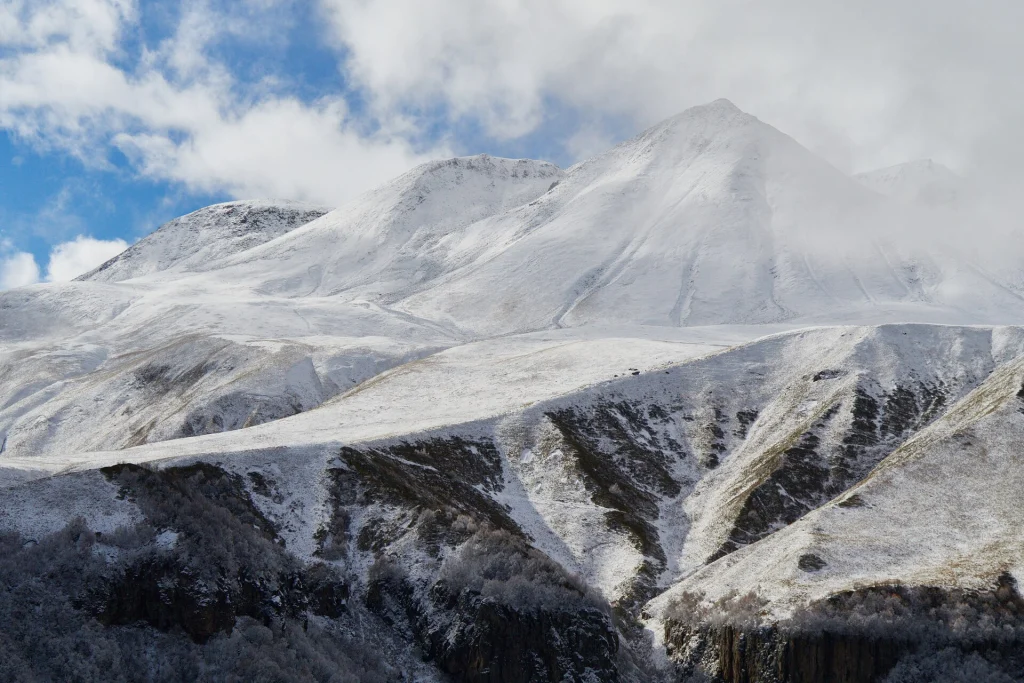
Abudelauri Valley beneath the Chaukhi Massif in Georgia's Greater Caucasus mountains. · Photo: Vyacheslav Argenberg / Wikimedia Commons, CC BY 4.0
Been to Georgia? Tell us how it went — the best stories are published here.
Share your tripOne email a week: what changed for travellers in Georgia — rules, roads, flights, seasons — plus one place worth the trip. Written by the GTour desk, no advertising, unsubscribe in one click.
This story across our partner network — ქართულად: შენი დასვენება